
Season 1 · Episode 71
71 - Van Ling - VFX Supervisor, DVD Creator, Cameron Collaborator
About this episode
I spoke with Van just before our trip to LA. We were hoping to meet up for lunch while we were out there but the schedule was too tight. Maybe next time Van.
So here is my interview with Van Ling, disc creator, VFX supervisor, director…
Links
Filmumentaries Merch!
Support the Podcast on Patreon
This podcast is completely independent and made possible by listener support. If you’d like to help me keep making these episodes, you can join my Patreon community here: https://patreon.com/jamiebenning
Watch more on YouTube:
Check out the Filmumentaries YouTube channel for behind-the-scenes clips and extra content: https://youtube.com/filmumentaries
All my links
Transcript
Automatically generated, so expect the odd misheard name.
Welcome to episode seventy one of the Film Mementories podcast. This is Jamie Benning talking to you here from my house in London. It's still March twenty twenty three, just about This is the second episode of the month. If this is your first time listening to the podcasts, welcome. You have about an hour or so of film history chat ahead.
Please do check out some or maybe all, of the previous seven episodes. There are some good ones and some great ones. There are bad ones. As far as I'm concerned, each of them gives you a unique insight into the film industry and the people behind the scenes. If you're a regular listener, thanks as always for joining me and for your continued support.
If any of you like my work and this is work, then please visit patreon dot com forward slash Jamie Benning, where there are several tiers to choose from in helping the podcast. Some of those tiers have perks and merchandise too. Thanks to my new patron this month, I'm back up to ninety eight of you supporting the podcast. I think I've got to about one hundred and five at one point. If I could just double that, I could start to focus more on the podcast than perhaps get more more episodes out each month, and focus on getting more and more interesting stories that I can find.
I mean, it's going quite well already, but it would be great if I could, if I could do that with your help. I'm talking of March. You can also support the podcast by buying some filming mentor goods, including Monks, T shirts, bags, bottles, and even socks. Also T shirts with inside Jabber and inside Jew's posters on them that my friend and long term collaborator Pete Starling designed back in the day for me. As I've said in previous episodes, why not buy one for your next film convention.
Star Wars Celebration is coming up. You might be the only one wearing one of these T shirts. And you know if I see you, because I might be there. More details on that soon, I might be there. If I do see you, then you get a high five automatically from me, whether you want it or not.
I may be going, as I said, to Star Wars Celebration. Not usually my thing conventions, but I may have a good reason to go. More on that soon. Hopefully all that and more can be found at Film Momentory's dot creator dash spring dot com. Catchy huh.
I'll post a link to that in the show notes as well as the Patreon and I'd appreciate your support if you can so. For this episode, I spoke with Van Ling and name you may recognize, perhaps for his work on LaserDisc DVD and Blu Ray, perhaps for his collaborations with James Cameron on the Abyss and Terminated too. Oh, you'll love the story of how he got started with Cameron. I had no idea, and I have some pictures to prove it. That's not as dodgy as I made it just sound then, or maybe for his time working for VFX House banned from the Ranch Entertainment on films like Dante's Peak or The Relic.
Either way, you'll find here his eclectic career fascinating. I'm sure I spoke with Van just before we had our trip to la We were hoping to meet up with Van for lunch while we were out there, but our schedule was made even tighter because we ended up getting a few interviews we didn't think we were going to get. We didn't have plans to get them, but suddenly doors were opened. So maybe next time, Van it would be great to meet you. So here's my interview with Van Ling, disc creator, VFX supervisor director as well, and I'll be back at the end for a bit more jabbering on Van.
What was your path to to USC When were you first aware that you wanted to become a part of filmmaking. I think I think filmmaking and visual effects and things were really on my radar all the way back as a kid, you know, used to watch Star Treking rear runs. Uh. And uh, of course I was into with a disaster films of the seventies because you know, my first PG rated movie in my life was The Poseidon Adventure in nineteen seventy three. Uh.
So, uh, there was just so many amazing things about the movies and television and Ray Harehausen films. Watching those and all of this kind of thing, Uh kind of really set me up in the seventies for wanting to do that. Then, of course Star Wars comes out and that changes everything for so many people, including myself, where all of a sudden there was this right in your face entertainment that was a completely new paradigm. It wasn't stately shots and grand you know, grand miniatures with slow push its and Matt paintings. It was this kinetic, exciting, real life feeling kind of world.
And that kind of sealed it for myself and so many other people, and I resolved to get into visual effects and to get into the filmmaking. So, you know, did the standard make a lot of you know, home movies and and try to do a lot of experimental things, trying to replicate shots, your favorite shots, all of those kind of things. And it was crazy. I was using a regular eight millimeter wind up camera that my father had from from from way back, so you know, you you would be able to have a single frame feature so I could do animation or play with it and you try to get all your mistakes out you're younger, Yeah, and it was it was a challenge because of course we didn't have video, we didn't have anything that was instantaneous.
Everything was you got to experiment with this. You'd spend your time shooting something and then you send it in to a lab, hope they don't mess it up and uh, and get back and go should have done this and you learn from it. And that was that was the process. I actually would joke with some of the some of my other colleagues in the industry where we look at what is available to to folks today, um and just say, you guys better be making the best things in the world because you have tools we would have killed for back in the back in the old days. I do wonder though, some of those limitations that you had.
What year are we talking now, we're talking about late seventies. I guess that you're talking about Star Wars there, so seventy seven and yeah, so going across into the eighties. I mean, I wonder back then, because of the tools available to you, that you were more thoughtful about what you did and it was a more kind of cerebral experience rather than you know, this instant feedback and instant gratification that people get now. Yeah, Yeah, it's very it's very interesting because it had to be a lot more considered. Often it wasn't, but it was at least things that you could you could try, and you you understood a cost to it because you had to pay for each role of film.
You could mess it up, you could accidentally expose it, you could do all sorts of things and not get what you want. You do have the ability to record over it and all of these things. I think you're right, You're absolutely right. It makes a difference that we have the ability now to essentially on our phones, on our portable phones shoot, you know, right, shoot, create and distribute to the entire world with the click of a button, and it in a way devalues some of it because you know, you see a lot of stuff out there that is not edited, is not crafted in any way, and it's and it's just terrible. So you have to you have to figure out how to how to address those things.
Um, you're you're absolutely right. There's a discipline that comes with that process, and I fortunately grew up with that kind of discipline. So hopefully I'm not wasting as much film or tape or digital uh these days. But it's a lesson that's that's really worth learning because you have to go through so much just to get something out there. Um, the technology be the barrier to entry now, it's not.
It's the starting point for so many people, and it's made it possible for a lot of really amazing things to happen and for people with talent to be able to get out there that they never would have had that chance on the flip side, it means there's there's a thousandfold more junk out there. Even when movies were made, you would say that ten percent of it was any good and one percent of it was great. Multiply that by just the overall volume change. But those proportions have not changed. That's that's one of the interesting challenges that that we have today.
And when did you finally get to USC and kind of put all this practice that you've been doing at home, you know, into something more heading towards more of a profession. Well, um, I was in high school and graduated in nineteen eighty two, which was right at the height of everything that was the summer of et Tron Star Trek to the Rath of Khan Polder, guys, so many, so many things. So there was this heyday and I was fortunate enough to get accepted to the USC School Cinema Lucas's alma water of course, which of course was the was the the goal of so many of us, and by that time, I imagine it was very competitive to get in there. Just sorry to jump in, but I'm just you know, I've spoken to people, you know who went through USC around the same time.
As George or just after George. But by the time you reached nineteen eighty two, I can imagine the numbers of people applying versus the numbers of places available was a very different catlet official altogether. Well, there were a number of competing schools and they all had different they had all different styles. You know. There were there were schools in New York and they were very more art edgy kind of you know, Scorsese kind of movies.
You had others who were very much into the subrebol experimental kind of movie. And then you had USC which was the one that had the most industry ties. And that was one of the one of the things I think that that was the most practical from my standpoint, that made it something that I wanted to I wanted to try to get into. So I was fortunate enough to get accepted. I was also on scholarship for my general education for various stuff from high school, and so I went to film school, did my first two years as usual undergrad as a just general education, and then the last two years of my four years was in the film school.
This was the original film school, the stables with the graffiti. Reality ends here over the front door the horse stables that they used to be on campus, so they were still in the middle of all this other stuff. At USC in the middle of downtown near downtown Lau was this this rambling, old wooden set of stables with a central courtyard. And so I spent my first two years, even though I was in general ed at the time, I was doing you know, all the kind of preparatory film classes, the you know, the film history and criticism and the history of American film, history of world cinema, all those kind of things out of this old building. So I got to be in that environment where there were all these traditions from back in the day, and and you know, everybody wrote graffiti on the walls in the editing bullpen, and it was, you know, this this kind of you know, ramshackle department.
Uh, you know, in the middle of this uh of this uh big university that was known as a party school. And most of the people who were in the Cinema school wanted really nothing to do with the rest of the school because you know, they used to call the university or spoiled Children. That was the nickname that all of the other all the other schools other colleges in the area. Ucla in particular, would would call USC because it had, you know, a lot of a lot of the scions of business, the kids and all that kind of thing, and a lot of those would you know, not really be taking the education seriously. It's part of their process to getting their inheritance or whatever.
That wasn't my background at all, it was it was. It was so different to see a lot of these folks where the old joke was if you if you bought the textbook, you got to see if you open the textbook, you gotta be if you read the textbook, you get an a kind of thing. Um. And in the midst of all that, we were at the Cinema School, and the Cinema School was this completely different entity. It was all of these very inquisitive, hungry people, competitive people trying to try to do things.
The school was really interesting. And halfway through after two years, I was right at the time in which they were building the new Cinema School, and that was the George Lucas Instructional building and the Steven Spielberg scoring stage and the Marshall Lucas Editing post production building, and they built this whole new thing. So I spent my first two years with one foot in the old and then my last two years in the new, brand new building, you know, and they modeled it plan wise exactly the same as the old one. It's just now it's a multi story. It was a multi story building and had a quad and the whole thing.
So I kind of got the best of both worlds in that sense. That school has since been torn down and changed and now they have a huge, huge cinema school that has become an entirely different entity. And there is something, you know, amazing to see that journey, because now you go to the Cinema school and they still have the reality ends here, but it's harved like a Roman tablet above this gigantic building with marble columns. So it's interesting to see that. The feel, you know, that the idea is still there, but the field has completely changed.
Yeah. Yeah, And did you get to a chance to kind of specialize in something in that final year? Did you know by now that you were kind of heading towards visual effects having because from what I gather from people that have been to USC, it gives you a very good range of all the different parts of filmmaking, and you know, you come out with experience across all these this broad spectrum of disciplines, but you get an opportunity to focus on one towards the end, you do. But visual effects just not one of them. Right back in my day, there was literally not a single visual effects class available in the curriculum.
When I was there, there was there was always one listed in the syllabus as something you could take, but they never had it when I was there. It was after I left that they had a few people who really pushed for it, and they had one or two of them, but when I was there, there wasn't no such thing. The closest there was was an animation class. I guess everybody that could do it was doing it for real, you know, in the industry itself. Well, yeah, although it was interesting because it was none of it was computer.
It was all practical, but nobody thought it was a large enough niche back that it was always writing, directing, editing, sound, cinematography, production management. Those were kind of the areas that you had to pick. And I was gravitating more towards editorial because post production get more involved in that kind of thing. But you know, we were all doing visual effects stuff on a fly, you know, just being inspired by the movies and all the things that were happening throughout the eighties and which was really kind of a golden the golden age of of visual effects on a physical level, miniatures and and pyrotechnics and most control and all of that som so I was there at this at this this you know, high point for that technology.
So it was something you know, you get really immersed in learning about, but not in school. You're learning all the fundamentals, which which I have to say, is the most important thing. It's so easy to get lost in the technology that that you don't really know how to tell stories. And so that's why it was actually a good thing. I didn't actually work.
My specialty in my last year was not editing. It turns out I was doing sound because they needed there is there are nine people on a crew and they were all split down into these various categories. Two editors and they had two sound people and all the other positions were filled. So I took sound, but it was still post production, and it was really eye opening to learn how many things you can do in the storytelling just with sound. And so again it's part of that process of manipulating reality where you can do it in sound in ways that you know you can't even do it visually.
I mean you can now, but it was it was really a great experience because it gave you a well rounded idea. And one of the things that's the hardest to deal with sometimes today is that people are so specialized that they don't know how their part fits in with everything else. You know, if you're if you're a compositor, it helps if you know how to you know how the shot got to where you are, and what the point of the shot is not just composite this. On top of that, it's what is the feeling, What is the dramatic intent? What is the storytelling of every single shot that you're working on, and how do you help the overall thing?
And and a lot of people, you know, don't necessarily see that. And so getting a well rounded idea of how films are made in general really helps whatever task you're doing, because then you're working towards a whole as opposed to just a bunch of disparate parts where you're not where you're not invested, yeah, in everything, and the tools become the tools as a as a means to an end. You've actually got an end point, you know, rather than saying I don't I don't know after effects or blinder or whatever, you're more thinking about the composition. You're more thinking about how that effect is going to tell the story most effectively. Great to come out with those kind of disciplines into a into a job with James Cameron.
I mean that was that your first job out of USC? That was my yes and no. The first job I had out of USC was as a PA on a film called alan Quatermain and the Lost City of Gold. I've never heard of it, but it sounds quite grand. It is.
It is the sequel to King Solomon's Minds, starring Richard Chamberlain. Yeah, and uh, and I was. I got the gig right out of right out of college because I had gotten a scholarship from the Robert Greenberg Scholarship and his son, who administered at Michael Greenberg, was at the time married to Sharon Stone, who was the female lead in the alan Quatermain The Last City of Gold, and so part of their scholarship was also getting getting a summer paced shop on the show so I got to do that and the other thing, because that was only a few weeks after that, uh in graduating. You know, after graduation, I worked at a I worked at a very small firm called Coffee Table Videos that was trying to do a kind of a That's Hollywood style documentary interview series with old, famous, old stars.
And during that summer I also interned at Doug Trumbull's Show Scan Corporation in the marketing department, so I got to see all the actual show scan sixty five millimeter, sixty frames per second films that he was doing. He was trying to again, he was way ahead of his time, you know, And so I got to do a lot of interesting things a rub elbows with very interesting people. And that was the summer that Aliens came out, and that was obviously a huge thing. James Cameron had brought a terminator, the first one, to one of the film classes, and I remember watching this film and he was there talking about it. He was talking about all these little tricks and oh, you know, we ended up using three three different boys to play the Mexican kid at the end.
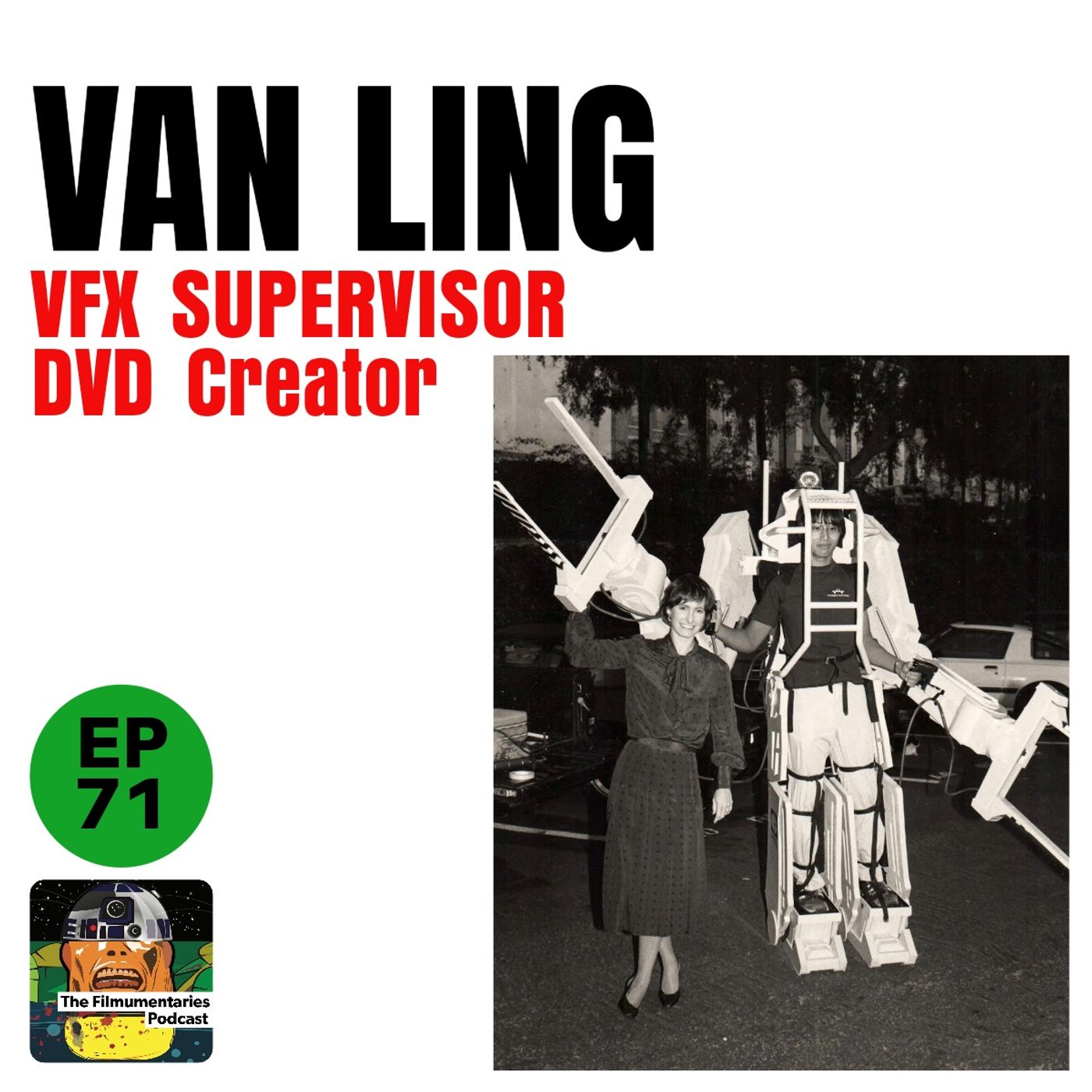
And it was because of this, because this and it was fascinating to hear all the kind of low budget ideas of what you had to do to tell your story, and and I thought, wow, here's somebody that when I graduate, I would love to figure out how to get content. Never did per se, And what happened was Aliens came out and on the first day I saw it twice and one of my friends, it was a year behind me in film school, said, I know you're individual effects and technical, you know, gadgetry and stuff. I dare you to build a model of the powerloader from Aliens Aguilla Walking portlet And so I said okay, And I had I convinced him over the course of the next few months because the deadline the movie came out in the States in mid July and then Halloween is end of October, and he said, you know, dare you to have this little model ready by then.
So it lit a fire under me and I said okay, And so I said that's what I was going to do. And on Halloween I had completed a seven and a half foot costume with motorized motorized arms that moved up and down and the whole thing and was built on a backpack that I wore on my back, and I had these stilts that raised me of like a foot off the ground. It wasn't size, but it was the closest that, you know, a recent poor college graduate living at home was going to be able to pull off with foam cores and wood and you know styrefolma. So so I did that. It was a gentleman's bet.
I went to his dorm wearing this costume with my car headlights and backlighting it and the whole thing, and won that bet, and then went to a costume contest at some nightclub in Glendale, California. One first prize, which almost paid for the cost of building it, and some but he said, hey, you really should show this to James Cameron, as I write one am. I supposed to head to do that, but over the summer I had been calling Gail and Hurd's office, his wife at the time, who had an office on Both of them had on office shared office on the twenty century Fox lot, and I was asking about internships and PA jobs and they'd always say, no, we don't have anything right now, but you know, callback next month, which is always nice to hear because they came from Roger Cormana, the Roger Corman's school of you know, whoever can do it, you know, give him a shot, you know, as long as they're cheap, you know, that kind of thing.
And so they they carried that mentality, and so on Halloween, I called them one last time and I just said, hey, you know you I mean production exist at jobs. No, we're not in production anything yet, but you always call back next month. And I said, oh, one more thing. I built this costume and I told them what it was. There was dead silence, and then they said, come on down.
We got to see this, will leave you a pass. So I had to scramble to rent a pickup truck to carry this thing and got down there like at the end of the day and at five o'clock. This was before I showed this costume to my friend to win the bed or gone to the night club or anything. This was like first time out, and drove it down the twenty century Fox lot. Some of the guards were like, oh, they're bringing the prop in, so that that was a nice sign.
I go up to them and they're all looking out the windows at me, a gail staff while I'm dressing up this thing and wearing it, and they actually sent a Fox photographer over to take a picture with me and Gail and his costume. And so I'm putting on this costume and They're all looking at me out the windows. I have a couple of friends with me or helping me put this thing on, and I'm just in my jeans and T shirt wearing this this big yellow styrofoam walking forkliff thing. And Gail comes out and says, this is the best walking resume I've ever seen. And we talk a little bit and I said, you know, I, you know, I I gotta go.
I've got a got a bet to win at at my friend's dorman. You a see with this? And she said, hang on a second. She goes back inside, comes back out with Sigourney Weaver's jumpsuit costume and a rebox that's custom high top rebox and says, you might us will make the costume complete. Just get these back to me with all their original dirt on them.
And back then I was thin enough to actually fit in Sigourney Weaver's costume. So that made a huge impression on me, because here's some you know, here's somebody who's come up through the ranks has that the low budget terms had the mentality of, you know, rewarding talent, rewarding people who have you know, the drive, and and that was such a nice, you know, moment of trust, and so everything kind of went from there. Jim was not there. I was so late getting out there that he had to go to another meeting. So so two weeks after that, I'd get a call at my parents house.
I was out of town, but there was a message on my parents answer machine that basically said, Hello, this is Jim Cameron. I heard you built a powerloader worthy of note I'd like to come see it. And so, but you know, a little while later, he comes down in his corvette to my parents' house, finds me on the floor of the study cutting foam core to help one of my fellow USC students to one of their student projects. And he comes He comes in and immediately says, hey, you know how to cut foam corps like this, And he gets down on the floor with the exact the night and his cutting foam core from my friends student project with me, and so we kind of hit it off. You know, he saw I was an honor student and you know, liked reading and doing research, and I knew something about visual effects, and so a few weeks later he said, how would you like to work for me as my research assistant working on a new film idea called The Abyss.
And I need to do a lot of research on submarines and marine salvage and oil rigs and you know, undersea life forms. And that's kind of how it started amazing for me. And I was with him all the way through the production of the show. It wasn't just doing the research. It was, oh, you can do research, great, Oh you know how visual effects works clearly.
Can you help us put together all the visual effects shots in terms of you know, we have Phil Norwood and Steve Berg and Ron Cobb and all folks designing all these things in John Bruto and storyboarding and all all of these elements of its. Here Van, here are the shots that we picked. Can you compile them all a book and do a guide on how we think we should break up the different techniques and everything. So it's kind of like being a visual effects producer, but you know, on a kind of a test level. And so I got to do that.
I created a phone book sized notebook called the How and why wonder book of the Abyss that broke down all the shots and how they were supposed to be done, and you know, went over all these things. Jim would come and say, Yeah, that's great, No, maybe we should do this with underwater miniatures as opposed to a dry for wet miniature in smoke, motion control and AD and we went through the whole process, and I went out to Gaffney, South Carolina with them and was on the show every day. In some cases, I was Jim's eyes and ears on the units that he couldn't be at when he was in a tank. I was in b tank working with working with the Underwater Miniatures crew because I knew the film and the show inside it out, so I knew exactly what needed to happen.
And in some cases I was helping to build miniatures and helping editorial identify shots and make sure that we were getting everything yet. So it was the most amazing education. Yeah, amaze, that's guy, how I spend my summer and fall and winter and half the next year. So amazing. It does seem that people like, you know, I've heard people talk about George Lucas in the same way and obviously James Cameron as well, from from what you said, allow people to kind of enter at this level and give them a certain amount of trust to kind of bridge between departments, and if their skills happened to bridge between different departments, you know, whether it visual effects, optical, you know, the optical side of things, or whether it's miniature making, they let them do it.
You know. I'd spoke to Nelo Rhodis jamiro who went from industrial designer to costume designer all of a sudden because Richard Mark on the Return of the Jed, I said, I want Nelo to give it a go, and why, you know, why not? So it must be fantastic. Must have a kind of film school feel to working for somebody like that, where you're able to kind of obviously you've got the responsibility of making a you know, a proper Hollywood movie now, but just having that ability to kind of oversee multiple different stages and multiple different disciplines as well, it must feel like a kind of a graduation of a film school. It was.
It was grad school. It was graduate school. It Working on the Abyss was straight up graduate school for me because it was a real project. It was all of these different areas that I could be involved in. It wasn't siloed as much because as gyms he used to call me his extra ram because I was there to help keep track of a lot of different things, to be the first line of defense when there were questions and you know, should we do it this way?
Should we do it this way? Well, what would Jim want, you know, because he's so busy. Remember as a director, you you get all of these requests of you know, we need answers to the you know, give me the top ten questions you need answered, and each department gives the top ten questions they need answered, and then he has to take those from all the departments and figure out which ten questions from all these departments he has the time to answer in the middle of everything else he's doing. And so my job was to kind of help that process. And he very explicitly said, I don't want you to be my executive assistant.
My executive assistant is the guy who picks up my dry cleaning, you know, so that I can focus on this stuff. You are a creative in this process. And that was the interesting thing. My credits on the ABYSS one was kind of a visual effects assistant to the director, and my other credit on the ABYSS was creative slash technical slash research assistant to James Cameron. So it was really an amazing education.
And then I kind of doubled down on that for my next film with him, which was Terminator Too. Starting from the ground floor. Yeah, and amazing about both of those movies. You know, if we just go back to the bits briefly, you know, such a pivotal milestone in visual effects. Okay, maybe some people don't regard the film as successful as say Terminator Too, or maybe Jurassic Park or something later on, but certainly the effects work on that movie is seen very much as a turning point.
It kind of opened the door to what we are experiencing now as viewers and for people working in the visual effects the industry. So amazing to be able to arrive in the industry at this incredible time where the kind of old is being you know, not swept aside, but being pushed aside and making room for this new technology. And then ramping up again for Terminator Too. I mean that that movie probably was the film that reignited my interest in movie making, you know, Star Wars, obviously seeing those documentaries as a kid, but that was everywhere at the time. Everybody knew that there was this character that was made from liquid metal and it was this brand new effect and incredible to be working on something like that and being at the very sharp edge of where the technology was.
And you've always pushed the technology, haven't. You've always been had an interest. You're a big proponent of integrating digital technology into filmmaking. Well, that's one of the really interesting things about Terminator two is people talk about this was the birth of digital. Digital was a very prolonged birth through a lot of small steps, and you know, it was the one that made I think the biggest splash at that point in nineteen ninety one.
But it stands on the shoulders of the work that was done on the Abyss and all of it. This is the most important thing. It all came from storytelling. It came from Jim saying, I want to do something that I have in my head. I can't figure out how to do it with the conventional technologies, and I think there's a way to do it.
But I mean, there were some crazy ideas for the pseudopod in the abyss, you know, because it's a it's a water tentacle, and nobody has ever seen it, but everyone would know exactly what it would look like because it's water. Everybody understands that. And so it became this process of, well, you know, we could cover a sock puppet with front projection material and project ripples of water on it and have it move around. There were crazy ideas. Somebody said, just shoot miles and miles of footage of somebody throwing a fire hose around, find frames that kind of match and string them together.
There were some crazy ideas, but we all pretty much knew, you know what, we think computer graphics could do this, but we don't know, and we during production, even I Land was saying, you know, you may have to cut out six or seven shots because we calculated the render time with our fastest systems, which were their only systems, and it'll be after your release date, so you need to cut out shots. And so that's why we have pob shots of the pseudopod in the movie, because those could be done optically. So it was this process of one thing, a very small part of the movie, which Jim always said, you know, if it doesn't look right. We can always cut it out of the movie. I can make the movie story work without it.
But it became that thing that everybody kind of gave, you know, pushed the Oscar over the top in terms of awarding the film. I think all the rest of the work in the film, the miniatures, the underwater miniatures, the sets, all of those kind of things, the most control work was phenomenal in that film as well, And they pushed the envelope on that Jim's not about technique, He's about what is the best way to tell the story. And that was a great lesson to learn, you know, because sometimes the tail starts wagging the dog. And yeah, and in Terminator too, people I remember when it came out, people kept telling about, oh, this is a writer, shit, this character is. There's all computer graphics generated and everything.
And there were only like three dozen DG shots in the movie, you know, and a few of them were actually some of the some of the first not counting Howard the Duck, Why removals and utility visual effects shots that were done by PDI and some other and some other folks. And there are only a few of those visual effects shots that were computer graphics in the Morphing, with the morphing and the rest of it was stan Winston practical magic, and it kind of it kind of bothered them a little bit because they would be all these news stories where they're showing all this would look at all this amazing computer graphics, Look how real it looks, and the folks from stan Winston the studios are rightly saying some of those are shots are because they're real and they had done they had come up with ways to vacuum metalize rubber so that it would look like chrome.
So you know, all the arm blades, you know, some of its fiberglass, some of its rubber, and they would do all these amazing things. It's all about story. It's all about how you can integrate them. I mean, we could tell the difference from shot the shot CG, live action poppet CG, but a lot of people couldn't. It was all great blood and that's a testament to the storytelling.
And that's the big that's the big thing you learn from learning visual effects, right you know what is its place and you know later on it even doing small visual effect shots, it's always what are we doing to help tell the story, and that was some of the most fun I had in doing visual effects. We worked on a film called Um Deep Rising, Yeah, Steven Stephen Summers, and there was this there was this whole change in the ending where they wanted a character who they had killed off to still be alive at the end because he was too entertaining a character to kill off, so they wanted to keep him in case they needed a sequel. And but they had shot him in the leg. They had put him out in the ocean, and he was in no way he was gonna be able to swim his way to this prehistoric island at the end of the movie.
But they wanted to fare out to do that. So they came to us and said, we have an idea. We had a surfboard that was on their sampan at the beginning of the movie, and we have a shot where the sampan blows up near the end of the movie, and can you add a surfboard flying up into camera? So re established that there's a surfboard, so that when we do the reshoots in Malibu of him coming to shore, he's paddling on the surfboard because he had a shot leg, you know, and it worked, and that was like, how do we do this? You know, we can come up with this and so on, so you and solve narrative problems through the judicious narrative creative use of visual effects.
And that was a great, a great thing to be part of because then you feel like you're not just compositing something, you're helping to tell stories and it gets you more invested. It's a lot harder today when there's you know, it's not fifty shots in a movie or three hundred shots, it's two thousand. It's literally every shot in the movie, so with thousands of people working on those shots as well, exactly. But it's really important for everybody who's doing that to try to, you know, stay focused on the narrative because ultimately that's what makes the film better and it's also what keeps them invested that they're not just button pushers and you know, doing an assembly line of composites. You know, we're elements.
So and that's that's one of the lessons I really learned from working this industry for for so long. Um, I've had a very very eclectic I really have a career in terms of the types of materials that I've worked on UM and I'm actually very proud of that because it's not all just you know, visual effecture movies. Yeah. What what kind of sparked your interest in the emerging digital platforms of laser disc and DVD? I was a I was a big fan of laser disc because I had a I had a roommate, uh you know, at the round the time I started working for Jim who had one of the one of the only laser discs I ever knew of, and he was showing, you know, they can do still galleries and you know, they had these you know things, these little featurettes about the making of the movie and you can jump to you don't have to fast forward to get to them, and all this it was on a linear process.
It was somewhat long, nonlinear, and it was fascinating and uh so I was a big fan of those. Jim was a big fan of those. A matter of fact, my first LaserDisc player was his birthday present to be one year you know, I think it was nineteen ninety and so I was always into that. And when we got to finishing the ABYSS for Fox and they were starting to say, hey, you know what we can do these Criterion type titles. You know, why don't we do this for Aliens and do this for the Abyss.
And I got involved in that process as a part of Jim's team, and I started, you know, writing things, and I felt that the Criterion stuff was fantastic. The Criterion LaserDiscs, they're very scholarly, They're very well done. Morgan Holly and Alita Holly and the folks at a Criterion were really really studious and complete in the way they were doing these things. But they had an outside perspective. They didn't work on those movies.
They were just people who really knew those movies, loved those movies, and wanted to do right by them. I had been in the unique position of having worked on some of these films, and I said, what if, you know, the people who actually worked on the movie did these did a disc. And that's what I started with on the Abyss. I remember that so well. It was one of the first lazy discs I ever saw, you know, and I was kind of like, how do I get my hands on this?
It felt like a whole new world. It just opened up. Yeah, it was. It was really interesting to see how the process was done. Back then, you couldn't even take a screen grab and figure out how to get it into a computer there was or out of a computer onto video.
It was it was crazy. And this is standard definition video. This wasn't even HD or anything. But I resolved from my standpoint of having been in the middle of everything on the ABYSS, to write kind of the definitive making of and create that with visual and video and use all of the the frankly very limited technologies that you can have in LaserDisc to do that. And so we did.
We did it, and we we even did a pan and scan version. Is he because at that time, at the time, rather than run away from pan and scan and disdain it, Jim at the time was saying, you know what, this is the reality. Televisions are more square, films are much wider. You've got two ways you can do it. One you letterbox it and have a much smaller image.
Do you get the scope of it, but it's but you lose the intimacy. Or you pan and scan the movie and you have you trade this scope, but you have the intimacy. You're closer to the characters, you can see the performances, you can see all that kind of thing. And he said, I don't need to choose between them. I can tell Fox I want to do both, and so that's what he did.
But most pan and scans at the time we're like, okay, set the frame to whatever you're cutting off, usually just the sides, and leave it and run the whole film that way. And then of course you get people have cut off on one side. You have to actually use some creative license in how you pan and how you frame each shot. And so I even I even devised a logo. If you look on the on the pants get package, it's it's a it's a film frame with a brain in it, you know, intelligent pan and scanning.
And I don't know how many of those sold, but you know, because now now things are kind of different. People understand multiple formats, aren't so freaked out by letterbox and aren't saying, hey, I paid for a whole frame, how come I always see you know, the middle two thirds of the frame. Um, so yeah, that laser disc was something. Uh that was I think something new for that industry is like, you know, this is kind of what some of the possibilities are and then I double down on that with with the laser disc for Terminator two, Yeah, which ended up being this huge set, and those each had their limitations too, because you can only put half an hour of high quality material on a side. You can do an hour, but it's at you know, a a lower quality, So there are all these limitations.
You had to do side breaks, and I kind of got into a laser disc doing that partially because when Terminator two was first coming out, Pioneer Entertainment was going to do the laser disc and normally we're not involved in any of that. They just put they just put the stuff together and have us look at it sign off. And I remember that day in nineteen ninety one, late nineteen ninety one where it was like, man, get into my office right now. I go in there and I find out that where you choose, you know, where you choose the side breaks for a laser disc, because you have to choose where you're going to break, was being done by the manufacturers, not by any creatives. And so in the middle of the hospital chase sequence is where it suddenly goes end of side one, you know, turn over, and Jim was livid.
It's like you can't. You should either start here or start here, not here in the middle of the chase sequence. So I got involved in that, and the poor lady from a pioneer who had just sent these as kind of a courtesy to get Jim signature on a letter that they wanted to include with the with the laser disc had to endure me coming in and saying, yeah, we can't do it this way. You're gonna have to you know, well, we've already pressed the disc and we've already made all the jacket. Well he got to trash all of them.
And by the way you spell judgment day rock, let me use yeah, you know over here we don't put in E on judgment. Yeah, so uh in the in the middle. So they had to trash their entire twenty six thousand disc run. And I worked really closely with them and made friends with all of them, and they saw that there was somebody who understood the technology enough to care about their needs and their concerns and their limitations, but also could show them why it's important to do it this way and that way. And we hit it off really well, and so I got it more involved in the technology of laser dicks, not just the other stuff.
So that was the process by which I kind of got into those things. And then when DVD was starting to be defined as a format, there was a seminar or a kind of a colloquium in nineteen ninety five in which they invited all of these different folks from different disciplines who had used laser disc for various purposes to come and explain what they were doing or what they did that was forward thinking in LaserDisc. And they wanted to ask us, what do you want to see in the DVD format, you know, And we would come in and say, you know, we were able to do this, but we had to jump through hoops, and it would be great if you could just build this into the format spec and we'd love to do seamless branching, and we would love to do all these things.
And they listened and they created this format. And when the format came out, I was one of the folks who was privileged enough to get work in designing stuff to really show off the format. Not officially as here, we want you to show off the format. It was more like, oh, well, you know, we want we want you to you did the t two and the Abyss discs. We would love you to do those films for DVD because we think you can really do something progressive with it.
I remember those discs so well, and you know, talking about those Criterion discs there before DVD came along. What was amazing about them is they felt curated, They felt like they were handled with care, and your name over the years has become a kind of byword for that very thing, for these wonderful curated discs and the terminated to DVD I remember very well. I ended up buying a multi region player here in the UK so that I could get one from the US sent over by a friend of mine. And just seeing the also, you know later on with the special editions as well, having somebody who worked on the inside on those films, who knew what material was available and might be of interest to fans, and yeah, just really fantastic to have you there kind of on the inside, projecting your your love those films back out into the world.
Well, thank you. It was an honor because I kind of looked at those projects as I wish I had these When I was in film school. It was make a film school on a disc that was really kind of what I wanted to do was I cover every department and talk about what they did. Here are the things we ran into, Here's how the call sheets work, Here's how it was scheduled, so that even if you were into production management, you could look, oh, they scheduled it this way because of this and this. UM.
So I tried to be as absolutely thorough as I could. UM and UH. The discs were things I were really labors of love, and there were things that are very very proud of. UM. And then you know, I became one of those guys to do big movie laser discs or DVDs, and Fox hired me to do the ABYSS, and I tried to add something new to on top of all of the information on the on the the bonus material, and you know, being involved in the in the transfers.
I was always involved in the transfers of Jim's movies with him, you know, to learn things and make sure that things were the way that he wanted them and so on. UM. But there was a new area that I could actually kind of own to some extent that was menus. And so I tried to do things with the menus that you know, weren't just here's a frame with a couple of buttons on it. Why don't we make it immersive?
Why don't it be Why can't it be something that brings you into the world of the film in one way or another instead of just basically a poster, which was kind of the easiest way to do it then. And so my menus kind of got pretty labyrinthine at a certain point, but you know, I'd fill them with easter eggs, you know, the Terminator two disc. If you waited long enough and didn't do anything, the T one thousand would morph out of, you know, one of the menus and look at you and were you the best person to kind of introduce those easter eggs? Do you think is that? I don't know the answer to that.
I really don't answer that. Well, it might be, um, I certainly, I certainly dove into that because I always thought reward the people who spend their time looking at things, and you know, you do it in movies, you know, and you can just anything you can do to give moments of delight that don't necessarily pull you out of things. That was then then I kind of tried to up my game after those you know, Independence Day. I've done a couple of different both of the DVD and of Blu Ray for Independence Day. And then I got the big call which I'd have been hoping for, which was they were starting to do the Star Wars movies for DVD, and so I got to bring that to Fruition with Lucasfilm.
That was an interesting one because the thing I had in mind was crazy, which was, I don't want to just do one menu set. I want to do three for every movie that that was themed to a different planet featured in the movie, and I want them randomized, so every time you put in the disc, you don't know which menu you're going to get, you know. And since it wasn't normal, you could put in the disc one day think oh, okay, the menus take place on tattuweed, and then next time you're putting the disc it was, oh my gosh, it's on Coruson and and that was the fun of it. And I had to build out and figure out how to program. The poor guys at the DVD programming facilities were pulling their hair out because it's three times the amount of work and it's but they made me come in there and test them all.
So I'd have to go in there and test every day. Is it going to the right menu, know if this one's going from Tattu Weed, And all of a sudden the second menu is from Coruson. We got to fix that and the programming and go through this whole process. But it was so much fun because it also gave the fans something to look at it, and it made people, you know, come back to the disk just to look at the just look at the menus. And so I felt that I'd like to think it had a had an impact on how they did the redo of Star Tours where they do that now where they randomize things so that there's like fifty four different ways you can go through Star Tours.
Yeah, I'd like to think that, but I don't know. They may they may have already had that design progress. Interestingly enough, I did work on the Star Tours theme park rides, and that was the whole other thing I got into as well, which was theme parks. I had some friends who in the Visual Effect Society who worked in theme parks, and they said, hey, you know, you know, we could use some of your some of your skill in some of this and I got involved in that, and so I had worked on I had co directed the test shoots for Terminator two three D before I had left Light Store, so I was in. I understood some of the theme park requirements, and when Star Tours came along that they were doing a redo, they needed to do new graphics, new displays, new skin.
I wasn't involved in the actual ride portion of it, but I was involved in all the pre show, the part where you spend most of your time. So it was you know, we need, we need you to do the arrival departure boards in the spaceport and come up with there and make it all accurate because people are gonna be staring at this eight hours a day for the next decade or two at least, and so it's got to be right. So you know, we're and I had a producer, Marianne McClean at Disney Imagineering, who was very much into I'm going to make sure that all the partual arrival departure times are logical and that these planets are cannon, you know, And and it was so much fun to kind of go through all this and some of the stuff that we built, because it'd be like oh, we want to use this planet.
Okay, we don't really do much with it. It's just mentioned in one of the one of the Asshillary novels. Can we use it? Yeah? Can we establish that there's three moons on it because it'll be more interesting.
Okay, So now it's in official cannon stuff that we had. We had come up for for some of these things. So those were a lot of fun. And I ended up doing a little bit of work here and there for both the one here in Anaheim, the Star Tours in uh Florida, in Tokyo, in Paris, so it was it was a lot of fun. I worked on a number of other theme park attractions for Walt Disney Imagineering over the course of the years as well, so that was a whole other avenue.
And meanwhile, I'm still I was still doing like DVDs and then blue rays. I created all the menu systems for with Full of Easter Eggs for the Hunger Games films, and it was it was a lot of fun to create all of those things. I also was still try king my hand in visual effects, and so I would work on you know, stuff for movies shots here and there, and I had a so I have. I've had a really collected career. And then I was also involved with the Visual Effects Society.
I was on I was on their their board for a long time, like a dozen years, shaired a few committees, worked on a lot of different things, and then I was inducted into the Academy a munch Bittial Arts and Sciences in two thousand and nine and have worked on committees there as well. And one of the one of the quieter things that that I did with both of ES and the Academy was I cut montages. I cut visual effects montages every year on my own, you know, not not compensated to kind of like this is the year in visual effects, and we would screen them either at the BS Awards or at the Academy bakeoffs. And I've been doing that since two thousand and nine. I had done a VS.
Fifty Most Influential Montage visual effects film Montage in two thousand and seven that I was very proud. I love to edit. I wonder if that's still around. I'd like to see that. Yeah, it's uh, it should be available somewhere.
The challenge is with all of these things is that it's copyright and material from start to finish, so you know, you probably won't find it on YouTube. You might find it, you know, behind the paywall at the Visual Effect Society if you remember things like that. But it's it's crazy, and I still do that. I still try to do that every year, and I will I will put one hundred and twenty eight films into being represented in a two and a half minute montage cut to music. So it's, uh, that's kind of been part of my service back to the industry.
Try to inspire and say, hey, you know, there's so many great things coming up from all around the world. Now hopefully it'll inspire folks. And I understand that there have been some places in the educational sphere where they they'll run some of these you know, they'll ask me for permission. I get permission from the academy. They'll run them certain classes and things just to kind of get people pumped.
That's the most fulfilling stuff in a way. Isn't it being able to give back an inspire a new generation to come up with your ideas? Well? Yeah, I mean it's paying back because there was so many I was fortunate to have so many people, you know, from James Cameron, to Galen her to all sorts of folks who were open enough to say, hey, you know what, here's somebody who's kind of outside the box. You know.
I didn't do the Spielberg thing exactly of walking in with an empty briefcase with the bricket it and pretend that an office at Universal was my own. But I did walk onto the Fox lot with a powerloader hallowing gust, and you know, I was fortunate enough to have a you know, a good reception to that, and it gave me a career start of one. The rest of it was up to me. That all culminated. In the last few years.
I was able to direct my own feature, which was which is what this cliff background is, movie called Clips of Freedom that I co wrote and directed back and was released in theaters very few theaters in twenty nineteen. What can people find that now if they did want to check it out, It's on Amazon. You can rent it on Amazon, you can get it from various I think iTunes has it, Google Play. And as somebody who came from a lot of visual effects and a lot of you know, science fiction and those kind of movies, this is a historical Greek romantic drama that has you know, a lot of a lot of nothing to do with any of the stuff that I'm generally known for. But the important thing was that it's about storytelling.
To me, that was the most important thing that those are the things I learned the most from all of the process of all of these films over the years. It's not about spectacle. It's about how well do you balance the emotions, how well do you carry the performances, how well do you tell a story that can take an audience along. And that's what we're all trying to do, really, even every every compositor, every you know, modeler. That's part of their that's really part of their jobs, and part of it is being able to step back and realize that they're part of that process and they're not just making widgets, even though sometimes it feels that way with the kind of production lines that have and deadlines that have to go on these days.
Thanks so much for sharing your story with us. It's so to be able to talk to somebody who's work, you know, has inspired me. I don't know if you ever saw them, but I made some things called film umentaries, which were feature length kind of behind the scenes documentaries where where I took the film and I just put every piece of behind the scenes I could find, photos, videos, I'm sure ripping off from all sorts of people's work all over the place, but just trying to make this different way to watch a film. So I made one on Star Wars, Empire, Jedi, Jaws, and Raiders of the Lost Arc as well, and that was you know, I remember having to use DVD studio pro to kind of make sure my menus look good and trying to use some of the techniques that you had and put Easter eggs in there and all of that kind of stuff, and yeah, great, too great to talk to you.
It's it's humbling for me to see, you know, people get into this and if any of it is, you know, spurred on by anything I did, that I'm very proud because that's really what it's all about. It's communicating with other people and communicating your The things that excite you or the things that you think would be interesting are things that people could actually learn to make a living off if you inspire them and teach them well enough. And so that's fantastic. Keep it up. You've got the torch now, so get you and so many other people get to carry that and bring bring the next generation into this.
And it's tougher because everybody's just looking at TikTok or they're looking at you know, Instagram or you know things like that. But there's there's purpose in all of this stuff. I want to thank you for doing doing podcasts and talking to all sorts of folks from all different perspectives, because I think that's really really important, because you know, the entertainment industry and culture in general are not monoliths. They're made up of all different types of folks and every one of them has something valuable to say and to contribute. So thank you.
Thank you anytime you always feel free to contact me. Take care, cheers all right, bye bye bye. Well. I hope you enjoyed my chat with Van Ling there. I should say that after we chatted, we got to corresponding over email and we realized that we didn't actually chat about his time at Band from the Ranch Entertainment.
So keeping with Fan's body of work, we decided to chat again. And I'll include that as a bonus episode as if it were a DVD extra, and it's available now then you can listen to it right after this one. Next up, I'm interviewing Mike Dawson, special effects guru. I spoke to him just a couple of days ago. Great guy we had.
We had a really nice, relaxed chat about his career. Wow, what career he's had in special effects. Started off on Superman, is still working today on the House of the Dragon for Ryan Condall. That's how I got hold of Michael through Ryan, who's a previous guest of the podcast and friend. Now you know, we chat quite a lot on What's happen and we've met up before as well.
Hopefully we can meet up again soon. Ryan, Thanks for giving me the details of Mike. Yeah, really interesting guy and I know you're going to enjoy that one, So that would be one of the next episodes. Very difficult to research Mike Daughtson actually, because it doesn't seem to have done many interviews over the years. He's one of those guys you know, he's just always been working.
So I know you're going to get buzz out of listening to that one. I've also got the long awaited Stu Phillip's composer interview coming up. Once he sorts out his telephone issues. I'm setting a date with Pete Kuran, who worked for ILM for a number of years. Talking of ILM, I'm also hoping to set up an interview with Pablo Hellman, who recently worked on The Fableman's More on that soon too, hopefully.
In other news, Justin Berger and I closing in on finishing a return of the Jedi Unofficial Timeline Book, ready for the lease of the film's fortieth anniversary on the twenty fifth of May, or May twenty fifth, as you say in the States. It's a reference book containing as many dates on the film's pre production production, post production, comics, toys, everything you can think of and beyond. But in addition to that, it will have insights from several people that worked on the film, many of whom have been guests on the podcast. So it's still very much a reference book, but with some extra added context. Pete Starling, who I mentioned in the intro, my buddy and longtime collaborators finishing up the cover this weekend, just gone, hoping to hear from him in the next couple of days.
It will be available on Amazon few to order. We can't do pre orders at the moment, but I am hoping to create a landing page on my website filmmentries dot com soon so that you can sign up and being notified when it's released. So in many ways, this is another way to support the podcast without going to the Patreon route if you want to buy the book. If you're interested in the book, I'll be posting about it on social media when it's released, but I'll also see if I can sort that landing page out. Anyway, thanks for joining me, and I hope you can do so.
For the next episode of the Filmingventrius podcast,



Similar episodes across the network
Matched by shared keywords.
-
Episode 701: Alien - Romulus (2024)
1 shared keyword: cameron
-
169. Lady Relic & Amulet
1 shared keyword: relic
-
The 90s TV Babies Take On Remington Steele
1 shared keyword: james