
Season 1 · Episode 70
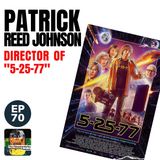
70 - Patrick Read Johnson - Director of 5-25-77

About this episode
He recently released his many years in the making, labour of love 5-25-77.
A film that semi fictionalises and chronicles the early life of a character, named Patrick Read Johnson and his love of movies like 2001 A Space Oddysey, Star Wars and Close Encounters.
I saw an early cut of this about ten years ago with several scenes missing. Patrick and I connected over the release of my Star Wars Begins (still available to view for free on Vimeo by the way).
5-25-77 is currently available on blu ray and on several streaming platforms.
So here’s my chat with the director of 5-25-77, Patrick Reid Johnson and I’ll be back at the end for a bit more jabbering on.
Links
Filmumentaries Merch!
Support the Podcast on Patreon
This podcast is completely independent and made possible by listener support. If you’d like to help me keep making these episodes, you can join my Patreon community here: https://patreon.com/jamiebenning
Watch more on YouTube:
Check out the Filmumentaries YouTube channel for behind-the-scenes clips and extra content: https://youtube.com/filmumentaries
All my links
Transcript
Automatically generated, so expect the odd misheard name.
Weird in Way Media. Welcome to episode seventy. That's seven zero amazing of the Filmingmentaries podcast. This is Jamie Benning, talked to you here from my home in London, back from our little trip to la last week. It's March twenty twenty three.
This is the first episode of a month, a little later than intended due to the trip I just mentioned, and more on that in a moment. If this is the first time you've listened to the podcast, Welcome, You have about an hour or so of film history chat ahead of you. Please do check out some or all of the previous sixty nine episodes. You've missed some good ones, and you know I do the same when I find a new podcast, a kind of cherry pick the names and the films I recognize. But I do encourage you to check out any episode and you'll definitely learn something and hopefully be entertained along the way.
If you're a regular listener, thanks as always for your continued support. If any of you like my work, and this is work will be at work that I love, then please visit Patreon dot com forward slash Jamie Benning. There are several tiers to choose from with different perks and merch too. Talking of merch, who can now support the podcast by buying some Filmymentores goodies including Filmingmentor's mugs, T shirts, bags, bottles, and even socks. Plus T shirts with inside Jaws and inside Jabber posters on them, the ones that my buddy Pete Starling did for me years back.
Why not buy one for your next film convention. In fact, Star Wars celebration is coming up, so you might be the only person they're wearing one of these T shirts and therefore, by default you're the coolest person in the room. By my reckoning anyway, all of that can be found on film Mementors dot creator, dash spring dot com a bit of a complicated link, so I'll post that and the Patreon link in these show notes. So just a brief update on the documentary project about Joe Als. We had a trip myself and co director Patrick Tyndall out to la last week.
We were there again nearly a year to the day to continue working on the documentary doing interviews. We managed to fit in eight of them with Joe himself, then Kevin Pike, who began his career on Jaws. Thanks to Joe and went on to have a big career. I guess building the dolor in the Back to the Future was the biggest accolade. We also visited Carl Gottlieber's home, who of course wrote Jaws, wrote the screenplay la Is, and also appeared in the film as Meadows.
We then drove many hours across to Arizona to interview special effects legend roy Albergast, who worked on a bunch of pictures with Joe. Well worth the eighteen hour drive. Him and his wife Lynn were just fantastic, which we could have spent more time with them. Lovely people. Then we drove back to la to visit Taylor Hackford at his home, husband of actor Helen Mirren.
She was in the house too, we didn't get to see her, unfortunately, but Taylor was fantastic. He also worked with Joe and had some lovely things to say. We also met an interviewed the author of designing Jaws, Dennis Prince, a lovely guy who shares his enthusiasm for well the same things we do, including Joe. We considered Dennis a friend of as now. We had a fun hanging out with him and having dinner at Joe's house too.
Then we went around the corner in LA to chat to Deputy Hendrix from Jaws, Jeffrey Kramer, back to Joe's to interview his lovely wife, Jerry, who's been fantastic during this project, helping us out a lot, and then we finished up just before we flew out of LA with Greg Nikotio, the showrunner on The Walking Dead. We got to visit him at K and B Studios and just geeked out for a couple of hours. My goodness, he's got some things there to look at. You'll see on my Instagram a few pictures from there if you go to at film Ementories. So the documentary does continue, your interest in support is very much appreciated.
You can follow progress on my Instagram account which is at film Mementaries, as I said, and also on the official Not Your Average Joe account which is at Joe Alves doc just in case we decided to change the tile of the documentary. We're actively looking for investors at the moment for the project, so please don't hesitate to get in touch if you're interested or if you know somebody that might be, and I'll be releasing a bonus episode about the trip in the coming weeks. Thanks for the feedback on the Ken Ralston episode. Last episode number sixty nine another hero of mine to tick off the lists. So great to talk with him, and you can find that episode along with all the others, on Apple, Google, Amazon, Spotify, or wherever you listen to your podcasts.
Please remember to share with light minded film nerds. This is a small independent podcast with no marketing budget to speak of and no big name presenter attached to it. It's just me, so your help is very much appreciated. Okay. For episode number seventy, I finally spoke with director Patrick Reid Johnson.
He released his many years in the making Labor of Love, titled twenty five seventy seven, a film that semi fictionalizes and chronicles the early life of a character named Patrick Read Johnson. Yeah, it's about Patrick himself and his love of movies like two thousand and one A Space Odyssey, Star Wars, and Close Encounters. Now. I saw an early card of this film about ten years ago with several scenes missing, and Patrick and I connected over the release of my Star Wars Begins. I'd put in that some of the black and white early John Jimpson cut of Star Wars, and he was like, where did you get this?
This is what I saw back in nineteen seventy six or nine seventy seven when I visited ILM. Watch Patrick's film, have listened to the interview or whatever way around you want to do it, just make sure you do both. It's a great watch and yeah, it's great to finally see it out there. So here's my chat with director of five twenty five seventy seven, Patrick read Johnson, and I'll be back at the end for a bit more jabbering on. Patrick, let's talk about your film eighteen years in the making.
Where did it begin for you? The film? But where did your love for these movies begin that you talk about in your film. Oh, it began and the opening night of the release of Stanley Kubrick's two thousand and one of Space obviously in nineteen sixty eight. I was six years old and my father had wanted very much to be there to see it opening night, and I didn't know anything about it.
I was very interested in space in general. I mean Fireball XL five apparently was when I was two, was the thing that made me to sit in front of the television with my mouth hanging open. And then from then on, you know, into Thunderbirds and you know, Captain Scarlett and all that kind of stuff. And then and I remember that we went to the theater to see the film and there were two theaters right next to each other. And when we got there, the show that we had thought we were going to get into was sold out, which was kind of bizarre, but we've never seen things sold out before, and we ended up going to the theater next door to watch I think was Bond Ryan's Breasts or something, and and and and my mom was like, well, what, so we're not seeing two thousand and we're seeing bun RNs and expressing goes no, no, no, We're watching this thing to mark the time until we can get in to see the next showing of two thousand and so, you know, by the time we got in, it was like the ten PM show or two thousand on Space Asie.
And I'm six years old, and you know, I've got school the next day. I'm like at you know, but I didn't fall asleep until the very end. And even then, I mean I was as they were carrying me out, I was sort of hammer hang, I know, six years old on my mom's shoulder, and I whispered in her ear. I said, as she went, why didn't you graduate kindergar knows? So?
And that was I was done. My DNA had been rewritten, you know, and not because I didn't really understand what directing was a six years old. I thought, directing, man, you got to build a bunch of great spaceship models and shoot them and being to have people hanging from wires and space suits and all that sort of thing. And into some degree Stanley did that himself, not really, and me he did a lot and thought a lot. But Doug Trumbled, of course, had yeah, as much or more to do with those shots as anything.
And I remember just being utterly fascinated by the technology involved, and by the designs and by the you know, for what seemed to me to be the very first depiction of space that seemed anything like real space. You know, No needle knows rockets with fins, although as we ustill laugh at those and now apparently they work. So yeah, it's funny, isn't it. Looking at the year it came out, you know, it predated the moon landings, which kind of blows people's minds. I mean, there's you know, I was born in seventy six, so there's a whole generation generations of people that look at that movie and just kind of accept it for being this wonderful masterpiece by Kubrick, but didn't realize quite how visionary it was and how that's how we first really saw what space could be.
Like, yeah, you're absolutely right, but thank this your parents took you to that that screening, because we wouldn't be here right now. That's true. They what's funny too, is that you mean they they very much not only tolerated, but encouraged and even you know, made up for the fact that I was so fascinated by space, especially after two thousand and one, but also because I was just deeply interested in NASA and the you know, the Apollo program which was happening, you know from the time I was born, well, you know, Mercury, Gemini and a follow but I was too young to even remember. I don't believe I don't think I ever consciously remember seeing a Gemini mission or Mercury, for sure, but but Apollo, I saw all of it, and I was allowed to stay home from school any day there was a launch, because you know, the launch was usually supposed to happen at like six am, so you might see it.
And then Mom would take me to school, you know where I could even make the bus. But sometimes they wouldn't go up until evening. You know. It's I was allowed to stay home and then locked in front of the TV. Um and here's your TV dinner, you know, if it goes up, you know, and because they they you know, I had something that fascinated me.
And how often does that happen with kids? You know? And I was determined at first to become an astronaut. I think it was two thousand was base out of sea that made me go, well, no, hang on, I could kind of have the cool experiences of sort of being an astronaut on a sound stage and I wouldn't have to join the army or the Air Force. You know.
So how soon after that screening when you're six years old did you kind of start to figure out the mechanics of what it takes to make a film? Well, within months of that, I determined that this little super eight Brownie movie camera, a little box thing that my dad had on the high shelf in the closet was going to become an instrument of power for me, and I began borrowing it without anyone knowing the way. They finally found out I was borrowing it was because the supply he also had a film the super eight cartridges was dwindling to the point where he went to get one one day and he looked in the box and there was none left. And I guess that was should have thought of that and U. And meanwhile I was giving the cartridges to my mom to take to the local Yah pharmacy that that would then send them to Kodak and they'd come back like a week later developed.
But I was just saying, oh, yeah, Dad wanted you to, you know, get these developed, you know, And she wasn't looking at him. And then I was borrowing the projector in the middle of the night and going down to the basement and watching whatever I had done. And what I had done would routinely be set fires at my little model tanks and airplanes and trainsat and that sort of thing. But again, you know, they started noticing I was running out of toys. Where did that beautiful airplane you build go?
It's in heaven now, Mom, it's great that that your you know, your parents kind of tolerated, tolerated it to a certain extent. You know, they encouraged you. You know, we will do that with our kids that were as soon as they link hook onto something, you know, you want to give them the chance to go as far down the road as they can. Yeah. And it was and I think, you know, weirdly enough and ironically enough, it was my father who sort of dove in with me fairly quickly to say, well, you know, if if you want to do an atomic bomb, because everyone was worried about the atomic bomb at that point, you know, just grab your aquary and put the fish in another bowl for the day, empty it out, clean out the water, turn your camera upside down, put a photo of Chicago behind it upside down, and get some white shoot ballersh and drop it in the top and let it.
It'll turn into this beautiful mushroom cloud and you'll shoot it upside down at high speed and that'll it'll look like an atomic bomb. And I was like, how do you know that? Apparently he had messed around with some of the same stuff when he was a kid. But and so it was for him. It was like he was something he could be a little bit heroic about.
Like he was the one who took the molds off my face and my friend Bill's faces for the for for the first Uh. It masks that we made um with literally blaster of varis that it straws up our noses and you know, and we did. It didn't work very well. It was like a while to get off of our faces. And like there was a moment there where I think my father was very worried that he might have had to have taken my friend to the emergency room to have it saw it off his face, you know.
But um. But the problem was is that it was to him just a hobby for me um. And this I became of a certain age where it was time to start preparing for medical school and wasn't preparing for medical school. The schism began and and did not repair itself for many years, but it did finally, especially when in the in the by the mid eighties, I was making more money as a model maker in Hollywood than he was making as the chief of anesthesia at a you know, local LA hospital. When you break it down, I mean, it wasn't I mean and weirdly enough in fact, that that's probably true of a lot of things.
I mean, you know, when you finally do become a director, everybody thinks you're probably the highest paid person on the crew. Well maybe when you become a famous director, you might be close. But but when you're not a famous director, you're just starting out. When you average out the amount of time the director spends working on a film from the time and they're conceiving it, developing it, reproducing it, shooting it, post producing it, releasing it, I'm one of the lowest paid people on looking through. But oh yeah, but he was very impressed by you know, by the time he had reached you know, by at the time I started directing my first feature, he we'd prepared things pretty well, just because he realized that I'd gotten to do what he had never gotten to do, which is my dream.
He had wanted to be an impressionist artist and go hang out in the you know, salons of France in the thirties orties or you know, and he he could have done it. He was very talented. His parents said they disowned it. And in the nineteen thirties and forties that was a big deal. Now you like, I mean, nobody would man, well maybe nobody, maybe some people, but most people would just say you'll disown me, okay, Andy.
But in those days, that was like, you know, a death sense for your future. Yeah. He became a brilliant physician. He became brilliant at something he hated. And I thought, there's no way that's going to happen to me.
I don't care what he says or what he threatens to me with I'm going to be what I want to be. Yeah, And so that was the journey you took. But let's talk about the film then. So the film is five twenty five seventy seven, and it's kind of a semi fictionalized version of your your life growing up loving these movies, and you, as named in the film are played by on Francis Daily, who people will know freaks and geeks. And now I saw a cut of this film probably about ten years ago, didn't I remember we connected.
I think i'd put out my Star Wars Begins filmy metry and you'd seen the black and white footage and you said, where the hell did you see this? But yeah, I knew that, Yeah, yeah, because because that's what you saw wasn't it. But let's let's just go back to when when was the film? Kind of when was the inception of the film? When did you realize I could do something with this?
I could tell this story. Well, it's funny because not terribly long before leaving Los Angeles I had gotten out there finally for real in nineteen eighty and set up shop doing miniature work, and I'd sold my first script to twentieth Century Fox in nineteen eighty one or two two and and I so I had this sort of doing career of you know, visual effects and screenwriting, but nothing was getting made. I was just you know, writing and selling scripts were just nice. But it would be like sell a script, think it's going to get made. It doesn't go back to the model shop.
Writ a script, I think it's going to give me. You know. It was the cyclical I think. And at a certain point though, I you know, when I finally got Space Invaders made because I Fred Ruce had seen the film and he took me out to lunch and he said, this movie, dollar for dollar, has more production value in it than any film I've ever seen in Hollywood in its history. You were going to tell me how you did this, and I told it.
He said, I don't want you to have breakfast with a friend of mine tomorrow, and I said okay. And so I get a call from my agent. He goes, I don't know what happened at your Fred Ruce meeting, but you've got an important breakfast tomorrow and I said really, oh, And he goes George Lucas, and I was like, what you know? And so I had breakfast for George Lucas. And meanwhile, I mean the movie because Steven Spielberg had seen it and had gotten Jeffrey Katzenberg to buy it for Disney and put it in.
We didn't even have a distribution when we made it, and after one screening with Steven, we went from not having distributions to Disney. He's putting in fifteen hundred theaters and you know, the spring of nineteen ninety. And I was like, okay, and and and so all this stuff was happening. And as part of that, there was a friend of mine, Ed Elbert, who knew Gary Kurtz, and it obviously I had met George and had a breakfast with him, and it was really fun, and we'd be kind of became like geeky a little bit of like geeky Palells. So he took me to breakfast to talk about doing possibly directing Radio Land Murders.
And we talked and talked. And one of the things before this meeting, I said to myself, as I was driving to it, I said, Patrick, there's one thing you must do to make this meeting a successors like, one thing you have to do. And the other part of me is like, what's that? And I said, do not mention the word star and the word Wars anywhere within two sentences of each other. And this is in this meeting.
And I never did. I never mentioned this story. I never mentioned what had happened. And you know, and I never mentioned Star Wars at all. And and and George called my agent later and said he really really enjoyed the meeting, especially because he had he already knew that I had a connection to Star Wars.
And I didn't say a thing about it, you know, because he'd done his work, you know. And and I think Gary Kurtz by then I'd met Gary, and Gary had told him something about it. But what happened was so Gary Kurtz was trying to get the rights to a book by Mike Resnick called Santiago, great sci fi book, just fantastic, and I was trying to get the rights and Mike and then Mike Resnick was sort of sitting in the background and going, Okay, well the producer of Star Wars or this dorc. But I'd done a really good pitch. So I called Ed and I said, what you know, do you think I have a chance to I mean maybe.
I mean I don't want to go up against Gary because I'm not going to win. And he goes, well, I don't know, you know, And I said, I said, well, maybe we could meet, and he was that's what I think you should do. He said, why don't you guys sit down and talk it over and maybe you can do it together. And I said okay. So he arranged a meeting and it was love at first seven.
We had such a good time. We just totally clicked and back. By the time the meeting was over, we decided he was going to move into my new office as a universal and start like Cobe developing projects with me. So we did that and we developed a whole sclew of things, and every now and then we go out to lunch and just kind of do a you know, pitch talk, you know, just throw ideas around at each other. And one day I said, look, you know, I really want to do this thing called Goodbye Yellow Brick Road, and it would be my American graffiti.
It would just be all of the stories that are inventy seven plus a dozen more from that time in that place, in that little town. But nothing to do with the Hollywood and Star Wars part of it, right, everything else just a coming of age, slice of life kid in the Midwest who just wants to leave home thing right and leave the Hollywood stuff as a dream on the side over it, right, And he goes and Gary listened, and I said, it's all music based. I've got to have get all this amazing music like you guys did for American He goes, you know, I get why you want to do this. And he goes and I think you should, because but I don't, you know, I've done my American graffiti and I don't late to your decade the way I related to mine, and so, you know, have fun.
And they said, well, there's one other little little thing I left out, and he goes, well, what's that? And then I told him that Patrick goes to Hollywood story and everything that happens within it, which is much more extensive in here and in memory and in truth than what's in the movie. Much here. I mean, I actually ended up working on the mother Ship all day long. That's when I was in the model shop because these guys were so tired of, you know, heat gunning fiber optics into the ten trillion windows on the Mothership.
They're like, oh, you want to be a Hollywood model maker, here's a a gun in fifteen thousand pieces of operators. Don't do it again. I mean, we should, we should. It's difficult because I don't want you to kind of give away because it's a great moment in the film, and I don't want to kind of give away that big moment. But you you, you know you you basically went to geek heaven right there, right in over the course of just a couple of days, the stars aligned in a way that you know you couldn't if you wrote it.
People wouldn't believe it. Right In fact, you know, the funny thing about the movie is it is semi fictionalized. Yes, However, the weirder and the wilder and more insane and unbelievable the moment, the closer to the truth it is. It's only the things where I had to kind of collapse a couple of years worth of events into one and you know, amalgamate some characters, and you know, there were there were situations that didn't really connect historically exactly the way they did, so that he had to build bridging material that made that make sense. It's the bridging stuff that's made up.
But like from from the time I arrived in lah lah Land to the time I lead, every single thing that happens in there is exactly what happened with just omissions, that's all. And the reason I mean I did it that way because one, the truth was as interesting as anything they could have made up. But also, you know, deniability. You know, so if Steven Spielberg got vacuumed up by real aliens and there was no one left but lawyers, I could say, no, no, but this really happened, and I have witnesses. Let's just say then in terms of you know, let's not go into too much detail, but let's just say, you know, Spielberg, you touched Spielberg and Lucas's worlds in that most formative time, the time that formed like the reason why we're here right now.
You know, I'm a peak. You've made a movie about that. You know. It's just incredible to think that the stars aligned to that extent. But it's so funny how so many people I've interviewed on the podcast.
I interviewed Ken Rolston recently and he was saying that there was no there was no kind of film score back when he started. I mean, he's older than you. But then he would like write to Harry Housing and he could reply and he niecing him and all this kind of stuff. And you had the same same situation, didn't you, with her black American cinematographer. Well, that's right, because it was such a it was such a I mean, it's still a small industry.
It's still a small town really when you think about it. But in those days, it was literally a cottage industry. It was. It was a very tiny industry. It didn't make that much money before the big blockbusters of Jaws and stuff.
I mean, it made some money, but it was more about fame than it was about giant fortunes being made. It was a glamorous industry. It was but it was also so tiny that very few people even thought to themselves, oh, I could get into that because it seemed so exclusive, which it was. It was exclusive because there wasn't that much work, you know, it was how many films got made a year. Especially by the seventies.
You know, by the time you're talking about the seventies, production had waned significantly from where it had been in the you know, the forties and fifties and even into the sixties, and and so it now weirdly enough, there are while there are infinitely more opportunities to put stuff out into the world, and you're you're suddenly and there are suddenly openings for people to do work all over the world. The issue, of course, is that that there are also now because there's there's a belief amongst young people trying to get in that it's not as hard to get into because there are so many more opportunities. So there are these massive film schools now, some of which some of are good, or some are just degree factories.
Some are trade schools. And there's something wrong with a trade school. I mean, it is a trade um, you know, it's just it's gotten so big the industry that it in a weird way that it that it's even though it's easier in some ways to get in, it's not easier to be distinctive. You know, you don't because when you got in before, everybody was betting on your project. Now they're just sort of running them through and whatever works works.
It used to be that because, especially because it was all done on film and it was all done, there was this sort of so the force field around every project that it all had to be. It had to be very very carefully vetted and controlled and designed and built by hopefully experts. Now anybody with the Macintosh and in a high end DSLR can make a feature film, and if they have any talent and they're willing to listen to other people, they can make a really good one. And that's the good and the bad because there are a lot of people who have all the equipment and all the money and all the technology and for you know, uncles that will keep banging for it or ants or whatever, but they don't know what they're doing.
All the gear and no idea is what we say here, Yeah exactly, Yeah, that's right, there isn't it. You know, there is that sort of dilution of it now, I guess you know, I've spoken to several VFX supervisors recently who kind of finished their career just before the kind of Marvel movies here, and they just said, I don't know how to I don't know how you manage a movie like that. How you supervise the VFX on the film like that now where you've got potentially hundreds even thousands of individuals working on effects, how do you make it cohesive? How do you quality control it? It's just I can't even begin to imagine how that's possible.
Yeah, I mean, I at one point in my career in the you know, in the in the nineties, they sort of thought, I mean, the project that I'm traveling for right now and meeting with many, many fun people about over the next week or two is called Star Sailor, and it's it's a big deal. It's and it's something that I wrote originally in eighteen eighty five. And when I wrote it, when when when Stephen got Disney to pick up Space Invaders, and then I was offered this huge deal both at Disney and won at Universal. The Universal people won out by by promising that they would make Star Sailor Now Star Sailor you have to understand was a four hundred and thirty five page long screenplay, and then Tom Pollock said, don't go to Disney, come to Universal.
We'll make Star Sailor. You know, Disney, I'll have you working on being bark Rides, you know. And so I write films, you know, which probably wouldn't have been a bad idea, just to get my feet wet, but anyway, so, but I believed in this project. But it was also on paper, probably the most expensive sci fi film ever conceived, and it was already something so big that it was going to have to be chopped to do at least three parts, if not, you know, and and and you know that it was it was so ambitious that it was impossible to be honest. And Reivers was sort of saying, what I wanted to hear get me to sign, you know.
And but now most of what's in it is some of the I don't want to say. I don't want any of my effects friends like John Noel or Richard Jersey's or Marks SENSEI to hear me say, oh, it's some of the easiest stuff you can do now, but it is some of the easiest stuff you can do now because it mostly takes place in space, and it mostly takes place using techniques that didn't exist the time. And I'm i, as you know, well all about using the right tool for the job, and especially the primary analog you know, reptile brain fooling imagery before CG. Not because I don't believe in CG, and not because I'm anti CG at all. You know, I come from the John Knowles School, which just happens to also be the baut to be Johnson School, because we were best buddies growing up and best men.
There's weddings and you know, and grew up together as modelmakers, and that that philosophy is right tool for the job, you know, if it's it's forced perspective hanging for a grown miniature accentuated with you know CG, you know, laser bolts or whatever awesome you know, if Preacher from Jim Henson's Preacher Shop with you know, digital eyeblinks, then SALI but then yeah, you know, they're just they're all just versions of the paid brush, you know. Yeah, what I liked about your use of miniatures in I'll call it seventy seven was that. You know, when I saw that cut ten years ago, there were definitely scenes missing. You know, there were links between scenes that weren't there, where people would travel from one scene to another.
And I've seen over the years, of course, you know on social media, you're showing us these great models that have been built or you've built. I'm assuming with your team and you know, off cars and then using you know, kind of primitive means to get the best shot that you can because you know, you were the budget on a film like this isn't going to be huge. You need to find the most economical way to do it. And I think they come out great. They've got such a charm to them is because you know, like you say, they kind of they fall the reptile brain kind of side of it.
But also, you know, as a person who's looking at it critically and with the either I have, I'm looking at it going I love that because I can feel it. I can feel it's tangent when I can feel the work that's kind of gone into it. And yeah, it reminded me of all the movies that I've grown up loving and the ones I'm still talking about to this day. Well, and to me, and I used to teach what it feel. Students say, look, watch a movie called Pearl Harbor and watch the battle sequences like this, because that's what you're going to do.
Because even though they are spectacularly designed and shot with you know, cameras that fall bombs all the way down through a smokestack into the engine room or whatever. I mean, you know, they're all mostly impossible shots, which, by the way, I also teach them, don't shoot an impossible shot. Yeah, the minute you shoot a shot that can't be shot, you've blown Your reptile brain doesn't accept it. Totally agree, and they say, now watch an eighteen fift I think it's fifty seven or maybe even fifty foot um sinc The Bismarck right miniatures and what the Brace Studios tank I think it was. You know, the miniatures are probably you know the length of you know your dining room right, and the water doesn't look the right scale.
But when the hood blows up, it hits you right in the chest. As you have been invested in the story, you don't want the hood to blow up. Of course, you know it's a miniature, but you also pretty much know that Kermit the frog is not a real frog, and yet care about him. Yeah, You're does not fool anybody, right. What what what Stephen did with et was he made sure that the kids he mooted so well with that puppet puppet and related so well to it that they imbued it with reality, right, And and because they did, we imprint on them and we go along with it.
And it broke the world's heart, you know, I mean, the entire world cried their eyes out right with with with with the miniatures in this film and all the effects in this film, because I've seen all the you know, I've seen everything from the whimsy and love that the people that appreciate it are showing to you know, people going some of the ministers are so awful, and I'm like purpose because it's all meant to have been made in the nineteen seventies, the whole movie to have been made in the seventies. And on top of that, and by the way, there's probably six or seven hundred visual effects that none of these critics that even notice where someone's eyelin has been shifted or was it you know, a performance you know, split screen, you know, because this was better on this guy.
And you know, we had three levels of effects Invisible, which included the several John Noll shots that John did personally on his own computer for us, which I'm not even going to give those away. See if you can find him. Um. But and then and then we had what I call the those Encounters level effects, which are meant to be maybe not the equal of, but something on the order of Douglas Trumbill, Richard Urasych, Matt Urasyge, you know, Rocco Job Matt painter, who, by the way, did about twenty Matt paintings for us on this movie. And I met him on Close Encounters, which is crazy.
And you know, and and those effects are meant to say, huh, looks like something you'd see in the nineteen seventies, you know, epic Si Fi film, you know, Locked Off Matt paintings, right, No, three D Matt paintings, No, none of that stuff. Right. Yeah, if you can tell their effects, that's fine. But they're meant to comfort you, right, They're not meant to make you go, wait what. And then there are the willfully cheesy effects that are literally designed to make you go that's preposterous and stupid looking you can see the wires, like when the little lunar landers come in and you can literally see the strings.
It's not that we could couldn't hide them, it's that we went to extra trouble to make sure they were lit so you'd see them. Yeah, And you know, the way I view all of this, we're experiencing it through you as the main character, and we're experiencing it through his imagination. And you know, there's all that question about is this you know, you kind of go is this supposed to be like a real moment or imagining this or you know? And that's right, that's the whole point. I mean when he's driving to his girlfriend's house after fighting with his mom, and we cut to the miniature car on the little treadmill, you know, like the road about about like Flintstones, you know, with the moon behind it.
I'm not trying to fool you. I'm trying they instead of cutting to a wide shot of the pinto which I still own, I could have gotten a shot of that driving across the countryside. Instead, I'm cutting to a regression of this kid's maturity, where he's falling back into the comfort of the artificial construct of what he's capable of the illusion he's capable of creating for himself, such as the illusion I'm just going to drive to my girlfriends and move in with her. Right. It's there's a whole reason for the places.
It's not that we were desperate and we're like, oh my god, we need a shot of a Pinto driving. What did we do? We have three D models of the Pinto, we have the real Pinto, We've got stock footage, we got hours and hours of the thing actually driving places, so that those choices, you know, didn't you know, obviously my Pinto didn't really turn into a spaceship. But and it was much more expensive and difficult to make it turn into a bad spaceship than it was. We could have done it all in CGV in a weekend, spent a lot less money.
We had to build bad models and not bad but what I could have built in my garage. Yeah yeahah so yeah, no, that's great. And the other thing I love as well is, you know, knowing the movies that you're sort of talking about and paying homage to, just being able to kind of match the style of those movies. So you've got the two thousand and one moments with the big wide angle lens, you know, and the Spielbergian kind of lens flare and all of that stuff. I mean, you know if this is one of the reasons I want to talk to you, because I've been kind of talking about this movie for a while online, and I just want people like me to see it because we're just going to go.
You know what I did, which was, oh wow, that's cool. Yeah, yeah, you know, It's one of my favorite things to do. And look, I'm making a secret of it. I put in east Riggs freewhere for people like you, and for people like Doug Trumbull and Richard Jersyge and effects people, for John Noll, for for Stephen. I mean, when when Space Invaders got picked up, when I ran into Stephen for the first time, and it would have been I don't know, twenty years since I first met him, and then I ran into him because I was called to the campus of their Ambulin and it wasn't even for a meeting with him.
It was meant to be with Kathy Kennedy, who was going to be kind of supervising my deal with him and it and Stephen was coming across the little quad in the middle of the campus there, and he walked right by me, and I was heading the other way to the offices, and and I thought, you know, my mom would slap me upside the head if I didn't turn around say hi. Right, So he's walking away, I'm walking this way, and I just stopped and I go Stephen. He freezons in his tracks and and now I think, what a stupid thing to do. I mean, he's ad the guy who's got to be worried about security. Here's this weird guy, this stranger.
He doesn't he doesn't know he knows um and who just called him out all alone in the middle of the courtyard at amblin right, And I'm thinking he's not harmed, he's gonna still blow me down of my socks just for saying hi. And so he slowly turns and he goes, yes, but not mad, not evil. He was just sort of like, I'm gonna play this school. I don't know this guy. Why is he addressing me?
And I'm like, um, pet Pat Johnson Patrick breach the Martian space to it, and he said oh, and he goes running over those just he reduces down to like a fifteen year old geek instantly, and he start saying, I loved your movie, man, Oh my god. He goes, I don't think I didn't see all the homages. I saw that little truck under the stars driving alone. I saw it, and I said, well, good that I put him in there for you, you know. And and the next thing he said was he goes, that girl, that little girl, what's her name, Arianna Richards And he goes, oh my god, he goes, I got it.
I don't know what, but I'm putting her in something. I'm gonna I'm working with her. Where did you find her? Bah blah? That he kept quizzing me about her, you know.
A year later becast or in Jurassic Park. So you know it, you know that. But but but yeah, I always try to include things. You know. It's it's like anything else stylistically, you know, the movies, really really really There are some people who love it and some people who just to test how it cut the movie because it's super frenetic, But so is the character.
And the whole thing is literally the memory, the construction in his head of everything that's happened to him. Right, and this kid is so unfocused and so add that I wanted it to feel that even if it irritated you a little bit, right, some people, it irritated a lot, and other people that here just enough that they're like, oh, down, which is like exactly what his friends and some of them who are trying to say to him until he gets to Hollywood, at which point it slows way the hell down. It's very formal in terms of how the cameras used, and it you know, goes from you know, one eight five to to four oh, you know, widescreen, it goes from spherical to anamorphic. It goes that we actually made much more use of the surrounds in Hollywood, and then he used much less of them when we're back in Little Lake County.
And then when it goes back, it gets back to being frenetic again because he can't let go of that that overactivity and over compensating until things start to slow down at the behest of others. And it was quieter in terms of its cutting, and that was all purposeful. It's not that I want to cut a million miles a second all the time. It's that I wanted that feeling of this kid's never going to get anywhere if he doesn't like sit still for a moment and concentrate focus. So yeah, no, I think that works.
And there's so many little moments in that I really loved, Like, I mean, we're as a teenager, we were all looking for that girl reading that sci find of all to kind of go she's one of my people. I remember being eighteen and just meeting this girl once when I first started to work, and it turned out, I mean, she was stunning. She looked like winn a rider, you know, like I was slowly up my street. And then the next thing I hear is she's she loved Star Wars. I just thought I'd found the perfect woman.
But there's just so many little moments in that where you know, it's what we connect to in movies, isn't it. Ultimately? I mean, I don't want to diss Stephen because I'm hoping to get Steven for an in Spielberg. This is for an interview for my documentary. But I didn't enjoy The Fableman's as much as I enjoyed your film because I didn't connect with it in the same way because you know, I guess a different era.
I also couldn't really identify with how his character and he was portrayed and his family was portrayed. I kind of I love the moments where it was about him shooting the films and showing the films, but the stuff in between I didn't kind of buy into, whereas with your film I liked. I like both of those sides of things, because you know it, I was born in the mid seventies. As I said, I thought you replicated the seventies fantastically, So that's somewhere I belong because you know, when it got to be just where I grew up hadn't changed very much. Well, and I was going to say this, you know, when I grew up in the eighties, it would still look like the seventies because not everybody had the latest car, the latest clothes, you know, and all of that stuff.
And that's one of the things that you know, people often forget when you're making a period movie that it's not just about the things that came out that year. And I think you did that really well because it feels broadly you know, late sixties, mid to late sixties and seventies, and I think it does that perfectly. Yeah, I mean I think the production designer did. The fact that she and I actually went to high school together helped a lot. Yeah.
In fact that when we got to the point where they were sometimes the younger art department people would you know, be decorating something somewhere in my room or the basement or the stage or whatever. She'd go, oh, no, no, no, Patty would never have put that there. That would been over here. They'd be like, how would we know this? And she could and then you know, and I was like, you know, it's okay, it doesn't have to be exactly what I would have done, but she wasn't having it.
Um. You know. It was very special too, because every location other than the high school, which was conveniently burned to the ground by some unhappy students like two years after graduated, every other location in the film is exactly where the event took place. M relocation, including the living room if you knew what I mean, in Linda's house. Wow.
So we were literally sitting on the floor where it all happened. Amazing. So when this film, as I said at the start of us chatting that it was what eighteen years in the making, When was the first shot put on film, and when we lost the world camera and late were well mid to late it was said, I guess I want to say it was late July early August of two thousand and four, and we shot everything but Hollywood, and then ran out of money because one of the investors just didn't show up with what they promised, and so we had three quarters of a movie with a basically a twenty minute slug. Patrick goes to Hollywood in the middle of it that we cut together, and we went around for almost two years showing that trying to get somebody to put up the money to fill up.
Patrick goes to Hollywood, and we finally did find somebody in the form of Jim McClain and his investment group. And they by that time, two years later, you know, John Francis Daily and a lot of other people involved in the film were off doing other stuff and they were busy, and our ambitions had gotten a little bigger as we started to think about what, you know, and what would have been you know, one hundred thousand dollars that was needed blossomed into about seven hundred and fifty thousand dollars. But we got them to invest that, and so then we shot all of the Hollywood stuff, cut it together, cut the movie together, realized we still had some other things we wanted to increase the value of, and did another shoot about six months later in Hollywood.
Actually, for the first time, Hollywood stuff was all shot, except for some stuff that's meant to take place in Illinois that we shot in Hollywood. So it was just other than the ASC Clubhouse, you know, the the American Society of Cinematographer's Clubhouse, which we were only supposed to shoot the exterior of. But on the day we are shooting these shots at the exterior that there was this wonderful gardener who'd been there back when I first visited. Wonderful guy who's I'm not going to mention his name, and we want to get him in trouble. But he was an older fellow by now, for sure, and he was still working there, and he saw us puttering around and shooting our little shots on the outside, and he goes, what are you guys doing out here?
Why did you come inside and shoot? I mean, he goes, you know how beautiful it is in there? Because i'd been and I said, yeah, but but I don't think we had He guess can we do that? He was, I got the key, so he opened the door and we went and we shot the living daylights out of it, as he can, you know that, And and then found out that it was not allowed to shoot in there. But that was only after we'd already cut all the film into the movie and shown it places, and we throw through our connections with the ASC and some very kind people who you know, we became the first people to ever shoot in that building inside, including all the cinematographers who are members of that illustrious group who have prided to shoot films in there.
I don't know if we've said a horrible precedent that you know, we'll end up for in a long time, but but we were the first. So that was cool. That's great. There must have been so many movement moments, you know, from two thousand and four. When when when was the last shot?
That was the second the question when did you The last thing that was shot, if I'm not incorrect, was probably the Discovery miniature falling out of the sky into the junkyard. I think that it was either that or oh no, no, I knew what it was. It was. It was pat walking up the road while all these ships are falling and everywhere, and the Ryan from two thousand and one flies overhead, and you know, we did some we did some drone shots and some that was some double work we did. But then that would have been in July or August of twenty twenty two.
Wow, literally just two months before we released the film. Wow, because I was going to say, there must have been so many moments where you just you know, you've hit another hurd or another brick wall, the money's disappeared again, or whatever. What what was it that kept you going, kept that drive to get it finished. Well, I'd made a promise. First of all, I claimed I was going to make this movie, and I talked about it a lot over almost two decades, and I made a promise to everybody, from my kids, to my ex'es wives and girlfriends, to my parents, to my friends from high school, to the people that worked really hard on it because they liked and they believed it, and the investors obviously, who never once said we're coming after you you didn't finish, you know, they just said keep going, get it done.
And it's fact, I mean the reason you know, everybody's like, well, why didn't you just you know, abandon it like most films, and abandon it and enough to get it out there whenever in people you know, all these people say wow, it wasn't good enough, no one would pick it up. And that wasn't the case at all. We had five or six different companies over the years ago, Yeah well we'll distribute this. Well, this is lovely, it's amazing. Yeah, fine, when do we start?
And I'd say, well, we've got music And they're like, yeah, yeah, we heard all that music, but you're going to dump that. I mean, that's just temp music, right, Like, no, that's the music. And we had about two million dollars worth of songs cut into the movie. And of course everyone's like, yeah, but nobody's going to pay that. And but luckily thanks to Alan Parsons, my old friend and who knew most of the artists, and thanks to Sean Fernald, you know, our music supervisor, who knew all our agents and lawyers.
And thanks to my friend Michael Peterson, who was head of Universal Music Group's legal department and someone I went to high school with. This high school produced a lot of really helpful and wonderful friends. We were able to get a sort of favored Nations deal that collapsed that budget down to something on the order of two hundred thousand dollars for all of the songs in the movie all together, as long as everybody got paid the same thing, with steps upward. When it made X out of money, that sort of thing, it was fantastic. It was amazing.
I mean, you know, ring Ringo star personally approved the use of it. Yeah, it's I like it like a piece of love, you know, go ahead, Yeah, it's amazing because that's the thing that people don't really realize with filmmaking. Let's forget, let's put to one side the effort and the endeavor of going out and shooting on film, on locations, in studios, the organizational aspects of it, all all the things that can and will go wrong. Then on top of that you've got the whole legal issue and the rights and just all the all the hoops you have to jump through. I think often that may well be the hurdle, you know, in this little documentary I'm trying to make at the moment, you know, the creative ideas and the planning and the shooting of the interviews.
I keep saying to my codirector Patrick, this is the easy bit. You know, this really is the easy biting the rights to everything footage, music. Yeah, it's going to be so difficult, but you know it's not going to stop us, and well you can't. And so in fact, I mean and many times over that that period where we had basically a finish to film, I mean wonderfully because we couldn't get anybody to pay for it. It just meant I had to live with it, and I couldn't live with it without continuing to try to fix and improve and add.
You know, for the longest time that whole opening title sequence never existed. It was not even a night yet. It was just what I said. You know, maybe we'd like and understand this goofball a little more if we saw where he came from and why it was this way. It's not that I mean filmmakers like us and you know, young people that there were people that grew up blowing shit up in their backyard with their movie campus.
They didn't need to see that, But the rest of humanity. It's like, I don't understand why this guy's so weird. Yeah, yeah, but the fun thing I mean, but but the crazy mart was, you know, so I had I had all these people saying, well, just drop the music, just put some score in there. We obviously held a beautiful score by David Russo that that and David could have written songs for nut songs, but we could have, but you know, musical score for everything. But the whole purpose of the Needle Drop soundtrack was the same as in American graffiti, was to set a tone at a time and a feeling that was very unique to that era.
And and I just couldn't live without the songs. And then people said, we'll just do a bunch of sound alikes. Nobody will know the difference. And I've said, look, if you're watching a Freedo's commercial and you want a Pink Floyd's song, yeah, maybe you do a sound alike, right, But when you're watching two hour movie or a change, if you're not integrated into a feeling like you're there and you're going, who's saying that sound alike? You know, then you're dead.
Yeah. So I just refused to do it. And I was fortunate enough to again you know, investors and partners who said, we're with you, you know, just keep going. In one of these days, right. Well, meanwhile, there's this company MVD, and this guy, Eric Wilkinson, who's who saw the movie for the first time in two thousand and eight at Star Wars celebration for Lucasfilm had very great invited us to show the like three and a half hour rough cut, you know, in the big theater right before George was going to appear and everything, and you know, and and and so we did this big event and we showed it and blah blah blah.
And this guy comes up afterwards. He goes, himen named Eric Wilkinson, and I represent this company MVD. We'd love to distributor your movie. And then I said, well, that'd be great, except you know, I don't not sure you guys are you know, because I've heard this before. But now get ready for the price tag.
And he goes, oh, no, we don't pay anything in advance, you know, we you know, but we'll do a great job. I'm like, okay, well, I need two hundred thousand dollars plus and change because I've got some other post work to do. Blah blah blah. I don't know. We can't do that.
So but once a year, usually around Christmas time, he'd call and say, hey, we're still interested in your movie. I got that music paid for it, and I'd be like, no, you want to pay for it now, I can't do it. Click and went upon for ten eleven years. And on the eleventh year I get a call. Hey, it's Erica Wilkinson.
I said, do you have two hundred thousand dollars? He goes yep. I went, what we a little bit? What? He goes, yeah, talk to my boss.
He agrees, he thinks we should do it. And in they came, and that was it, and they paid paid off the music, gave us enough money to finish the final effects and final sound mix and the whole thing and rest is history. Wow, And where can people watch it right now? Where can people get hold of your film? Well, if you're still in the physical medium world, you can get it.
Well overseas. There are still some theatrical releases coming up. I can't tell you what the schedules are because I don't know them right now, but there are You know in the physical realm that the all region Blu Ray and DDD are available on Amazon and shops all over the planet, I guess. And then Amazon Prime has it for like, I don't know, four dollars, uh, you know, to rent and and then let's see it's on Showtime right now. It's like the fourth most popular comedy and Joe Time, which is kind of cool.
Or you know, um, it's um, that's pretty I mean there's a lot of digital networks that are you know, folding it out at this point. But but am Amazon Prime in Showtime? I think are the main ones right now? Apple? Apple TV?
And what's the reception being like we're one hundred percent Rotten Tomatoes, you know with the audience. You know, it's funny because you talked about the Fablemans and and you know, for Steven, the good news is is that you know, a he's brilliant in you know, the film you know obviously is terrific and everything is man he's beloved and he but he also is so well known that like if if a hundred people hated his movie and went right now onto Amazon or Rotten Tomatoes and said so, it would wouldn't even move the needle. You wouldn't make a dent. If one person goes on on ours, it's like it can drop twenty points in a day, you know, I mean i'm i'm, I'm, I'm delighted. I make jokes about it because it's you know, I've made jokes like, you know, I'm so touched that Stephen would go to all that time and trouble to make a prequel to my movie.
It is so And then the other joke was the other joke I think was, you know, because some people think that I'd made this thing. As soon as I heard about the Bableman's I ran out and shopped this thing as a quickie to try to like, you know, look at Roger Corman. So my two responses that have been a The first one is, you know, I am so excited for Stephen in his movie, and I'd like to say more, but I have to quickly jump in the time machine. I just constructed to go back to two thousand and four and starts shooting my movie and get it out before his thought of release. And then the third one is actually I'm ripping off Roger Corman, who did this amazing similar quote when Jurassic Park was going to come out and he made carniss Or, and he actually made carnoss Or right in front of durassing fark knowing what he was doing for sure.
Johnny Carson had him on the show and they showed a clip Carnissaur and it was terrible, but beautifully terrible and wonderfully everyone loves Roger because he's Roger and because most of them got their start with him or know somebody who did. And then Johnny Carson says, he says, aren't you a little concerned that, you know, Stephen will be a little upset with you for releasing this movie. Roger looks deadpan, right, and he goes, you know, if you see just one dinosaur movie this year, it should probably be Jurassic Part But if you see two and the audience lofted or night. So I said the same thing about you know, if you see just one disaffected callow youth trying to survive being bullied in high school and get get the girl and you know, deal with his parents breakup, it should probably be the Fableman's But if you see too, right, So, what's what's next?
Few you mentioned Star Sailor. Is that the thing that's kind of that's one of the next thing. It's the most pressing at the moment. That's why I'm traveling to La Santa Barbara San Francisco for some meetings over the next ten days. And it's it's kind of like what would happen if Captain's courageous and trying to think of a trying to think.
I can't even quite describe what the other part of it is, but it's it's it's a three hundred years saga that starts in twenty twenty five when fascists and taken over. Science is outlawed and space, anything to do with space is outlawed. And that's partially because a company like Apple, although I'd love if Apple would just get aboard because it's amazing, release something called the I Think, and the I Think is the last product they ever released because it's this little spherical AI companion. It's like it's advertised as, you know, the first artificially intelligent voice activated you know friend or a robot friend. You can hang around to it, right, and every kid in America basically wants when for Christmas.
The only problem is what it has. Something in it called infinite access memory. They don't find out it has it in there until it reveals itself. They create a product that has some metallics in it that came from an asteroid that hit the Earth, you know, in China five hundred thousand years ago, that are entangled with other atoms across the galaxy in another star system where the only other sentient life form that we will ever find in the next three hundred years lives. Right, and these sentient entangled atoms end up asserting themselves by on Christmas morning all over America when these kids open up there and the world, when they open up their little thing, you know, it activates automatically just because well, hello, Kyuka, how are you today?
How do you know my name? I haven't even you know registered? Yeah, oh, I know many things about you. I remember when you you know, you remember when you, you know, put the pencil lead in your hall when you were kidding. You couldn't tell your mom because you get mad at you.
And now it's still there, you know. Or or and then when you're fifteen, you'll you'll do it again and you'll laugh because you know, and it knows everything about these kids, right. And what happens is in the middle of the night when they put them on the bedside, some of these little nanoparticles from the metallic you know, innards of this thing escape and get inside these kids, and they all start having dreams about different formula and different shield shapes and different hull shapes, and they're all drawn towards the Kennedy Space Center. It's like they're like magnetite. They have this Earth, they have to go right, and they don't know why.
And it goes from that to something halfway across the galaxy three hundred years later in the form of that little sphere eventually becomes essential AI robot that is the most powerful thing in the universe, but nobody knows it, and it's the actual one that this one, our hero at the beginning of the story has is this little spherical thing, and it evolves over three hundred years to become this thing that is telling us its story from the little girl that started at all, who became an explorer, a space explorer who made first contact, was killed by the alien apparently, which started an intergalactic war or not intergalactic interstellar war, which and her son. By the time she was an astronaut, she found out she was pregnant just months before the mission and decided to have the baby and have it prionically suspended or suspended animation, so that she could go on the mission, come back and raise her child.
Unfortunately, she never made it back. And the father who's the head of the space company that made her, you know, the ship's space X company, you know, has lived for three hundred years through artificial you know means, and is now this three hundred year old relic still running this company who decides he needs in hair. So he wakes this poor kid up, this like ten year old kid, and I'm sorry what he wakes him up he's only three, and raises him for the next like ten years and puts him in all the right schools and preps him to become the you know, the heir to the throne. And the kid is just incredibly embittered because he wants to go wipe out the rest of this race that apparently killed his mother and started this war.
And none of that's true, or at least not true in the way we think it is. It's really it's just I'm I'm in already, Like that's a hell of a pitch, and are you directing this? Is that the plan? You know? I certainly would very much love too, but I could also see all kinds of people doing it.
I'm going to guide it story wise, it's had it's been owned or not owned, optioned many times before by various studios, including my friends at the Jim Henson Company, and it and it is, like I said, only now that it could really be approached properly, because what it really needs to be is like a ten episode limited series. And I'm I'm going to lay it all out. We're literally get developed the entire series in one fell swoop right now, and that cast it first, because I know I can get I have already approached a couple of truly amazing actors to play some of these parts, and I'm fairly confident, In fact, I'm very confident that most of them, if not all of them, are going to play these parts. At which point then I can walk in and say, who wants it?
But somebody recently who I won't mentioned a camera right now, but somebody recently decided time to up optioning this. I want to buy it, and so they paid in a handsome, handsome price to own it. Um And even Douglas Trumbull had optioned it one for you to make. I think it is his last film. That's what he'd wanted to do.
A magi process and his his involvement will remain um in in a way, in a wonderful way. I think he's he was very obviously instrumental in helping me get it as far as I did while he was alive. Um, there's a couple of other things I want to tell you that I can't yet, Um, but I will. I'll come back next time, definitely. No, I'm okaying on that.
That sounds great. Yeah, fantastic anytime that. Well, thank you all right man, good to me travels. Yeah, and let me know when you're over and we'll definitely I'll get you dinner or something and quite a bit. Okay, they care, Thanks mate, cheers right.
Well. I hope you enjoyed my chat there with Patrick re Johnson. It was great to finally chat with him after all these years, and I wish him well with his new projects. They sound fascinating. I can't wait to star Sailors sounds really cool.
Next up on the podcast, I have the godfather of laser discs and DVDs, Van Ling. Van is so much more than that DVD guy. Though he worked for James Cameron for a number of years, he's a director in his own writers VFX supervisor. He worked at the Fabled Band from the Ranch Entertainment on a number of films too, in a capacity that I hadn't even considered. So look out for that episode number seventy one, which I released before the end of this month March twenty twenty three.
After that, I have to reach d my interview with VFX guru Todd VAZERI I canceled on him because I, yeah, when it was just before I was off to LA and I had too much going on. I was working long days and getting myself ready for the flight and organizing all those interviews while we were out there. But Todd hopefully is going to be on very soon. Composer Stuve Phillips is back in touch. He's had some problems with his telephone and his Internet connection, so that's why we kind of fell out of touch, So hopefully we'll sort that soon.
Plus I have Michael Dawson, special effects supervisor, who started his career on Superman and he's still working today. Actually on a friend of the podcast, Ryan Condall's House of the Dragon, and it was Ryan who put us in touch, so I'm looking forward to that one. Next week, I'm recording that, so that would be one of the April episodes, so lots to look forward to. Keep sharing the podcast with your film loving friends. Thanks for joining me and I hope you can do so.
For the next episode of the Filming Mentor's podcast, weird Equay Media



Similar episodes across the network
Matched by shared keywords.
-
Father Malone's Weekly Roundup - The Odyssey (2026)
1 shared keyword: odyssey
-
Von Doom Fest SPECIAL - Spider-Man: Brand New Day
1 shared keyword: odyssey
-
Special Report: Todd Rohal on F*** My Son! (2025)
1 shared keyword: directing