
Season 1 · Episode 69
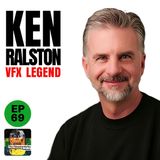
69 - Ken Ralston - VFX Legend - Star Wars, Star Trek, BTTF

About this episode
Ken started on VFX in advertising, then in 1976 he was employed to work on a little film called Star Wars. He remained at ILM for 20 years having worked on Star Wars, Star Trek, Dragon Slayer, Back to the Future, I mean the list is huge. He then went on to work as Visual Effect Supervisor and Creative Head at Sony Pictures Imageworks. He’s won five academy awards during his career.
If you know who Ken is, you’ll love this conversation. If you don’t know who Ken is, firstly WHY? But secondly, you’ll definitely know his work.
He of course recently featured in the Disney+ Lawrence Kasdan documentary series Light and Magic. But as ever I am keen to dig a little deeper. I hope you enjoy our conversation.
Filmumentaries Merch!
Support the Podcast on Patreon
This podcast is completely independent and made possible by listener support. If you’d like to help me keep making these episodes, you can join my Patreon community here: https://patreon.com/jamiebenning
Watch more on YouTube:
Check out the Filmumentaries YouTube channel for behind-the-scenes clips and extra content: https://youtube.com/filmumentaries
All my links
Transcript
Automatically generated, so expect the odd misheard name.
Weird in a way. Media. Welcome to episode sixty nine of the Film Momentari's podcast. This is Jamie Benning talking to you here from my little home office here in London. It's still February twenty twenty three, just about.
This is the second episode of the month. If this is the first time you've listened to the podcast, welcome, You have about an hour or so of film history chat ahead of you. Relax chat. I don't like I'm not a fan of shouty arguably podcasts, so I make this kind of as an antidote to that. Please do check out some of the sixty eight episodes that came before this one, or all of them if you wish you've missed some good ones.
I've enjoyed all of them. But I'm aware that you might like to cherry pick the names of the people you know and the films you like first. But I do encourage you to check out any of the episodes out and I'm pretty sure you'll learn something new. If you are a regular listener, you know the law of the podcast. Thanks as always for your continued support, and if you do like my work and this is work, then please visit Patreon dot com forward slash Jamie Benning.
There are several tiers to choose from with different perks along the way. You can now also support the podcast by buying some film me entries merch including film Mementry's logo, mugs, bag bottles, t shirts and even socks, and also T shirts with inside Jabber and inside Jews posters on them, the ones that my good buddy Pete Starling creative for me way back when. Why not buy one for your next film convention. You might be the only one wearing one of these T shirts there, and by default you'll be the coolest person in the room. Anyway or full of that can be found at film youmentoriest creator dash spring dot com.
It's quite a long link, so I'll post the links to the merch and the Patreon in the show notes too. Thanks for the feedback on the how Hicle episode last episode. He was great to chat to and you can find that episode along with all of the others, on Apple, Google, Amazon's Spotify, or wherever you listen to podcasts. Please remember to share with like minded film nerds. This is a small, independent podcast that is just me, my laptop and a cheap mic no marketing budget and no big name presenter attached to it.
So your help is very much appreciated in getting the word out there. The best way to do that is to review it on Apple Podcast, because apparently the more reviews you get, the higher they'll put you in their ranking on their website, in terms of how high up you appear on their page. When I first started out, I've got some lovely reviews and I was right near the top and getting actually more listeners than I do now. I'd love my listeners, Don't get me wrong. You're a great bunch, and it's great to interact with so many committed listeners.
But I would be great if we could get this out there two more people, Okay, So for this episode number sixty nine, I spoke with Im and Sony Image Picture Works Legend Ken Ralston Ken started on VFX in advertising and then in nineteen seventy six who was employed to work on a little film called Star Wars, and he remained at ILM for twenty years, having worked on Star Wars, Star Trek, Dragon Slayer, Back to the Future, Forrest Gump, Chimanji. I mean, the list is huge. You can find it on IMDb, He then went on to work as a visual effects supervisor and creative head at Sony Picture Image Works. He's won five Academy Awards during his career and I got to have a chat with him. If you don't know who Ken is, firstly why, But secondly you'll definitely in other films he's worked on, as you can tell from that list.
And if you do know Ken, you'll love this conversation. He recently, of course, featured in the Disney plus Lawrence Kasden directed documentary series Light and Magic. But as ever, I'm keen to talk to these people a little bit deeper, you know, kennon nice boat for just over an hour, So without further ado, here's my conversation with the VFX legend Ken Ralston, and I'll be back at the end for a bim on ja ring on Dennis Murin when I interviewed him. And also, I've heard Steven Spielberg and so many others of your generations say that they became obsessed with movie making after a particular visit to the cinema or a particular movie that they saw as a kid. What was that movie?
If you can well it, it must have been because I've always thought the same thing, which was The Seventh Boy just sindbad Ray Harry Housen's film. Of course he didn't direct it, but no one even knows these directors. It's always a Ray Harry Housing. And I was very young. I think it was like at a Saturday mattinee or something here in La where I was growing up, went down and I don't know what the double Bill was, probably some horrible thing, but that it came up and I did know what I was watching.
You know. I just had never seen anything like it, and it seems so real and and it just never obviously never left me. I just was obsessed with it. Yeah, it's funny, isn't it. For me?
That movie was Stars, of course, you know, I'm for my forty seven this year. I was only one when Stars came out, But you know, it was those movies, thank you very much. It was those movies. You know. I was surrounded by those movies by the time I was three or four.
When Empire came out, that was kind of my world, you know. But do you look back and sort of see your parents as supportive because I know we saw in Light and Magic we call some of those eight millimeter films, and thank goodness freight millimeter existing, otherwise we wouldn't be here now, right, That's right. But it's so important to have the kind of the backing of your parents, whatever your hobby is in your case, wanting to kind of replicate your your heroes. I guess I give them all the credit in the world for me having a career doing what I'm doing and what they put up with. It was many years later, of course, when I started to think about, oh my god, that what were they really thinking and not telling me where They've got this kid who's in this garage animating clay blobs and obsessed with this kind of trying to learn what all that world was about.
I had a a little eight millimeter Bolex camera which was a great little camera that they helped me get and it's like the one film I had done with a friend of mine, Glenn Anderson, was The Bounds of Imagination, which I believe there's a piece of in the ILM doc and there's one of the scenes which I'm sure they didn't use, but it's a psycho. We were just trying to cover a lot of different sort of genres in this attempt to do anything. I mean, we were like fourteen years old and we had a like a maniac on the loose scene and it was like chopping stuff up. We had blood flying in my folks garage. The wall was staying forever with like red food coloring and I can't And then I never heard a peep about it.
So it was great. I mean, they were fantastic. I think sometimes I like to pretend my parents weren't involved in you know, what I would become. But you know, when I look back, they bought me a camcorder when I was in my teens. I was into cars.
My dad was into his cars, and I work in motorsport TV. Now, I mean, it can fit more obvious. Did your parents come from any background that was interested in film or any ab so lutnant? Not. My folks had no connection to that world whatsoever.
Even more horrified, Yeah, what did they do? Your parents? Well, like, my dad was the president of like a foundry basically that would make parts for the air line industry and helicopters, like Bell Labs, things like that. My mom was, you know, housewife. Yeah, but then I suppose the ingenuity of an engineer somebody that's working, you know, with parts for aeroplanes, and also the problem solving you have to do every day as a housewife.
I mean, I'm sure that all kind of you know, we kind of soaked that all up as a like a sponge. Don't because that's what you guys do, your problem solvers, ultimately problem solbers. And also when you're doing something like what I was doing to have port like that and not having anything really keeping you from moving it just trying the most insane things, trying to learn because believe me, there was no information what I was doing. Yeah, hardly at all except in Famous Monsters of Filmland magazines like that that had very little information but photos of things that intrigued the hell out of me and got me excited about all the possibilities of that hands on creation of these worlds, you know, and it really appealed to me obviously, And yeah, thank goodness for that support, or I would be probably who knows what I'd be doing now.
I don't want to say it an occupation that will make someone pissed off of it. Let's leave it there. I just disavoid working, like look at looking in those magazines like Famous Monsters of Filmlander Forrest j Ackerman. I mean, these these people are kind of your mentors by proxy in a way. You might not have met them at that point, but they become your mentors because I'm imagining that other than the friend you mentioned, just a moment a guy.
There weren't many kids of your age at school doing this stuff. Nobody, and there was. And I give Forrest Jay Ackerman a lot of credit too, because when I was in how old was I I must have been fourteen, Michigan Somewhere in that world. I had wrote a very i'm sure stupidly awkward letter to him because I just didn't know how to connect with anything in this world. And he answered me back and actually invited me and the friend of mine, Glenn, to visit his place, the Ackermansion.
I didn't know what I was in for. And what happened then was we showed up. My folks drove us up there. I don't know what they were seeing about this guy in this freezy house. And first of all, we were mesmerized by all the props and the artwork, and four he had the most amazing collection of the old King Kong models and things.
I was going nuts about At the same time, he had invited a couple of people he knew, John Burg and Bill Hedge, who were working at Cascade Pictures of California, basically doing visual effects for commercials. And that connection just kept building. And Glenn and I were making that movie Bounce Imagination, and we'd go to Cascade, which they invited us to go see that, which again we were there's a setup over here for the dough Boy and a character named Hans the Chocolate Man, and miniatures, Oh my god. And we would take little sections of the movie as we were working on it over there with an eight millimeter projector run it in their screening room, and that too was fueling us and getting us excited.
And they were sort of knocked out too by these two knuckleheads with eight millimeter felt showing him some interesting work. Yeah. So Cascade then was like a kind of proto Ilm in a way, because so many of you kind of started to forge your your croft there. It's really there's a documentary right there in Cascade just because yet so many of us kind of got our start there. I learned so much because I was allowed to do anything that I was totally terrible at and you know, I did stop motion on some it's long ago, whatever the hell it was.
It was called Adventures and Underland and it wasn't about Alice and wondering. I was like, there was a dog and a frog and a turtle character. And but we got to do stop motion over the summer doing that stuff, and they kept me on. And I had been out of high school, so I was just kept learning there. And Glenn went off Mormon he was on a missionary trip, so he was doing that, and it just kept growing from there.
Plus I met the greatest people in the world with John and Dave Allen and Lane Liska, Bill Hedge and Dennis phil and Rick Baker, and on and on it goes. And and plus I probably never laughed so much in my life as working there as I ever did after that. And I can imagine that, you know, you're just thrown all these sorts of different challenges day by day, you know, with different customers coming in for completely different commercials. And what was that like kind of realizing that one day you were going to be animating a show. The next day you might be the I don't know, the Jolly Green Giant or something like that I you know, it was great.
I just I was very excited about the variety of the work and the challenges. And also I was surrounded by people that were teaching me how to do a lot of different things. A guy named Ow, I mean, there was Jim Danforth was there too. He was there, Off and on Tom Santoman who was just getting into the stuff and building armatures for odds and ends. There just amazing work being done and at least and we were struggling all the time because you know, the technology was almost non existent and just doing you know, I'm building stuff out of bondo and stack refoam, and but I learned a lot I had to blast and for years just was able to kind of, I guess, hold my craft.
And I guess that's what I liked about the ILM when I got there, is it allowed me to, once they knew who I was at, the certain things I was good at, to keep growing to do some designing or sculpting or even puppeteering besides the spaceship stuff or anything else. Yeah, it's nice that that that kind of attitude carried over into ILM. You talk in the documentary and you know, when I spoken to a few of your your colleagues. They talk about ILM being a place that there weren't necessarily defined boundaries. You could cross a boundary and you could, you know.
I spoke to Elo Rhodus Jamiro, who you know on Empire was industrial designer and then on Jedi he's a costume desig. I know, all of a sudden, that's right, yeah, and that something stastic, yeah, that you enjoyed being able to do, because it could be daunting to some people. I'm sure to realize that they could be moved from one department to the other. But you enjoyed that crossover. Oh, I loved it.
In fact, I sort of thrived on it because I guess I get bored really easily or something. But there was always challenges, and we were always pushing the envelope, so it wasn't like, well, I'm gonna go do that at again. And I guess we could have had that attitude, but then you'd never hear of us. So we all were always trying to push envelopes. Plus there was a great cross pollination between all of us.
Such a talented, weird group of people that got together and became friends and learned from each other and just kept building and growing like that. It was very unique, great. Before you kind of took that leap from Cascade over to Ilm, had you kind of already started to work out what your particular forte was with and visual effects or you just kind of a jack of all trades at that time, and that came later. I don't think I ever really thought about it. You know, I kind of had my hands into a lot of stuff.
I was intrigued by a lot of it. Was intrigued by a lot of different movies that use different visual effects and also just monster movies, ridiculous things like that. And makeups is actually how I really first started getting interested in that world. And so, of course later got to be friends with Rick Baker and what an odd collection of people to meet and just loved every one of them, you know, it was great. So would that be the kind of Dick Smith kind of makeups you were looking at as a as a kid, and I was looking at all anything available, but yeah, Dick Smith, since you mentioned him, he had come out with a book that famous monsters put out on makeups that you could do at home.
Though I tried a lot of those, you know, and it was fun. I don't know why I was interested in all this make believe stuff, but yeah, it was a great magazine and had simple stuff for young kids to try with grease paint and stuff, and then it had like sections. I guess I don't remember exactly, but I guess as you got older, he had harder things to do. Yeah, but yeah, it was just one more thing to keep fueling you, you know, to get that fire going. For me, I noticed looking at your films, your eight millimets films in Light and Magic in the documentary, in comparison to Dennis's, yours appeared to be very comedic in style.
What was it? What was the attraction to the comedy? Was it just something you wanted to see? I guess that's just things I like. Yeah, it was why do something?
I mean that, I guess the main menia on the loose would have been the only serious thing we tried. But most of it is all for laughs, because it's more fun to do when you're out there doing it and we're laughing and goofing off and coming up with ideas, and Glenn and I would switch off on Okay, I'll do the next idea and then we present that to the other person, and then he would come up with an idea, and so we kind of mixed and matched the different areas of this knucklehead's life during a day where he imagines all kinds of different things. So all it did was given us an opportunity to try whatever we wanted to. Yeah. Yeah, and I'm imagining that kind of the culmination of actually seeing it, having it back from the lab in what a couple of weeks.
You know, it was fun, but it was kind of over and done with and you're onto the next projects. I would imagine. Well, also, I mean that's a world like people don't even know about now, which was you know, s there it's a fifty and it was a twenty five foot roll of eight millimeter that they would split down in the middle because that's such a small image. So you had fifty feet of this stuff that would come back on a little white reel, and the excitement and the terror you would feel if it didn't work, you know, because we were doing stuff, we had no idea if it was going to work or not. Come back, getting the room shut, all the windows off, put the film in, turn it on and very exciting stuff.
And then eventually when we finally finished that thing over a year between school, we showed it in a lot of classrooms and stuff. We were and what's the word got out. I can't even imagine how many times we showed that time. And that was pretty fun too to get that kind of response from a little group of people. And anyway, it was all great.
Did you get any other members on board that kind of wanted to get involved or was it very much? It was really just Glenn and I and then occasionally like my cousin Paul showed and helped us out on a few things. And it was a pretty small, contained little unit with us. Plus I think we were the only two people who knew how to do any of this stuff, so we just kept it that sort of contain so we could achieve what little we were achieving. But it was fun.
Yeah. I didn't speak to Phil Tip, Yeah I'm hoping to at some point, but I heard him say something about those early days of you know, making some effects in camera sending them off to the lab was a bit like learning to play the piano, where you pressed a note but didn't hear it for two weeks that's perfect. Yeah, it's a really good good way of kind of visualizing that because today we're so used to just try it, undo it, try it again. You know, controls. They it's immediate gratification now, And yeah we had to wait, and then you're off doing other things that are planning the next thing.
And then but when you would get something back, like if we try to split screen with something, I mean, this is done in such stupid ways and it worked. Oh why that was really thrilling, And I guess yeah, well, I'm just gonna say, I guess what. I It means a lot to me because the work should always be that. I don't care how it's created or what the setup is, how you build, how you work with a group of people. Even in this crazy new digital and saying global way of doing work.
Anything you can do to give some authorship to everyone who's working on these things, and there's so many now it's a difficult thing to do without just having them be beaten over the head. Just to do the same thing over and over. That thrill and that that ownership of anything in it is really important. Yeah. I've spoken to a couple of the effects supervisors and I've always asked them the question, you know, jumping your head now to kind of the digital realm.
I'm sure we'll jump back to the analog realm again, but how do you as a supervisor managed to keep everything kind of cohesive on the films of today when shots can be made across the world by potentially thousands of people now very different when you were starting out? How do we do that? Sometimes we don't do it. Yes, well, I mean the technology, I mean the way it's split up. I'm all bore you with the whole thing because you already know it.
But you know, you have your department heads or people that you're that I'm dealing with as the supervisor of the world kind of work being done split all over the place, and you sit in a this is this is what I don't like about it because in the earlier days and the early ILM days, we all knew each other. We actually work to face human being to human being. It's crazy, and there's there's a language that cannot be explained. Besides the you're talking and you're showing stuff. There's a lot going on between two human, three or four or twenty humans that goes beyond that and it's just that connection.
So now you sit in a screening room somewhere and everyone has their time with you. It's all video conference calls and everyone's lined up. You're only you have to only deal with the main people you need to deal with at different facilities. They're the ones that then take the work and reread it around to the people around. Although some places will connect everyone to the the screening room stuff if they want to hear it, I hope they would.
Yeah, yeah, I just can't. I mean, I'm sort of, you know, ramanticizing about something I've never experienced, which was working in the analog time of v effects. But it does sound like, you know, it's an entirely different dynamic today, and I'm not sure if it's always successful, as you say, but you know, it may be visually successful, yeah, but it's expence spiritually successful, you know, it's not. It is impossible to explain to a lot of folks now what that was like to be in these groups and then at the end of the day we go out and have dinner together, a beer, go hang out, go play around, and you've got to know a whole world of each individual, not just what it's like me and you right now, I'm on the screen with you and that's it.
Yeah, you know, it's like I can't there's no other way to connect. It's great that we can do this, Yeah, but it's I've found it to be very different, and I've done on both ways. You know, it's very odd. Yeah. I've traveled the world for two decades working in motor sport in Formula one Motor Sport as an editor on site with all the camera operators or the sound operators.
And since COVID, I'm now in a hub like twenty minutes down the road from where I live. So instead of going to Australia and Montreal, you know, or Melbourne and Montreal, I'm now in a hub and I miss that kind of interaction. I missed that be able to put my hand on someone's shoulder and you know, talk to them and go to lunch with them and talk things over and rather than just waiting till that moment that you've booked a meeting or you're on air to talk about things and well, how much we may not like it, we are a human and there's a world where if you're not physically with someone doing the work or talking whatever. It's very different than doing this and I do miss that too. I mean, I mean, why would you want to travel around the world do your job.
It's ridiculous. It's like I think about these different things. I still when shooting, I'll go on the set so no one does something stupid, so I can't make it work. So at least there's that part of it you still get to. But instead of me wandering around to workstation to workstation, talking to the artists themselves and making connection network, it's all done over the internet and webs who knows what.
Then they can be thousands of miles away and I can feel it. That's all I can say. I can feel it. Yeah, I mean, I suppose the benefit is it opens the pool of expertise. You know, it's not just a group of guys that happened to be in California and we're banded together.
But you know, yeah, I suppose there's a given take with all those situations. So going back to that moment when you were employed on Star Wars, was that a matter of John Deister kind of going around and gathering up all of the people we knew that that could do this stuff. Well, the first wait, I mean I found out about Star Wars from Dennis, who got hired on there. And I actually don't know how Dennis got on there. When you I'm thinking about was like, oh, how did they connect with him?
I forgot and he had the script when people could do that, you know in those days. Hey look what I got. And him and John Berg and I I still remember I was in a car with those two. I guess we went to lunch. He had the script and we were leafing through it and sort of reading little bits out of it, and a couple of things were I mean, it was funny.
It was fun but at the same time, because you had about Star grew people would talk about movies, not Star Wars, but trying to make movies of a similar of vein, let's say, and you know, the bigger it gets, the more you'll never get it made, and all the things that keep to stop something. And it seemed like, how did he ever, how'd this ever come about? You know, there's so much in it that was that I forgot about. And then I was back at Cascade and messing around, and then I got a call from Dennis. In fact, I was at my folks cabin up in Sierra's at least that's how I remember it.
Ed asking me if, hey, do you want to, you know, be my assistant on this movie Star Wars? George Lucas is don't sure. It was sort of like yeah, I thought, okay, right, eye, I don't know what that means. And I hadn't even seen I'd only seen Tax, hadn't seen American graffiti, and I really like Tax. Oh yeah, this could be interesting.
And was there a period of time talked about at that time? Do you remember? Didn't he say like, oh, it's for three months or six months or a year or no. I just showed up like pretty recently after he asked, and then we all were doing the same thing. We're just trying to figure everything out.
Yeah. Yeah, And as he's documented in the documentary, you know, there's that period of time where you were inventing the technology to enable you to do this stuff, and therefore nothing really was produced for quite some time. Did you feel the pressure of that kind of ticking clock. I didn't feel it, like let's say, John Dexter felt I wasn't responsible for that sort of thing. However, I was pretty more I was probably more frustrated than anything as the new technology, how slow and clunky it was at the beginning to get the simple as shot done where I know Dennis and I would make comments about, you know, okay, tie ship's going to start from point A lie By and go out.
Well, it was so complicated with the computers and the camera and trying to get things to work right mechanically at the start. And then we would of course bring up actually in some of these shots from the lie Decker Brothers, if you know what they are, you probably do. We're from a film call Flying Tigers, which was all miniature and airplanes on wire rigs, and we were trying to duplicate those shots with the X rings produced it as kind of a previous and that probably would except for building the model, which we had to build models too, that was probably a lot of easier to do. And it was hard I understand then what we were attempting at the start of this thing, before we all started to understand the intricacies and the odds and ends of this system.
Yeah, I can't imagine the complexity of it. I mean, I look at I remember that documentary How to Film the Impossible where horizon shown on I think called Horizon here in the UK where you were interviewed about returning the Jedi, and that you're talking about the shots of that that was sp nineteen. I think it was called that shut. I'll never everyone will always bring that up. Yeah, And it still kind of baffles me that you could understand the trajectory of each ship, the scale that it had to be, how one would interact with another, and if it was going to cross paths with another, given the technology that you had a time.
I mean a lot of this stuff you kind of have to hold in your head, right, Is that right? Or was there you know? I mean obviously drawings and diagrams and mathematics, but a lot of this you would have to hold in your head. You have to hold it in your head. And I also do a lot of doodling, drawing, sculpting, things like that, so I must have a certain facility for guess, hanging on to certain like images and images like in a three D space, things like that.
And at the same time, you have to make a dramatic and cool and fun and all that sort of thing, even though you're only doing so called see spaceships and stuff, But there are ways of you know, making it a little more exciting and fun and nifty looking, and so you have to do all that, but there there's a lot of the other stuff, the technical, awkward, technical nonsense you had to do with our as system which was so rime evil, but we made it work. Yeah. How did that kind of chnology develop through those first three Star Wars movies? Was I mean, the complexity of the shots definitely increased. Did the technology itself increase to kind of keep up keep up with the imagination of George, you know, in a weird way.
That's an interesting question. I don't know if the technology improves that much as our familiarity with the different mechanics of the different cameras. There was the Dixter flex, but I guess by Jetta. I don't remember when the moose flex came in, but it was a longer tracked, bigger version of the Dixter flex. And I think for me because I have the personal experience of learning the joystick, trying to figure out how to create each move of the ship as a separate axis, which is really I don't recommend it for anybody.
So you have like the ship's going to come in, do a turn and take off. Okay, I guess the first thing I do the main drum. At a point of this thing, it'll be the distance it travels. So okay, I'll do a static ship doing nothing, traveling from point eight to point being. We do a track down and maybe I'll move it around in the frame so I know, based on the graph I've made where it has to be.
Back it up. Okay, I'm gonna go to the next little pot of this little information on the joystick and now I'm gonna do the pen and tilt. No, that didn't work. I didn't work. Okay, I think I got it, and I'm gonna back it up.
Now I'm going to do the role. I'm gonna do the spit and it all has to awkwardly come together and look like it's just a single quick move and if you go so. At the start it was horrible, And by the time Jedi came along it was second nature to me to be able to do all that stuff. Wasn't easy, but it was certainly a lot easier to come up with just I knew how to feel my way through it. Yeah, the trial and error of it all, like I said, did those computers ever, did you ever get like, no sure way down the line to getting everything kind of ready and then you had to stop from scratch again.
I can remember on Empire, I was doing a shot with the Millennium Falcon and I was on the night ship because we only had so much equipment, and I would do stuff at night after Dennis and the group would leave. Sometimes I'd take over shots he was in the middle of most of the time. We tried to split it up more distinctly than that, and I did the whole thing. It took hours. The Millennium falcons flying was doing all this stuff.
Okay, let's shoot this thing, and there was a power outage came back on. That was the end of that. So I don't think I stayed to finish at that night. I think I wrote one of my night crew notes to the day crew, probably going on a rant about losing all of it. And then you start over there's nothing to do.
And there's the way it used to be was you put castes into the recording device, little cassette recorder, and that was recording the data to do these moves on the Dixtra flax and uh, you know, they could get stuck in there. It wasn't It didn't happen a lot, but every once in a while would have happened. Yeah, I mean once it's enough. Was that like an audio cassette kind of cassette you're talking about, was it? Yeah?
Yeah, yeah, just like an audio cassette click click, you know, a little I don't know who made it. I showed my kids an audio cassette recently. They had no idea what it was. I asked them to guess what they were. They were looking at it for like ten minutes, absolutely no idea.
They're teenagers as well. You talk about a long hours, you talk about the night shifts there, and it gets kind of unsociable. Working in the industry as well, I'm sure, But what is the attribute you have that in your personality that drives you to kind of want to be able to go back in that next day and try that shot again? And it's it's I guess it's this kind of tenacity or determination you just have him built. I E.
Well, probably. Bottom line is I probably really don't know. I could. I think it's because I respect the craft. I think sitting and doing, you know, mediocre work is is a pointless exercise.
And you see it all all over the place in different businesses, all over you just coasting, just coast through this. Well, none of us were there to do there. We were there to be the best. And I enjoy that because it pushes you as an individual to keep growing artistically, technically, any number of different things. And I think that's also why I like to get my hands into the designing of some of the characters or puppeteering, sculpting characters from movies, things like anything that is constantly growing as a creative person.
And to be around another group just like that and there are different fields, was very exciting. Yeah, it seems that George and I guess, you know, John were able to employ people of a certain kind of personality trait. You know, it wasn't necessarily that they were into movies or into science fiction or you know, had a love for even the Star Wars movies. Later on, you know, again talking like about someone like Nelo, he said he wasn't interested in films, he didn't care for sci fi, but he was industrial design and what they seem to be good at. George and you know, in his senior group, I guess which includes you.
Is that you're able to bringing these people that kind of just have this passion to see and you said it yourself, is funny. Dennis uses the same words, neat, nifty cool. You know, just want to see that that moment when your shot comes back and you kind of get a thrilled from it and a pride in your work. I guess, yeah, pride in the work is. And plus we thought we were working on and we were some really fun projects that really needed to be like, at least for our area of it, as good as possible.
And that's why we were there. And it is interesting though, when you're talking about it, yea, all these different individuals, but there's something in our personalities deep down in our DNA, there is a similarity in an odd way that our interest that led us there all are fueled by kind of the same passion to be the best at that one area. And there we were all thrown in in a big mess of goofs and flying away. Some were more mechanically inclined, some artistically Dennis and Meat and a few others really into visual effects and had studied it and knew met ray and all the movies we knew all that stuff, and I think that's where we found some frustration where you'd bring stuff up no one know you were talking about, like no, no, there's easier ways to do some of this, I forget it.
That's the other thing, though, isn't It is finding out the most economical way, And I'm not just talking about money, but in terms of time and effort as well to achieve the best result. And like I think that example of you know, using a polaroid of the millennium folk and you know, and Geoye saying, yeah, cut it in. Yeah it was. We did a lot of that in the analog days. Oh my god, but it was a lot easier.
I did things on movies that were so funky and ridiculous. But if you know the craft, if you know the art of it, if you know human perception in a movie, you can start to save yourself some grief and do something so simple. Now that sounds like it's a cheat and it's something you're trying to get away with, Well it isn't. It'll look very cool, and it gives you an opportunity to do the really hard work, spend a little more time on it because it needs it to get that shot or shots to work. And we were all just constantly juggling things so you get the most for your buck, bang for your buck.
And at night I would have tie ships or whatever at one end of the track. The other end of the track, I'd have the millennium falcon on the side of the track, maybe a couple of why wings or something just static, and I would try to just cover all those bases and I can get every element. I could shot that in one night, and I get okay most of the time. But those little tricks and things and ways no. I mean, I was going to say shortcuts, but that kind of infers that you're not doing it properly, like you say, but just finding a way to do it more efficiently.
I guess that's the benefit of having that kind of collective experience and collective memory of all that you know, that group of people that you had an ILM for for decades, and it helped. I mean, I've always talked about the dumb things I've done, like put potatoes in the Empire strikes back. Everyone knows that story, and it's just first of all, this ridiculous story to know, but it's also your perception of things in films. So it's like, Okay, there's a whole bunch of asteroids flying around, and I used to just kind of joke at the model shop he just looked like potatoes, some of them, except you had to build it and painted do all this. So as a joke, I went out and got the potatoes and shot a couple of them for the asteroids, saying, but it's not just trying to tweak everybody.
It's also about, hey, look this looks what can I get away with? It looks just as good. I can save this, and then I can worry about what the Millennium's falcon is doing, because it's going to take me a lot more time to figure this out and light it make it work. It's interesting that you're sort of comedic ways come back into it. You know, maybe I could use a potential.
Yeah it does, doesn't it. Yeah. I did a lot of silly things in the the like the before a shot would start, sometimes I would do something stupid, or I would shoot another version of something. There's a I just remember doing a flight over one of the asteroids scene. Again, must have really had it out for that scene flying over a miniature that the guys have built of the cratered surface, and that's where the hole is where the giant slug things going to come out.
So hey, what do I do? I take? I make a sock puppet of a ridiculous stupid thing. We're flying over it, so at the end of it, that's what comes out of the hole. Then we shot the shot, which ultimately was a kind of ramped up version of a sock puppet.
Anyways, that's in fact mine was better. Mine was funny at least when you work on a project, presumably in some cases as your career went on from from the very early stages, because you know you're supervisor by this point, I'm interested to kind of talk about how the goalposts can change so much, and how the initial intention of a shot can change completely given you time constraints and budget constraints, and what's feasible. How do you go about sort of learning that flexibility or learning to be as flexible as you need to be. Is it about having a bunch of options lined up to sort of offer to the director initially? Sometimes it can be there.
I mean most of the time. I think for me and some of the experiences there is whatever the discussions have been with a director and the storyboards and the first concepts. You try to head down that path, at least at the start, because no one really knows how this is all going to play out. I mean, Robert town who wrote Chinatown, I think, had called it rational noise at these meetings where everything's going to work and it's all going to be great and we're gonna move hair and the locations over there, and none of that happens. It all blows up in your face.
So I think the flexibility happens from first experience, and that only comes from being beaten over the head by things. And then when it occurs, you start to quickly figure out based on what you know about what the SHOT's got to be, the technology of it, well, your time frame, what they're willing to put up with it. You have to spend a little more money to make something work that is obviously not going to work now because of whatever reason. And it's an ongoing process too, and which is what film is. It's a flexible art that keeps shifting because there's a lot of people involved, all variables.
You can't even guess at that's the thing is you can't guess if most of the things are going to slap you in the face down the line, so enjoy the slapping, be a masochist, and then get past that. I feel it's a personal attack on you, which maybe in my early day some of that is what it felt like, and try to make the best out of where it wants to go all of a sudden at the very last second, and it is frustrating, but you know you could do it if you just hang in there. Yeah, you grow a thick skin after a while, I'm sure you do. And you don't want it to get too thick, that skin, because then it kind of, I think, cut you off of being bold about some of the things you still want to try and jump into, even if you think it's sort of foolish, because sometimes it pays off in really good ways.
Yeah. I think that's what's always been amazing to me about what you did as a group of Industrial Light and Magic is that you didn't kind of just rest on your laurels. You know, each new show would present new challenges and take your places you didn't know you were going to go. That must be both kind of exciting and daunting at the same time it is, and it can be as different as I mean. The example I would throw out as doing you know, the Star Wars movies and Star Trek movies, things like that, and back to the Future very different ish yeah, and back to Future two and then it's Roger Rabbit yeah, and it's just couldn't be more different.
It was great for me because I am a huge fan of those early cartoons by the great Warner Brothers directors Tech Savy, Engined Yea and Chuck Jones and you name it. And when that showed up with the intent that Bob wanted for it, oh man, that was a match made in heaven, I'll tell you that. And it was brutal, but it was great at the same time. So it keeps you going, keeps going again. When you see results on something that's finally coming together, it's a blast.
And at least I always bringing this up. There had one screening room at that ILM at the time. First would go in Willow. Dennis was doing Willow. They'd be in there and we start to form outside the door and wait there would come out very very really we would go in and when we came out we were laughing chuckling and having a great day because what we're seeing is so ridiculous and fun and cartoony, and we were having a fun time on that shot.
Yeah, I guess Willow had its own challenges. I'm just thinking. I spoke the other day about, you know, work just that kind of the morphing technique and all of that that kind of appeared out of that. Yeah. I remember hearing you say when you saw the Star Wars premier, you leant over to Dennis and said, you know who worked on this?
And I think on that that documentary I mentioned earlier where you said you looked at that Jedi shot or some of the shots in Jedi you said, that's great, but what we did was a lot lot harder than that. Do you still are you still able to kind of be astounded and surprised by the final car of a film when it will put together and you see it for the first time, or is it more of a sort of relief that it's done well? Yeah, you know, you're right. I think as the years have gone by and as the way you do the work has shifted, it's more of a relief. However, when the film is well done and it's the music is there, and the sound effects.
You're there, and it's the final polished piece, and let's hope it's a decent movie. Sometimes it's not. And you sit there and you see it without having to worry about finishing the shots or any of that, and you kind of sit back. I always get excited by it. What a scene that you've worked on too, and you have your work in something that's well done by everybody, not just us.
If it isn't the whole group, by aydepartment, you're going to look like an idiot, you know. And so it always gets me hyped up and excited and proud to have been a part of whatever that happened to be. Of course, looking through your you know, your filmography here and you know, we say Star Wars, Star Trek, you worked with Ron Howard on Cocoon, and Robert Zemeckism Back to the Future and Roger Rabbit. But then we've got dreams by I mean one of the most legendary filmmakers that ever existed at Kira Kurosawa, I mean coming that that must be up there for you, surely as a bucket list moment. I don't even know what to say about it, because I don't even know how I was the one they picked for this.
I know I went down to Amblin to have a meeting with him and his interpreter, Mike, and I was beyond I don't even know what to say. It was an amazing opportunity. It was so hard and so painful being on that movie. But I am so proud to have had any connection with this gene us and to have been around him and watch him work on at least the work that I had to do stuff on. He was kind to us.
He was very gentle and wonderful. Of course, he had to be tough, as he's a directory and the meetings we'd have, i'd get him to laugh as soon as his interpreter told him what I was saying. And it was really an amazing experience. But I will talk about this because it's unique to most of the films we all work on. Krusawa is a real filmmaker, which means a movie called Dreams.
And I told him this at the first meeting because I was a little concerned, and I said, well, this is great. However, he's making a movie that's about his deepest, most personal visions in his head, his dreams. This isn't a guy that's making a commercial. And for me to get in there through his interpreter to understand where I'm trying to go with these images, all I said was, well, I'm a little concerned. Now.
I hadn't worked with you know, Japanese, anyone really before that, so I didn't realize when you say things like that, you'll probably hear, oh, don't worry, it'll be fun. Well, it wasn't really fun because I could not It was so hard to crack that. I had shot so much footage. I wasted so much money. I'm sorry, I am, but I could never find that place because it was so personal to him.
I finally got images that made it in the movie, and there was very few shots in the movie, but wow, what a journey. But I'll never forget moments like being on the side of a mountain. I think it was called Getemba, and the way he would work. This is the artist. He's walking around, he's a tall guy, and he was how old was he?
Then he's up and down this mountain. Then we're trying to keep up with him, and he had a tablet and he'd sit there and there's about foodge in the background, and he'd stop. He's the one. He would sit there and draw the shoddy right there. Sit there, he draw this thing and he would finish some stuff later for it.
And I'm just thinking, oh, this is so wonderful. It was wonderful. So yeah, what a what a thing? I can say that I worked on a Krosawa film, but it doesn't make any sense at all. No, It's so fantastic, though, isn't it to have that opportunity kind of thrown at you.
I'm trying to one trying to imagine what else was going on around nineteen nineteen ninety because I guess that's Back to the Future too and all those things. But you worked on those as well, so you obviously just had this sweet stock in your schedule. Yeah, and up terrible with dates. It's like, I don't know when death becomes or Fu you know, goes into that thing or was that ninety two around there, wasn't it? Yeah?
Yeah, but I don't know. But Kursawa, you know, you look at some of those storyboards he did for like well for any of the movies like just These Beauty you gladly just put them on your wall. It's so vivid, so colorful, and but trying to make something physical to appear in a film for this man that has such an amazing imagination. I mean it's near impossible, but you know, pulled it off. You know.
I think if we were doing the same thing now with digital, probably an easier way to finally get the sense of what he was trying to pull out of his deepest thoughts on screen. I would like to think that I'm trying to wonder who who had the more difficult job? You or He's translates it, you know, just trying to I think it's translator trying to get us to get, you know, to understand what was going on there. Plus, it's just a different world when you're working with some of that is a real truest artist in that sense that we were used to. Really and I'm not putting down anybody I worked with other than him.
I mean they're all artists in my book, it's just a different approach. Yeah, And one of your biggest collaborators, I guess would be Bob Zamicks. Did that come about when he was initially slated to do Cocoon? Is that right? Yeah.
My first meeting with Bob was on Cocoon, and I think he liked how much I was willing to try to do the insane things he was coming up with because that's what he does. And then there were issues with apparently his buddies a twentieth Century Fox and I know you're all part of Disney now, but anyway, at the time, they wanted him to reshoot stuff on romancing the stunt playing something in a plane crash or something, so he wasn't able to do Cocoon. But that was my first meeting with him. So I get on Cocoon with Rod Howard, which was great, fantastic, but during that Bob gets back to the future and he wants me on that too, and I don't know how I did that, but I did both movies at the same time. Yeah, it was a little tough at times.
That was both in the supervisor role, was it? Yeah? Yeah? Wow? Did you ever was ever a point where you kind of were climbing that ladder where you, you know, how come back to the to the days of you know, actually physically having more hands on because I'm guessing as a supervisor you're you have a certain distance you have to relinquish quite a lot of responsibility to your creative teams.
And oh absolutely, especially now, I mean, oh my gosh, you're basically just so I don't even know what I'm doing now, but you're just sort of a skategoat. I think it gets slapped around. But however, yeah, I holm on as long as I could, you know, And I would program things all the time and light miniatures, like kept doing a fair amount of that as time went on. But at the same time, I'm working with really talented people that it would be great to give him a break. It'd be great to use Peter Dalton, let him go shoot some do his some motion control stuff and he was brilliant at it.
And and Pat Turner he would come in and be lighting stuff and shooting stuff and you start to move back. I was very conscious of it too, because I was so hands on on everything. But it was good. I mean, everyone got to get in there. And again it's that authorship part, giving people breaks like I had breaks.
So that's what you do. You find yourself in an odd position where you're at a point where you can help people out and move ahead. And Okay, why wouldn't I do that. So, Yeah, when I was talking to Dennis, he was saying that. I think it was Steven Spielberg said to him, you know, if you can't make it look photo real, just make it look beautiful.
And that was a kind of mantra he had. Is there is there any of those that you have that If I was to ask one of your one of your team, what is it that you know? What's the kind of nugget of wisdom that Ken passes down? What would people say, do you think wisdom? I don't know if Kenny has wisdom, but I guess it's to just give it your best, give it, go in and try as hard as you can to get the thing you would I suppose if you're not quite getting it, I mean there's a lot of factors here.
At least make it. Then it's going to go back to what you said earlier. It's make it fun. Make it a fun, cool nifty to use that again, you know something that is maybe it's a little tweaked, And I can point at shots I've done that are like, I don't know, but they're fun to watch, and just do that. So the audience in the movie, if it has the mood, the tone of the film.
You've succeeded. Okay, two final questions, because I'm aware we're reaching the hour mark. Ye, Now, what do you think the biggest challenges are in v effects today? Trying to stay awake? I think, well, because of the times, and that's what you mean, the times I'm difference, That's what I mean.
Yeah, No, I it's it's trying to again, it's trying to keep a team feeling with people spread all over the globe and trying to still as a supervisor anyway, which is harder to do. Now, give it that thing that you want to give it, to get something of your voice in there. You're there for the director understood, They've hired you to do that, to take what they want and get it in there and try to get it in the movie with hundreds of other hands doing it, and it can be darting, It can be a difficult thing to achieve. And as a final question, maybe with a little annex on it, how do you kind of understand yourself how ILM were able to make so many films and films that you worked on, Like, you know, if I just read the list to my listeners, now star Wars, The Umpire Strikes Back Back, Dragon Slay, A Star Trek to Return, the Jedi Star Treks, Three Cocoon, Back to the Future, Star Trek Again, Golden Child who framed Roger Rabbit, Back to the Future, Two Dreams Back to It just goes on and on the mask.
As far as Gump crazy, How did you and I am managed to work on all these movies that are still such big cultural cornerstones. I mean, these are still movies that people are talking about today. I mean my podcast is filled with people still. You know, I'm talking to people about those films, you know, films that are forty years old, some of fifty years old nearly. How how is that possible that you worked on all of those?
I guess I was young and fooloshite, I was full of pisson vinegar. I don't know. It's first of all, we were all very lucky to be on projects that were really fun, cool projects to watch whoever worked on it, and very well done. And we were working with other people in other departments. Again, they were also giving their all, and I guess because of who the group was there, we were all friends and we all worked really well together.
Most of the time, and it was that fire that somehow I don't know how. I mean, you're asking me something I don't. I can't explain it, which is how was that fire constantly kept burning it in us? I know we were all dedicated and wanted to strive for perfection and have fun at the same time, and we were in a place that offered us the ability to do that, and we knew it was a unique thing. And I looking back, we really now know all of us when we look back at those days, Wow, that was so special and so never to be repeated again, unfortunately.
And I think it just kept us excited. Every day was exciting and didn't matter how many shows you were doing or what I was jumping back and forth on different projects. I think for me, it just kept me alive. It kept me thinking and and it was making me challenging me to come up with solutions and the best way possible for directors and other people that I really admire like working with. That's a great answer and the final question then ken Is and I asked the same to Dennis about have you ever thought about making a book about your career?
And at that point Dennis went under the table and he lifted this huge manuscript up and said, well, it's here, but I haven't quite done it yet. Have you had any plans to do something like that? Here's mine. It's just one sheet of flame paper. No, no, I have not.
Every once in a while someone will say it, it's like, really, I can't imagine that being anything. It's so I just don't feel that way about it. I know, Rick Baker's come out with a great book. Phil just came out with a book. Idnnis has been working at his book for a while, so he better just come out with it.
Yeah. Me, I've never tried, never even gave it a serious thought. Yeah, I think you may maybe underestimate the interest that it would have. I think people would be very interested to hear that. And these days, you know, you can just dictate to her, to an author, and then you won't have to keep doing podcasts to idiots like me.
Hey, these are the fun things, you know, a books. Your sounds like a bore. Yeah all right, key, Well, thanks so much for your time. I really appreciate I really enjoyed talking to you. I enjoyed talking to you too, was fun.
Thanks. Well, I hope you enjoyed my chat pair with Ken Ralston. Thanks to Ian Ilem for connecting us. Thanks Ken for your time and for an enjoyable and relaxing conversation. Next up on the podcast is Patrick read Johnson, director of five twenty five seventy seven, a film that took eighteen years to make and was recently released back in November last year, Memory Serves.
It's a coming of age film written and directed by Patrick and produced by Fred Rouse and Gary Kurtz you know, certainly no longer with us. It stars John Francis Daily as a teenage Patrick and his obsession with filmmaking, as well as his excitement for the forthcoming movie Star Wars. Yes, that movie's back again does get a lot of mentions on this podcast. We've already recorded that chatter, and of course we hit it off immediately. Well, I mean, we've known each other online for years anyway, but it's no surprise given that we're very much the same films.
But it was good to finally talk to him, I would say in person, but it was viazoom. So that'll be the first episode in March twenty twenty three. There might be a slight delay on that because as mentioned previously, Patrick and I are going not that Patrick, a different Patrick, Patrick Tindall, my co director on the Gailes documentary that we're making. We are actually going to be in la again in March for just over a week. We're actually heading out to Tucson as well, and maybe even Roswell for another interview.
We're doing a bunch of interviews. I think we've got six or seven lined up now, so I've been sorting out the logistics of that. Paddy's been sorting out his camera equipment ready for the journey. And yeah, we're going to go on a bit of a road trip, bit of an adventure and nudget on some more. You know, we are trying to fit this in in between our lives and our jobs and our families and everything else.
And given that the kickstart I didn't work out in the way that we wanted, we were hoping that would give us the money to turn down some of our other freelance work to focus on that. That didn't happen, But you know, we're still pushing ahead. And if you want to keep ahead of what we're doing and follow that, you can follow me on social media at Jamie swb We've also got at Joe Alves doc as well, and we'll be posting some videos and pictures and things about our adventures over in the States in the next few weeks. Thanks as always for joining me, and I hope you can do so again. For the next episode of the Film Mementories podcast, we're in Way Media.



Similar episodes across the network
Matched by shared keywords.
-
Linus O'Brien - Unsung Cinema
2 shared keywords: of, the
-
Seasonal Differences, Shifting Fandom
1 shared keyword: the
-
Resident Evil - Kulture Meltdown
1 shared keyword: the