
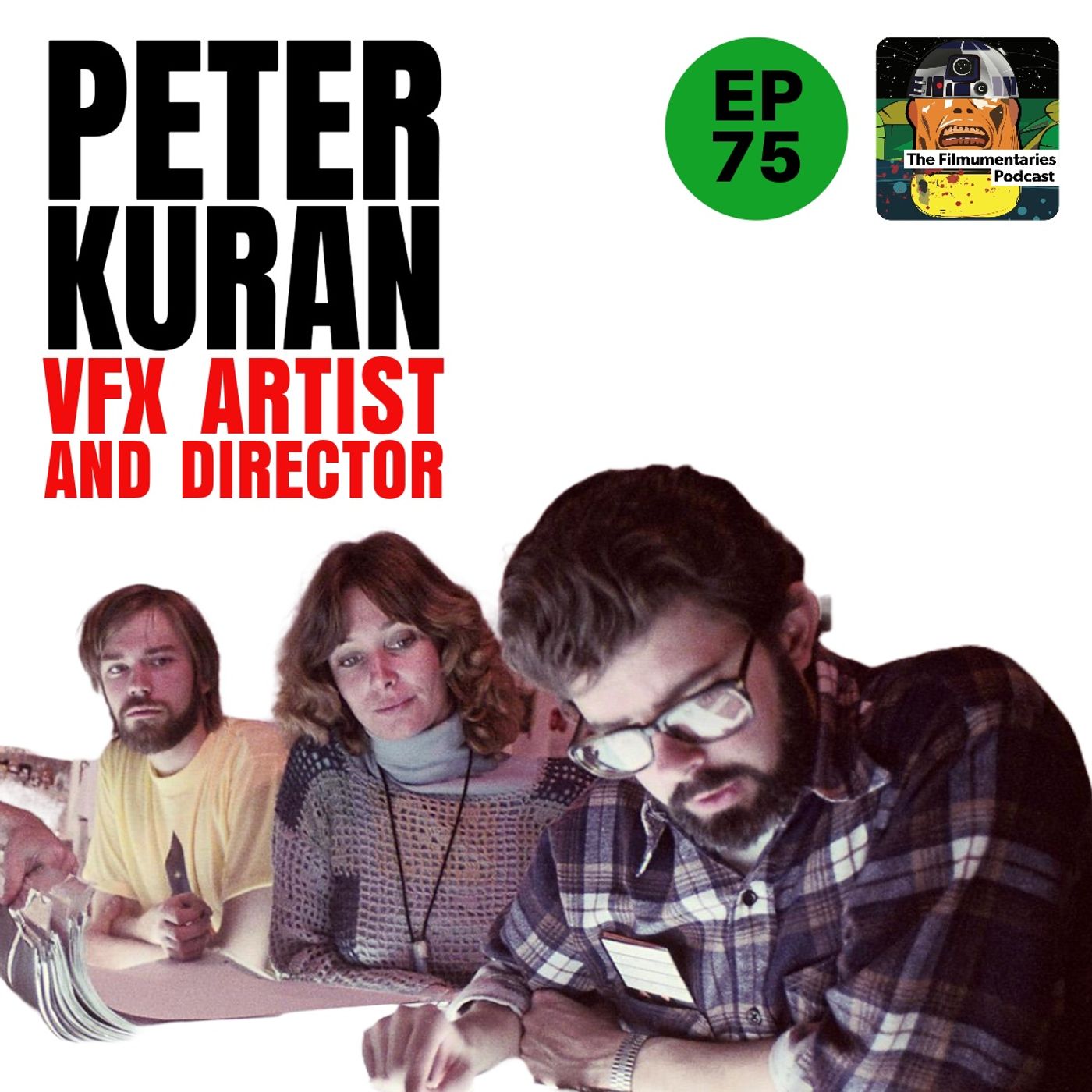
About this episode
He went on to have a long career in VFX and then became a director in his own right.
I should point out that we had internet problems so some of the recording is garbled or lost. I’ve edited around it in places and left it in in other places so you know that there was a piece missing. Apologies. We never found out if it was my connection or Peter’s.
I hope you enjoy the conversation.
Links
Return of the Jedi Timeline Book - Register your interest!
Filmumentaries Merch!
Support the Podcast on Patreon
The Man Who Shot Luke Skywalker
This podcast is completely independent and made possible by listener support. If you’d like to help me keep making these episodes, you can join my Patreon community here: https://patreon.com/jamiebenning
Watch more on YouTube:
Check out the Filmumentaries YouTube channel for behind-the-scenes clips and extra content: https://youtube.com/filmumentaries
All my links
Transcript
Automatically generated, so expect the odd misheard name.
Welcome to episode seventy five of The Filming Military's podcast. This is Jamie Benning talking to you from my house here in the UK. It's May twenty twenty three. This is the first episode of the month. If this is the first time you've listened to the podcast, welcome.
You have about an hour or so of film history chat ahead of you. Please do check out the previous seventy four episodes. They're all great if you love behind the scenes chat, and each of them, I would say, gives you a unique insight into the film industry and the roles within, including directors, writers, editors, visual and special effects artists, sound designers, behind the scenes documentarians. There's lots to choose from and hopefully lots to learn. If you're a regular listener, thanks as always for your continued support.
If any of you do like my work, then please visit patreon dot com forward slash Jamie Benning. There are several tiers for you to choose from with different perks and merch too, and thanks to those of you that are supporting the podcast, it really does mean a lot to me. Talking of merch, you can also support the podcast by buying some Filming mentors goods including mugs, t shirts, bags, bottles, and even socks. There are t shirts with inside jaws and inside jabber posters on them. You know, you could buy one for your next film convention.
And I keep saying this every episode, but nobody has bought anything from the shop yet, so you'll probably be the first and maybe the last if you do buy something. But I'd appreciate your support. Via means there's some pretty cool stuff on there to be had, and you know, to show proudly that you're a member of the Filmmentory's podcast family. All of that can be found at film Mementory's dot creator dash spring dot com. I'll post the link to both the Patreon and this merch link in the show notes.
If you're interested in our Return of the Jedi Unauthorized Timeline book that Justin Berger and I are putting together, please visit Jedi Timeline dot com and click the link to register your interest. The book will be released on the fortieth anniversary of the film, that's the twenty fifth of May this year, twenty twenty three. The book will contain the most comprehensive collection of dates on all things Return of the Jedi including all stages of production, game and toy releases, screenings, and home video releases. It also exclusively contains new photographs of the Kenner line of toys taken by Kim DM Simmons, the man who shot the original toy photographs. Check out his soon to be released book as well at the Man who shot Luke Skywalker.
Dot Com can now exclusively reveal that we'll have an extended introduction in the book from Jim Bloom, associate producer on The Empire Strucks Back and co producer on Return of the Jedi. We also have a photo from Jim that has not been published anywhere else. Jim, you know, we asked Jim Bloom after I did my interview with him for this podcast. I said, look, we're making this, but we'd love to have an introduction from you, you know, maybe three hundred words or something, and he's written nearer to fifteen hundred and it's great. It's like a real nice insight into, you know, what it was like to be working behind the scenes making that last episode of the original trilogy, and as they say, it doesn't stop there.
We also have never before seen diary entries from two members of the crew, namely Dave Barkley Jabber and Yoda puppeteer and John Koppinger animatronics engineer on Jabber. Both Dave and John very kindly offered us their diaries that they've kept during the production, and yeah, you'll see them in our book for the first time an exclusive. So we really have dialed in on trying to find out as much information as we can based on the day to day of the production as well as all the things that came before and after. We'll also have a special episode of this podcast with Jim Bloom and Justin Burger, my co author, as the second episode of this month. We're recording that in a couple of days just after the weekend here, so look out for that.
Because we're self publishing on Amazon, we're not doing an ebook that we're doing a printed physical book. You know, we both love having physical books. It does mean that Amazon does not allow you to have pre orders, but as I said, you can register your interest, so fill in the form at Jedi timeline dot com and you'll get an email to let you know how and where to buy it on the day of release on the twenty fifth of May. For those of you that have already registered your interest, Please remember to check your junk mail folder to confirm your interest, otherwise, when we send the email, it will probably just end up in your junk fold again. And they're about fifty of you currently that have not confirmed, so do check your junk mouth folder just to let your software know that this is not junk now, and then you'll get that notification on the twenty fifth.
Otherwise, keep your eyes on social media at Jamie swb on Twitter, film mementories on Instagram, and on Facebook, and we'll be releasing some details about the book. We're doing a bit of a social media campaign at the moment, something every day about Return of the Jedi, so look out for that and look out for the release date. We'll be revealing a few sample pages and things leading up to that as well. I should add this is very much a labor of love for Justin and I. The self publishing model on Amazon means that the corporate behemoth takes an enormous amount of money.
Our profits are minuscule at best, and given the time we've taken to make the book, I doubt if we will ever break even. There will be three versions of the book available for different budgets, and we've priced them so that we're making very minimal profit because otherwise the price just gets too prohibitively large. But the first one is the full color throughout book in hardback. Then there's a fully color book in soft cover, and thirdly there's a color cover version but with black and white interior. That's the cheaper of the three.
The prices differ from region to region, but it would be about thirty dollars for the black and white fifty dollars for the full hardback edition. As I said, we're making single figure profits on these as we've priced them as near to cost as we can to ensure that you know you've got the money to buy them and you're not spending too much. But we're not a big publisher. This is print on demand, and print on demand via Amazon costs a lot of money, but it is the easiest way for us to get them out to you. So thanks for your support and understanding, and let's crack on with what this episode is about.
So for episode number seventy five, I spoke with filmmaker and optical VFX expert Peter Kuran. Peter was one of the few people employed by George Lucas for Star Wars, and he went on to have a long career in VFX and then became a director in his own right. I should point out that throughout the interview we had Internet problems, so some of the recording is garbled, some of its lost. I've edited round it in places and left it in in other places, so you know that there was a piece missing. Apologies, we never found it out if it was my connection or Peter's.
But anyway, it's still a good conversation and I hope you enjoy it. So here is my conversation with Peter Kuran, and I'll be back at the end for a bit more jabbering on Peter, where did it all begin for? You were born in New Jersey? Is that right? But where did that spark first come for your love of being involved in movies?
Well? I think originally, if you've got back really far, I was interested in astronomy first. Yeah, I think somewhere around the third grade. My teacher was tired of me writing things about astronomy and suggest that I do something else, and she suggested football, And I really wasn't interested in football, So I started getting interested in photography, then film and special effects. I had this book by Raymond Fielding on special effects, and it was really fun to go through it and see all the different types of equipment that was used that I wound up using and that has absolutely no use anymore to anybody.
But did you have a like a Super eight camera when you're a kid or emming? It be's a camera that you would make this shore right? My? Well? First, first I started with my grandfather's camera, which was a double eight and milimeter camera.
When you had to turn I think you got maybe a minute or so out of the footage and you turned it over and then you ran the other side. That eight millimeter camera had the ability of doing you know, you could wind it back and double exposed things over it. I also had Super eight. That was what I got. I eventually got a Super eight camera.
But you can't wind Super eight back very easily, you know. There there are ways of doing it, and you can really screw up the cartridge. But um, and then somebody actually a friend of my mom's, uh gave me a when these a little sixteen millimeter cameras and a and a sixteen mill projector the sixteen millimeter camera. It was a little thing. It's it's it's originally the history of that type of camera, uh started in World War Two.
They were called gazap cameras for gunsight aiming point cameras, and they're a little and they would go into the fighter aircraft and whenever the pilot depressed his firing button, the camera would take frames so that hopefully they got back okay and they could look at their film and see what went right and what went wrong. But so interesting, yeah, yeah, there's there's a lot of interesting a lot of interesting things about about the history of film. You know, for instance, from a from a technical standpoint, the photography when when photography first started a long time ago, it uh um, the I mean, it was black and white, but it was blue sensitive only. You know, the original black and white films were blue sensitive only.
And that is one of the reasons that some of the old time movies they'd wear pancake makeup because because being blue sensitive, major skin very dark, you know, since that's why they used to use blue in blue screen, you know, because you're there's not a lot of blue in your skin tone, and it would make it very dark. And then and then Kodak and the other film manufacturers came up with dyes that they would add to the black and white film and make it blue and green sensitive, which is what they called orthor chromatic. And then eventually they pushed it even further to get red green and blue end and some infra red. But that led to panchromatic film. History of black and white film.
I hope I didn't put you to no, no, no, it's this is the great thing about doing this podcast is I is I hear things that I've never heard or read before. So that's great. But where did you kind of begin your journey sort of entering into the industry. What when did you graduate high school? Was that was at mid seventies.
Yeah, I graduated seventy four, my team seventy four, and then came out to California from New ju nineteen, you know, seventy five, seventy well for about a year and a half, and I went to cal Arts, California Institute of the Arts, which is in Balencia, California, and I got on a work study program which at Disney because I wanted to go there because of Disney had an interest in the you know, in cal Arts and I got to go on a study program at the Disney Special Effects Department Optical Effects Department. So I was there a path there was there if you went to cal Arts, there was potential that you could end up working for Disney. Possibly. Yeah. Well, I mean, actually, you know, the interesting thing is that these were really the old guys.
I'm not sure after their department finished, you know, if after they were all retired, I think there wasn't a lot of that optical department left. But actually I think maybe Harrison Ellenshaw had a lot to do with with that. He was working there when I first he sided the place. I don't think they have an optical department anymore, I'm sure. Well, I think in those days kind of well, I guess the seventies we're talking about the coming of independent cinema and a move away from those kind of big spectacular epics that would have been required to use opticals.
But then then, of course comes along George Lucas not only into everybody's lives, been to yours in particular. How did that come up? Well, when I mentioned at first that that book on by Raymond Fielding on special effects, I had visited Temple University first, because I had heard that he was a teacher there and I went and visited, and I said, boy, you know, I have your book. I've read it forward back where a million times, and I really want to get into the special you know, visual effects. And he said, well, there's no work.
You won't find any more. And I suppose if I lived in Pennsylvania at the time, I wouldn't have found any work. But decided I didn't want to go to school there because he was kind of bringing me down on the whole idea of getting interested in into special effects. So that's why I want to to cal Arts. And I think I just happened to hit the hit it at the right moment.
Yeah, And how did you hear about this young filmmaker who just made American Graffiti. How did you hear about the fact that he was making this this new film? Um, well, I had I was going to cal Arts and I was. I think I was probably one of the few people, if any of it, was interested in special effects, you know, like blue screen and things like that. Now there was animation, animation department, experimental animation, live action, you know, but nothing that specifically is about visual effects.
But there were optical printers and animation cameras and lots of equipment to be able to work with all the equipment I had seen in Remand Fielding's book. But then this guy Michael Ross, who had gone to some of the classes I had gone to. He had originally gone to get a job at a place called to Patty Freeling, and Patty Freeling makes made the Pink Panther. You know the title sequences, the cartoons, you know everything about the Pink Panther. I think it was their franchise maybe, And they just happened.
They were in VN Eyes and very close to ILM, which was also then Eyes at the time. And he's said I should he had gotten a job. He went and got a job there, and he goes, you know, this is the kind of stuff that's right up your out, Well you should you should apply because I know you're interested in this kind of stuff. So in any case, I had applied, and I wanted to. I got an interview with John Dykes trip and put together a demo reel which completely fell apart when I showed it to him.
But well, just this brook hit started ripping out something. The perforations, Yes, you have to you have to remember this isn't on videotape, you know. That is I took all of these pieces of sixteen millimeter film that I was working with al Arts, you know, and put them together. And I bought this this dumb little splicer that ran on batteries and had said special diamond cut invisible splice and sixteen millimeter and so all this is great, you know. And I went and put all of this, all of the splices together like that, and they all broke.
Um. But so I'm the I'm the guy who said, look, just give me a week. I'll work for you for nothing for a week and if you have uh you know, if if I do a good job and you want to keep me on, great, you know, and if not, then I'll just go away. Kind I was gonna say, quite a kind of thing for a young man to offer a potential employee. Let me work for a week and see how it goes and see what you think of me.
You know. It's what I wanted to do, you know, it's it's exactly what I wanted to do. I um And at the time, besides going to cal Arts, you know, I was working at the uh the theater down in Westwood, and you know, as an usher because I like doing that. I don't think I actually made any money doing it, but you know it was you know, work an xtaryt popcorn and work on special effects. That's that's kind of what I wanted to do at the time.
So so tell me about that moment you walk into that building in Van Nuys and as a you know, in this week and a half, what were you doing within that week and a half? At what stage were things at at this point? Um while they were building the models, the animation department was just coming together, the optical department was there, and they, uh, you know, we're all doing tests. I mean basically it was all like testing stuff, you know. And you know when they when they said that you saw the documentary, there's a you know, this this shot of the gun tower and they said, well, that's the first shot that they did, and it's not really the first shot that was done.
It was the it was the first shot that George Lucas had approved. Which there's a big distinction between because for one thing, you know, you know, one of those tower shots like that, what was not a primary shot, you know, driving a primary shot until the end of the film. Uh, and before that there we were doing shots that were for the trailer, you know, so like we're um On and Lucre and the princess or in the morning falcon and being in high ships. I mean those were kind of the first shots put together because they were the first shots and in the trade like laser shot laser you know, handgun lasers that were being farmed out to some other optical houses, you know, so that was those were like the first shots, but they weren't approved.
Yeah, they were used. Yeah, and what were you doing then in that first kind of couple of weeks there, Well, what happened after the the week and a half you obviously got the thumbs up. Yeah, No, they decided to keep me on. I was you know, basically at initially, you know, beating wedges and things different colors for you know, uh beams, fighting the laser beams and stuff like that, learning us using the equipment and stuff like that. So it's like they figured I, I mean I did have a certain amount of knowledge on you know, how to do this stuff, and it wasn't like it was you know, completely foreign to me.
Which was which was? Which was a good thing. I was. I was happy that I, you know, seemed to know at least as much as what everybody else was doing. I think one if you look back at a lot of films that kind of tried to replicate the look of Star Wars after its release in seventy seven, one of the mistakes you often see is with the laser bolts, where no perspective on them, a tool and they're just kind of straight lines, whereas the stuff in in Star Wars, some of which would have been done by you.
I'm guessing I actually did the first perspective beams because I thought that at least what was being tested was just kind of like back and forth, back and forth, no perspective on it, and I had suggested that we try that, and I actually got a very chilly response. So I decided to stay late one night and do a test and took it to the lab myself, and it ran daily as the next day, and EXTRA liked it. So I wound up being the chief of that at least for the time being. I also did a lot of experimenting with like doing shadows and light reflections what they call in our interactive light now m I just thought that that was something that was needed. Yeah, and what what shots were they on?
Can you remember? Well, there's some on there's some in the trailer. My my, my favorite shot, the one that I really liked doing was in the trailer in the movie where the tie ship's coming at the camera and there and it's firing and there's some light reflections in there. And that was basically a shot where they said, here's a tie ship coming at the camera, what can you do with it? You know?
And I think in that case, the animation actually, you know, became the moving factor in the shop. Describe the process of doing something like that. Are you actually drawing on to film itself? And how are you doing that and what you're using to do that because people today are just so used to going into after effects and um, but you were doing a manual destructive process here as well as well. For yeah, well not not actually drawing on the film, but the like.
For instance, since the original camera that we were working with was used in the Ten Commandments a paramount because it was it was vis division and everything was being done in VIST division, so it could be squeezed into a four prof anamorphic frame. So everything was basically VIS division and this camera was VIS division, and it was it. And the process of rotoscoping is that you use the camera as both a projector and a camera. You can project through the camera onto like a piece of paper. That's the simple way of doing it.
This machine was a lot more complicated. But you know, you use the camera as a projector. It projects down onto a piece of paper and you could draw on that piece of paper. And if you don't move the camera and shoot back up through the same piece of paper, it stays in position where, uh, you know, where where you drew things. And a lot of it I think started well, you know, the effects of using backlight art and diffusion filters and things like that.
You know, it was basically the department. Once once I started getting into like reflections and stuff that that was a little bit different, but it that's basically what the department was doing. And did you get to see people like Dennis Muren and Ken Ralston and John Dyster doing a lot of the the motion control rigs and things in the studio at the time as well? Sure, I mean I I used to I used to hang out. I would go and look at you know, if something cool was going on, I would go and go and chuck it out because when when Deister originally hired me, he said, well, we're not paying you that much, but this is a learning experience.
So I took him at his work and also shot some of the you know, few pieces of sixteen millimeter behind the scenes footage because I was interested in getting that on film. And actually before I went to work on Star Wars, I had met Dennis and Ken and Phil, along with Jim dan Fourth and Dave Allen. They were all working originally before Star Wars. They were all working at a place called CPC, which was Cascade Productions, and Cascade Productions did commercials, and I forget what, I don't remember what Dennis was working on. Ken was doing the animation.
He was animating some dancing bacon or something like that. And Phil was actually doing um the statue for whatever it was, sent Sentinel Insurance or something like that. He was basically the sculptor. And then the night that I or the day I visited him, they were all getting together and they were going to show Dennis's copy of Equinox. Uh.
So I went over to to visit and oh, and Phil had done a test of this creature that actually wound up in the Chess sequence. He had before they showed Equinox, he had showed a piece of animation that he did with this, and I thought it was really funny. I think it was Dan Forth who said, Phil, I didn't know you could animate anyway. Yeah, and that was one of the creatures that they used in the in the Chess scene, you know. Yeah, So in speaking to some of these guys, it always strikes me that, you know, the people's roles weren't hugely defined.
There was a sort of a blurring between different roles. So one day you might be doing one job and the next day you might be asked to do something else as a sort of core member of that crew. What some of the other things that George asked you to do that weren't your primary role. George was always looking for a way of making the land speeder float. And in today's digital environment, you know, it's it's much easier.
You know, you can blend things almost seamlessly, you know, completely seamlessly. Where was in the optical printing you had to like hide things. So he was he was always looking for a way of making the land speed or float. And I'm not sure exactly who came up with this idea, but it was a great idea where you could put this. Someone an Alim came up with the idea that you put this milar or mirror underneath the land speeder, you know, like where the you know, where the wheels are, and you tilted in such a way that it reflects the ground.
So we went up to this place called Elmurage, which is east of Los Angeles, and it had to settle for Tunisia, you know, because they wanted to do some transition shots, you know, going from one place to another, and it actually worked out pretty good. But I also because I was the low man on the totem pole you see, Elmage was actually pretty close to where I was living because I was still living at the dorm dorm low and on the pole. They made me go get Mark Hamill and he lived in Malibu, I think, I think it was Malibu around that area was so small house, I think, pretty close to the beach, which was totally in the other direction. So but this was off to principal photography had finished and everything well it's kind of wrapped.
Yeah, yeah, yeah, it was and it was after his accident, so he had a pin in his nose which he got a kick out of grossing out people by pushing it and it would kind of come out this way, and then pushing it this way and would come out that way. And it's like, I don't know anybody who thought that was cool, but he did that. So yeah, we talked a little bit well on the way to you know, the setup. And also the other thing was that I didn't know how to drive a stick shift. So when we got there, because it was an English car, the steering wheel was on the right hand side, so I wound up being the you know, in the C three po suit and being the passenger, but I also had to drive.
And I said, look, I we got in the car and it's like I didn't mean I didn't even know what to do with a stick and they pulled me out and and took me around in I think dull Shorth had a BMW with a stick and you know, took me around for about half an hour to teach me how to shift gears and then put me back in the car. And then you know, and I guess because I had some experience putting on the suit. They after the movie had totally wrapped. I helped Anthony Daniels put his footprint in Gruman's Chinese theater, you know, as as well as some other things that wound up happening. You know, with the suit, with the suit when you were in the in the car in the land speed and then I'm presumably you had just your own jeans on or something and just the the upper paw of the suits.
Yes, pretty yes, just the upper part of the suit. But unfortunately, I the the car didn't have a a firewall between my legs and the engine, so it was very hot. L my legs. My legs were very hot because the engine was was practically right on top of them. And I guess with that mask on as well, it's all very constricting and you know, difficult to see around and hear things properly, and all those things that Anthony Daniels had to put up with for for many weeks.
But you got to expense that too. The hard part was catching the cost still under all the under your arm pit. Yeah, because I guess by then it hadn't been He talks like years later about it being far more refined, and you know, softer bits placed in where it needed softer bits. But back then it was quite sharp, I believe, quite pointy. Yeah, no, there wasn't anything comfortable about it.
And did you were you kept on directly straight from there? You stayed staff through two Empire strikes back as well? No, um, they there was there was a there was a period of time, but I was hired back by a distra on the pilot for Galactica, so I went to work on that. Um And actually I had met working in that department Harry Moreau, who had come off of close Encounters, and he pretty much showed me all the independent jobs I could be doing, you know, um, and I found that more more interesting because I got to do more more things with independent you know, um special effects jobs I normally didn't pay very well, but I really didn't like being kind of put into a I don't know, you'd say, yeah, pigeon hole, because you know, it's like what I liked was the opportunity to start from scratch with something and say, okay, now where where am I going to go with this?
And how am I going to be able to pull it off? And and you know, completely before digital so whatever physically you could find a work with. Was there a reluctance then to come back for Empire or did you jump at the opportunity? Um? Actually I was.
I was kind of like losing my shirt and business and as I was learning how to be a business person at the same time. But when they offered it to me, I thought, this is yeah, I would I would like to do that. They you know, I would, I would like to come up there. But you know, you know, at the time it was it was called Star Wars two. It wasn't called five or or out of Many.
UM, and I wanted I had started my own business at the time because I was interested in learning more than just that department, you know, and you know, and so anyway I went. I went to uh work on Empire and as as the Roscope Animation supervisor. And then after that, I had actually I had actually planned to leave and I and I did leave. UM and George had offered me, he had offered me a job for life, and yeah, why did you not take that job? Because you wanted to have your own business and considered that having a business, which was much more difficult than actually doing the work, because you know, and I can understand, you know, how George would want to make that part of the business easier on people so that they didn't have to you know, but I still saw that as a as a challenge and also at the same time, you know, when I I guess, when I was out of work for a period of time, for a small period of time, I thought if I had my own company, I'd been last person I could fire.
So you know, I looked at that as as like a safety issue, and it's a way of keeping my self employed because you know, the movies would I mean, Star Wars went on. I think I worked on it for about a year or more over a little over a year. I think some people worked on it longer than that, some people less. But I, you know, I hadn't yet been accustomed to having a job that actually had a deadline and had to finish. You know, when you're working as an other hitter, you know, you're it's just always going, you know.
So I wanted, I wanted a business. He was still very they were still very good to me. They still you know, gave me work on other productions they worked on and recommended me for, you know, other productions that weren't Night necessarily being handled by them. So yeah, because I lem at that time, I guess was kind of putting their feelers out a lot more to kind of. I mean, George says, I think in the in the Lighter Magic documentary that he had to find work for these this group of people he'd assembled, and so they started taking on the effects work for for other movies.
And you you worked on a bunch of movies in the early eighties. I didn't your Dragon Slayer and Rath of Khan. Rath of Khan's an interesting one, isn't it, because that's kind of one of the early yes on sets of digital with the Genesis Planet and all of that. But you know, these still the traditional methods being used. Did you did you find interest in that in that area at that time?
Um, you know, I was still unlike a mission to perfect optical printing because you know, to me, optical printing has always been the I mean, for you know, forget about the digital Okay, we're still talking think about the past. And optical printing to me was like where things either look good or will crappy. And I had seen lots of things that I did that I thought didn't come off very well, um, you know, and I would you know, blame it on the optical printing because I didn't really have the option to be able to change anything about what I was doing. So so that was my mission was to improve optical printing. One thing, I mean where I did that first was on like Dragon Slayer and couldn't pull off subtleties if you're doing optical printing with color, well, I mean it's it's it's a technical thing, but if you print off off of a colored print, it looks very contrasting.
And when something looks very contrasting, you can make it look subtle, you know. So I was able to come up with some things on right and layer or that made it made the on some of the automation effects, and you know, that's that's what I was, you know, that's what I was really aiming to do because I really I really liked the optical printer. I mean, you know, as as I look now, um, most of I would say most of the work that we've done has been digital as opposed to you know, as opposed to optical. But I really enjoyed the optical printing a lot more. It was it was you know, I guess something I grew up with and something I really you know, I really enjoyed, you know, finding way to tame it, you know.
Yeah, but there's a rule. Well. I find interesting about the optical world is that there's that real kind of combination of artistry and science as well where you're trying to, you know, create something wonderful for these fantastical movies, but you're having to have a not only a keen understanding of how to tell a story with an effect, but also understand the science behind it. Yeah, but also also back then, like you know, when you come up with something that's really interesting, with something crazy, like I did the opening the opening to John Carpenter's The Thing, and the spaceship was built by Susan Turner, and we actually shot the spaceship and VistaVision at Appige, and then I took the spaceship element from Appige, took an ilm Ilm made a reduction element for me for for perf and and as far as the title goes, I took the title.
I painted the title on the back of a a fish tank and I filled a fish tank full of smoke, and behind the fish tank, I put a I stretched a garbage bag plastic, black opaque garbage bag plastic over this frame, and behind that was a it was like a light and the garbage bag plastic helped back the light and you couldn't see anything until I touched the garbage bag plastic with U with a couple of matches, and matches like just started to burn the garbage bag plastic and it revealed the titles. And you know, that's a that's a kind of thing that I like, you know, coming up with goofy stuff like that to try to make something look neat, thinking outside the box, well, thinking outside the fish tank in this case.
But yeah, it's a it's a great effect and it's very iconic that look, isn't it. And you know, I guess that that effect has been replicated in many different ways, whatever methods they've been using, I don't know, but um, it's certainly the first time source or something like that. So somebody online m I watched who kind of reverse engineer things and movies. They said, well, we're going to reverse engineer this shot for the thing, and the one thing they didn't do was contained the smoke and a fish tank. They did everything else right, except that they just left the left the smoke everywhere, and it's like they had to, like, you know, chase people out of the building because they got pulls.
And I said, you know, I wrote him and I said, that's why I put it in a fish tank, because I'd already discovered that you make a big mess of smoke and kick a bunch of people out of the building and smoking it out, So you know, it's almost you solved that problem already. Um on Return of the Jedi m I read about you having to do come up with a new optical technique for the Was it for the lightsabers in the desert sequences? Well, usually you know these lightsabers, and there were there were other lights sabers in the film too, But the fortunate thing about them is that they all took place in fairly dark and environments, you know, like the Death Star or something, so you didn't necessarily need to worry about the background contaminating.
When I mean contaminating, it's it's it's like if the background is bright, it goes through the light that you've added, and that light is no longer colorful. It's been bleached out by the background. So you know, so you would want to do who is the pars and then you print the spaceship on top of it. You had a black mat to hold out the background. The only problem is is that the lightsaber, the light from the sabers had kind of glowed it and it had a fuzzy edge, so you couldn't necessarily you couldn't really make a black mat to hold out the background because you would either get a black fringe most most likely a black fan it was too small, you would get a bright fitu around it wouldn't write.
So I came up with the idea of making colored mats, you know, like green and blue colored mats because on color print stock, and then putting them into the shot. So if if there was any kind of a fringe, it would be a color, it would have color to it. And that is you know pretty much how it worked out. You don't, you can't. This sort of thing doesn't matter anymore on digital because you could just paint whatever you want on top of an image, but back then you had to worry about that.
But it also quite a leap though it wasn't it then and you were awarded with the Sidetech Academy Award as well. Well. I was awarded with the Academy Side Tech Academy Award because I used a similar technique to fix some faded color film. I mean that was when I was making Trinity and Beyond, and I learned that the certain years when they developed, when Kodak had put out Eastman color negative film, some years were fading very quickly, you know, I mean, well, like from the year's nineteen fifty seven, fifty eight, fifty nine, later fifties, they Kodak could develop a film that had a higher sensitivity and it seemed to fade more easily. So I was trying to figure out how to, you know, how to fix that because I wanted to use some of that footage and Trinity and Beyond.
And you know, the first thing that everybody tries is making separations a red green blue separation. The blue separation looks flat as hell, so you want to try to make it contrasting. And when you do that, when you finally get a blue separation contrasted to the point where it looks right, it doesn't look you can't, you know, it just breaks up and gets all greeny. And I think that's what most people had tried, but but I thought about what I did on Jedi, and I thought, well, I can make yellow mats because what was actually going on was what they call crossover. You know, the shadows were very blue and the highlights were very yellow, and if you try the highlights being yellow, then the shadows get even bluer.
And if you try to fix the blue and the shadows, then the yellow highlights get even yellower. So I had this idea that I could neutral's highlights so that they were so they weren't yellow, and then make this, uh yellow matt that basically covered all of the shadow area and bipack that with the film, and that that actually worked pretty well. I mean there were there were a few instances were you know, like if it was if the image had been overexposed more than a stop and a half, I think it didn't work very well. It worked great if it was under exposed. But the problem was that by the time it got recognition, you know, digital technology was already fixing that problem.
Interesting, that is a problem you had to solve on Return the JO for one issue, and then it kind of evolved into this other idea to help restore film. I always find it interesting when you know things can be applied in completely different ways but using very similar technology. Yeah, you know that that's something something that Jonathan Rlin had said once that you know, maybe some of what we learned in special effects technology could possibly help in other uh film technologies. Um. The only the only problem was that it was such a simple fix that nobody who was actually working in that technology was happy about it, because you know, everybody had been trying something and then you know, I come along with this, you know, with this really goofy fix and it's like, oh, yeah, where did he come from?
That's it Sometimes though, it's you know, thinking, as I said before, outside the box or using a simple technique that people would have even you know, discounted or not even thought of. Um. Yeah, that's great, and well, you know, congratulations on the award. I mean it's a long time ago, but it's something to be very proud of. I would say, Yeah, I always I always say that, you know, the the OSCAR for Visual Effects is a is an award that has to be given out.
You know. The award I got was one that if I hadn't done it, there wouldn't have been an award. So to me more special. Yeah, yeah, that's true. And you know, looking through your list of films on IMDb, which I know isn't always entirely complete, it seems that you did quite a bunch of work for for the kind of Lucas Stable over the years that you walk al the battle Friend or you could venture that was that was called Caravan of Courage here in the uk um Oh Explorers, which is a film I loved at the time, and Howard the Duck when when we spoke over email only I only worked on one shot.
Yeah, that's what you said. But what was that one shot? It was some kind of animation effect I remember too well, except that I remember I got up there because they wanted to meet me at ten o'clock in the morning, and you know, and we pull out the shot and go over it, and I go, okay, what else and they go it was just this one shot? Like I really I had to come up here for to go over one shot, you know, And what do I what do I do? I am I'm not scheduled to go back until tonight.
They said, no, I'll go and enjoy San Francisco, you know, take take a boat ride on the on the bay, you know, do all the things that you never did when you were here. I also see that you worked on in a Space. Now was it Dennis I was speaking to or was it Ken? It might have been Dennis. He said he always hated the look of the Fantastic Voyage, and when in a Space came along, it was a great opportunity for him to kind of, you know, make it look better.
Yeah. Yeah, I was just kind of like doing fixed charts and things, you know, where they wanted stuff. I was kind of I thought that Rob Booteen should have been one of the five and that film, and I think he did. But because I think he provided a lot of work on that film, I think he's underappreciated. Yeah, you know, his work stands out massively if if you look through his catalog of films as somebody I'd very much like to be able to speak to.
But yeah, No's and I liked, you know, I mean some of the films they work done, because I you know, I all up a working relationship with him too, and I really liked on his um on his stuff. And one time he called me, or I think I had called for him, and then two days later he called back and he and I said, who is this? He goes this, Rob. I go, no, it isn't. That doesn't sound like you.
He goes, no it is and I go, okay, Well there was the only way I could tell. I said, I want to hear you laugh. And he has such a great laugh. You know, it's like I can, I can that's him or not by his laugh. I don't know if I'd mentioned this before, but I think maybe after the hallowing or something.
Um uh, there were some conventions and I think some of the guys involved, Mike Finell and Joe Dante. Uh. They said do you want to come to the convention and I said, yeah, sure, and then Mike Vanelle said, um, well when you come to the convention, could you dress up like Rob Bouteen as they couldn't get him to go to the convention. So I so that Halloween there was a there was a party ABC MSSA I think was putting on a on a Halloween party. And I put these four inch blocks on my feet and this blong black um wig.
And he liked to dress and you know baggy, uh kind of jackets and and I dressed up just like him. And I and I went to this party and it was dark. He couldn't really see a lot, but because I had four inch heels on my feet, I was like the tallest guy in the room, which is like Rob, He's the tallest guy in the room, you know. And Mike Vannelle was there, and I could see him out of the back of my I just looked back and and he could see me, thinking I was Rob, and I would let him get like within, you know, a couple of feet of me, and then I would walk to the other side of the room, you know as it just ignoring him. And I did this a few times, you know, because he just kept trying to work his way over to to talk to Rob, who wasn't there, you know, but I just kept avoiding him until the end of the night Rise.
So you've played C three po and Rob Botine. I mean, there are two roles to die for. Yeah. I think you said Dinau some very initial emails that you probably worked on visual effects on over three hundred movies. Yeah.
Have you ever thought about kind of writing a book or recording that in some way about the work that you've done, Because I think, you know, one of the reasons I do this podcast is because I don't think Hollywood is actually very good at is not actually very good at recording its own history. The you know, you've already kind of mentioned that all the stuff that you know and you back then is redundant now. But it's all part of the process. It's all part of the history and the you know, that's how people learn, you know. And I think a lot of the people I've spoken to in the digital realm today still encourage people to go back and do things physically, you know, just so you get that kind of sense memory kind of stuff.
I mean, obviously the optical printing side of things very difficult to do now. I'm sure there's not much technology that survived. But have you ever thought about trying to record some of your experiences other than you know, chatting to people like me? Well, I have been writing them down a saying along, right, you know, I've had some interesting experiences. I don't know if I mentioned this before to you.
I used to do air brushing while yeah, compression out air, so you get a CEO two container, two tank and I would have to go get two And the weirdest thing that ever happened, I mean, was when one day I was hot. It was in the middle of the summer. I went and got a CO two and I guess they must have filled it up a little bit too um much. And this I didn't know. But I know now that there is like a safety seal, so if it's too um if if it's if it's to pressure, the safety seal will blow, will lead to two out of the tank so it doesn't blow up.
But I had the tank in the back of my car, and it was like I was driving on Wilshirt Boulevard and there was like this whoosh and then all of a sudden, It's like everything around me was white, you know, and and the windows were freezing. And I'm in the middle, I mean, and I'm in the middle of traffic, and I can't see a damn thing, you know. It's like I'm in the middle of the of a blizzard. It's like I just get beeping the horn and just slowly trying to get over to wherever I think the you know, the curb is, you know, to get out of the to get out of traffic. Because I didn't know, for one thing, I didn't know what the hell happened.
I eventually figured out as they had something to do with the with the tank. But you know, weird stuff like that, you know, Well, that's that's the thing that you know, people working in the digital realm today never come across is these, you know, the fact that there is peril involved in doing things physically to create effects, you know, I mean the biggest peril is that your seat might collapse or your mouse might stop working. I'm the last day of getting something done, you know. Yeah, you're trying to get something done and the computer is not helping you. Yes, quite Yeah, I think we've all been there before.
Before we wrap up, because I think we've been talking for million hour and now I also wanted to have a chance to talk to you a little bit about your films that you you've made. When when did you start making those? And can you kind of fill us in on what the what the subject matter is? Sure? Um, well, actually there's six of them now, um and they're all on atomic you know, the atomic era, starting with trinity and beyond.
UM. I had decided pretty much that I had this whole facility, you know, this whole um facility where I did optical printing and stuff. I could actually start putting a putting a film together, you know, because I had actually, um what what actually set me off was going to talk to these people about the Barney movie. I think it was way way in pre production and they were just talking to all the visual effects companies and now and then Cally and you talk to them and give them ideas. And when I left, I just been get to give me this job.
I just wasted you know, hours of my time the whole day going to this place in Almante or where it was, and you know, talking to these people who weren't going to give me this job. So it's like that's when I started really disliking the industry because I said, you know, if I'm going to waste my time, I might as well try to get something out of it, you know. So that's when I started my interest in that doing that film and the others because, you know, because I learned a lot about you know, automic history that that I didn't know, you know, in atomic photography, and there's a lot of a lot of interesting things that that that have gone on in physics land. You know, I'm not a learn about these things as I go along.
Where can people watch these films are they available still for people to see? Yeah, yeah, they you can. You can watch them on Amazon, you can. I mean, we still sell DVDs and and a blue ray on trading beyond on our website which is Adam Central A T O, M C E N T R A l U dot com. Um.
You know, um, the ones online are usually the most update the updated ones, because you know, when I make a bunch of DVDs, you know, you either have to start with a thousand of them or something and uh and then when you get down to the last one you got ordered, you know, another five hundred and uh. So they usually aren't the most updated versions. But well, I'll certainly look out for them on Amazon because I think it's a it's a topic that i'd like to know more about. I appreciate you giving your time today, pizza, and it's been great to talk to you. And I hope one day, you know, that book comes out or maybe some other four.
Yeah, it'd be interesting to hear some more of those stories. Yeah, there's yeah, there's plenty of goofy stories. Well, I hope you enjoyed my conversation there with Peter Kuran. Again, sorry for the drop out at times, but I think it was still worth sharing what we were able to record. For the next episode, as I said in the intro, it will be a conversation between Justin Burger, my co author on our Return of the Jedi Unauthorized Timeline book, and producer of Return of the Jedi, Jim Bloom.
Jim was kind enough to do a lovely lengthy intro for our book, and very much look forward to chatting with him again, this time all about that last episode of the original trilogy, and that episode of the podcast will be up on or before the twenty fifth of May twenty three, ready for the release of the book on the fortieth anniversary of the film. Then there'll be my conversation with composer Stu Phillips. We recorded that a couple of weeks ago. Now, very interesting, very cool guy, ninety four years old and sharper than me. I can tell you other episodes coming up on my conversations with production coordinator Mickey Herman, special effects supervisor Richard Van den Berg, VFX artist Charmaine Chan and VFX supervisor Pablo Hellman, and recently I've also set up an interview with supervising sound editor Max Smith looking forward to that one as well, so plenty to come.
Remember to subscribe and leave review on the podcast. If I'm going to continue doing this, I really do need your help in getting out there in front of more eyes and ears. So thanks for joining me, and I hope you can do so. For the next episode of the Film Mementory's podcast,



Similar episodes across the network
Matched by shared keywords.
-
Episode 755: Return of the Jedi (1983)
2 shared keywords: ilm, lucasfilm
-
Neil Marshall - Unsung Cinema
1 shared keyword: director
-
Special Report: The Mandalorian and Grogu (2026)
1 shared keyword: lucasfilm