
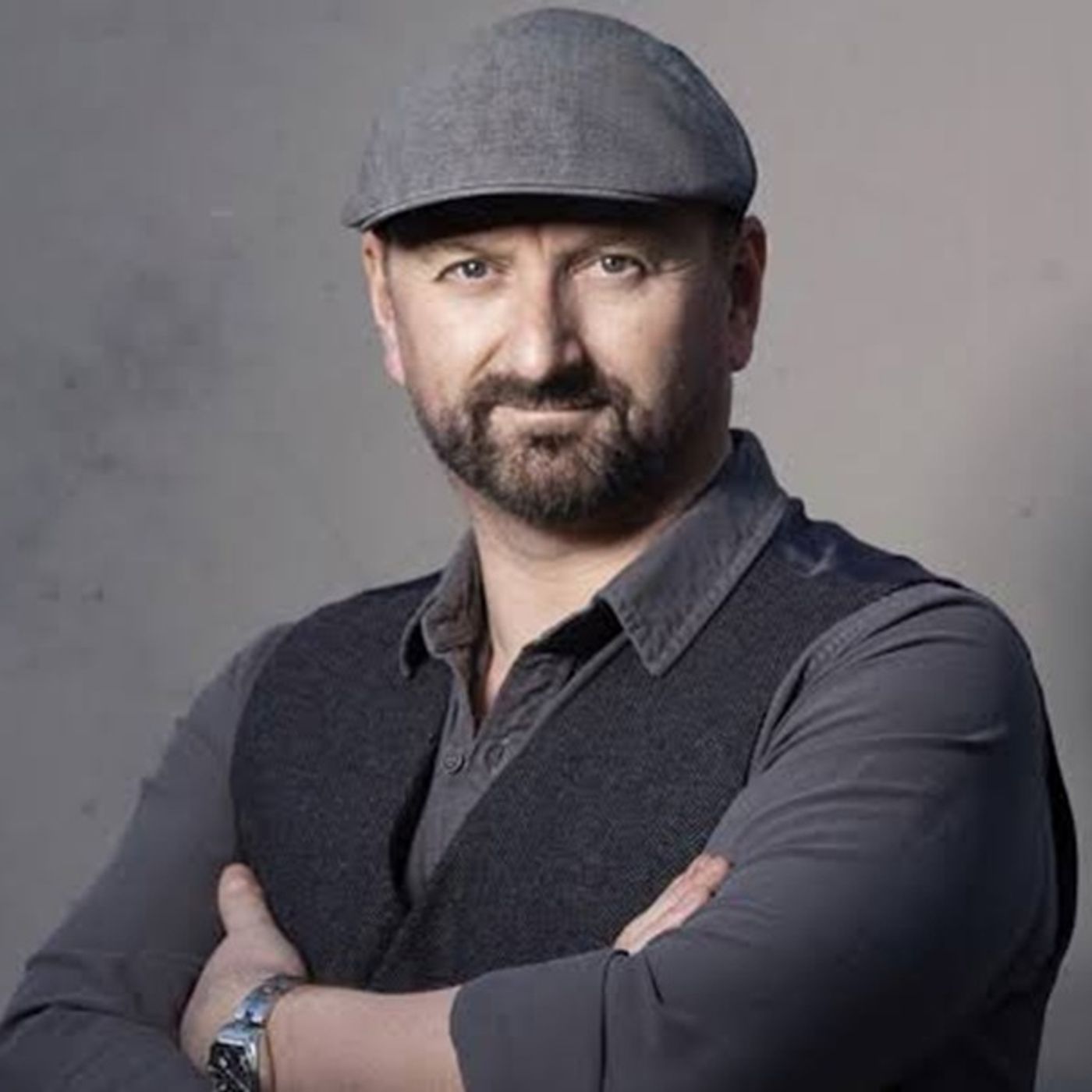
About this episode
And while we realize that a horror movie could be beautiful, we also mention… a zombie, action, sci-fi thing, magical light sources, wonderfully surrealist moments, Highlander, story boarding stunt and special effect sequences, The Cars That Ate Paris, having access to the kit, it's not Crocodile Dundee that's for sure, cinematographer Dean Semler, shot in story order, Terry Gilliam-esque, Mike Johnson, the Universal classics, had to make it… nobody else was gonna, Picnic at Hanging Rock, a wacko performance of two psychopaths, Michael Fassbender, Starlog, an expensive mechanical pig, in the Highlands of Scotland, Star Wars, it all kind of made some insane logic to me, werewolf movies, I miss the filters, Ridley Scott, you can't go wrong with a good monster, Raiders of the Lost Ark, spray-on foam, Blockbuster: How Hollywood Learned to Stop Worrying and Love the Summer, seared itself into my mind, what the hell are these things going to look like, and I believe in the razorback.
Transcript
Automatically generated, so expect the odd misheard name.
My name is Alex Cox, and you're listening to Movie Meltdown. What's up, and welcome to Movie Meltdown's Unsung Cinema. I'm Brian, and in this series, I welcome a guest to discuss their involvement in film, and then we round out the episode talking about a movie that they enjoy that maybe doesn't get the respect that it deserves. And this episode, well, let me take you back a few years. Back when I first saw The Descent.
The Descent is a masterpiece. A horror movie that works as so much more. I was blown away by that movie. And I saw the original cut, not the doctored US release nonsense. I don't acknowledge any of that.
But I saw that and I was so impressed. And then I saw another very different movie a few years later. And I thought, this is amazing and crazy. And who made this? Well, It was the same guy.
And then a couple years later, I unknowingly watched this sweeping epic, only to realize this is the same director. So over a matter of years, it dawned on me, without even trying, I'd found one of my new favorite directors. Then I went back and watched his first film, and since then he has continuously worked, lending his talent to different TV series and continuing to make films, most of which are based on his own concepts. I'm of course talking about Neil Marshall. A director and writer who has carved out his own area in cinema and to this day shows that creating your own films is something you can do.
As challenging as the industry sometimes makes it, and we will talk about that along the way as well. And all that before we round out the episode with a discussion of Neil's unsung cinema pick Razorback, a VHS classic from the 80s directed by another impressive career filmmaker who gave audiences a horrific peek at Australia when a lot of people were still relatively unfamiliar with that part of the world. So I was looking forward to hearing about the influence of that movie on him as a director and how his overall journey led him to becoming the storyteller that he is today. So I say we get to that right now as we talk with Neil Marshall. Well, usually I'm kind of fascinated with people as kids, how they get interested in things and how they get into the industry.
So I guess, originally, where did you grow up? I grew up in a city called Newcastle-upon-Tyne in the northeast of England. It's the same area that Ridley Scott comes from, originally. Something in the water. All right.
Ridley Scott, Sting, Mark Knopfler. Yeah, there's a few people. That's impressive. So when you were younger, did you initially connect with film or was it just sort of the arts in general? What was it that you were kind of drawn to as a kid?
I fell in love with film at a very early age. First, obviously, first watching films. Some of my earliest memories is my dad showing me the old Universal Classics movies. I think they were on there on the BBC late at night or something like that. And he's like, well, I was like five years old and he's like, come and wake me up and say, you've got to come and see this.
Cause he loved them so much. And, um, and I remember seeing them like both completely entranced and terrified at the same time. Uh, but couldn't take my eyes off the screen kind of thing. So, um, I kind of fell in love with monsters from a very early age. Um, going to the cinema, like, um, it was, it was actually, it was my sister's birthday treat, but we went to see star Wars at the cinema. and I was seven years old and, and that transformed me completely in terms of like, I fell in love with going to the cinema then, I mean, as you would.
So I started going to the cinema a lot in the seventies. God makes me feel so old. Um, as a kid, as a child. I'm right there with you. Don't worry.
And then, then that all, you know, that all led to me seeing Raiders of the Lost Ark, uh, when I was 11, um, And I literally walked out of that movie knowing I had to direct movies. I didn't know what directing movies meant, but I needed to do that job. And I think I also saw a TV documentary about the making of Raiders and that kind of filled in the blanks. It was like, right, that makes that, I get it. I want to do that for a living.
And so that was my path set right there and then. And my best friend, a guy called Mike Johnson, his mom had an eight millimeter camera So like a week later or something, we got hold of that and we literally started making movies, really bad ones, of course, but that's, that's the process, isn't it? You know, we're teenage kids in his backyard making films and things like that. It's a passion that we both shared. We were both in love with movies.
We were just trying to make them. We were like reading every episode of every issue of star log and, um, fantastic films and starburst and all these kinds of magazines. Cause it was the only access to information about movies back then. We didn't have the internet. there was a few books that we read, but mainly those magazines were our lifeline to reading behind the scenes and, you know, Cinefex magazine and things like that. Um, gaining access to a, an old comic shop in Newcastle.
There was a sci-fi bookshop that had back issues of old magazines and things. So we both like just devoured this stuff. And he's now a successful screenwriter. He wrote Sherlock Holmes for Robert Downey Jr. and things like that. So, you know, we both, we both stuck with it, um, over the years.
Um, But for me personally, it led into film school where I did a degree in media studies or whatever, which was in itself, the degree was utterly useless. Nobody's ever asked to see it in any of the jobs I've done. It doesn't really matter. But the experience of being on the course and having access to the kit and making films and my final film, my graduation film was a 20 minute zombie action sci-fi thing. called brain death and uh that attracted interest from local filmmakers who started offering me some editing work when i graduated and that led to being a freelance editor for like 10 years through the 90s at the same time directing shorts and writing my first feature which ultimately would lead to be dog soldiers so that's kind of the journey Yeah.
I think that is such a generational thing because I had those same steps. And I feel like every kid, maybe also because there wasn't quite as much stuff being thrown at you at that point in time. But like that Star Wars moment was like it changed so many kids. And I usually hear like just in general, like over the years, it's one of the two. It's either Star Wars or Raiders.
So that like Lucas Spielberg one-two punch that came out within a couple of years is And every kid of that age was just like, this is it. This is what I want. And like it, it just changed that entire generation of kids. But I, I wonder now like what, because there's so much more being thrown at kids now, what, if you go ahead 20 years, like what are the key moments for kids now going to be? I don't know.
I ask that all the time. I wonder like I, when I, when I, when I meet students and things like that, I'm like wondering what's the definitive thing that you saw that made it like, and, People don't come back and say, oh, I saw Harry Potter and I wanted to be a filmmaker, or I saw Avatar and I wanted to be a filmmaker. I don't know if it's just viewed in a different kind of way. Filmmaking is more accessible now than it was back then. There's a fantastic book called Blockbuster by a guy called Tom Sean.
And he says in that book, because I think he's obviously of our generation, he says, like, what an incredible... um piece of luck and quirk of fate it was to have been a a young teenager when you know when Raiders of the Lost Ark came out um and it's not specifically that but the whole that told you the 80s period or whatever like how lucky we were to be in that at that particular time in our lives so yeah and I absolutely believe that so I don't I don't know what inspires the next generation. It's interesting because they all still keep wanting to do it. I mean, now that you have YouTube and kids making weird TikTok videos and like, so they're still drawn to it, but it is, it is a different inspiration now.
And I don't know what it is because I can't figure kids out. So, yeah, but that's, that's another one just to kind of jump ahead a little bit as far as just the industry in general, because all of that's changed so much. Like, what do you sort of think of the state of things now? Because, it's so drastically different between, you know, the streaming options now and the people being able to shoot for, you know, a lot cheaper. And like, there's just so many things that have changed massively in the last 20 years that like, how does that factor into your life?
Well, in some respects, I think it was, it's the same as it always was, which is all the equipment and the fancy technology, whatever it is, will only get you so far. At the end of the day, you have to have some kind of talent to back it up. And, you know, that'll get you the rest of the way. And so, you know, a lot of people are going to fall by the wayside. There's also and it was the same in my generation.
I think of like of the 30 plus people that I graduated with. I honestly think that maybe me and one other person are still in the business because it's hard because it's really difficult. And when you get out of college and you find you're not getting any work and, you know, if you've got end up with like families and things like that to to support, then a lot of people do. fall by the wayside, because it requires such stubborn determination and single-mindedness just to keep at it. So that kind of separates the wheat from the chaff, as it were. But nowadays, yes, the technology is there.
It's kind of a perfect storm at the moment because off the back of COVID and strikes and the changing technology and AI and all this kind of stuff, it's like there's more people who want to be in the business and there's less jobs than ever before, it would seem. Well, maybe not ever before, but certainly for a long time. And so, again, that competition is stiff. It's very, very difficult. I mean, if anybody asked me, like, do you want to be in...
Should I be in this industry? At the moment, I'd be like, don't go near it. It's just like it's going to be just too difficult. There's other things you could do. Certainly simpler things.
Simpler things. But I think if somebody takes... accept my answer, then they're never destined to be in the film business in the first place. If somebody says, no, you're wrong. I have to do this. This is what I have to do.
And there's no other choice then. Yeah. Fine. Good. Go with it.
Yeah, definitely. Well, going back that far, I guess, as you, as you get into that first feature, I mean, that's, that's impressive in and of itself, just putting one together, but at least like with that first, when you have it as sort of like a controlled situation, like you're mostly on set or you're you're in the woods so you can kind of swap out different visuals if you need to. So was, was that first movie just sort of figuring out the basics? I mean, you'd been doing it, you know, in school and stuff, but like it's being thrown into that first film. I had a pretty good handle on, on the basics by the time I made it.
Cause I had directed some short films, things like that. I had a lot of time to prep for it. Cause I wrote, I wrote it in 90. I first wrote in 1995. I kept, rewriting it for the next five years or six years before I actually got to make it but during that time I was also shot listing and storyboarding and planning the whole thing in my head ultimately storyboards that kind of got thrown out because I hadn't factored in actors and how actors don't necessarily want to stand in one place all the time you know it was very kind of naive thinking but it was such a learning process to do that and at least I always had a backup plan that was like fixed in my head of like I could if I get these shots I know I have a scene So even if I'm going to deviate from it, I always had that foundation to build on.
So knowing the film inside out before I ever shot a frame of it was a huge amount of help. Had I known it was going to take six years from script to screen, would I have done anything differently? No. I mean, I think I would have done exactly the same thing. I never once during those six years believed it never wasn't going to happen eventually.
Like I just, I say it's just stubborn determination of like, I've done this thing, somehow it's going to get made. I don't quite know how. And it was just a process of a bit of luck, a bit of timing, a bit of determination, all sorts of things factored into it to get off the ground. I was also like, and this is symptomatic of the kind of films I wanted to make, was in the climate in the UK at that time, nobody wanted to make horror films. It was like the last significant horror film was something like Hellraiser. back in the 80s, but there hadn't been any significant British horror films for a long time.
And the attitude that I received from the British film industry was, you know, that's not our cup of tea and we don't do that sort of thing here. We do Merchant Ivory films and things like that. So it was very, very difficult. And not only was I trying to get a horror film done, I was trying to get a werewolf movie done, which, again, nobody really touched upon in quite some time in any significant way, and certainly not in the UK. So it was considered wildly too ambitious for a first-time director.
But I kind of embraced the fact that people were just saying it's too much and too big and too ambitious. And I was like, yeah, this is what I want to make because I actually want to make a film that's going to appeal to a global audience and not just a specific audience in the UK. I'm not making arthouse cinema. I'm not interested in kitchen sink drama. I'm interested in explosions and guns and werewolves and great one-liners and things like that because I grew up on loving American cinema.
So I wanted to make a film that would work in America and work in the rest of the world. the film that me and my mates would go and see on a Friday night, I suppose selfishly I made it for myself. Somebody had to make a werewolf movie with soldiers. I mean, you kind of have to. With any movie, I mean, anything that you put that much time in, there's got to be a little of just fulfilling it for your own needs at that point. Yeah, absolutely.
I mean, not only just to make a feature, but like I said, it was a film I wanted to watch. I thought, you know, nobody's making this kind of movie. And I was so inspired by, you know, all the way, you know, the Howling and the American Werewolf, but also like films like Aliens and Predator. I was like, I want to combine these two and make a sort of action werewolf movie. Nobody done that before.
So it was like, I want to watch that movie more than anything. So I had to make it. Nobody else was going. Yeah. But that one, I can at least still sort of wrap my head around the containment of it. once you get to the descent, like how do you, like that one just seems overwhelming from the get go because I mean, you don't even have a cave for one.
So like, I'm just from a, from, cause you were talking about even like trying to storyboard stuff on that first one. But when you don't physically have the setting you're going to be using, how do you start planning out the descent when you don't know where you're going to be exactly? Um, I only storyboarded certain sections of the descent. I storyboarded, um, special stunt sequences and visual effects sequences. And that's kind of become a rule with me now.
It's like, I don't bother storyboarding scenes where it's like actors in a room or something like that, because I know that, you know, I don't want to be the guy who's like treats them like puppets and says, you know, you have to stand there and you know, whatever it's like, I want, I want to work with them and find the scene. So, but, but with your special effects and particularly with stunts, pre-planning is essential. So nailing those down. So on descent, yeah, we did have a storyboard artist who did some great storyboards for certain sequences. And we followed those boards for the stunt sequences.
And it's handy of like looking at the storyboard and saying, well, okay, it's the girls going down a whitewater raft, rafting thing, a sequence. So these shots will need to be the actors and I'll handle those. And these shots, we might need to do a second unit with some stunt doubles and in a different location because they're wider shots and, you know, all this kind of stuff. And that's ultimately how we did it. There was a, there was a mildest set of rapids that we could send the cast down.
And there was a much more dangerous set of rabbits that we couldn't. So we sent the second unit off to grab shots of the stunt doubles going down there, which was quite a lot, which actually dies in weeks. But Hey, it works, you know? So yeah, the planning of that was interesting. And then, Again, it was so much luck and creativity that myself and the cast went caving as kind of a research trip to just get ourselves into the mindset and understand it.
So we did the whole thing. We crawled through tiny little spaces and abseiled down waterfalls and all sorts. It was brilliant. But it taught us immediately that we cannot film this in a real cave. We will all die.
There's just no way. And we're never going to find a cave that, fits all the specific sequences we need. So we can't film it in 15 different caves. So then it became, we're going to have to build the caves. And Simon Bowles, our production designer, thankfully found a system that was the spray on foam stuff that you could cast against real rock faces and use just a basic timber support structure, but like create these caves much cheaper, much lighter, much more durable. than ever before because the old school method would have been all plaster.
And that would have weighed a ton and cost way more than we could ever afford. So little things fell into place and enables us to do it that way. And at the end of the day, there isn't a single real cave in the whole movie. That's amazing just because I just rewatched it and it holds together so well and you feel like you're in those caves and it's amazing that there aren't any caves. Well, you know, we deliberately shot it sort of almost documentary style of saying that there's not going to be any external light sources or magical light sources inside the caves.
The lighting is what the actors or characters take with them as much as possible. There's a couple of little cheats, but on the whole, it was like they had to self light and that made it feel authentic. And also we constantly had the sets. There's like spritzing going on. So there's almost like mist in the air and water running down the walls and Just kept it feeling alive all the time.
It didn't feel nice. And it wasn't. It was absolutely freezing cold. Well, and also the tension holds up so well. So as you're shooting, are you trying to find a way to sort of keep that in the shoot?
Or does the tension sort of come together as you edit and put things together? It was a mix of both. There was a degree of tension on set because of the sets, because of how claustrophobic some of them were. I shot it in story order. once we got onto the sets, I shot the whole thing in story order. So as characters would get killed off, they would leave, they would be wrapped and gone, which kind of, you know, it raised the emotional stakes on set because it became quite sad as we got whittled down the cast.
Also, I kept the crawlers hidden from them. I kept the crawlers completely hidden in terms of they never saw the designs. They never saw, they never met the actors playing the crawlers. They never saw anything about the crawlers until they literally met in a scene And I think that's helped generate some tension as well. they were apprehensive they knew they were coming but they were they were somewhat apprehensive about like what the hell are these things going to look like what they're going to do all that kind of stuff so that was fun that helped build up. Tension they are a sight to see it would it would catch you off guard if they just showed up all of.
A sudden yeah they're disgusting slimy things um I mean, it was also, that was a reaction to having done more elaborate werewolf suits on dog soldiers and what a pain in the ass that turned out to be, was like, I wanted to strip it all back and very literally and have essentially like these ugly naked dudes that were running around in the dark and pallid and slimy and, you know, they'd gone blind and all this kind of stuff. So it was much easier for the physicality of the creatures and interacting with the actors and fighting and stuff like that. Well, I wanted it. hit a couple in this period. I know that's, that's, it's just interesting coming off of that. But then watching Doomsday, I'm like, I'm almost asking you, why would you sign yourself up for this?
Because I love it, but there's so much there and so much you had to sort of take on in this, like so many different sets and environments and extras and costumes. And like, it just seems like such an undertaking that midway in, were you, what was I thinking? Uh, never. I love the scale of it. Also, like, so it was, it was a rare opportunity.
I imagine if I'd made the descent, I don't know, 10 years later, then maybe off the back of that, I would have got offered some, I don't know, some Marvel franchise or something. God knows what. Um, but not that, that wasn't really forthcoming off the back of the success of the descent. Uh, what it did allow me to do was pitch a doomsday, which was an idea I had. And, you know, it just allowed me to go into, to, universal and pitch this thing and they said yes and i still look back and go i cannot believe that they gave me the money to make that film and to make it in the way that i made it and you know by blockbuster standards it's it wasn't huge it was 28 million dollars but we went down to south africa to film it and i'd say we kind of got 60 million dollars worth of production value out of that because it looks way bigger than it actually was but still when I made the descent for three so 28 was a lot and I got to had all the toys and honestly the bigger the scale the more I enjoyed it I wasn't daunted by that at all the more elaborate stuff the huge set pieces things like that I absolutely loved doing that big stuff and say I had all the toys I had you know camera grains and helicopters and all sorts of stuff to do uh hundreds of extras and amazing production design from Simon again, amazing photography from Sam McCurdy working in South Africa and just having this incredible landscape to work in and sets.
And yeah, I loved it, but I still, but I still think, yeah, it's nuts. And also like, you know, they didn't demand that we had like a big American star in it. You know, we had Rona who was well known, but not like a huge box of star. They didn't pressure me into doing that. It was more of an ensemble and, I mean, I did get to work with Bob Hoskins and Mark McDowell as kind of the more established actors.
But the rest of the cast is, you know, a lot of people I've worked with before, like Sean Pertwee and Darren Morfitt. And yeah, it was a good little ensemble. And, you know, we had just had a blast, absolute blast. Every day was just doing something completely mental. And different.
So what spawned the idea originally? Was it just all the things that you grew up loving? Because it's like so many different movies packed into one. Yeah, I mean, it was like a love letter to 80s movies, really, because I wanted to do something like a post-apocalyptic movie set in the UK because I'd never really seen anything like that. There has been a handful, but nothing like a sort of Mad Max type vibe in the UK.
I was like, why can't we have one of those as well? Everybody else has got one. So I wanted to do a post-apocalyptic movie in the UK. But originally it came about because I had this vision of, futuristic soldiers squaring off against a medieval night. Uh, it felt very kind of Terry Gilliam esque.
Um, and I was like, I set myself a problem was like, how could that circumstance happen without time travel? Cause I didn't want to do a time travel movie. And, um, and then came up with the whole, you know, the plague and the, all that kind of stuff. And people running around Scotland is dressed as knights in armor. Um, and it kind of, there was a, there's an insane logic to it of, you know, um, in a post-apocalyptic society, like in Mad Max or whatever, they don't have castles there, but I bet if they had castles in Australia, the Mad Max community would be taking over those castles and using them.
The crazy people would move into the castles. Of course they would. They're fortifications, you know, huge fortifications. They've got everything kind of ready-made for them. Half of them are museums, which contain suits of armor and swords and weapons and stuff like that.
So they utilize those, you know, when you're running out of bullets and running out of this, that, and the other. So it all kind of made some, insane logic to me. Um, but I also liked the, the fun that I could have with putting a little in jokes along the way so that, you know, our, our soldiers end up in a castle and this medieval weird hybrid characters living there. But there's also signs on the wall saying, you know, gift shop that way and emergency exit that way. So all the contemporary elements are still in there.
Um, so it's fun doing that. A lot of fun. Definitely. Yeah. Well, and then as far as moving into that next, like, again, the scale just kind of gets bigger because Centurion is just an undertaking, and the visuals on that are amazing.
And moving into, like, getting Fassbender, like, was he game for how much you were just going to abuse him for the entirety of that movie? Yeah, well, because weirdly, Centurion was like a third of the budget of Doomsday. but we managed to give it such scale with the vastness of the locations, you know, getting to film in the Highlands of Scotland, getting to film mostly exteriors and building some of these sets and things like that. I mean, we really, again, the brilliance of Simon Bowles and Sam McCurdy of making it look so much more cinematic and utilising visual effects to sort of give us armies of thousands when we only had hundreds, just little tricks of the trade. And then putting together a cast, Fassbender had only really done, he'd just finished shooting Hunger, which either had just come out or, no, it hadn't come out yet.
So he was kind of just on the cusp, but actually auditioned him for a role on Doomsday, but given it to somebody else. And so, but I was always interested in him as an actor and came back to him for this and he was well game for it. And so he was, his physique was like, He was just kind of rebuilding his muscles after hunger. So he's very kind of lean, incredibly lean. But he was game for running through the snow with his top off in minus 18 degrees centigrade and all this kind of stuff and going in the rivers.
And, you know, the whole cast, I really put them through it because those rivers and things like that were seriously cold and we had potential frostbite and all sorts of stuff going on. Well, it reads cold. So I was like, I'm assuming you guys are freezing. Yeah, no, and I deliberately chose that. We shot it in January in the Highlands of Scotland, up on top of the mountains.
It was seriously cold, seriously sub-zero. I didn't want the actors to be pretending to shiver. I wanted them to look cold and be cold, and then they could just focus on their performances, and they were fine with that. You know, I don't know. Everybody just mocked it, and they got into the spirit of it, and it just makes it look so much more authentic.
It's the whole thing has a real feel about it. of being cold. And Olga is so amazing as your, as your, I guess, main villain, really. I mean, she certainly commands the screen. Did she get that character from the get-go or was it something you had to kind of clue her in as to what you wanted from the menace that she becomes? It was a little bit of a process.
You know, I think she was, she signed up for it and she was like, yeah, I'm well up for doing something like this. I've never done this before. But she would, she would often say like, can I not just say one word, just one word. It's like, no, no, you've got no tongue. You can like, you can just about scream.
That's it. But you've got no tongue and we're going to show that you've got no tongue. So no, you can't say a word. But I honestly think that she, she embraced that and gave, I mean, it's like a silent movie performance. She just like gave 200% to the physical performance of what she was doing.
And, and, carried a lot you know just an amazing role amazing role she's she's so well and it's brutal cool and the other key thing for me was she's both she's the villain but she's really sympathetic as well it's like she's had some really bad shit done to her so like you get it and i and i always wanted to blur the lines of that film of like telling it from the point of view of the invaders and where we actually support them but you know but you sympathize with the with the bad guys as well. Yeah, she's definitely got a horrifying backstory, so it sort of makes sense why she's as messed up as she is. And ultimately, you feel for her when she dies at the end. It's like you feel sorry for her in a way.
Yeah. Well, again, I could run through yours all day, but we also want to get to our main movie, so I will usually give the breakdown here as we get into our film that you have chosen. Our unsung cinema feature is Razorback. The year is 1984. The director is... is Russell McKay.
And the plot, according to IMDb, as a vicious wild boar terrorizes the Australian outback, the husband of one of the victims is joined by a hunter and a farmer in a search for the beast. I guess that's accurate as much as IMDb ever is, so. Spoiler alert, I'm assuming by now you've already seen this, but if not, fair warning. My question for you is, what was your history with this movie? Where did you first see it, and then what was your thinking when it came about?
I didn't get to see it in the cinema when it came out. I did see it on VHS, so I guess I would have seen it, I don't know, 85 or the earliest, maybe 86. But what I do remember is it just absolutely... see it itself into my mind um with those visuals um incredible you know dean samuel's incredible photography but ross mckay's kind of video pop video sensibilities of uh making this kind of weird art house horror film a surrealistic thing with just stunning visuals um showing australia in its it's never looked so kind of dirty and grungy and sweaty and lots of flies and rats and mud and pig shit and stuff like that it's like he really captures you know an essence of this outback community that's just dangerous and and yeah it has such a vibe to it um i just remember when the opening title came on like the opening sequence is brilliant and then the title comes on And it's like, I've never seen that before.
I just thought it was the most stunningly beautiful opening title for any movie, let alone horror movie. So yes, it was just all of that kind of stuff. And I wasn't fully aware of Mulcahy's work at that time. I think that led me to kind of go, oh, what else has he done? And seeing, oh, holy shit, he did the Wild Boys video and all this kind of stuff.
It's like, okay, that makes total sense now. But yeah, it kind of came out of the blue. I wasn't expecting something so beautiful. Yeah, this is one I, and it's interesting looking back, this has become like its own subcategory of movies. And you probably had a similar experience.
I spent so much time at video stores that there are certain movies that I just know the box art more than anything. So this is one of those I remember being fascinated with, just the box art. And like I saw it so many times. And yet there's a bunch of them that I never even saw the movie until years later. But I was just like captivated by box art on so many of these weird projects at the time.
And this was one of those. I just remember seeing that video box sitting there every time and just the artwork on that initial one was so cool. So it was years later. Yeah. But it was going back now and going, oh, no, this is the movie we're dealing with, which is kind of different than i expected going in um it does not make australia look fun at.
All no not at all yeah it's definitely not it's not crocodile dundee that's for. Sure even that's a little uh that's the thing none of the australian movies make you like it they're not from the tourism board like even in crocodile dundee she's about to get eaten so like there's no good australia which kind of leads me to that at the time it wasn't called Osploitation but like certainly they were in the middle of that period did you kind of get into that knowingly or did you just sort of pick up certain ones over the years. Well yeah I definitely had certainly over that period of time because once VHS happened and I had access to you know so many more movies and video store and all that kind of stuff and started devouring films but also more stuff was being on TV and I remember there was a fantastic series, like a film series on BBC Two in the UK called Movie Drome, hosted by Alex Cox.
I've talked to him about that, actually. There you go. And he would regularly show just films I vaguely heard. He showed The Cars That Ate Paris, and I think I saw Picnic is Hanging Rock. Anyway, there was a lot of Australian cinema coming out. uh, being shown.
And I grew aware of exploitation and, you know, of course, Mad Max and all that stuff as well. So I started to slowly fall in love with Australian cinema. And I, and I have ever since it's like, they just keep on producing like amazing films. Um, and I don't know why, I don't know why that is specifically, uh, something to do with the landscape or the sense of humor or the, uh, whatever the accents, I don't really know, but I just love Australian cinema. So, Razorback was very much part of that and became, to me anyway, became like a definitive Australian movie.
The fact that it was, you know, I was watching the making of yesterday just to kind of catch up and the producer hired Russell, not knowing he was Australian until later on. So that's interesting. But yeah, it's just seminal and part of that, very much a part of the Ozploitation movement. Yeah, I don't know if it's just that they lucked out and had several really good directors. I mean, you've got Russell, you've got Peter Weir, like all these guys kind of coming out of that point.
And then we're like, because you think about it at that time, what other small contained areas cranking out the kind of stuff that Australia was that's like impressive. Yeah, it's pretty unique. I mean, I think for whatever reason, there was a big government push at the time to produce movies there. And as I say, it spawned, some amazing directors, um, Roger Spott as well, and people like that. Um, and we also spawned some amazing DPs, you know, obviously Dean Semler and John Seal and people like that.
So he's, he's amazing in this. Yeah. I think that's what struck me was the visuals. Yeah. Well, yeah, that's, that's, that's the thing.
I also like, I literally just found on YouTube, there's a little video called the beauty of Razorback and it's like, yeah, there's just so many stunning shots in it. I mean, it, it's very eighties, you know, lots of filters and things like that, but I love it for that. And I was like, I missed, I missed the filters, get the filters back. And I, and I honestly believe that if, if, you know, if things had gone differently for him, I think Russell McKay had the ability to be like the next Ridley Scott or, you know, to be something in that vein, if he'd got the right scripts and the right project off the ground, because the work that he shows in this is, is, you know, up there with Ridley Scott's best. the framings the lighting the um the beautiful sunsets just so many so many stunning shots throughout even the even the wonderfully surrealist moments the dream sequences and things like that it's like wow where did that come.
From yeah i didn't expect that right in the middle of it either. Yeah uh so there's like the dream sequences there's the use of the music throughout which enhances the visuals i think gives them that's that dreamy surrealist quality and just random production design thing. Like one of the very last shots in the film is Gregory Harrison walking out of the factory. And there's what appears to be like a fence hanging up in the roof. It's like wavy fence thing.
And it's like, there's no reason for it to be there other than it looks great. Cause it's just stuff like that. And I just, I love that creativity going into a film, you know, which could be boiled down to, it's just a film about a giant wild boar, you know, it's jaws with trotters or whatever it is. People were joking. And I, I was kind of protective of the film at the time.
If I wouldn't say it was just a giant pig movie, it's a lot more than being a giant pig movie. And actually the, the, the ball, the Razorback itself is. It's an element in the film, but it's not the scariest thing. The scariest thing is, um, the two guys is. The two killer creepy guys.
Yeah. And, um, David argue, Chris Haywood are absolutely brilliant in this film and cracking me up every time. There are so many great lines. But they're just such a wacko performance of two psychopaths, psychopathic brothers. It's like, I love it for that.
Absolutely love it for that. And that's the disturbing part is like, it'd be different because they come off very post-apocalyptic. They still seem like they're from another world where there are no rules, which I guess is Australia, essentially. But like, it doesn't even make sense why they're as like nihilistic as they are. They just seem like horrible people, but... you're like, well, they're driving this movie now.
Well, I read it kind of like a Western. It's like, you know, they're the bad brothers who kind of live in the town and cause a lot of bother and stuff like that. And so then they live out of the mine and things like that. So it felt very kind of Western-like iconography. I love Bill Kerr as well.
I mean, I think he's up there with Quint as one of the great, you know, one of the great hunters. And he also has the best line in the film, which is the whole... Something about blowing the shit out of a Razorback that brightens up my whole day. And his delivery on that is fantastic. See, that's the thing.
Going in and it being Razorback, that's kind of what I wish there was more of. Especially then reading they spent like $ 250, 000 on that full version of the Razorback that they built. But you barely get a chance to see it. Like even that last scene is really the only time they make use of it. And even then it's kind of real quick shots because I guess they were afraid it It wouldn't read right, but I don't know.
Even if it's a weird mechanical version, I kind of wanted to see more of this Razorback. No, me too. I'd rather see a slightly ropey mechanical version than a poor CG version. Oh, definitely. I can live with that.
It feels like it's in the scene with them and it's something going on with it. Yes, I would have liked to have seen a bit more of it. I would like to have seen more of it because I know that they did a version that they wrapped a real pig in like a latex Razorback costume. And one of the best shots in the film, it's fleeting, but it's a silhouette of the Razorback on the horizon. And that was like a real, and the reason it looks so realistic is because it was a real pig with the Razorback. costume on it but you see it for like a split second maybe the reason they didn't use it so much is because it ended up looking terrible but for that split second it's like I believe in the Razorback there so I would have liked to have seen more like that but you know maybe maybe it's one of those things that less is more you know we would love to see more but maybe it would have spoiled the movie.
Yeah I mean this is coming off of Jaws and that's certainly the trick of Jaws is you don't see him for most of the movie so I guess they're kind of playing that same game very. Much so yeah And doing it, you know, using all the tricks, point of view shots and things like that to do it instead. I do like the one that they built specifically to ram into vehicles because it does seem like it's a force of nature by the end there where it's just taking stuff out and just moving physical objects around it. So again, I would have kind of liked to see him just ram them into more stuff. Yeah.
And it would have been nice to appreciate the power of the Razorback as well. Like you could have seen it ram into a vehicle and, know actually knocked it on its side or something like that but uh understand just sell the power of the monster a bit more but yeah i mean on the whole it's just like i still i love it the way it is but you can always think of oh that could have been a little bit better i would have liked to seen a bit more of that um but that's yeah we weren't there in the in the heat and the dust with them so. Yeah definitely Well, then as far as the creature features, I mean, that was its own subcategory that I guess they were, I don't know how much they were knowingly getting in on it or they just sort of happened upon it.
But did you get into those over the years? I've always been into creature features. You know, right from Frankenstein to Jaws through American Werewolf and The Howling. And, you know, it's no accident that my first movie is a creature feature and my second. I love monsters.
I love I also like my uncle had a copy of the pictorial history of horror and all those black and white photographs of horror movies and stuff like that. So the monsters and things there, and he was an artist. So he used to draw me monsters all the time. I just make them up on the spot. Amazing imagination.
So I've, I've definitely been a big fan of anything to do with monsters. I love, and I'm still, I'm still writing monster movies now. So, you know, can't go wrong with a good monster. Definitely. That's, that's the whole reason to do any of this really.
Yeah. And I think your other connections to this movie for me are when I was making Dog Soldiers out in Luxembourg, Russell was actually there making another film. He was making a film called The Lost Battalion, I think it was called, and staying in the same hotel. So I actually got to meet him then. And lovely, lovely guy.
And then, you know, so just the chance encounters of meeting the director of one of your favorite horror films and Highlander as well. And then, uh, like just very recently, I got to see the 4k Highlander on a big IMAX screen and stuff like that. So, you know, Russell's always there. He's always, you know, I just, I just wish he'd done more. Like I'd love to see another Russell McCartney film.
He's done a lot of stuff. I, I, again, I kind of forgot like how prolific he was there. Like even going back, there's so many, like at the time, pretty big, I mean, the fact that he did, you know, the shadow was like kind of the big movie of that summer. And like, It didn't quite catch on the way it probably could have, but, you know. Yeah.
I'd like to revisit The Shadow. I'd also like to revisit Ricochet. I saw that on the list. I loved that at the time. I saw that in the theater.
And I remember, like, just thinking it was a great action movie. And so, like, looking back and going, oh, he did that one, too. So he had a nice one. Yeah. As I recall, that one, like, very much fell into the whole, you know, Joel Silver thing at the time of action movies.
But it seems to have been the one that's been forgotten about. But I liked it. I did thoroughly enjoy it. So I definitely want to track that one down. Great villain.
Yeah, it's Denzel kind of just sort of catching on as like, oh, this guy, this is our leading man right here. Yeah. And Lithgow. Yeah, I mean, great, great cast. Yeah, there's a few of Russell's films I want to revisit for sure.
I always enjoyed The Shadow. It's got some really great visuals in it. But yeah. The fact that he's still out there doing, I mean, he did one of the Resident Evil movies, and he did the Teen Wolf movie. Like, he's still out there making stuff.
Excellent stuff. No, yeah, and I think his Resident Evil was, again, I think was my favorite of that whole group. He's had a really strong visual sensibility to it. But, yeah, I'd just see him do another Australian horror movie. Yeah, it seems like this is the time.
You've got to jump onto that. So you do feel coming out of this movie, it did sort of attach itself to, like you said, the creature features, but even stylistically, do you feel like it sort of helped play into how you wanted to shoot and cut? Yeah, I think the idea that a horror movie could be beautiful was a big thing, and I definitely applied that to The Descent, because I think The Descent is really beautiful in its use of color, things like that. I had less of an opportunity with dog soldiers, although I tried my best, but it was kind of shot on 16 millimeter and it looks very grainy and things like that. But descent definitely has a beauty to it that I don't think is appreciated as it should be.
But certainly films like Razorback taught me that, that you can combine the two and still make it a scary film. It doesn't have to like look ugly and dirty, but then, you know, Razorback does that thing of like being beautiful and being dirty and grungy and, capturing that essence as well. So I loved all that stuff, trying to make things gritty. I think I definitely applied that to Centurion and Doomsday as well. So it had a distinct impact.
My love of like synth scores as well, like some of the music on Razorback is haunting and I still listen to it today. Sometimes when I'm writing things, if I'm after something very surrealistic and haunting, then some of that ivor davis music and it's just phenomenal. Yeah and it holds up as as a movie but yeah i kind of it would be interesting to see if if he sort of revisits this idea and you see him go back and do a creature feature with the the effects you can do now again hopefully not cg but you know. Hey raise it back too please bring it. On yeah i mean there's there's still got to be crazy giant animals out in australia i mean that's all they have mostly and.
Well, yeah, Australia's full of them. But what about Razorbacks? Maybe do the multiple Razorbacks. Do the Cameron move. But there's a lot of them now.
I'd be up for seeing that, totally. I'm just looking online here. It says that Russell's in pre-production on a film called Werewolf. Hey, wait, he's moving into your territory. Hold on.
Yeah, what's going on there? We shall see. We shall see. Well, as far as your projects, do you have new stuff that you're working on or other stuff that you have been kind of toying with over the years now? I have multiple projects I'm working on.
I'm working on at least two monster movies. So, yeah, a few things going on. I've spent the last few years just literally just writing and amassing a bunch of scripts to make. So I'm on the starting line with a few of them. which is trying to get cast attached so then we can get the money and then go and actually make them. It's a difficult climate right now, but you've just got to persist, haven't you?
That's what I was going to ask. How different is it coming out of the era that you originally did versus this as far as just getting projects off the ground? How drastically different is that? Well, to be honest, I don't know that it's ever been easy. I wouldn't say it was ever easy to get films made.
It started out difficult. It got a little easier at certain points later. You know, your career always goes ups and downs and lefts and rights and things like that. So there's moments when it's been a little bit easier for sure. And there are moments when it's been harder.
But something comes along. And as I say, just sheer determination. What else am I going to do? I have no desire to do anything other than make films. So that's what I'm going to keep on doing one way or another.
I guess it's a little late now to pick a whole new career. Exactly. Way too late. Well, do you want people to find you online, or what's the best way for people to see what's coming out next for you? So, yeah, I'm on Instagram, neilmarshalldirector, and also I have a website, neilmarshalldirector.com.
All right, sounds good. Otherwise, I think that about does it. Thank you for listening. This episode is a production of Movie Meltdown. Produced and edited by the Oddity Studios.
With music written and performed by Andrea Davidson. For more on how to sponsor or support the show, email producer at moviemeltdown.com.
More from Movie Meltdown
Similar episodes across the network
Matched by shared keywords.
-
Razorback
3 shared keywords: australia, australian, razorback
-
139 - Art Directing from Titanic to House of the Dragon with Dominic Masters
2 shared keywords: director, the
-
127 – Max Evry on A Masterpiece in Disarray: David Lynch’s Dune – An Oral History.
2 shared keywords: 1984, the