
Season 1 · Episode 139
139 - Art Directing from Titanic to House of the Dragon with Dominic Masters
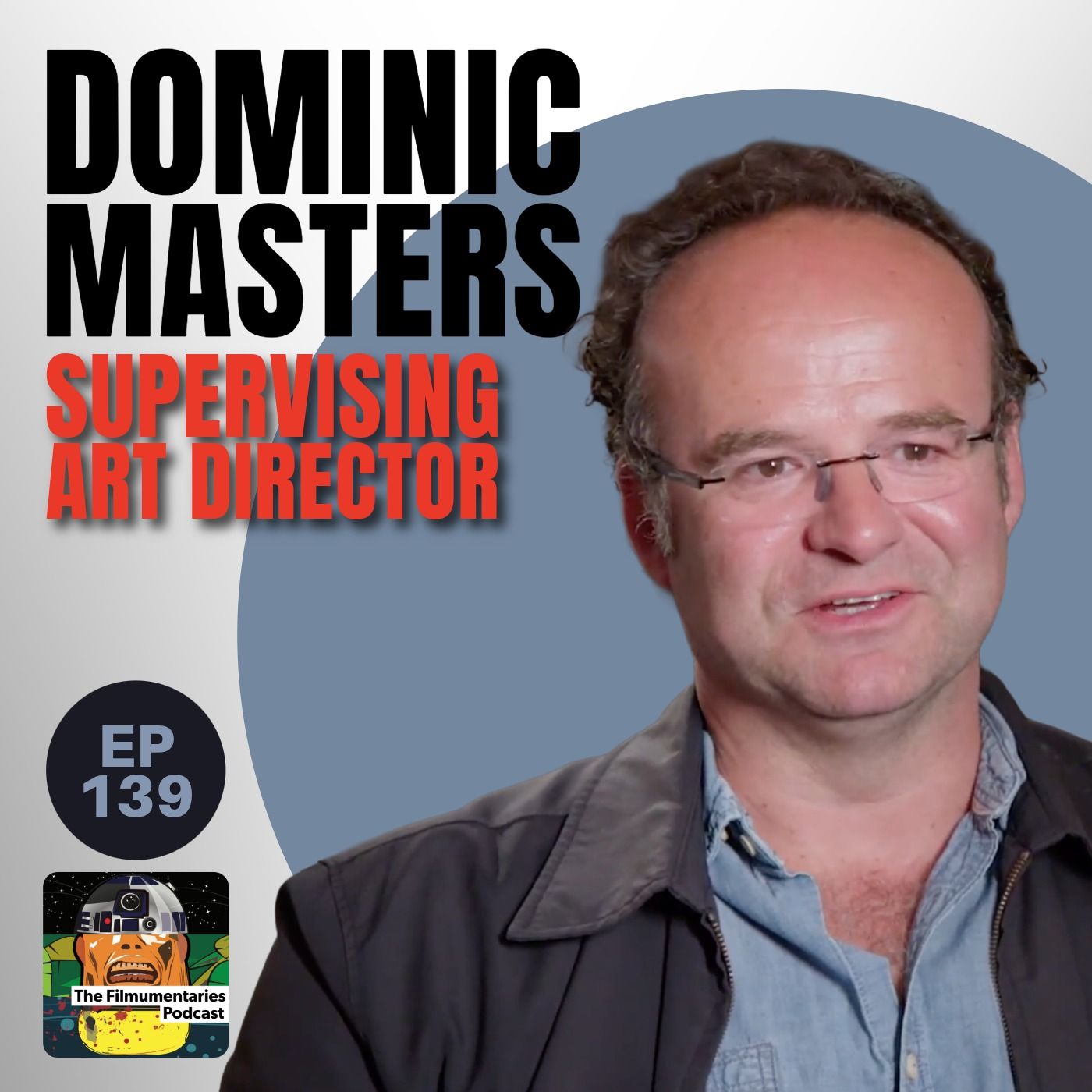
About this episode
Dom talks about learning the foundational skills of drafting, the early struggles of finding work in the British film industry of the mid-80s, and the unique lifestyle of moving from production to production — that strange micro-community that forms on set, often in far-flung locations.
We cover his experiences on Titanic working under James Cameron, the shift from physical sets to set extensions and digital workflows, the evolution of the art department, and how shows like House of the Dragon demand an enormous level of coordination, creativity and technical precision. We also talk about the British Film Designers Guild, the camaraderie that forms in the art department, and his personal creative outlets, photography and music, that keep him balanced between jobs.
It’s a wide-ranging, honest conversation with someone who has seen the industry evolve from the studio backlots of the 1970s to enormous contemporary productions. Topics discussed
- Growing up around film sets and learning from legendary designers
- His first job on Tai-Pan in 1985 and the experience of shooting in China
- The hierarchy and craft of the art department
- Collaboration with directors, designers, construction and VFX
- Working on Titanic and the extraordinary scale of the build
- The Harry Potter films, James Bond films, and shifting directors
- The intensity and scale of House of the Dragon
- Surviving the freelance lifestyle and industry downturns
- Creative outlets outside the job
Selected credits: House of the Dragon, Belfast, Wonder Woman, Now You See Me 2, Casino Royale, Harry Potter, Titanic, The World Is Not Enough, The Avengers.
This podcast is completely independent and made possible by listener support. If you’d like to help me keep making these episodes, you can join my Patreon community here: https://patreon.com/jamiebenning
Watch more on YouTube:
Check out the Filmumentaries YouTube channel for behind-the-scenes clips and extra content: https://youtube.com/filmumentaries
All my links
Transcript
Automatically generated, so expect the odd misheard name.
We are Takuay Media. Hello and welcome to episode one hundred and thirty nine of the Film Heamentary's podcast. I'm Jamie Benning. I'm the host and the creator of this podcast. This week, I'm speaking with art director and supervising art director Dominic Masters, a man who has worked across some of the biggest productions over the last thirty years.
Dom grew up around film sets thanks to his father, the legendary production designer Tony Masters, whose credits include two thousand and one, A Space Odyssey, Papillon June, and many others. Dominic started his career at nineteen when his dad took him to China for eight months, and it was the first Western film ever made in China. We talk about that in the interview. From those early days of drafting in China, through huge builds on Titanic with James Cameron, James Bond, Harry Potter's Wonder Woman Belfast, and now the epic scale of House of the Dragon, his career is really kind of a master class in the art department and what that department does. In our conversation, we talk about the hierarchy inside the art department, the balance between creativity and technical precision and directors who really know what they want.
Also the evolving relationship with VFX, and the madness and brilliance of building ships, medieval cities, and just about everything else in between. And we also get into the unique lifestyle of set life, that strange kind of intense micro community that forms and then vanishes overnight. It's a nice relaxed chat, as I always enjoy having for this podcast with somebody who's really been there and done it and is still doing it to such a great standard. So here's my interview with Dominic Masters, and I'll be back at the end for a bit more jabbering on. I was very fortunate my father was a very successful production designer, having joined the industry I think after the Second World War.
He worked his way through the British film industry and then became a designer, and. You know, he was one of the greats. Really. He did things like two thousand and one, Space Odyssey, Dune, the original June, David Lynch version, Papion, you know, the whole score of movies that established him as one of the best in the world. Really, and I was very fortunate that he took me on really.
I think I went to art school and was going to study fine art and you know, maybe not necessarily go into the family business, if you like, but it became fairly, you know, obvious that that was a that was a very good career path to take. So he got me my first job, which I was very lucky to go to China for eight months on a film called Taipan, the James Clavell novel, which he designed, and he took me on and we went off to China for eight months, and that was in nineteen eighty five, which how old were you then? I was nineteen. I think at that point I sort of spent a year working as a landscape gardener and then Dad said, what do you want a proper job? So you're going.
Off we went and that was the start of it, really, and I was very fortunate to spend a lot of that job actually learning to draft, which is kind of the meat and bones of what the art department does is the technical drawings of design so that you know, you can hand these drawings to carpenters to build. So I was fortunate to get a good grounding on my first job, and then came back to the UK in the I suppose mid to late mid mid eighties eighty five eighty six. Trying to get work at that point was very difficult. It was very sort of. Small kind of industry and there was very few movies being done at that particular point.
Yeah, and so I was out in the big wide world then, trying to find my own job and making tea and you know, prints and all of that that you do for you know, your early works and learning the learning the ropes, so to speak. Yeah, what a hell of an experience they have, though, eight months away on a job and being able to soak all of that stuff up in an environment which was completely alien to you. I would imagine China in the nineteen eighties. It was pretty alien to all of us. It was like, wow, this is you know, this is fairly surreal.
I think it was very much the you know, the days of maulsuits and bicycles and you know, there were wasn't the huge skylines that we see now. You know. It was very very kind of different place, and we were We spent I think two months up in I spent two months up in guan Jao and tom as it was previously called, and we set up you know, offices there and were drawing up for Taipan, which was effectively eighteenth century or nineteenth century or early nineteenth century Hong Kong. You know, the start of Hong Kong was the tale about opium trade and all of that. So we were designing what Hong Kong looked like in eighteen thirty, which was a fascinating thing to do, and just got you know, just got involved in that really.
But China itself was very much, you know, still a communists, but obviously even more so in those days, a communist society. And we were the first film ever to go into China. There was a DeLaurentis, Dino DeLaurentis under his wing, but really produced by Rafaela Drentis, who's his daughter, and we were the first Western movie to go into China and make a film there. Wow, that's amazing. I've been lucky enough to go to China with Formula one.
I think the first time I win there was like two thousand and four, and I could see that transition had already begun, of course, but there were still a lot of the bikes and the suits and everything, and you know, if you pulled a camera out, a security guard would pull the camera down kind of thing, you know, or ask you to delete the image. But yeah, there's something about that kind of international travel, isn't there that just opens your horizons as a young man. I think everybody should do it. Oh absolutely, I mean it's what life is all about for me. I still try and travel at the drop of a hat, you know, as soon as I finish a job, I'm off if I can do yeah, you know, see more of the world, because it's such an amazing and huge.
Place, you know. Yeah, yeah, so yeah, it's kind of it's imperative really to make that part of my life, I think, and I think probably starting from those days, the excitement of you know, getting out to China for eight months when you're nineteen was pretty pretty epic. Yeah. Did you manage to get on the sets of movies before that stage with your dad? Yeah, I mean I was lucky.
So obviously dad had a pretty phenomenal career. I'm in the first. The first sort of memories I have of really what he did was I was very young. I was literally probably about three or four years old going to Shepherdson h Stage and I still remember it very pretty clearly the two thousand and one Moon set where they discover the obelisk. Yeah, right, that's such a great sequest, Yeah, going down and going down.
Yeah, And so I walked that ramp and I still have very sort of vivid memories of doing that and sort of thinking. My god, is this what my dad does? Really kind of going into this strange sort of world, and you know, so I was, you know, from from two thousand and one. That's pretty much my own new memory is just walking that ramp down into the Obelisk set. But over the years, obviously we used to whenever he was working at studios, we'd go, you know, for a day and hang.
Out with him, and you'd walk with. The back lot sets that were up in those days. It used to be the Oliver Twist set designed by the great John Box that was always a Shepperton, and you know, various sort of carry on movie sets that would sort of you know that everybody would readjust the set for each movie. So these these sort of western sets that were standing sets around various studios around London that used to get developed by each movie. They'd change it a little bit and they'll always been developing.
But they'd always be slightly rotting away because you know, nobody really had the money to look after them, so eventually they all got scrapped. But I remember doing that as a kid. We were lucky to go on to location when he did Papion to Jamaica, went out to Montego Bay and they were shooting all over Jamaica. So he used to go to all the all the parties with Steve McQueen and Dustin Hoffman and you. Know, Frank Schaffner, the director used to.
Throw parties, and we were very lucky as kids, my brothers and I to be invited. We go along too that and I remember. Sitting on Dustin Hoffman's knee for an evening while he told us dirty stories. For I was only about eight years old, but it was a good memory. He kind of wanted to keep away, I think from the bulk of the you know, the crew.
He was quite a shy man, so he was happier talking to us kids than he was hanging out with Steve McQueen and the rest of the crew. I sensed, you know. But so those those kind of experiences we grew up with. My mother was also an actress and she you know, she she had a very strong career in her youth, won a bafter and things like that. Head the Sears used to and she did films with Joan Crawford and things like that.
So so we were part of that gang I suppose of movie brats, if you like the UK version. And yeah, we used to sort of get brought up fairly, and you know we used to we used to, as I say, go to the go to the sets and see it all. Yeah. Did you did you ever feel that there was a performer within you as well, like your mother or did your waist spill? Yourself was firmly behind the scenes.
Uh? No, school play, you know, I played. I played Scrooge in Christmas Carol and that was about the summit of my acting career when I was about twelve. But no, never, never really seriously entertained that idea. But now it seemed that the design side.
I was always very key non art and love drawing and all that kind of stuff, So it was I was definitely heading that way. I think, Yeah, it's one thing to have that keenness to do the design and the drawing and the drafting and all of that stuff, but also the other part of life on movie sets is of course, just that sort of little microcosm of a life for six months or eight months or ten months. Was that something you were attracted to as well, this idea that you'd be working together with a team and then you know, everything is then taken back down and you start again. I mean it is you know, as you the more you the more you do, the more you see that that is real, you know, you do all come together.
It's an amazing thing we once had, we've done. I think it was the World Is Not Enough for one of the Bond movies, and they got in a business school to come and spend a couple of weeks with us on the set just to sort of figure out how the film industry works and what the business, you know, how it operates. And so we had these students that were around and asking loads of questions and all this and then report was quite an interesting read, you know, in terms of how you you you bring all these people together for a very short amount of time for some very intense periods of work, with very tricky things to try and work out, and more often than not new things that we've never done before. And that the actual sort of you know, the unique uniqueness of that business model I think doesn't really happen in too many other industries, where you all come together and then you're all fired again, you know, and you've you've smashed out this sort of a month of intense filmmaking or whatever it is in the meantime, and you you know, if you're lucky, you'll be working with similar teams on the next job, you know, but quite often there'll be a whole new bunch of people and you'll have to figure out how they work, what their strengths and weaknesses are, how you who to go to when things are getting tough or there's a mist or you know, or all of those things you have to learn each time you start a new project.
Yeah, unless you're doing something like I'm doing currently, which is House of the Dragons, for it's a repeat crew and everybody comes back time and time again. You're always trying to find out, you know, the best way to get these jobs done in a short amount of time, and you know that that takes a lot of collaboration and a lot of discipline from everybody involved, really, because you know, if there's one department that falls down we can all come tumbling down behind it, you know, so you try and bowl everybody tries to work together to keep to keep the. Shell on the road, you know. Yeah, yeah, especially especially if you're on a location where you're all living side by side and you're somewhere in eastern Europe or wherever you and you might end up.
You know, you will bond. Yeah, you hope you will bond in a good way. You know. Yeah. It's very rare, isn't it.
I think it's part partly like my part of the TV industry as well, where you know, you have breakfast with those people, and you have lunch with those people, when you go out for dinner with those people, when you go out for drinks afterwards with those people, and it is just this, like I said, a microcosm of like a wider life really, but yeah, I think, yeah, there's something about that continuity, isn't there That shorthand with people where you can on. A series that has the dragon. I'm sure now that you're. Sort of obviously coming across challenges daily, but also you've been coming into your stride to the point where you know where the difficulties can be and you can spot them earlier and all of that kind of thing.
Absolutely, you you, you know, we have a certain shorthand and language that we all understand. And I think because of a show like that, where the schedule is is you know crazy sometimes. And it is the only way to get the show done. But if you've got you know, eight episodes and a huge cast and four or five directors all sort of trying to piece this extraordinary machine together. Yeah, you you when you've done one of those shows, it's you kind of see how it works.
But going into an episodic TV show, and I've always done movies, it was very. Much a learning curve just to see around. So we might be shooting episode eight on a on a set in the morning, and by lunchtime we're on episode one, and you have to then figure out, okay, so what of the what's the dressing changes? Well, you know, has the place burnt down if they matched it up, you know all these things, and you're going you're you're going between yeah, very very much. You know, different periods in the show.
But because of the schedule, you know, you don't move the unit from a from a set because that that loses time and loses money. You you change the set to suit what's being shot that day. So there's a lot of. Scheduling, wrangling, a lot of wrangling, and a lot of work from a lot of people to keep keep those kind of programs, you know, on the on the road. Yeah, I mean you're essentially creating like a fifteen hour movie or something, aren't.
You on correct? I mean it's yeah, because. The production values aren't any different anymore, are they? Film? Certainly not.
This show. This is very high end and you know, very high end quality, and it is effectively if you're doing eight I think season one we did ten episodes, so really in effect each hour long episode, yeah, you're doing five movies, you know, at one time. Really, it's kind of how it feels, you know, the amount of stuff you've got to do. So they're pretty intense shows. Yeah, a lot of a lot of you know, they're fairly relentless.
But it's lovely stuff to do, and we've got great teams and you know, good people on it that sort of everybody supports everyone to get through it. Yeah, yeah, yeah, I can imagine. I'm always interested to find out how people kind of define their jobs, and I'm also interested in the sort of ladder that you climb. You know, I can see that you went from jasman to assistant art director art director. Is that a path you always felt like you were on in the following in the footsteps of your dad, or was ever a point where you sort of wanted a veer off into something else.
I've just thrown about ten different questions at you. There, But I mean, I think once you start, my dad sadly passed away in nineteen ninety, so he got me on the ladder, so to speak, as I think I've started as at what I did start as an art department of the system, which is, you know, where everybody who gets into the art department starts, and there's always been a hierarchy within the art department. And that's totally correct and good in that you need to learn each stage of the job so that you you know, we're a technical department and there's a lot of information and a lot of skill that you need to learn and develop over your career to be able to call yourself, you know, a competent art director or designer or supervising art director or draftsman even And we were always trained I think you know the original art departments back in the forties and fifties.
We learned how to do it, I think from the Americans, and then we very much ran with it as our system. And as I say, it's always been a hierarchical department because I think if you jump too quickly through the levels, you'll come a cropper, you know, because your knowledge won't be. Enough to sustain what's being asked of you. And slowly, slowly, there's always been my approach to going through a career development and I think it's probably the proper way so that we still stay strong as a department, because if you promote people too quickly, then you know there are there are screw ups and problems and. Blah blah blah.
And then as a as a general department, we start for the weekend. So it's it's really key that people learn their craft. I think, yeah, yeah, I've had it with in my part of the industry, where people have climbed that ladder very quickly and haven't necessarily put in the sort of the due diligence and the and the time that's needed, because then what happens is the people below them start filling in the gaps that they don't know about, and it makes everybody's job harder, doesn't it. Yeah, it does indeed. And you know we've been we've got some and always have had some amazing talent within the British film industry and the British art departments, and we've all learned from you know, I learned from some of the greats and work with some of the legendary designers and legendary art directors who you know, have held the knowledge if you like, and passed it on.
And it's our job to keep doing that and to keep passing on what we know, what we've learned from them, because it's you know, it's a definite, you know, skill that you have to You can you can have artistic merit, and you can have a sense of design, and you can have a sense of proportion all these things, but unless you know how to use that in a technical manner to lay out a drawing so that you can throw that drawing to a workshop three hundred yards away and they know exactly what it is they're supposed to be building without having the get on the phone. And say well what does that mean? And so those technical aspects we are I hope we are artistic in our department because we're supposed to be the art department, but the technical side of it is really the meat.
And bones of the bulk of the department. Obviously, the designer is the real creative end, and we hope that we bring creativity that you know, gives flourishes to the designer's work as we then develop the drawings into technical stuff. But you sort of you need a bit of both. Yeah, I can imagine it's quite a difficult sort of line to straddle that technical and artistic as well for a lot of people. You know, sometimes I meet people that are one or the other.
It's very rare actually you'll meet somebody who's both. Well, I think we you know, we have those people. We're very fortunate, and those people will you know, get to the top because you need that dual talent if you like. Yeah, and I imagine it can be a really big department with you know, with a fast moving operation like you just mentioned on Out of the Dragon. How do you go Abauck keeping everyone aligned because you've got you know, you've got draftsmen, you've got the production designer at the top, you've got the art directs, You've got painters, You've got you know, props.
I mean, there's just so many people involved. Are you having meetings as a whole daily or are you kind of divided up into smaller departments where each one has a head. We certainly a through construct and props their their their own kind of outfit. Really, we have a construction manager who effectively heads up the plasters, painters, carpenters, metal workers, uh, you know that that kind of thing, and the prop master looks after the whole proper teams. And through the art department.
And it's kind of what I was saying earlier in that we are, you know, we're fairly structured and it's a well trodden kind of path in terms of how designs get through to the workshops. So we would normally start with early days, you'd hope, on a show like House of Dragons, we were in early. Myself and the designer, Jim Clay, We begin work quite a long time before many of the other departments because it's it's all about the development of the look of the show and what's coming up and how that's going to work. And so Jim will do his initial designs that will go through to Ryan and then through to the directors to be approved, and then we start working them up. So then maybe you have a concept artist who will take Jim's original water colors, which he does which are beautiful, but the concept art is more often more detailed and kind of true to the camera image that we're trying to present.
And once all that's approved, it's my job then to take those designs and farm them out to different art directors for different sets and say, right, okay, this is what we're doing, and Jim will talk them through the set and we'll start drawing up the necessaries we worked up, you know what stage we have to build it on, make sure we've got enough room to do what we need to do, make sure that the set is accommodating all the action that is required, and then very much, okay, what's the look of this. How can we make it's really cool? You know? And the art directors then start doing the technical drawings of the whole sets, which we would do at a slightly smaller scale, and then those drawings get fed out to the assistant art directors and draftsmen to start doing the details of you know, right, what's this door going to look like, where's the door handle, what's the molding is going to be on this door to make this look like an authentic medieval door.
You know, where are we getting this information from? So we go to books, we go to you know, online, and we look up you know, certainly for this show, which is medieval, we go through to you know, wonderful old Encyclopedia Medieval, which is a classic sort of textbook that we will use to to you know, get a lot of detail of how medieval architecture was and what the you know, the structure is and the proportions and that we do. And you've also got to keep it within the law of the show as well. Right, do you have an ex Do you have an expert on site for that that says, well, actually, that wouldn't be there because nothing isn't happening. On site.
Ryan Condall, who's the show runner, he's an expert on site. Who will you say yay or nay if we're going slightly off pieced, he'll put us back on track. But I think. We very much understand the language of wester Ross now, which was obviously game set by Game of Thrones, So we can't go too far from what was established as a as a look for Game of Thrones, but we very much, I think expanded four. House of Dragons were a much bigger show in terms of the scale of the sets and what we're what we're achieving for House of Dragon is Yeah.
I think it was described as Game of Thrones on steroids, and I think that's a fairly good. Analogy, which is something to say. Yeah, but you know, depending on what you're doing, you might be doing medieval one year and then you might be doing Star Wars the next, or you might be doing you know, sixteenth century Paris or whatever it is. But all our work. To try and keep it on track with If you're doing that kind of thing, it's in the books, you know, you go to your architectural books, you go to libraries, if you sort out what things look like, so you don't you get it right, And I think, you know, more often than not a lot of people don't realize when they see a film or a show that that's a set.
And if they believe. They're in a real place, then we've done our work well and we've you know, we've been true to history and architecture and got it right. Yeah, yeah, you want that almost that you don't want people to think about it. Ultimately, you want it to be a sort of subliminal thing that people just accept, Okay, this is that world. It feels right, and then you move on.
You know, you hope they'll be amazed by it, but you hope they'll believe it. Yeah, you want the wow factor. Of course. That's another thing I guess you're considering constantly as well, is that creative ambition versus the budget reality if you like, I mean, I I want to show like this for for HBO. Obviously the bu budgets are larger.
It doesn't mean that you're in any way more or less careful than you would be on a small budget thing, because ultimately you've got to always make it fit within that budget. Yeah, it's always relative. Yeah, I mean, you know, ambitions are always greater than you know, what we have in the pot, and you know you have to make that work. And so there's a there's a there's a degree of. You know, the early stages of any film or TV show or whatever, where you let your imagination run and you create these wonderful things and then and then you put a figure against it and then it's like, all right, well maybe maybe just a little bit smaller on you have to make you have to fit the figures as much as you can.
Sometimes sometimes that becomes you know, certain sets go over and you try and balance it with with you know, the spending on another set to to kind of make the bottom line work. But it's it's a it's a juggling act budgeting, you know, and we try, you know, to hit the mark, but it's you know, it's it's always a kind of a shot in the dark because we're inevitably putting figures into a budget very early on in the show when we don't really know what it is they want, or what they want to produce, or what even what they're going to shoot you need, so you have to have a stab at it and then that goes in and it's locked as a budget, and then somehow you have to make that work with all the different requirements and everybody's.
Latest ideas and wouldn't it be nice if and you have to. Sort of think, okay, well we can't actually do that, but we could give you this, you know. So there's a lot of sort of wrangling goes on just to hit the. Figures, and that's kind of partly my job and construction manager and gym the designer certainly for House of Dragons, you know, yeah, kind of work that through between us. I would imagine as well that something that's changed over your career is your interaction with the VFX department, where and how do you kind of communicate with those those teams, how do you sort of find the line between actually it's going to be cheaper to do this set extension make it two stories high physically, or it's going to be cheaper to do it in visual effects.
Because of course, you know, when you're budgeting something, you might be twelve months down the line to actually doing it our six months, let's say, by which time there might be a new technology involved. You have to be sort of agile as well, I would imagine. I think so. I mean, we certainly working with Jim Clay, who I've worked with for many years now. He will always designed to fill the stage as much as possible, whatever the size of the stages that we're given.
Gym sets will normally, you know, will inever to be beers tied to the stage walls as possible so that we're getting as much in camera as we possibly can, but bearing in mind that, Okay, so we could put you know, in the digital world, we could extend this set up and that could go you know, thirty foot higher, and we can put great big window up here. There could be you know, we've got a big open archway door that we could then put blue screen behind and then throw that view you know, two hundred foot if we want to, or you can put the mountains out there, or you know, all of those things I think we consider as we design the sets. You know, so we're trying to think beyond what is physically built to the world beyond.
And I know that's you know, a very important thing for a production designer to not hand everything over to the visual effects department and say you carry on, because then you lose the uh, you know, the solid well not control so much, but the look that that we're trying to create. Unless it comes from us to. A degree, then you might find somebody in you know, New Zealand is extending your set but not understanding. The architecture that we're trying to set and that kind of stuff. So you need to have figured it out to a degree that we can't do it all, and we often do have to rely on the sensitivity of the visual of X department, and often they're they're amazing and very collaborative and we all work very harmoniously, but it should come from the production designer what the what the the development is of those images.
I'm sure it changes from job to job, but some directors are very sort of visually aware. They're almost kind of production designers art directors in their own way. How does that differ for you when they come already pre loaded with this stuff? Does that make that easier for you as a land department or does it do you find that there's sometimes clashes? I think it can be if they're if they're really solid and they know what they're talking about, it could be great because you know, you've got a very direct line into what they're thinking.
And I think that that actually can be very helpful. And I think there has to be a bit of understanding though between a director and a design whereby yes, they come in with a very strong image, but they have to be able to trust their designers to give them more, you know, and to take what they come in with and then expand that into something perhaps they didn't you know, imagine or think of and that's why you employ a. Designer to take those ideas. So even those very strong designers, I'd imagine my father with Kubrick as an example of Stanley Kubrick obviously one of those directors who totally had a very firm, fixed idea and what he wanted things to be. But at the same time, my father, being a truly great designer, took all of that on and developed the look for Stanley.
But you'd hope that that You'd hope you have a director who's a visual Some of them aren't, and you do have to then provide them and cajole them into certain things and you know, talk them through it. They often. Before we really got into the world of concept design, which has been I suppose pretty strong now for the last twenty years or so, it's been a new sort of a new kind of field. We used to try and we build models, and we do technical drawings and we try and show the directors what the set was going to be through through that, and more often than not, modern directors these days don't really understand drawings, and they kind of they can see it. They can see a card model and sometimes they love that, but some of them are like, oh, I can't really visualize this, so they work to concept art, which in some ways can be a problem for us because concept artists generally are wonderful, but they're not beholden to a budget, and they're not beholden to stage size and not beholden to the so they sell an image sometimes.
That can be beyond what achievable. So it's a it's a sort of it's a bit of a you know, a melee of problems trying to get the directors to you know, sign off and be happy with the set. Do you ever work with previs on that side of things? You ever build three D models in the computer to sort of show how the studio might contain a set or a degree. I think we're again that's sort of we don't really do too much of that in our department.
I think more some departments are much more techy than say, what we're doing. We we obviously we're capable of creating digital models of the set and walking the director through them and all that sort of stuff, but because you know, we're always up against such time constraints and we've got a whole hungry team of construction people waiting for drawings. That feels to me quite often like a bit of a luxury that we can't spend, you know, months developing digital model and making it all yeah, all singing or dancing. We've actually got to produce drawings because we've got to get the sets built. Practical previs and that kind of stuff.
Visual effects handle a lot of that. We hand them are digital models and then they'll then take that into previs and do proper you know, journeys through the sets. We don't really take that on that often in our particular department. I know some other departments do, but we don't. Yeah.
I was also going to just going back on to that thought about directors as well, because you've worked on several series, if you like, you know Bond, there's Harry Potter, and the director's changed throughout those I mean, going from Chris Columbus on the Chamber of Secrets and Philosopher's Stone or Sorcerer's Stone as they call it in the States. Yes, you know, he sort of set the look of those movies right, and then in comes Alfonso Korn who you know changed it up. Was that something you kind of list at the time that you know, we're going to kind of reinvent the wheel here, or did it mean that you had to put so much of what you'd already done, you know, in the trash and start again. I'm not sure that we reinvented the wheel with it too much.
I think it was it was the sets. Were the sets more of an evolution, I guess, isn't it. I think an evolution is a reasonable way of describing it. But I don't think, you know, we we had, say, with Stuart Craig, brilliant Stuart Craig had created the world in the first two films, so it wasn't like you could you could, you know, raise it to the ground and build it up again. It had to be.
Fluid as a as a concept and a look, but within what we'd created as a style. So I think I think our farmso went with it, and I don't know that there were too many dramatic visual changes in terms of what we built. I think it was still everything was still heavily based in real architecture and real you know, the real sort of Gothic with a twist. But I think stylistically the film was different, certainly had a different pacing and a different look, and it's kind of edgier and you know, certainly a bit more rock and roll, and. You know than the previous two had been, which was obviously brought to it.
Yeah, do you do you step back sometimes and have a look at the films that you've worked on and think, wow, that looks pretty bloody amazing. Actually, because it's difficult is that when you're in it to sort of see all the nuts and bolts, it's easy. You can see you know, the patches and the tape and whatever in your mind and you can see the job that you did, and then seeing it on the film translated, you're able to be like an audience member when you see a movie. Not first time around. I have to.
See it once and then see it again. But you know, I think I think we have we have a golden day on every film set, you hope, where we've got the set ready, the set is dressed, they've lit it, we're waiting for the unit to come in the following day or whatever, and the set is yours for that day. Before they bring in the dolly in, before they set up you know, catering, and they bring in the video assist and all the tents and all that that fill the setup. So you get that that day of standing back and looking at at the set and on many you know jobs, you know, I'm still astounded every time I walk down onto a good film set of the craftsmanship and the level of finish and you know, plaster work and paint and design and props and set dressing and you know, to bring it all together is amazing.
And then and then you see it on film and you hope they've captured it and you you know, they've lit it nicely and all that, and the more often they have and you sort of can appreciate it, but I will always be needing to sit twice to. To not sit there and criticize it. Yeah, God, that should have been better, you know. Yeah, Yeah, I'm kind of the other way around as an audience member. I'll watch it first, just let it kind of wash over me, and then the second viewing and that's when I'm sort of saying.
We'll hang on that. Yeah, that doesn't fit and. Why is why she said that? That doesn't feel like her character? Yeah?
Yeah, I saw that. You also worked on Titanic for James Cameron was that was that? Was that in Mexico? Was it started? We started in Leaveston Studios.
Yeah, London, did you I didn't know that, Yeah we did. We did I think to two months of draw drawing and design development in Leavestone where we were I think a piece of Lamont. The production designer had managed to get hold of the original steel drawings from Harlan and Wolf, which were the original designers of Titanic in in Belfast, so we got some. So we've got a few of the drawers nothing, you know, not the whole ship or anything, but we knew kind of the spacing of what where the steels were, where the windows were and all that because we had the original drawing. So the first couple of months was in the UK trying to figure out that, and then we flew to Mexico City.
It was a very small English contingent flew up to Mexico City and we had a Mexican art department there who were fantastic but all very new to it, so we were having to teach them pretty much how to how to draw. And the Titanic, being eight hundred odd foot long, is a hell of a thing for anybody to. Try and draw and we were you know, once. We'd established the basic shape of it from the steel drawings, we then said, right, well, what's the detail of this ship? What did it actually look look like?
And of course very few photographs of Titanic actually existed, so there's like a handful of shots that were taken on setting sales from Southampton, and I think there was some taken on the first journey from Belfast down to Southampton and then blah blah blah, and then the thing sang, so we had a very limited amount of reference. We had. The sister ship, the Olympic, which was very similar to Titanic, which obviously lasted longer, and so there are a few photographs of that. But it was a historical piece of research for us as a as a team to try and and get it as accurate as possible, because Cameron was insistent that we had a perfect, you know, representation of the ship, and quite rightly and.
The tough director to work for, yeah, yeah, yeah, because he again again he's another one who is an artist, isn't he. I mean he was doing the paintings, wasn't he was working visual effects. He's got a very defined idea of what he wants to see. He totally does. He draws, you know, and he understated he's one of those that understands everybody's job, you know, is an extraordinary skill.
He's an extraordinary man. He's you know, as you right, I said, he's tough to work for, and that he's very exacting and very kind of strong and knows what he wants and won't be shy and telling people when things are not going quite as they should. That's another part of your job, don being a diplomat as well, to do. You know. I had lunch with Michael Ford many years ago.
Lovely Michael. Yeah, I met him just a few years before he passed away. Sadly his memory wasn't his immediate memory wasn't great by that point. But I had a lovely dinner with him and Peter Lamont as well, and yeah, just he told me some of those stories of working on that film, just how difficult it was on everybody. But you know, he always you know, he won obviously got the Oscar, the team on the Oscar for that, and the sense of achievement seems to have, you know, put all of those moments of stress sort of to bed.
In a way because awards. Yeah, yeah, I mean it's nice to be recognized, isn't it for something, particularly something of that scale. Well, something of that scale that we you know, we didn't really know when we started it. Obviously we knew James Cameron and Peter had worked with James on True Lies and the Alien Aliens, so he knew the man we were dealing with, we didn't really and we weren't really sure why anybody would want to go and see a film. About the Titanic, and we thinking.
Well, okay, well, when you know, we we were pretty quick to understand the scale of the project when we were in the UK, this. Is going to be a ride. And then by the time we got to Mexico City, things were hotting up in Rosa Rito, which is the north of Mexico, close to the border of with Tijuana and San Diego, where they purchased a plot of land there to create Rosa Rito Studios. And then we moved up after a couple of months to the site. There where the ship was going to be built and the stages were being built and we were dynamiting the tank.
When we first arrived, I think we were one of the first ones in and we were in little porter cabins that had no air conditioning, and we were wetting all over our drawings, and every hour or so we'd have to leave the site while they dynamited the tank out, so we'd all run up to the main road and great explosion dust would cover the whole site and cover all our drawings and all this. So we knew we were into something really rather unusual from the get go. And then you know, when you start seeing eight hundred foot of steel starting to go up, and the technical kind of headaches of making all of that work, and the interaction with special effects in that the thing had to sink, you know, the complications of that build were second to none, and I don't ever be anything like it again.
I mean, they built the whole thing on. It was a big mess, huge steel frame that we built, and that was all put on hydraulic cable that special effects work through so that you could you could you could slacken the cable off across the width of the ship. The steel frame sat on that and you could slacken. The the hydraulics and let the ship sink, so you could you could, you know, cables at this end, you could you could you could drop so that the ship would start to go down into the into the tank, into the water, and then you could bring it up again and go for take two just by lifting up the cables. And it was an extraordinary feat of engineering.
Yeah, because the sturdiness of bringing something up again to do it again, I mean. Well absolutely, I mean it was phenomenal. And you know, the build itself was phenomenal just to recreate every rivet that was on the side of the ship was pretty much correct because we worked it all out and we put them all in the correct place, all the steel plating on the side of the hull, the window positions, the detailing, the doors, the funnels. It was an exact replica of Titanic, only forty five foot shorter. I think from memory we cut about forty five foot down and I still don't really understand why we did that, but we did.
And then of course we had the tilting poop deck set, which was at the end of the film where Jack and Rose end up on the railing before it all goes down, And that was itself was an extraordinary, you know, engineering wonder to be able to pick that whole deck up and do that and then lower it again. So a lot of really you know, technical things that had never been done before or achieved on that movie. And for you know, whether you like the film or not, whether you think it's a bit hammy, it's still an extraordinary achievement that that job. And we were, you know, we were blown away with it and very fortunate to have been involved. You know.
Yeah, it's it does feel like I mean, it's in my mind it's still ninety seven, is still fairly recent, but it does seem like you said that nothing like that's ever going to happen again with the avent of technology today. Yeah, and just that sort of that single mindedness of a director like Cameron to do something like that. I mean I've spoken to people who worked on the Abyss with him, you know, when they built that giant water tank, and yeah, I mean it's just it just wouldn't happen today. Just it really wouldn't. Know, it really wouldn't.
I don't think you'd ever get it financed, you know, something of that scale. I mean, you know, Cameron put a lot of his own money into that, and I think he deferred some of his fee to be able to kind of achieve it, but just the sheer scale. Of what was achieved on that, I. Don't really see it anybody stupidly want to do it again. Yeah, because I remember the press at the time it was sort of destined to be a flop in a way, because every headline was overspend.
It was you know, too many days, it was this, that and the other. Yeah, the press seemed to want it to be, like you said, They wanted to see Cameron and his crew fail, but to come out the other side to have what I think it didn't overtake Star Wars as the most successful film all time. I remember there was an advert in maybe a variety of of like the Star Wars characters looking at the Titanic or something, there's a little message from George lu because it was it was a sort of handing off of Wow, you've achieved something amazing. And then to get all the oscars and all of that incredible, really, and it sort of really bookends a period in the film industry, you know, based on what we've just been talking about, where people just couldn't do that anymore.
Great to be a part of something like that. It was interesting to see you know, when you see the final movie, some of the very basic visual effects that were creeping into. You know, moving making in those days. And yeah, like those fly past what you could see people walking on. The deck and things like that.
That was really the beginning of of that world taking over, I think, And obviously cameraon loves loves his visual effects, so he was good to go and run with that. It's obviously the future of it. But we did a lot in camera on that show as well, you know, huge painted backdrops of sunsets and things like that. Right, you know, if you're without that there, you'd be looking at a little fishing village in Rosato. But we, you know, had scenic artists who painted the backdrops and obviously nowadays it will be blue screen, but it was.
It was a real scenic painted, you know world in those days. Yeah, did you coming off the back of that job? I mean, A did you take a break first? And then B did you sort of relish getting into a smaller project or looking on IMDb, I think he was straight into something like the Avengers or the world is not enough for. Remember what did we do somewhere here?
I'm not actually sure what did straight after that? Probably The Avengers. Yeah. I think it was the Race Fine Zuma Thurman. Yeah movie which unfortunately wasn't very good, but a lovely film to work on with Stuart Craig, first time working Yeah, yeah, the great Stuart Craig, and we did some beautiful sets, but the film was not not want to be.
Yeah, I came and really quickly didn't it. Yeah, Yeah, but that again, you know that there's still big movies so so, and then I think, yes, then it was into into Bond movies we've done prior to Titanic, We've done GoldenEye with Peter Lamont, which was the first. First Brosenam Bond, which was his best one. I feel, yeah, it was great. Yeah, And then I think after The Avengers we did the second second Brosma, which is The World Is Not Enough, which again was not one of the best more movies, but really have a really lovely time doing it.
And those movies are always huge and challenging and they keep you on your toes in terms of right, we're going to really ramp up the action this time, and then you know a lot of stunts and special effects and trying to do each other, but lovely things to work on a really really nice people and good fun always good nice locations. Yes, yeah, and I guess again you've got that sort of continuity with those people. And do you work on of like a freelance basis? Then are you your own limited company if you like? Yeah, I'm just I'm not a limited company.
You're a sole trader. So lots of people are a limited company. I don't have the discipline for that, So stick as a scheduled d kind of guy. But then you'll get a call from somebody who says that I'm going to be working on this show. I really like you to be involved, and you're sort of signing on the dotted line for the next however many months.
I think that's how we all work as freelancers. Yeah, you just wait for the next call. I mean. The joys of doing House of the Dragons is you're pretty sure it's coming, you know, and so you can plan your life a little, whereas the real sort of film world you never know what's around the corner, and so you literally are you finish your job, right? I go on holiday?
Or do I save the money? You know? Yeah, well that's what I was going to ask. Do you ever get can you ever get comfortable in those moments where the phone isn't ringing? Like what?
I try not to think about it. I think most you know, if you if you if you're going to spend your life really panicking about where the next dollars coming from, then you're probably in the wrong industry. And you know, the more you do, the more you get used to having to put a little aside for rainy day and not kind of be too extravagant in your lifestyle. And you know, in the knowledge that it could be two months away, it could be six months away. You know.
I've had periods earlier on in my career where you'd have eight months out of work along with everybody else because you know, the industry was collapsed or you know. And we've been very fortunate, I think, certainly in the UK, not so much in the States, that our industry has flourished massively over the last ten years or so. All the studios around they're continually extending stages and studio space and all that. And we were doing great until COVID, and then COVID hit and everybody had a rethink. And I think we're still still trying to recover from that rather disastrous period followed by the actors strike.
So yeah, I think producers have taken a little step back and thought, Okay, how are we going to spend our money here? You know, it's not the gold rush that we had for the last few years, and I think a lot of people in the. Industry have. Slightly come a cropper in that they believed, you know, they're new to the industry, certainly from the two thousands and you know, twenty ten onwards, that that life was always going to be like this. But you know, us old old hands, you know, been around in the eighties and the nineties it was very much you know, ac quiet a time, and we're sort of slightly more used to the periods of unemployment than some of the younger members of the UK film industry.
So it's been tough for people. Yeah, yeah, it's the same in my part of the industry. You know, working in live TV, usually it doesn't suffer when there's a recession or there's a downturn because everyone's at home watching live sport and TV. But with advertising revenue kind of dropping off and the model disappearing, it's there's this period now of readjustment and realignment of where the revenue's coming from. And I haven't really quite figured it out.
I'm luckily enough to be on you know, big sports like Formula one and athletics and things, so you know, this fairly insulated. But now you're right about that. There was that period, wasn't there where I think there was like every bit of studio space was booked out for four years in the UK or something, and anyway, you know, there were new studios popping up. What's the one down in Shinfield kind of popped up fairly recently. I was down there maybe six or eight months ago.
There are only two stages being used out of I don't know however many they've got, but yeah, no difficult times. Well I hope, you know, I hope it does pick up. It feels like these things do sort of go in cycles. There was that period, wasn't there when the boom in the eighties here with a lot of the Hollywood directors coming over with the tax breaks and everything, and then of course El Streets sort of selling off half of the plot to Tescos and things like that. But then it does seem to sort of ebb and flow so I hope it does.
I think it will. I think, you know, I think I think it will pick up again. It seems to be, you know, steadily the you know, the arc is increasing, I think a little bit more now, so hopefully to keep everyone entertained. Yeah, I know that a lot of people when they get a bit of free time with their work or they you know, have a bit of leave or whatever, they'll go and do something creative. They'll pain, or they'll build or extend their house or whatever it is.
What does somebody who's doing that stuff constantly is their job do? What do you do in your spare time? Well, it's going to sound a bit pontious, but I'd like to think of myself as a creative person and coming through the art department over the years, being able to use my creativity. Until you get to a point where a supervising art director and you're not really doing creative work. You're more running the show and you're sort of out budget some schedules and you're looking, let checking on everybody else who's being creative and making sure they're doing the right things.
And you know, so there's a lot of that. So I very much when I do finish work, need that outlet to do go and do something creative. And so I'm very keen photographer. I do my own music, and so I'm very serious about that, but as a hobby. But I'll take it very seriously.
I don't never make any money out of it. But it's just for me and I. Have to do that end game, is it. Yeah? No, yeah, I have to do that to keep myselfs saying, otherwise i'd be So it's like, is it all just about spreadsheets?
You know? So so I have to find that outlet to do something for myself as well. Yea. Once, once I'm done on a project, I try and find that. And travel helps with that because I'm saying, key photographer.
So I grab my camera and off I go. Nice. Yeah, And when you are waiting for the phone to ring and a job comes in, do you sort of equally relish those big tent pole movies like Wonder Woman and you know, the Harry Potters of the world. Do you like. Prefer to work I mean obviously difficult to say, but do you or do you prefer to work on something like, you know, Belfast with Kenneth Brown, smaller unit kind.
Of yeah, they're they're also different. Really. Yeah, I loved working on Belfast. It was a fabulous little thing to do, and you know, we were all badly paid and all that, but it was good fun. And we we had a very tight little budget and we had to build Belfast streets that we could you know, smash up and have riots in and all that kind of stuff.
So it wasn't like we could really go to a location where was that strange enough At Farmborough Airfield there was a car park there and we built it there and with a very limited amount of money, and you know, we had Jim Clay up ladders, painting, painting the set, and myself were all sort of you know, getting stuck in because you didn't have enough people and we didn't have enough time or enough money. So everybody was just you know, jumping in. On it as well. Sorry that was They have their own challenges, you were saying, Yeah. Totally, I mean we you know COVID really kind of it was very strange time to work.
I mean we had to do a COVID friendly street riot and you know, we couldn't have people mixing, so they all had to be wearing ballet clavas and things around here where obviously they had masks underneath, but it was you know, those are the rules we were kind of working to. So those kind of little movies were lovely to do in many ways, just as much as the big ones. The big they have their same problems because you're really just scaling down the same issues, you know, and you've got less money to do something with, so so it can create its own headaches. But the big ones are you know, you get to do more exciting stuff. M Yeah, and do you have are you part of a union as well?
I'm not personally no, I mean there is back to union. I'm not really you know, I don't really have too much to do with that. No, just really My question I guess was do you, as people that work in the art department do you have do you meet up at any time? Do you sort of discuss each other's work? Do you have a journey?
Is there a magazine? Is there a way. To interact with each other? There's a nice thing that the British Film Designers Guild is. A you know, a.
Group of. Art department members really well, you know, sign up for that and there's various events and portfolio reviews and bits and pieces that they set up continually through the year and get young people, you know, starting out in the industry can join and meet some of us old timers, you know, and they do social events and we have an awards ceremony at the end of each year on February. I'm sure it's a great do you know, very sort of glamorous. Everyone togs up and goes to it, and then the whole departments everybody meets, you know, and you see all your old pals, and then you do sit around and chat and you know, find out what everybody's doing or what's coming up, and it can be very social.
And then there's obviously you go through your career and you make friendships, so you sort of every now and again you just meet up with somebody and catch up. So it's yeah, we definitely try and keep a little sort of film industry. Family going, if you know what I mean, and you do. Sadly quite often you only meet up at funerals these days, but it's you know, that's when everybody comes together, and it's yeah, it's so small that it's still a small industry really in terms of you know, the top end of it. Yeah.
Yeah, no, it sounds like I've always felt like that, you know that my toe has been dipped into the film world now and again, like I said, with Michael Ford and with Peter Lamont, and I was at Robert Watts's funeral, you know, the producer earlier in the year, and bumped into Walter Merch and who I've interviewed a couple of times, and I know a little bit. And it does feel like there's a there's a sort of mutual respect for each other's jobs. In that community. You know, everybody kind of feels the need to pay their respect in a situation like that, which, you know, which is exciting. Therefore, ultimately, Yeah, I mean I think, you know, we're all in the trenches together, so to speak, and you kind of, you do, you know, hold each hold each other up in those we've all been through the wars, you know, And yeah, it does create that camaraderie.
Yeah, it's a unique kind of bond, isn't it. Like when I've traveled away on Formula one for months and months, and like I said, you know, socialized and all of that stuff. With those people, there's. Just something you sort of carry between you. That isn't always like a thing you can express verbally.
You just it's going to just be a little look across the room and you'll know that they're thinking about you know that time you solve that problem or whatever it was. Spent six months in the jungle with that person. You, so you're going to have some fairly you know, strong bonds. Yeah, so what's the next for you? Then?
How's the dragon going ahead? I think so, we'll see how we go. But I think that's going to kick off in for us in the summer sometime. So for now, I'm going traveling. I'm going to hit the road for a few weeks and then to see what happens, come back and do enhanced photography for season three that we just finished, and then wait for season four.
I think, yeah, yeah, fingers crossed. Well, you know, from this side of the screen, I appreciate all the work that you and your your colleagues do and it's always great to talk to somebody like you and get more of an insight. So yeah, thanks for your time today. Done not at all. It's been a pleasure.
Thank you, And. There we go. My conversation with dominic masters. I always love hearing from people who have spent decades inside a particular department, and the art department is one of those you know, It's one of those disciplines that most viewers never consciously think about, and yet it shapes kind of everything. Really, listening to Dom talk about growing up on the two thousand and one sets is just amazing and improvising through those early years of the British film slump, surviving the scale of Titanic with Jim Cameron, and navigating the enormous machine that is his current job, the House of the Dragon with Ryan Condall.
In fact, I'm going to see Ryan tomorrow or today if you're listening on the twenty fifth, because Prop Store have a preview of their upcoming auction and Ryan is going to be there. I haven't seen him in a while. Would be good to catch up. I'll let you know how that goes. In fact, I've just been to prop Store today, not for a mooch around and an interview, but actually to drop some things off.
I've decided to put some bits up for auction. I need some cash, honestly, and so yeah, I popped up to Rickmansworth and dropped off a few items and they're going to be in a few auctions next year. Anyway, what I was going to say was, you know, talking about House of the Dragon with Dom, it's just a remind of just how collaborative, precarious, and impressive this industry really is. I just always find it fascinating. That's why I'm still doing this one hundred and thirty nine episodes in If you enjoy these deep dive interviews, please do consider supporting me on Patreon.
Could be just twelve dollars for the entire year, but it would make a hell of a difference to me. There are one hundred and twenty of you doing that at the moment. I would love to get that to four hundred. That would be amazing because I know that there's a few thousand of you that listen every month to these episodes, and it genuinely helps me keep this podcast going, to book guests and carveat time to make these conversations happen. Of course, also have a look at the Filmymentary's YouTube channel.
I've been putting a few more bits and bobs up there recently, including extra clips, archived material, and more of these conversations. Well, thanks for listening and I hope you can do so. For the next episode of the Filmmentaries podcast We are KINGUAE Media



Similar episodes across the network
Matched by shared keywords.
-
Linus O'Brien - Unsung Cinema
2 shared keywords: of, the
-
Neil Marshall - Unsung Cinema
2 shared keywords: director, the
-
Garret Dillahunt - Unsung Cinema
2 shared keywords: house, the