
Season 1 · Episode 76
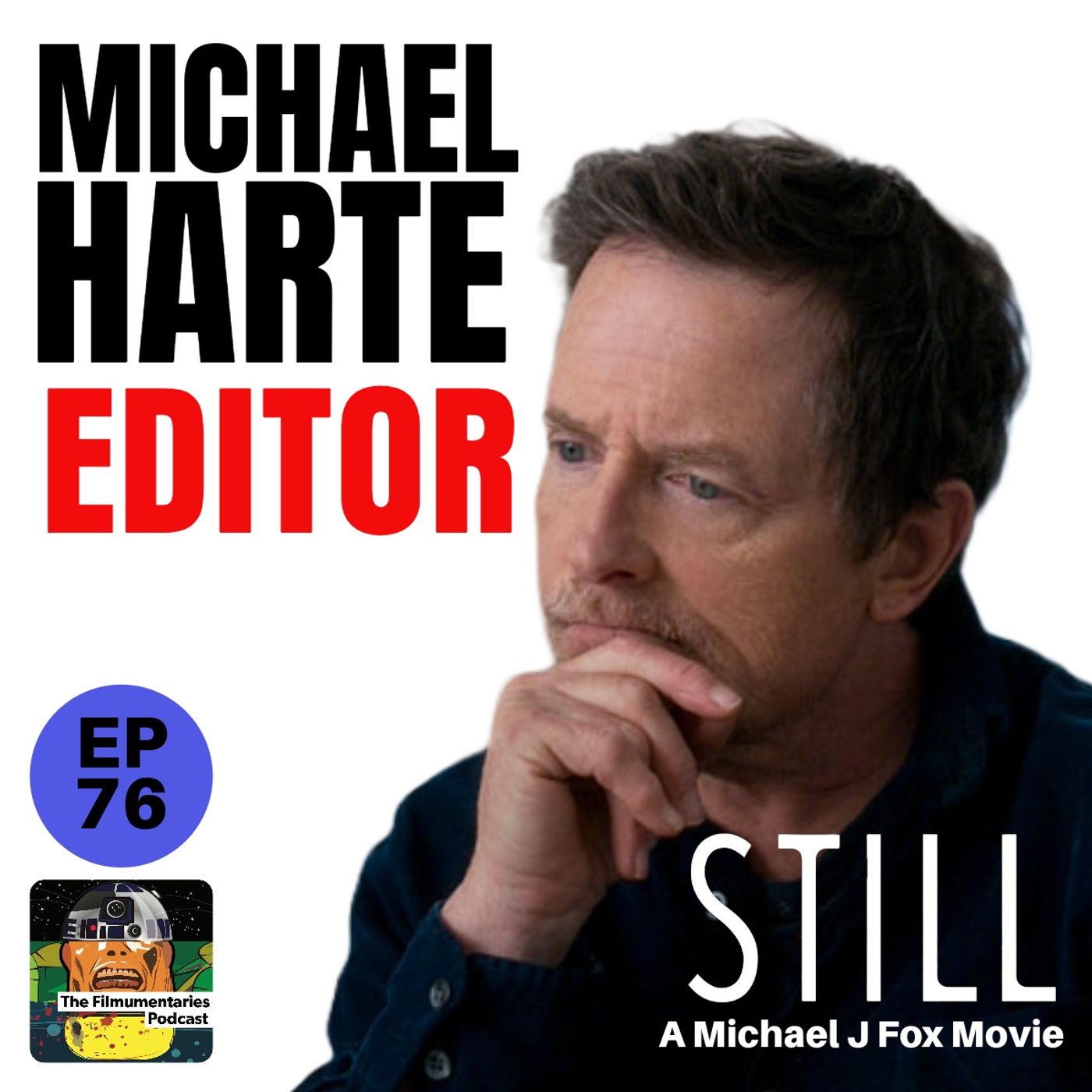
76 - Michael Harte - Editor of "Still: A Michael J Fox Movie"
About this episode
This is my conversation with editor Michael Harte about his new film "Still: A Michael J Fox Movie", which is out today in cinemas and on Apple TV.
Listen out for some exclusive clips of the film during our conversation.
I hope you enjoy it.
https://twitter.com/AppleTV
#AppleOriginals #STILL
This podcast is completely independent and made possible by listener support. If you’d like to help me keep making these episodes, you can join my Patreon community here: https://patreon.com/jamiebenning
Watch more on YouTube:
Check out the Filmumentaries YouTube channel for behind-the-scenes clips and extra content: https://youtube.com/filmumentaries
All my links
Transcript
Automatically generated, so expect the odd misheard name.
Welcome to the Film Momentari's podcast. It's the twelfth of May twenty twenty three. You've already had an episode this month, so this is a bonus episode for you all. You weren't expecting that, were you. So a few weeks ago I approached the press people that are promoting the new documentary directed by the great Davis Guggenheim, still a Michael J.
Fox movie, and they were kind enough to get back to me with the offer of an interview. So this morning, well this afternoon, actually midday, I interviewed the editor, Michael Hart. It was so great to talk to Michael about the film because the editing of this. You know, editing is a huge part of filmmaking, but the editing this is something else. What he's done with the archival clips, the reconstructions the clips of movies to create this story along with Davis, is fantastic.
I watched it this morning. It's wonderfully, definitely and compassionately crafted. It made me fall in love with Michael and his movies all over again. It's funny, emotional, truthful, powerful, inspiring. I mean, there's so many words I could use to describe this.
There are so many great sequences and the core interview with Michael J. Fox is just astounding huge. Thanks to the people at Apple TV for lining up this interview and to their promo people for providing the clips too, So you're going to be hearing a few clips of the documentary throughout conversation. So, without further ado, here's my conversation with Michael Hart about the new film Still a Michael J. Fox Movie, available today twelfth of May on Apple TV.
And I'll be back at the end for a bit more jabbering on, but not too much. The story of Me Take two? Can we go? Ready to wait? A NTE doc?
Ha? Are you telling me that you built a time machine? Howd of a delirian? What did it mean to be still? I would No, He's ever still.
That's him. That's our star. I want this job. I can do it. Whatever the exception is, I can fix it.
I can be older, I can be taller, I can be anything. The popularity of Michael J. Fox is a phenomenon. Here is Michael J. Fox.
What is the secret of your success? Michael? I don't believe this all right? I feel four feet tall. I get it.
I was big, I was bigger bubbleguming. I woke up and I noticed my pinky auto animated Parkinson's disease. I told Tracy the news in Sickness and Health. I remember her whispering. No one outside of my family knew.
There was only one reason I took these bills to hide. But oh, those years of hiding was shaking me away. She denied that part of me didn't want to continue to go on and do things is to quit. I don't want to accept that him. I'm a tough son of the bitch.
Still. Oh, Michael J. Fox movie. The Sad Sack story is Michael J. Fox gets the stability and disease and it crushes him.
Yeah, that's worry. First of all, congratulations on the film. It's wonderful. I watched it this morning, and you know, within five minutes, I think I'd laughed and cried, you know a couple of times already, and you know, came out appreciating. Um.
You know Michael even more than I already did. And you know I've read his books and followed his career. Why do you think now was the time for Michael to tell this story. It's a good question. I think there's a singeing the film where he says, I think he answers it himself, that question where he says, Davis asked some of the director and why now and he doesn't answer really in the shot.
But you know, his time, as as ours is and on the podcast, this time is limited, and he is definitely on stage of his life where he's reflecting on what um, what has happened and what he's brought to the world. And you know, his story is definitely not over, but it's definitely at the point where it's it's it's it's starting to he's starting to look back more than a board, I would say, and we Yeah, when we and Davis talked about this, we could we could have made this film twenty years ago and it would have been great still, you know that, But but I think he was in a different mode then, and and I think look actually see from his interview he's more than willing to tell his story and what's and all out.
And I'm sure you would have got the epsil worry in time. Yeah, yeah, No, it's fantastic that it is so honest and so truthful. Was there any reluctance on your part too? You know, WinCE at some of those moments they are included. I mean, there's that scene early on where we see Michael walking, and I don't think i'd seen him walking.
Of course, i'd seen him on chat shows, and i'd seen him in front of camera, but I've not seen how difficult it is for him to walk. Was there any moment where you thought this is really difficult to watch? Should we include it? Do we need to include it? How's your day gone so far?
As successful? Everyone knows who are Parkins when they see you walking there? Oh yeah, good, stubborn Resa. Good, here we go. Well, I can think billy freaks people out.
Fuck, but we won't hide it from you. And and do you can do with it where you will. If you pity me, it's ever going to get to me. I'm a pathetic shit going on. Take good time, Take good time.
We tough son of a bitch. Cockroach. I have been through a lot of sulf You can't kill a cockroach. You can't kill a cockroach. Nice and so nice and so there you go, beautiful, O good stop as I haven't all right?
Yeah, okay, may nice to me? You n me on my feet? Yeah? Absolutely, I mean that was that was the biggest thing. At the start.
I was like, oh, how much, oh, of this do we want to show? And and how how shocked to the audience gonna be? I mean I was shocked and I see that first scene suddenly I I'm gonna remember now about the first time I can have assembled the the we'll call the present day narrative of him as as as him kind of dealing with Burginson's today. I assembled it for Davis and sent it back to him. I was caughting in London, and actually I caught out the section where he falls over because the microphone and on my side did it hadn't picked up.
I had been given the role audio, so I didn't get the punchline when he says he knocked me off my feet, which is everything. And so I remember sending it to Davis, and Davis like, um, I'll have a look at that scene when he falls over. Maybe I think it's pretty important. Like so I did it and got the audio and then when I when I heard his um punchline, I was like, Okay, this obviously has to go in because it said that moment from the from the moment he falls to the moment he says that that that line is the whole film. And so what we realized is, let's put it all in.
Let's not shy away from any of this. Why would we him? And it's real, you know, he's he he hit it for years and um and has a chapter that then and then was as short you know, way, way, way we hade And you know what was it? The service to Henman and then anybody that was soccered from something like that, you know what? I think?
It's yeah, yeah, that that scene in particularly, that scene in particularly, it really defines the man. We see the fact that he's struggling, we see his determination, we see his need to keep fighting. And the humor, I mean, the humor comes through so much in this film. Like I said, I was laughing and crying throughout. What what attracted you to the film in the first place?
You know what? What was it that really engaged you? Why did I choose the job? Yeah? How did that come about?
Look? I think when I was a huge man, Jay Fox final, I was a kid and I grew up raid at that time. I mean, I'm a massive fan of the Eadies, movies of the Eedies, you know, and like stuff they joined Dante and you know stuff like Grammars and nests and you know that that kind of thing. Yeah, like that's what I came on. I did say once it isn't the end of the Godfather, but um, yes, anything that the speed and and and events here I discovered and stumbled across.
Back to the Future two that I was older was the first film. I saw it at the cinema and it didn't make any sense to me. I had no idea what it was about because I hadn't seen the first one and it's so complicated anyway, even at the abstine. But I was in awe. I was in awe of it.
I was like, especially the first twenty minutes where we go into the future and you're seeing it from Michael Jay Fox's point of view, and once the Jaws thing came out and tried to beat him, but the moment he jumped on the horror board, I was like, I am in I am whatever this is, I don't I'm not sure. I was like seven, and so eventually I've can fell in love with the Back of the Future movies and trilogy, and I had like six months to wait until the third one. Came out, and I remember that time, it felt the hundred years whining for to come out him. And so I was a huge fan of his movies. And then I worked on a lum called Three Identical Strangers about five years ago.
Amazing. As we were watching it, yeah, thank you. We we decided me in the director Tomortal, decided to watch Speak for My Success and other make chickbox movies, just put to get a sense of what eighties movies were like that documentary to feed like in eadies movie in the first twenty minutes. So we contacted made chip Boxes agent and we were want to do it together, me and him, and he said he's overrun and was was Davis the great Davis Good and Hyman and which made sense and Davis is like such a good director, and then and Michael already had a relationship, and so um him said to Davis, you got to use my editor because he's he's myde J Fox. Then I'll try that to say fanatic because I did work to a movie.
It's a weird to say that. But so me and David spoken and and the rest is history, you know, so great, great, Yeah, I mean, like I got a wake what brought me to I grew up around the same time. I think you know, eighty nine was a big year, waiting for Back to the Future two and three and Last Crusade and all those things as well. But what I loved about the film that you've made with Davis is that you know, you've managed to paint the realities of life. You've got the humor in there and using the archival clips, you know, behind the scenes in combination with like new interviews with my calls, but also the clips from the movies themselves.
Where was that idea conceived? Because it could easily fall into kind of cliche, but you managed to ride that line so well. When did that first happen and how how did you strike that balance? Well, Darvis, this big idea was let's make a Hollywood Let's make the stuckumenty Feedick and later Joe Fox movie, and like I've made Wild Raid in the Ear East, And the oldest thing he wanted to do was let's tell it entirely from his perspective, which is just him as his voice and his boys, rim SAPs Barca. It's rare you get that.
I remember are a warstad in the bog of war and you know, um that documentary from The Naughty and I'd always wanted to do that, but never thought I wouldn't be in a position to do it. Who's going to be able to hold it a documentary for nineteen minutes and he could, to be honest, he could have held it for four hours, five hours still, So because of those two things, which is his point of view, and wanted to see it like a Hollywood movie. Um, the film's going to be immersive and it's going to tell everything from his point. You want to be in his shoes. Because of that, we don't have the archive to tell to do that.
I mean, there's a version of this right. I thought we could do it entirely with Archay, but the more I think about it, it wouldn't work. Um, so we need to come up with new ideas to figure out how we're going to tell this story. The easy option is to do the reconstruction, to do the recreations. That's that's an easy option.
But I think because it's all it's entirely from point of view, what happens is I said, you're going to see it at the back of the guy's head for so long because we can never obviously show the actors, yes, because why would we get an actor to play the most famous actor in the world of the time anyway, So we had a problem that I was like, that was the conundrum of the filament, like, well, how are we going to do this while at work? Maybe we need other people to do talking heads and other interviews to help tell this story. And um, one evening I was in the editor my old I was in London because I had a one year old and Davis gave me sixt months in the little on my own to work on it and we would zoom and I had I was listening to his audiobook and he talked about reading script for Back the Putri and as I was listening to it, there was a very nerdy editing.
But the zarif because there's two monitors on the on my computer and one was his audiobook where I would listen to, and the other one were movies I was watching. And by chance I'd looked and I'd seeing a clip from Braddy Bradday Spook seting yeah, where he's reading a piece of paper, and I took At the time, I was teasing Davis saying, I think I want to use some back in the future soundtrack, and he knew, and he was freaking out because he thought, this is it's going to SEBASTI just gonna cost a lot of money. If we're gonna use them, we need to use it properly. You know, we earn using the track like that dayway the story to call a long story short. I added the audio book moment what you see it in the film where he raised the scripture and he said, I got a shopping guy, David Goldberg la as I published together, I was kind of nice.
It's like, well, that's kind of interesting. At the moment I took back the featured tinkle. You know, there a little sound that's kind of synonymous, a good little in. So when those three things came together with a picture of the music in his audio book, it was on every project so well, it doesn't happen in every project, but a lot of projects that there's that moment where he cracked the grammar or the film or or one part of the film. And I got so excited about it because I was like, I think this could work.
I think if we if we do this right, it could work. I haven't done it before. I've seen it kind of done, but we could go to the extreme up But because I was on my own in the edit they didn't have the director saved me saying, yeah, that's gonna be great. So I said that to Davis, and I was Kenneth reap Dog because I thought if he doesn't like this, I'm not gonna get buyer. But there's going to be anyway.
I got to email on the morning it would be ever saying let's get on his zom this car quick, very excited and so we wan's that happened. I think we were after the racism. Um, yeah, nice, Yeah it started. It never feels like we're trying to be tricked by any of that footage from the movie or from the archive. We kind of buy into it very early on and we kind of understand it as a as a as a grammar of storytelling, and that's what it's ultimately about, I guess, is the best way to tell the story.
And I think you've achieved that so well. All always in service of the story. It's in the same every time and stop I work, I mean I stop I work on. That's always the case where I'm always to protected the problems and there are a very easy ways to fix upon it. I'd like to see, can we try something else that we can have on with And it was that as in service of his story and his character and just to load us plus plus plus it's just fun to see him in the movie.
Oh yeah, so it looks great. He looks great on camera, and then that juxtaposition of him between nine and then is really piratefule And it was just all the way that kind of always just to see him, you know, the real Yeah, we're there for I think you really capture the sort of kinetic energy of the young Michael j you know, I mean, he's still got a lot of that energy about now. But we see those moments, you know, those great montages you know of all those movie clips, and we again sort of fall in love with him and his charisma and everything. And then, like you say, we cut to those moments like where he's getting therapy or whether he's pondering an answer to camera, and you allow us time to sort of sit with him and linger and really find the truth in that moment.
I think that was a kind of master stroke. There is there is a temptation as an editor I'm sure to kind of think we need to cut here, but there are moments where you really hold that. Was that something you decided kind of early on that you needed to give that space to myke cool Parkinson's disease? And I said, you know who you're talking about, right, you know you know I'm I'm like, not someone who's supposed to get this. He handed me a pamphlet, which one had the incurable brain disease was not clear.
They both looked happy. He said some more words like progressive, degenerative, incurable. He said, you lose this, You lose this game. You don't win this. I should have seen it coming, the cosmic price I had to pay for almost success.
I told Tracy the news and sickness and health. I remember her whispering, yeah, I mean we we actually hadn't shot the interview at the start of the process. When I was in the edit, we started with the arcade, right and we had an an hour and a half assembly of just his audiobook and arcade and potential storyboards. And I had edited this on my own and said, of the Davis and we were kind of excited about it. You could see that there was it was an arc there we were using his story book, you know, his audiobooks A Lucky Man particularly, So there was it, and then I kind of got excited about this ideal an arcave only Felon was Mika Jay Fox and then being a Sanna and you know it's just an arcade.
But that's when you started to realize as an editor's ballady project. Then you know, am I doing this because I want to do it in Shiwong but I can books. We had a couple of gaps in the story and anyway, but the pace of that was just relentless. It was like his you know, I wanted this to be fast, and Davis was the same. It was like but Davis and we decided we're missing a couple of kind of moments in this.
Maybe he can give us some audio where he can re record some of the audio that are are they cut out of the audiobooks, and I and David said I'm going to record him on camera as well, like just just to be safe. And I got the pottage back into the edit a couple of days after the interview, and I remember watching the interview and thinking, this is easily the best interview I've ever had. In the edit easily, and he was so shocked and surprised how honest and funny he was. And he was like, Okay, everything we've done it's secondary. Now this is this that's not the movie and this is and he is the heart.
That interview is the heart and soul of the story. So then my job then was to figure that out. How do I add these two? You know, there's donasty there's a version of this film where it could have been just that interview, and someday I may do that. I may I'm caught it away and say this is you know that the editors cops or I don't know um because it's so strong and and and that's what I live for as an editor, and documentaries are strong interviews.
There's a kind of bonus that push back against them at the moment that I just think they're the best thing that I love to hear. And people tell stories, and him more than anyone. So what I realized was, actually, not only is he brilliant telling a story and bring a humor, but actually he's he's he's determining the pace of this film because he's flowering off start at both as filmmakers and the audience. He's telling us, let me just and ironically the film is about, you know, the difference between being fast and slow and still less and finding and we went through the same process. Once we started to finde out to the pace of the bill and started to slow down and the angst be still, it started to work the film and had a heart and that was very corteous.
Then we were like, well, actually, those things in the past, let's actually speed them up and now because he's giving us the breath to do that. My instinct as an editor or a lot as let us get rid of all that stop around but his interview. But actually what we find was it was the stuff in between the questions. There was a moments that you normally call out were what f one needed to be. It's the realist of makeup Jos, the most real makeup j Fox.
So I think it's become kind of cliche over the years to hear those questions off camera from the interviewer to lead in. But but somehow you've managed to navigate that where it doesn't feel cliche at all, because really the questions are as important, if not more important, than the answers. In some cases, you know, because they're questions that maybe Michael looking the expression on his face, but I get the sense that sometimes over questions he hasn't really been answered asked before, and hadn't really you know, certainly in front of camera anyway. Was there ever a time where you add in the edit those questions kind of cut out and just the answers there or did they always exist as they do now?
I don't know. I think yeah. I think initially when I looked at the interview, I loved his interview HOMOUSI. But what I also loved and I and I've never had that much before and any problem, which is the relationship between him and Davis, that this is an incredible interviewer. He's amazing and and and he's He's what I realized is that he's asking questions that probably all wanted to ask Michael Jay Fox for years, like you know, and and and he and he had had the ability to ask the right questions at the right time.
It was Michael and that that relationship in each interview they did seven, I think just grew more and more. And um so I think I always wanted Davis and then the way the which grade is the way they shot that interview. Is that you're looking um, it's it's it's the version of the entire tron that ar Warris invented. You're Michael's looking at in the lens, but actually, in reality, he's looking at Davis. They figured out some technology.
I don't know because I'm in the addict I don't know how it works. But but they hadn't. There was a natural connection between the two of them. They were both looking at each other. That was the territory, and you're looking at I think, to a monitor, and so there's an disconnect.
But Davis and h didn't have that. But also the technology, the way the camera shot allowed him to look much a the Davis spot at the audience. So you're you feel like you're just sitting in a barrow and I'm having a conversation and he's basically telling you one of the best stories to anyone's ever told me before me the questions were, like you said, there were everything, and yeah, that intimacy is something that really comes across, you know, between not only between Michael and you know asked as the audience, but between Davis and Michael and presumably yourself. Was there ever a situation where that relationship was kind of fostered by the fact that some of your early edits were getting back to Michael via Davis and him sort of previewing what was already put together and did he did he give you any guidance at all?
He was very good from the start. I mean he trusted Davis to watch that. He said, I think he was allowed to have for a couple of legally he's allowed to say three things that he didn't like it, but he did didn't mean want that. He was like, you just make the film, and he trusted on them. Um I didn't.
I'm tryer remember and now I did he shoot any interviews after we showed Michael the first Rock Cup So so we did show him the first rock cut on the filone. He came in and watched it, and that was the first time I met him, and I mean grown up watching migaj Fox Films. To have Mica jack Bock com into room and and it just himself on me say heres an hour and a half of what I think is you're like and I think here's the things that you could I was, Yeah, it's amazing. It was slightly terrifucking yeah, I bet if he didn't like it, if he didn't like it when the lights came while I was gone, and so but he did, and then his feedback was always excellent. You know, he's worked with amazing directors on an amazing films, so he knows how to make a movie and definitely knows how to make a Maga Jack Fox movie.
So that when they anytime they interviewed him again and again, think the only thing that changed over the course they talked about different periods and it is late. But the only thing I think, as we were calling, we realize he's not giving us. He hasn't fully opened up to this ad of pain. How much pain is he him? Because we will try and make something else.
We were trying to make a fun Hollywood movie. But as the phone progress and as the other progress, where like we do need to go there that that's what this is actually about. And and so there's there's an interview of the end were Davis and then talk about how much pain he's and then I think that's you know, as much at all as the razzle dazzle of the editing and all the wild story of Hollywood. That moment when Michael opens up to Davis. Since I'm a Roman pain, I think, and there's very little out of thing I'm backing up.
I think it's for me. It's the shongest part of the Golopment. Yeah, Mom, we've ordered it at that point, you know. Yeah, definitely, there's a there's a real honesty to that moment, and it feels like it's in exactly the right place in the film because we've been able to enjoy this roller coaster ride. We've been able to you know, get an insight to what it's like for him, you know, to to look at him.
We don't know what it's like for him, and it's until that moment where we we kind of go, shit, this guy really is suffering on on a daily basis, and yet he still remains no optimistic and so so so driven. Incredible, exactly exactly. Yeah, I was going to say, just diverting from that from a moment for a moment, some of the reconstructions, I thought we were fantastic. Again, It's not like they were trying to trick us, but they looked like they were shot by Dean Kundy. You know, they looked like they were from eighties movie.
They didn't seem at all out of place. You know, I really bore into them. For there was a couple of moments actually where I was almost full with the back to the Future stuff, where I just thought, why hang on, is that a behind the scene shot that I've not seen before? Because I've seen you know, I'm one of those people that's seen all of this stuff before. But now I thought it was fantastic use of that stuff, very very deftly, you know, edited together and used sparingly where it was needed.
Yeah. I mean I think that the trick with that was we storyboarded it and they added which something that I've never been done before. So we had a guy called David Navis Barcelona, So Davis Davis the O time was in La I was in Lord, and David David Navis was in storyboards in Barcelona, and we'd all get on his om when the time allowed us, and that we he would do it in real tame. He would draw the and then he would put it on a screen and we'd tay, can you move him to the left a bit. Then this kind of went on for a couple of weeks and um, but but but but I think what the reason it's feels potentially like a Dean can do convict polem is that or cinematography is that I would we would start with a clip of him in his movies first, yes, and work our way out as opposed to the other way road.
So everybody kept everybody when they watched it, they said to me, oh my god, it's amazing that you found that, you know after the you know, it was actually the other way around. We started with the clip and thought work could this let and we would then buld We would story ward around these shots and repurpose the shots so that we always knew where the where the shot, where the scene would end in the space and what. And that's kind of until the cinematographer and the story warders. I would that's the challenge I would give them. I said, where we're going.
It's a movie from the eddies. It needs to think like that. And also the grade helped. I think when they went into the grade, they graded it to match. And that's the grade as a very underrated part of the process and docs, but it really really helped us in this wor went Yeah, I was one of my questions was going to be about did you have a sequence where you then approached Davis and said, look, we need I think we need this to to fit in there, to sort of make it seeing an email you just kind of describe that.
Very cool to be able to make your own sort of moments from Back to the Future just on the periphery of the camera, you know, just off screen. Fantastic. That was luck. I remember when we started the storyboard that we call it the moon Lading scene when he's chopping between Back of the Future and so good. I had aid thanks, And initially it was just our cave and it was kin again like the movie.
It was kind of working, but not I was messing something and just didn't get a false sound. So as the kind of the schedule that he was on. And and like I said, I grew up watching these kind of movies, And when we started the storyboard, I remember more like, well maybe they could put a Delorian and yeah, this we're basically making back the future for here and were before and the cam corder and just the detail was fantastic. It really reminded me of there was that I was. There was a lot of fun.
There was a fantastic Film four trailer that was for a Kubrick season and they had Jack Nicholson walking through the back of the set and el Street for the shining and had reproduced it down to like pinpoint accuracy, with the crew in the same clothes and all the It really reminded me of that that you'd really gone, you know, and put a lot of care and attention as filmmakers into those moments because us fans, you know, we're quite picky about these things. You know, I told you it was that I said, you gotta get this rate. I said, we get the bath by a milimeter or we're done, and it has to be perfect frost, And I said, the Star Wars guys wouldn't lot lwered, so the Back of the Future guys definitely want a lared Oh and uh.
And that was, you know, we set a lot of table did look. The other thing I would say is that it was a lot more work in the added on other things than that. But that was the fond stuff. That was when we won, when the fulm was really working and we really were in the right structure. I said, okay, let's let's douce.
You know, when we really worked hard on a couple of scenes that were difficult. I was always like, Okay, let's go back to the other one. Soone I remember a bit of fun al though we're Yeah. As a last question, because we're sort of approaching our time here, there is something about Michael's kind of wide eyed optimism as a young man, and you know, in these roles that he played as well as in his real life, that's you know, so inspiring and so emotional. What did you take away from spending so much time with Michael, you know, in looking at all this material and what do you hope the audience takes away from this?
There's a few I mean in terms of justics movies and watched and all those clips and implouring all room for weeks in seven or eight weeks a year, to be honest, because we were always looking for store Um, I hadn't appreciated how good of a actor he was in terms of particularly Karma claiming he's almost a genius. You know that. I would say there were things I noticed and in a lot of the early stuff in the eighties stecially back in the future. Well by that time he had ken of holland his crap perfectly. He would just homble a lot them do you watch back in the future, you see and they do it in two and three.
He's always heading things and fallen over and trump I mean, and it feels slightly clumsy, but for some reason it adds so much more depth to his character. And um, a very very subtle almost like a Charlitie chaplain where kind you know he does it go which which, ironically then that's what was under attack when he gets Parkinson's, you know, that ability to use his body and to be very subtle with it, and I think, um, and it's just really funny, like is this comic? Even just the way he kin gives him one Laner is always flawless. I never appreciated that until I worked on this. Um.
But the big thing I think you want the audience to take away from is that, as I said, when Parkinson's, when that was under threat, that ability to do the thing he could do, and he initially ran away from it, as I think most of us would. I mean, you know that it's like I'm not dealing with that today. But but what actually happens, and hopefully it comes across the last act of the films, he to the embraces and runs into it. And becomes something quickly big up and then he becomes i think even fullier and even better comedic actor because he's embraced the hand that he's been dealt. And and that's to me.
I think it's very relatable to any world Walk of la and I hope that the film does speak to that strongly. And he's you know, I just the only thing as I did feel people fall over them all over again because I think he deserves it. Yeah, not a character, you know, completely the case. You know, I would say that. You know, I'm I'm a film fan.
Movie fan, grew up in the eighties like you, and I've had a real appreciation for a lot of these documentaries in the past. There are a lot of documentaries that I've loved and I've never watched again. But the first thing I'm doing after we finish this cause I'm going and booking tickets at the local picture house to see this again on the big screen because I think he has a real cinematic feel to it and I want to. I want to experience it again with my wife and my kid and you know, show them the story about this this great man that you've you've created with Davis, congratulations think, oh, thank you so much. And I think that's the one thing I would say or anyone listening, is that like the place to watch this, it really is with other people and legian A cinema, because what shocked us when we went to Sundance when we played it.
At first we knew we had a good movie and he was really good in it, but we had no idea how much it would make people laugh. That was always the big worry. It's like when he says that laying at the club, that's boring. You know, when Davids System were a sad sack story of Maga Jake Box and he's Antela is boring. We would say, if we don't get a laugh at that point, we done his work.
And so the first time that happened at Sundance, the place erupted with laughter, and then he fell over them again. That was like, this is the second obstacle or a second hurdle, and that gets even bigger laugh. So it's it did to experience that with other people. I think it's it's it's it's much more rewarding to be in a room with definitely people laughing as all bot you know, just trying to stand samon think it. Yeah, yeah you can, don't be declared them experience to watching this movie.
Totally agree, totally agree. Thanks so much for your time. I really appreciate talking to you, and yeah, congratulations again. Well, I hope you enjoyed my conversation there with Michael Hart, editor of Still a Michael J. Fox movie.
I am genuinely going to go and watch it in the Picture House in Brixton tomorrow. I suggest you find it on Apple TV or find it in a cinema near you. Thanks so much to everyone who helped make this happen at short notice, and I hope you enjoyed the episode. There will be a third episode this month, and that would be my conversation with producer of Return of the Jedi, Jim Bloom and my co author Justin Berger on our new book Return of the Jedi The Unauthorized Timeline, which is out on the twenty fifth of May. If you're interested in registering to be told where you can buy on the date of release, if you go to Jedi Timeline dot com, you fill in your email address there, click okay on the email that you'll receive, and then hopefully the notification will land in your inbox rather than your junk mail.
We've just released some information about the book, including the fact that Jim is introducing the book. Dave Barkley and John Coppinger, crew members of Return of the Jedi, have given us their diaries to put in the book as well. So excited to get this out to you, and thanks for joining me for this bonus episode, and I hope you could do so for the next normal episode of the film Emntores podcast


