
Season 1 · Episode 77
77 - Co-Producer Jim Bloom - Return Jedi Unauthorized Timeline Book

About this episode
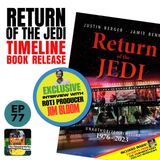
So the conversation you’re about to hear is our interview with Jedi’s co-producer Jim Bloom about his time working on the film. We are so happy to say that he also wrote a wonderful introduction for the book.
So today, 25th May, was supposed to be the release day of the book. Unfortunately Amazon let us down and we’ve had to delay until June 1st (jeditimeline.com) Basically our proof copies which should have arrived in a matter of a couple of days, didn’t arrive until too late. We didn’t want to put the book up for sale without having handled it ourselves to make sure everything is in order. Better to get this done properly than quickly. And in fact a couple of things have come to light since we decided to delay which are going to make this a better book anyway.
There will be three versions of the book. The contents are the same in each but we have three versions to suit all pockets. The first is the colour hardback. The second is the colour softcover and thirdly there's a version with a colour softcover with black and white pages. That’s the cheapest of the bunch. If you can afford it, why not buy yourself a hardback cover one to keep and treasure and a softcover one to flick through at your leisure?
So here’s our conversation with Jim Bloom. Justin’s internet died a couple of times so he doesn’t say a huge amount, but what he does say is great. Thanks to both of these gents for their time.
Links
Return of the Jedi Timeline Book - Register your interest!
Filmumentaries Merch!
Support the Podcast on Patreon
The Man Who Shot Luke Skywalker
This podcast is completely independent and made possible by listener support. If you’d like to help me keep making these episodes, you can join my Patreon community here: https://patreon.com/jamiebenning
Watch more on YouTube:
Check out the Filmumentaries YouTube channel for behind-the-scenes clips and extra content: https://youtube.com/filmumentaries
All my links
Transcript
Automatically generated, so expect the odd misheard name.
Welcome to episode seventy seven of the Film Mementori's podcasts. This is Jamie Benning talking to you here from My Little My Little reading look here at home in Out of London. It's twenty fifth of May twenty twenty three, a date that you may recognize. This is the second episode of the month and this is another very special episode. More on that in a moment.
Firstly, if this is the first time you've listened to the podcast, Welcome, You have about an hour or so a film history chat ahead of you. Please do check out some or all of the previous seventy six episodes. They're all great if you love behind the scenes chat, and each of them gives you a unique insight into the film industry and the roles within, including directors, writers, editors, visual effects, special effects artists, sound designers, behind the scenes documentarians. There's lots to choose from, and there's lots to learn. If you are a regular listener, thanks as always for your continued support.
If any of you do like my work, and this is work you know, this doesn't make itself, then please visit patreon dot com forward slash Jamie Benning. There are several tiers to choose from with different perks and merch too. Thanks to those of you that are supporting the podcasts, got another two new patrons this month just gone so yeah great. Great to have you on board and being part of the film Eventori's family. Talking of merch, you can also support the podcast by buying some good ease including film ementaries, mugs, t shirts, bags, bottles, and even socks.
Also t shirts with the side jaws and inside jabbers posters on them that Pete Starling designed for me those years ago. I just think they're great designs. There's going to be a few more, hopefully. I'm going to have a chat with Pete. He's done some great artwork over the years, and I think with his artwork and my kind of reach, it could be a combo, a good combo.
Me putting them on my shop helped promote his stuff and my stuff, and you get some cool stuff to boot. You know, why not buy one of these things for your next convention. I've said in the intro for the last few episodes that nobody has brought any merge, and then I got contacted by follower on Patreon the other day to say that he bought some so I wonder why I hadn't received a notification of a purchase, and when I looked on the site, I saw that, in fact I had sold seven items to several people. So that's exciting. Please check out the shop at film Meumentaries at dot creator dash Spring dot com.
I post the links to both the Patreon and the shop in the links and the show notes. I've also got an Etsy shop. By the way, if you look for film Mementories on Etsy, I do sell some of the jab of the Hut inside o the Hut posters there as well, so do check that out. I did sell one recently actually to somebody who was going to meet up with the Jabber guys and wanted all of their autographs. And you know, it is the only accurate rendering of their puppeteering in that you know, the one from the official documentary all those years ago was a bit of a nonsense, that diagram, So we created this one.
Anyway, I'm going to be adding a few more designs, as I said to the shop, so that'll be both the Etsy and the spring dot com one. So watch this space, or rather that space. Okay, So for this episode, number seventy seven, cool number. I have a guest host in the shape of my coauthor on our new Return of the Jedi Unauthorized Timeline book, Justin Burger. And Justin is here with me now, I Justin, Hey, Jamie.
So the conversation you're about to hear is our interview with Jedi's co producer Jim Bloom about his time working on the film. We're so happy that he's been able to write a wonderful introduction for the book. And today, the twenty May, the fourteenth Anniversary and Return of the Jedi, was supposed to be the release day of the book. Unfortunately, we had a bit of an issue with Amazon. But I think you know we've found positivity in this and Justin, let's just if you don't mind just telling people what happened with the Amazon end of things.
Yeah, I mean self publishing, you know, can be problematic in regards to you don't have a large company overseeing everything. We're dealing with Amazon, and as I'm sure a lot of you have experienced, Amazon actually did not get us our final proofs in time. There were delays in shipping, so we were not actually going to get the proofs until after the book had come out, and we just decided, you know, we can't put a book out that we haven't finalized and confirmed as being you know, as best as it could be, So, you know, for everybody's sake, we just decided to push it back a week to give us time to get those final proofs and to just kind of make sure everything is as good as it can be. Yeah, and that's the thing.
Like, you know, we've got the digital version of the book that we've been editing and working on, and that's one thing. But given that we're only making a physical version of the book, we wanted to make sure, as Justin said, that we'd had it in our hands, we'd had a good look at it, we're happy with the quality of it, that everything lined up on the cover for instance, just that it was a product that we were happy to put out into the world. So we are talking about delaying it until June, the first fingers crossed Amazon will get the proofs to us in time to be able to do that. It doesn't really affect anything, you know, it's one week delay. It doesn't really affect anything, you know, from our side, other than we are able now to put a few more things in that we've come across in the interim, and Justin has been working on the formatting some more as well.
So ultimately this week's delay is going to make it a much better book. We've gone from being disappointed just you know, a day or two ago, to now being actually, this is really good. Is because now we can change this. We can do that. We were kind of forcing ourselves to get it out on that date, and you know, it's a bit of a mixed blessing.
I guess in a way, Amazon have messed things up for us, but it has meant that you can get something even better out to you guys. So there will be three versions of the book. Justin you're much better explaining this than i'm. That's your job now. Yeah, there's gonna be three versions of the book.
They're all the same content. All it is is different cover styles where you've got a hardcover and a soft cover, and basically it's a different price point as well. So you've got the hardcover, full color book, which is going to be, you know, the highest priced book due to the fact that it's a hard cover and really good quality printing. That's going to be your highest tier for the collectors. For the people who really want a solid, beautiful looking book.
The other books are just as beautiful, they're just not hardcovers. There's a soft cover full color that, like I said, as has this same contents as the hardcover. It's just a little more affordable due to the fact that it's a soft cover instead of the hardcover. And I think the paper quality or printing is slightly less just because it offers a little bit of a reduction in price. And then the final one is going to be another soft cover with a black and white interior.
The reason we did this is just simply we want everybody to be able to get the book. You know, a hardcover, full color book is going to be a bit pricey, and not everyone is going to want to pay for that, but we wanted everybody at every level of income or you know, if somebody is just wanting the book but it's like, oh, I just can't justify you dropping that money on the hardcover, well we got you covered, no pun intended. But we do have those options available, and all three will be available at the release date on June first, and you'll be able to pick which one you want. You could pick multiple versions if you're a completest collector and you want to get all three, by all means, go for it. But we just wanted to give everybody the opportunity to get this book and experience it, because we're really excited about it.
We're really happy with it. We think it turned out great. If it's going to be even better now that we have this added time, you know, just just to clarify, there was nothing wrong with the book that we were going to put it on the twenty fifth. It was a great book, but just having that extra time, we took that opportunity to say, you know what, let's add a few more call sheets, let's add a few more pictures, let's you know, just do these little bells and whistles to kind of give it a little more umph, if you will, and just make it a better book for everybody. So we're really happy with both versions.
But the new version is definitely going to be something I think everyone's going to really love and appreciate and enjoy. And like I said, June first is going to be the release date. It's just one week later, and let everybody know, tell your friends, tell your family, and can't wait for you guys to get it. We can't wait to get it. We still have not got our hardcover proofs or softcover proof for that matter.
So it's going to be nice to hold the physical book on our hands and kind of flip through it, and just we wanted to really have that so we can just kind of look at it and make sure that it's the best quality it can be and not release something that might have a mistake or two and then we would have to, you know, change that. So we're doing this for you. But yeah, and like I've said on a couple of podcasts recently, justin and I've done a few a bit of a round of podcasts, you know, we want people to use this as a resource. This book. I certainly will be using it as a resource for future projects because it's the only place you can find, you know, all of these dates collated in one place in chronological order, and you can see, as Jim Bloom kind of describes in his intro in the book, that it sort of stripped back all the glamor and you see the bare bones of movie production, you know, the mechanics of it.
And it's going to be sitting right up on my shelf just to the right to me here next to the Rinsler books, probably next to the Art of Return of the Jedi, and it's going to fit right in. So here's our conversation with Jim Bloom. Justin had a bit of an Internet problem at one point, so I think he dips out and comes back. And you know when you when you interview Jim about Return of the Jedi or anything in fact, you don't get much of a chance to say too much because Jim is such a good talker. You give him a couple of questions and off he goes.
But thanks to Jim and to you Justin for your time as always, and I'll be back at the end for a bit more jab of the hut, I mean jabbering on Jim. Thanks for joining us. It's it's so great that you've been able to write this introduction for our book. Let's talk a little bit about Return of the Jedi. Your time on Return the Jedi.
From our previous interview, I know that you were involved on the Empire Strikes Back, having worked with George on American graffiti before, and what was your first kind of task once you were engaged for Return of the Jedi and where did that take you Well, you know, the first task was, you know, we had a rough idea of we didn't have a screenplay, but we had a a you know, a short five page breakdown. You know, we're starting on job as planet and then eventually winding up in the in the on the forest planet on endor so starting on tattooing and then going to Endoor. But the mandate was to find those locations in the United States and not overseas, because the politics of the times were changing and it didn't seem to be as safe at that point to be taking a British crew you know, into the wiles of Tunisia to go shoot for a while and whatnot.
In George decided, you know, let's try and make it here in the States. So that was really the first issue. And so it was like, okay, well, where are we going to find these locations or can we find them in the United States? So, you know, by Sally, as soon as I started, I launched this wrecky, which is a location scout in US parlance, but a wrecky in English you know, parliance for English crews or to find the location for jobs barge, you know, which was okay, where are we going to find Tunisia, what's it going to look like? And then where are we going to find the woods for the you know, for the e Walks, Because we knew there were going to be these you know, these e walk characters, these forest dwelling characters.
We didn't know exactly what they were going to look like yet, but we sort of had an idea, you know, it's like, oh, we're gonna We're gonna it's it's the Land of the Teddy Bears is sort of the idea behind it. And so Robert Norman and I launched off on this this great location scout that I you know, remember to this day how beautiful and wonderful it was. And we we really covered a huge amount of area. You know, the basic thrust of the trip was, you know, starting in um you know, Death Valley, Nevada, areas around Las Vegas. Because you know you're bringing in a big motion picture crew, you not only have to find a great location, you also have to find a place to house them and supply them.
You know, you can't really be out in the middle of nowhere. You know, we weren't you know, that small of a unit. Did you have a sense of the size of the crew at that point. Yeah, well, we we sort of knew we were going to be one hundred, one hundred and fifty people. You know, it was a Star Wars movie.
We had done Empire. We kind of you know, knew what was involved. And you know, you know, when you make these big science fiction films, you've you've you generally have larger you know, art departments, prop departments, costume departments, you know, slightly production departments. You know, all of the you know, camera to everything's bigger. You know, you're shooting two and three cameras, you're shooting vista vision cameras.
You've got ILM people down there joining you for the visual effect shots. You know, you're you're, you're You've got creatures, and the creatures need to be dressed. And it's not like you're you know, you're putting them in blue jeans and T shirts. You know, they've all got their creature outfits that they're wearing, particularly the Ewoks. You know, the Ewoks, we're gonna have like, you know, we needed you know, thirty or forty e walk costumes from you know, close up to background.
And then you've got your stormtroopers, and you know, all the other people involved, and you've got your principal characters, of which there were always you know, particularly in job as barge. We had everybody, you know, I can't you know, we had them all. And then you've got the robotics people for our two and the you know, the other people for C three PO and the other robotics and all the other creatures that surrounded Jaba, you know, his whole group, you know, of those who were on the barge, and then all the stunt men. You had stunt doubles for everybody. So we knew it was going to be a big unit.
So that was part of it. But the first that, really the first mandate was to try and find something visually that worked, you know, and then okay, okay, this works, half are we you know, you know. So eventually we settled on Buttercup Alley outside of Yuma, which was about you know, a twenty five minute ride outside of Yuma, so that's not too bad. So you're losing an hour of travel time coming and going every day, so that's not unreasonable. I've worked on movies where you know, we traveled much further to get to certain locations, you know, and it's it's expensive, it's you know, that's it becomes a consideration, and I guess you're also trying to find places for people to stay there of a quality that the cost has now become accustomed to as well.
Well yeah, yeah, yeah, yes, and no, I mean, you know, the the you know, I'm forgetting the name of the motel in Yuma, but it was we were sort of on the on the tail end of what they call the I'm going to get the expression wrong. There's an expression for people in the states who live in the cold Midwestern states like Minnesota, Wisconsin, Chicago. I think they're called snowbirds. And in the wintertime, the retirees will head south to Arizona, you know, southern you know, Palm Springs, where the weather's really nice and you know, lovely. You know, it's like seventy five eighty degrees, you know, very little rain, really pleasant place to spend your winter, as opposed to you know, sub zero blizzard, freezing cold, you know, like Fiensa and Norway.
You know, it's like let's get out of here, let's go to the south. So we were on the tail end of that season. So the most, you know, the one hotel that we stayed in, which fortunately was large enough basically to house the whole crew. You know, we just took over the whole place. So it was it was it was okay, you know, it wasn't it wasn't great.
It's not you know, it's it's interesting, you know that there are a lot I guess the hotel business has changed quite a bit, you know since the eighties, and now there are all these you know, beautiful places everywhere or often you know, in places. It's you know, it's really expanded as a service industry. Yeah, you expect more these days, definitely. Yeah. So in Uma and then in I have to tell you up in Crescent City and Smith River, which is where we were shooting, we had part of the crew, and we had the crew all over because there wasn't enough up there, so we had technical crew in Crescent City, you know, and they're small, like they were really you know motor motor you know, the traditional motor motels, you know, drive up, park your car, get out, and walk to your room which is either on the ground level or one level up.
And we must have had three or four of those in Crescent City and then we did have the nicer place that we had for the above the line people, you know, our cast producers, directors, you know, you know, your your your key people was in Smith River, which is really quite pretty because it was a smallish motel and it looked over the Smith River which looked over the Pacific Ocean, and it was quite beautiful because everybody had a really lovely room. I you know, some of us stayed in because we were there for quite a few weeks because of the second unit afterwards and whatnot. Stayed in you know, mobile homes that they had on the property, because they had a few mobile homes on the property that they would rent to people who would stay for longer periods.
So that was nice. So I sort of had a bedroom in a kitchen and the living room, and you know, I had never really lived in a motor home before, so to speak, or a trailer like trailer park, you know, trailer park living, so that was kind of kind of interesting. And so they stayed there, and all the Ewoks went up to Brookings Brookings, Oregon because we were right near the California Oregon border, and we put all the e walks up there and they were all little people came from all over the country because we had this massive casting effort to gather all these little people together because you couldn't put kids in the costumes and you know, for lots of reasons with shooting with children and whatnot and being during the school year.
So we launched this effort and I forget at the exact number, but we must have had like forty or fifty little people, you know, all together, and it was it was the greatest, one of the largest groupings of little people for a movie since The Wizard of Oz. And it was fun. You know, there were all these stories out of The Wizard of Oz about you know, little people, orgies and you know, stuff like that, and you know, it's all it's all bs, I'm sure you know, but you know, it was really nice for them because there were as you would expect anytime you have any gathering of people, it's just like any movie shoot. You know, they're you know, affairs, romances, you know, you know, new new things that turn into marriages, all those all those things happened.
So it was great. Jim. When you were doing the casting, did these people know that they were going to be in a Star Wars movie or was it kind of top secret we need little people for something. We can't really tell you what I you know, I think that they we were casting them for a movie and we didn't tell them exactly what it was until we found all the people that we on it to be in it. And then when they were everyone was asked to sign a non disclosure agreement, you know, which they were all happy to do.
And you know, and it was it was pretty obvious to people, like, you know, word gets out, You're the one leaking the word. You're not working on the movie. You know, you're you're gone. And I think the people were interested in doing that, so it became obvious at some point what we were doing, you know. And you know, I don't exactly remember how we handled that that part of the casting.
I'm sure it was. You know, I would have taken the attitude that I just had with you guys. Just tell them it's a movie. Tell them it's Blue Harvest. You know, we're doing a horror movie.
We're going to put them in little costume. Where did that come from? Do you remember who came up with the idea? I did, Blue Harvest is mine. It's all me, you know, because it occurred to me very quickly as we went location scouting that you know, it's it's kind of like dumb, you know, you kind of go in and say, oh, hi, here comes Star Wars.
We're making the third sequel. It's you know, the first two of the most you know, made more money than any motion picture of all time. They were like one in two or one, and I forget what the numbers were in the top ten box office grossing movie. And you know, we want to rent your X y Z, you know, and it's like duh, it's like, yeah, the price just went up three hundred percent exactly. You know.
That was that was part of it. And the other part of it was is that because Star Wars and Empire were so successful, you know, people were actually going through the dumpsters at ILM looking for stuff at night. You know, they were always dumpster divers, and they weren't looking for food, they were looking for storyboards and props. And you know, the security of what we were doing became very tight. You know, we were shredding everything and you know, locking the dumpsters, and there were night guards out and things like that.
And so for those reason we didn't want. The thing that we needed to avoid, because I knew how avid the fans were was I didn't want the fans on location. You know, it would have been hard to keep them out of Buttercup Valley where we were shooting Javas Barge. We started there, and it would have been kind of dangerous for them to be, you know, climbing through the forest to get to the location. We didn't want people up there taking pictures, you know, you know, when publishing stuff.
Yeah, I mean you can imagine how it was. So I said, we need to come up. Yeah, go ahead. We've seen those shots, haven't we have? Like Mark Hamill and I think Billy Dye Williams signing stuff for people through the chain link fence in Humor, people turning up on quad bikes and things.
But I think also over here in the UK, I think The Sun famously posted a picture of an aerial photograph of that Humor set a three weeks beforehand. Yeah. Yeah, yeah, so you know, you can only do your best, can't you with those things. I mean, obviously security has tightened up a lot since then. Absolutely no, no, it's very true.
And so for that it was it was the fans but it was also the financial aspect, which is that if people knew that we were Star Wars, you know, all the prices would have doubled. And it's you know, it's sort of natural. And I said, we need we need a we need a false flag. And I said, and I need to come up with something that's like really boring. I mean, some thing that when I tell you what the name of it is, you're going to go, oh, it's like a shrug.
You know. It's not like, you know, movie titles are supposed to be exciting. They have active verbs in it, you know, like don't open that door right, or you know, the Empire strikes back, you know, Star Wars and or you know what was Revenge of the Jedi. That's stuff that's supposed to like, you know, get your interest. And I said, well, I need the exact opposite of that.
And I thought and I said, well, okay, and then I said, well, what about I think there's a movie called Red Harvest. It was an Italian movie. I don't I don't I have to look back on that. And I said, well, Red Harvest. That's kind of interesting because it sounds kind of bloody.
But I don't I don't want to inspire, So what about Blue Harvest? It's like, what the fuck is blue Harvests? Really, it's like, what is it? It's like, I don't know, it doesn't it's not it doesn't inspire you to It's like what it doesn't even make sense, you know. And I said, oh, that's good.
Now I'm moving in the right direction. And then I came up with you know, or beyond Imagination. I mean, how ridiculous is that. It's just like it sounds like a bad exactly, it sounds like a bad B movie, horror. Beyond imagination.
You knew it would have its this whole new life outside of Return of the Jet. I now, you know, with Family Guy episodes and people wearing caps with it on a T shirt, you cannot go to a style celebration without seeing one hundred people wearing a blue people wearing a Blue Harvest T shirt cap. Yeah, I still have mine, I'm sure somewhere. Yeah, for people I was going to say, for people not watching the video, Jim is wearing his cap his under pants, Yeah, that way. But we we did do Blue Harvest rein gear, yeah, and it was it was pretty cool and and you know if you can still find the stuff at auction, and it's very pricey, you know, just like the Empire's snow outfit, you know, the people wore is like, you know, it's like goes up at auction for like ten thousand dollars an how or something, and and people have it in there, you know, um, you know, in their personal collections, wrapped in you know, Plexi glass frames and minds there I have.
You know, I sold mine a few years ago, and you know, I offered to buy it back from the guy who bought it, and he was not interested in selling it to me. But then I saw how he was. He was he was keeping it and it was wrapped up in a beautiful Plexi glass frame, you know, the full jacket, and it found a good hume. It's exactly the way I felt, which is if I brought it back, it would be stuck back in the closet again, you know, wrapped in plastic, and you know the way it was, it wasn't doing you know, at least somebody's getting some enjoyment out of it, you know. Justin you had a question about the Revenge of the Jedi title change.
Yeah, and I'd listened to your interview with Jamie earlier, and you know, you're in your introduction you talk about Revenge to Return, and I'm kind of curious how that all came about, because I know there's all these different stories about who came up with it, where it happened. Some people said, oh, it's because of Wrath of Khan, and they wanted it to be different from that, and then you know, just I'm just curious, since you were boots on the ground there, like, what was the story behind the change from Revenge of the Jedi to Return of the Jedi. You know. The thing that I remember and I don't know if I was one of many voices, which is possible, but I remember saying to George one day, I said, you know, I was thinking about the title and revenge is not something that a Jedi, a Jedi would want.
You know, Jedis are not revengeful. That's not who they are, and they're you know, their makeup. And I said, I think there's a bit of a you know, a bit of a conflict there. And he went, now, well, and we all do our George, our bad George imitations, but I should say we do it out of fondness because you know, I like the guy and and you know, and then he thought about it. He went, oh, yeah, that's that's interesting idea, Jim, let me think about that.
And then we changed it. He changed it to Return of the Jedi. That's that's my take on what happened, because I specifically remember having the conversation. It doesn't mean that after I said that that maybe you know how ideas float in the universe. You know, it could have been me.
Somebody else could have said it. You know, I'm not not quite sure, but but I remember that we changed it to Return of the Jedi from Revenge of the Jedi. I mean, I still have some of my old Revenge of the Jedi sweatshirts and t shirts. And do you know, just last week or two weeks ago, I mentioned about Revenge of the Jedi onto tweet on Twitter, and this woman said, Oh, my dad used to bring me paper back from Elstreet with the Revenge of the Jedi letterhead on it, just a scrap paper for me to draw on as a child. He was a rigger or something on on the movie.
And I said, oh, that's amazing. If you still got some, she said, yeah, I'll send you some in the post. So she just sent me a stack of this paper. Ye, wonderful. It's very cool.
Kid through college with that. Now. Well maybe, yeah, maybe I should have mentioned that too. What are the other stories about how the name changed. I'm not even I don't keep the one that The one that I've heard was it was because Wrath of Cohn was going to be released around the same time, or I think maybe a year earlier or whatever.
There was a conflict there between Rath or Star Trek was going to be called something else besides Wrath of conn and it was too close to Revenge, so they didn't want to confuse people, so they decided to change it. But that doesn't really sound like sound like yeah, I don't, but I don't think George Lucas would give a crap what the Star Trek movie is called. He's going to call his movie, but he wants to call it so. But I've also heard the story about it being Returned at one point, then Revenge, and then it reverting back to Return. No, it was never never started.
It was return. It was always revenge. Revenge is a better title, but it's not something that it is. It's it's just not something that a jet you know, Yeah, Darth Vader might seek revenge or the Emperor might, but you know, a real JETI Night wouldn't seek revenge for something. Yeah, I can coveted now than yeah, right exactly.
I was at Kevin Pike's house a few months back up in the mountains in California, and of course he's got the Revenge of the JUDDI poster there that he got from from back in the day. And yeah, yeah, they're great items because they there's something tantalizing about the kind of altern that universe version of these movies we had we sort of invent in our mind. You mentioned earlier about the scouting around the US and trying to find these locations. Can you give us a sense of what it was like to spend a lot of time with Robert Watson Norman Reynolds. You know, I've had the benefit of interviewing Robert and I you know, he's a great guy, fun guy to be around.
Norman hasn't had as much kind of I mean sadly passed away. We've dedicated our book to him. Actually, that was very nice. I saw that when I looked at that was a very nice thing to do. You know, his work is incredible and it's inspired so many people, continues to do so.
But I never really felt like I got the measure of the man because he wasn't really often interviewed in the documentaries. What was he like to work with? You know, it was you know, part of the great fun of the trip was being with Norman and Robert, because I'm traveling around with these two Welshmen and you know, who were constantly teasing each other and chatting and having fun. And you know, when you're when you're on a location scout, it's not just the scouting part of it, but it's you know, having you know, two or three meals a day with them every day for two or three weeks while you're traveling around and meeting all these Americans, you know, and they both would joke about the Americans, and they both put on their American accents all the time, and you know, which was always you know, it was always funny to hear the you know, these Brits, you know, do their you know, John Wayne accents and you know from you know, they're they're sort of American movie accents.
But Norman, Norman is he's a he was a brilliant production designer. He was just great. His his um, his work was just wonderful and as as he was a real human being, he was a he was a lovely guy and um, you know, I just enjoyed working with him. Immensely incredibly artistic, good ideas. You know, knew his craft so well.
You know, the great thing about production designers is that they they they liked to work with. They like to show directors how to shoot something. You know. It's like, you don't need to build four walls. Sometimes you only need to you know, and so it was a pleasure for them to work with.
And Norman was sort of that way. You know, he could talk to a director and say, well we can I think we can sell it. We only need to build this much. And I mean because the stuff that we're a building is not cheap, you know, sometimes it's very expensive. And because he had worked on Star Wars and worked on Empire, he knew the world, you know, he knew the techniques, he knew how to you know, create all these different things, and he knew how to use the visual effects, you know, to make it all work.
He had worked long enough with you know, Richard and Dennis and Joe and all the guys that he had a good feeling for all of that. And he also under understood how to you know, make things you know, work for you know, Ben Burt as well, the sound effects guy, is like, oh, let's have some steam coming out of this or that, and you know, he and he had a great sense for knowing that the way, you know, the Star Wars universe is a used universe. It's not a brand new you know, the Emperor's stuff might be kind of brand new and shining, but the rest of it is, you know, kind of cracked and wrinkled and dented and rusted, and you know it gives that you know that that that look you know that you want from this place has been lived in.
So he was, you know, I you know, I'm you know, I was crazy about Norman. He's one of, you know, one of my favorite guys. And Robert, Robert and I became great friends when we started working on Empire, and he and I, you know, having become friendly, we you know, we would we would laugh together all the time about things, which is which is great because he you know, again, Robert was, you know, I learned a lot from Robert because he was such a talented and seasoned production executive, you know, and as my my career sort of advanced, when I had ideas about how to do things, you know, I would call Robert up and say, well, what do you think about this? Or what do you think about that? Or you know, and he was, oh, yeah, let's do this, do that.
And you know, he would call me from time to time and say, what do you know? What about this? What about that? Or you know, how do we what's the way to solve these problems? So it was it was great, you know, great working with both of them.
It was really wonderful when we you know, Robert and I would eat together all the time, you know, every night when we were on location in Yuma and up in Crescent City. You know, when you really get to know somebody, isn't it when you say you're spending those meal times with them and absolutely between yeah, and then you know, and you you kind of develop a shorthand with with people that I had with Robert, you know. You know, in the shorthand is that you can look at somebody and you can like talk to them by how you move your eyes or you know like look, you know, you just like move your eyes over there, and they know that, you know, they're supposed to look over there. It's that kind of a you know, that kind of a relationshipship stuff.
So and he whenever, you know, when he you know, he also got to know my my wife quite well. And he would stay with us, and you know, when he would come to California, he would stay at the house with us, you know, because we if we had room for him, he would come and stay. Because it was always fun to have him, and he was a great house guest and we were just good buddies. So so traveling with the two of them was was was a great treat. And again there was there was a sense of kind of Lucasfilm history that Robert appreciated and understood that he knew all the people and he could see the expansion of Lucasfilm from Star Wars to Empire and then Empire to Jedi and how the company grew and you know, into this much bigger organization and all of these corporate people came into the company and you know, you know, and he and I would would often joke all the time, is you know, and not quite remind them.
But he would, he would, he would do it more than I would. I guess maybe because he was in London and wasn't over here that much, but he he had a tendency to remind all of them that the only reason you're here is because we're making good movies. It's like, don't forget, you know, don't forget that, you know, the only reason you have toys to sell is because we're creating them in the movies. The only reason you've got this big licensing department and all these new marketing and licensing and legal and all these people are coming in, you know, is because you know, these good movies are being made. So it's like, you know, it's not quite like shut up and get out of the way, but it's just sort of a gentle reminder of, you know, where all of this began and why it's happening.
So I always, I always, I always laught about that because you know, oftentimes in these situations when like the corporate types, the suits as they're like to be called, because I've been one, you know, show up. You know, it's it's like they they kind of strut, you know, they're kind of you know, you know, puffed out roosters, you know, and Robert was you know, would occasionally, you know, in a kind of polite British way, you know, remind them that, you know, it's really about the movies. You know, that's why you're here, that's why I'm here. So you know, that was that was he and I would laugh about that sort of stuff. One of the other things I'd like, you know, that we've tried to kind of get across in the book as well, is that the time in the time that Jedi was made in nineteen eighty one, nineteen eighty two, released in eighty three, it's a very different world to what we know now, a very analog world where you're communicating with each other over telex, you're sending dailies off to be developed and checking them the next morning.
I mean, it's it's a very different time that I don't think people fully appreciate, given the fact that the film stands up still stands up so well. You know, there's there's films that are made around that time that we're at the you know, in the top five of the charts that do not look anywhere near as good as as a Return of the Jedi did what you kind of described. Just then you know that you've got this group of incredible filmmakers, But can you talk a little bit about the sort of complexities of your job and of Jedi because Jedi, of course, was this huge there was huge expectation on you as a crew. Yeah. Yeah, well so also, I'll tell you a story that I didn't write in the introduction, but I think I maybe told it to you once before.
It was that, you know, years later, there was like, you know, as a Jedi anniversary of some sort, and I was invited to the the Court of Madeira Theater and Marin because they were showing Jedi again, or it could have been Empire, I forget what it was. But afterwards they did a Q and A and I was sitting on the stage. It was me and Phil Tippett and Dennis Muirn and Joe Johnston and Ben Burke, and somebody from the audience said, you know, how do you make these movies so they're so great? You know? And I said, you hire these five guys, you know, And it's I mean, it's it's that's that's really the answer.
It's like, how do you do great stuff? You work with great people, and that was really that was really the key, which is why is Jedi so good? We'll look at the look at the talent. That was a mass to work on this particular movie and to keep pushing the envelope of tricks that they were developing at im and then you're finally working with a kind of a veteran crew of people who would now this is their third movie together working and so they understood what it was that they were doing. They weren't all sort of being as symboled for one picture, but you had you had a core group of filmmakers who were coming together.
And when you when you look back on it, really the only odd man out in that group from some perspective, you know, was you know who was learning was Richard mark On the director, because he didn't have the background that all the other people did in making visual effects movies. Because making visual effects movies it's a very different animal, you know than just going out and shooting a live action piece in every way, and they the films have to be you know, architecturally designed and built and then shot and finished. There's a real process to doing it. And by that point there was a group of people who kind of knew knew how to go about doing it, and you had great people who were doing it. You know, it was really a wonderful crew, you know.
You know, you got Joe and Ralph mcquarie and Ken Ralston and Richard Dlund and you know, Bruce Nicholson in the optical department and Peter Kuran back in the you know, animation, and Lauren and Steve Gali you're back in the model shop building all the models and whatnot. And you know, you hi In Norman, such a great production designer, and Aggie Rodgers did a wonderful job on all the costuming, and you know, you just got this great, incredibly talented people together. It's really it's really a trick. You know, you start with a great story and great people and you let them do their work. You know, you're trying to, as I'd like to say, it's you know, get out of the way.
Yeah, it always want you get to me. It always sorry. It always seemed to me that if you want, you know, you watch all this behind the scenes documentaries. George Lucas is really pushing people out of their comfort zone and I and I just kind of want to ask you about that, about how George would push people to work beyond what they thought they were even capable of. I mean, there's the Dennis Mirren part in The Empire where you know, the tonton running across and he's just like, I don't know how to do this, and Lucas is like, oh, you'll figure it out, and he just leaves and then Dennis Mirren figures it out an hour later or whatever it is.
But did you see a lot of that where George is like pushing people outside of the comfort zone to really make them come up with these new ideas or new ways to do things that they might have otherwise not even attempted because it just seemed impossible. Absolutely, it's very true. I used to see him do it all the time. You know, if something wasn't working, something wasn't good enough, he had a new idea, he would he would, you know, sort of challenge them to you think about it, let's figure out a way how to do it, you know, and and when you're work, Yeah, when you're you're working with those guys, you know, when you're working with the you know, the Normans and the Dennis's and the Richards and you know, Joe and Phil and all of these guys.
It's like, you know, okay, let's you know, let's go bang our heads together and come up with a way to do it. I mean, you know, it's it's interesting. I had a conversation with somebody else about about this, and it's movies in Hollywood were made at the studios for so many years that when you needed something, you pick up the phone and you like call the department that took care of that to supply it to you. And on the most common level, it would be we need a widget, called the prop department and they'll have a temp teamster drive the widget over to the set. Okay.
So it was like somebody else was doing it for you. But Lucasfilm and a lot of us and a lot of the Brits too. And I'll get back to that in a second. Is that we need to you know, we need to widget. Where are we going to get one?
It's like, well, we better go find one, we better design one, we better create one, we better make a new one, or we need a widget plus or something. There was no phone, There was no studio that you could call to do it for You had to go do it yourself. And that was part of what ILM was about. You need it to go, you need to do it, go create it, figure out a way to make it happen. And so when you say a lot of the other movies that came out at the time, we're not as imaginative, they weren't as inventive, they didn't look as good.
You know, I think that, you know, I would sort of say that there was a certain ethic in making these films where you're dealing with people who, if we need to do it, let's just figure out a way to go do it. We'll do it. We'll you know, create it. We're not going to call the you know, let let a bunch of people and you know, the prop department figure it out. We're going to do it.
And I think that was part of ILM, and I think that was part of the ethic of making you know, the Star Wars movies. We're you know, just going to go We're going to create, create these departments and make the stuff ourselves. You know, when we needed to create all the costumes for Jobs Palace and Jobs Barge, well, there was no we had to create a creature shop. You know that we create it out of you know, you know, you create out of whole cloth. It's not like something you fall back on.
You just kind of find the people and try and give them the time and money that they need to come up with all this stuff. So that's it's sort of a different style of filmmaking. And I think that because the getting back to the way the Brits work. Americans are used to going on location in the United States, you know, you know, and mostly in and around California because it's cheaper, it's closer or whatever, and you know, that started in the thirty four, in the thirties and forties. The Brits, on the other hand, their backyard is the whole world, because you know, they're not a lot you know, Yeah, you want to go shoot Robin Hood will go make it in England.
But you know, if you want to go do something else, we've got to go somewhere else to make it, whether we go to Africa or we go to Southeast Asia. So they're far more used to traveling, and in that traveling, they're used to dealing with and working around the you know, problems that you arise when you're in a foreign country and how you come up with stuff that you that may not be there. You're speaking foreign languages, different cultures, everything's different. So they're much more comfortable in that kind of environment. You know.
I always used just you know, somebody would would, you know. I remember Phil Kaufman wanted me to produce a movie and he thought, we wanted to go to Katmandu. And I said, well, great, we'll take a British crew. And he said, well, why won't you take an American crew? I said, because the Brits are used to working there.
You know, they don't have a problem, you know, going out for dinner and eating you know, naple least food. You take the Americans there, they'll all be on the toilets all day long. You know. Their constitutions are just not built for that kind of a work environment. You know.
And I think the same thing as you know, still still probably true to this day. You know. It's like you want to go somewhere, you know, crazy to take the people there who know how to do it, you know, don't take the you know, the people who want to go back to the holiday and at night, you know, and have it and have it, have a hamburger. Yeah, I do see these as British movies as much as I see them as American movies, because well, you know, right down, you know, probably twelve miles as the Crow flies as Elstree Studios from my house here, absolutely, you know, and it's British cruise. It's all the cross people being involved.
Talking about the effects on because of course you've famously had the task of moving I LM from la up to northern California during the empush trucks back now for a return of the Jedi, they're trying to ramp up once more, and I think that ended up being the most complex optical movie created at the time by some way. You know, there's that famous shot sp nineteen where I think there's like, I don't know, seventy odd elements were crossing each other and the effects guys have worked out all the trajectories and stuff. Did do you remember the first time you saw that effects work and your reaction to it, You mean that I saw it on screen or what the challenges were in were both in story? Well, you know, it was we always knew that, you know, every leap was exponential from Star Wars to Empire and then Empire to Jedi and what we could and we couldn't do, and what they did on Star Wars.
You know, it was interesting on Star Wars. I'm trying to think about on Star Wars. We we we You know, they used motion control cameras on Star Wars, and I had worked on Close Encounters, so I was very familiar with that. And um, then on Empire, we took it to the next level, you know, and built our own cameras, you know, most which occasionally worked. You know.
Um, that's like the joke of the the the Empire Flex camera you know up in Norway, which never quite worked. You know. It was always the old, the old Technicolor workhorse, you know, that old like you know, built like ups heavy, fifty sixty pound original three stripe camera, three strip camera. But so again, you know, moving from Empire to Jedi, that the challenge was always to make it bigger, greater, more interesting, because the audiences were becoming more more mature and they were getting used to all of this. So the stuff became the design of the work.
Particularly, I would say in Jedi, the complexities ramp up. We're in the space battles, which is mostly well, how many elements can we cram into a shot, you know, how many different elements can we put in? And then also the the speeder bike sequence in the woods, because that was always like, well, how the fuck are we going to do this? You know, it's like and that took it took quite a bit of time to figure it all out. I mean.
The other thing about effects work is is, you know, when you shoot live action stuff, you can go out and turn the camera on. Nowadays with digital you just let it run, you know, all right, take one, Okay, do it again, do it again. You know when the film you would cut, you know, reset, do it again, you know, because film was expensive and you had to process it and develop it. The thing about visual effects work is that the idea is that you know, you look at the storyboards, they have how many frames are there. It's a twenty four frame shot, it's a forty eight frame shot, because that's how you know how long it's going to take to create it by how many frames it is, and everything is sort of down to the frame.
And so that's why often with certain sequences it was it was you know, we had storyboards or animatics that we could use in place, so we would know, well, This is a thirty six frame shot. This is a forty eight frame shot. You know, we know exactly how many frames needed to be photographed because that's what they did. They only photographed that many frames. You know, they know that you've got, oh, I've got forty eight frames to get this, you know, particular craft from here to there, you know, four ground to background, background to foreground, left or right, you know, whatever it would be.
However it's crossing in the frame, or something's being chased, or when the you know, the rockets are being fired and you know, different explosions and whatnot. So it all had to be exactly timed out to the to the frame, and so that that imposes a certain structure on your work. You know about how to do it, how to create it. It's not quite free form. You can make adjustments to it after you do it.
But you know, you're you're you've you've got this strong pattern you know that you have to fit into and uh and and it was a challenge and it was you know, George knowing I need to push, I need to you know, we want to make this better. We've got to do more stuff, you know. And it's also what you know what the guys wanted to do because they didn't want to. None of the guys ever wanted to sit on their laurels, you know. They wanted to make something better and greater than Do you remember do you remember Black Friday as they called in at the time, November twenty second, nineteen eighty two, when forty effects shots were dropped from from the movie.
I, you know, I don't remember that because I you know, I left the picture in um like June and July of eighty two, Okay, so I wasn't around. Somebody else was running ILM, and I had been asked to produce another movie that and I didn't think that they needed me on the tail end of Jedi because Howard was producing, and Mickey and Lewis Mickey Herman Lewis were staying on for post production. Tom Smith was running ILM, you know, and all those things that I did on Empire, I wasn't, you know. I was like an extra body. And I had a chance to go produce this great science fiction movie that Hell Barwood and Matthew Robbins had written.
So I remember I went to George and said, do you mind if I leave? And he said if it's okay with Howard, it's okay with me. And I spoke to Howard and Howard said, yeah, well I think we got a covered. Yeah, if you've got a chance to go produce a movie for that we never made. Unfortunately, that's you know that I think I'd never tell you about that movie you did.
Yeah, he did. Yeah, it's always tantalizing, isn't when those movies aren't made. But so well, you know, just sort of bringing up background. We've been but mentioned that to me. So what happened on that day they dropped forty from which sequence?
Did they dropped the shots from? As? And as the entry says in that book, here George Lucas throws out nearly a hundred effects shots and four months of the effects work. Ken Ralston goes out and gets drunk with most of the effects crew. Ralston says, George, throughout forty of my shots and thirty to forty of Richards.
It added up to about two hundred and fifty ships we shot from scenes we'd been working on. All this material was just tossed out. But you know, that's that's George just trying to be economical with the storytelling. I guess, you know. And you know there's that famous to me anyway scene where he talks about the sal Bard.
You know, even though we took months to build this thing, it's only on screen for a few seconds. I'm not here to show off the work that I've done. I'm telling a story here. And I guess it's the same with the effect shots. They just weren't needed when they made certain cuts and certain you know, changes to crafting the story.
So and so I would say to you from a story point of view, what sequence was that from who was who was fighting in space? That they threw that workout? Was that stuff with with like Lando? And I guess it was years? Yeah?
Yeah, yeah, because I mean I'm trying to remember Jedi. I'm a little fuzzy on it. Now. You would know better than I would. You've got all the stuff happening at Endor, right, and so you've got you've got them trying to blow up the generator.
Isn't that it? While there's a battle going on in space? And who are they here? Who's in space? Isn't it?
It's not Lando's up there with nine numb and Lea. Yeah? Yes, well you just answered the question why a lot of his stuff was cut. You know, you know you talked to George about movies, and the thing that he taught me more than anything was story story story, and story story is you know, you know, who are our characters and what are they going through? And who do we care about?
And who are we following? You know, and if I were to look at you know, the characters of the Star Wars universe, you know, Lando's in the top six or seven, right, but he's not one, two, three, four or five. You know, it's it's Luke, you know, Leia and Han solo or one two and three right, followed by C three PO and R two D two and Chewy you know four or five and six and who's number seven? Landau? He doesn't even get introduced to, you know, like you know, Act two or three of the Empire strikes back.
So it's like, so why did that stuff wind up on the floor. It's like because it was just probably battle stuff, you know that would be my guests without specifically knowing what the shots were, because what you cared about is what was happening down on the planet with you know, with our heroes. What I liked about you, well, One of the things I liked about your introduction in that book is how you talk about you adore the characters just as much as anyone. And if you ever saw a kid wearing a T shirt with stars and you'd have a conversation, not necessarily giving away your role, but just right trying to, you know, just understand the audience point of view as well. Yeah, it's fun.
I still enjoy it. You know. I see people with Star Wars stuff on it. Oh cool, Yeah, I do it. I always say nice T shirt.
Yeah yeah, And I have no reason to other than I love the films. But yeah, it's fair. You know. I wanted to ask you, but maybe this isn't the place to do it about your Your experience at that Star Wars European celebration, Oh yeah, you know. Yeah, it was that I can say, I can say, and then I can cut it out.
Yeah. I went to one before over here, and to be honest with you, I lasted about an hour and a half there. It was about ten years ago. Just too many people and it was a lot of queueing and everything. But this time I sound very smug now, but IMM gave me like a VIP pass because I was hosting a panel for them about the and Or TV series, so I interviewed the special effects and the visual effects heads on that and a thousand people turned up for great.
Yeah, I mean, nothing to do with me. It's all to do with Star Wars, of course, but that went really well. And do you know, it was a great atmosphere. It's just a love in really because everybody there is because they love Star Wars, whether they love the original movies but not prequels, or they love the prequels but not the sequels, and or the TV and but not the cartoons. There was something there for everybody.
And what was great is seeing people of your age, of my age, of my kids age, all dressed up, all doing you know, just doing their bit for their the love of the movies. And that's great. Yeah, I mean for some people, I'm sure it was a bit of a religious experience with you know, you and McGregor turning up, and Anthony Daniels was there, and Warret Davis was there. Yeah, there was a fourteenth anniversary Jedi panel there, a big Billy d turned up because he was also plugging his book which is coming out soon. And yeah, no, it was good It was good fun.
But you know, like I said, I've benefited from just jumping all the queues for the panels and things like that. That's great as as a punt. As a general customer, I don't think I would have liked it because it's you can just spend three days queuing. Basically, when is the Isn't there some some international one coming up in the next few years Japan? Yeah?
Two years, and I'm you know, I've never been to one, Jamie. You should, Yeah, I know, I would. I have to think of to do. I'm not sure who to call anymore. Everybody's you know, we're all dying.
Well, I know the press guys, and I know the head of publicity. Now, oh you do for Lucasfilm or for ILM's for I LM and Skywalkers sound yeah, oh yeah, Well let them know to give me a call. Do you know what I'm going to write here on my pad to to email? Yeah, they want it if they want to fly me to Japan. One of the things I'd like to talk to you about as well, of course, bringing it back to our book, what what was it like looking through our book?
It's a it's a reference book. It's not like competing with JW. Rinsler's you know, Tom on on Return of the Jedi. It's a reference book, but it kind of strips things back, doesn't it. And what do you make of it?
Well? I, you know, from me, if you know, I really enjoy it because I used to see those call sheets, you know, and reports and letters and memos and drawings and sketches and it, you know, in a really wonderful way. It takes you, you know, back down to that you know. What I think I said in my introduction was it takes you back to this sort of skeletal, analog version of what making the movie was about. So I think that's great.
You know, it would really be nice if Lucasfilm would give you guys access to the full you know, you have you tried to do Have you tried to do that with them? Or no? No, to be honest, we haven't. The thing is if they say no, then you can't do your project, you know. And what we kind of want to do is show that we can do something like this and then they say, oh, these guys know what they're doing.
Yeah, right, and maybe at least and that's how it's kind of worked out for me with the with the podcast and the things I'm hoping hopefully doing for them in the future. But yeah, no, but I I enjoyed that immensely. It's great to see all of that, you know, all of that material, see all the photographs. You know, is it's also wonderful. It's it's you know, it's a it's a great you know, behind the scenes chronol algy you know, I mean, great job justin.
I enjoyed the one on Empire too. I wish I would have known about that before you published it. I would have been that would have been amazing. And well you know what I don't. Yeah, we've talked about doing a revised version of Empire, the Empire one, so we might we might come back and pick a brain on that.
Sure, well please, you know, please do you know it was you know, I mean, in some ways I'm closer to Empire than I am to Jedi, you know, for lots of different reasons. But um in it. You're in it for stock Well, yeah, exactly, I meant it, you know that. But I was, I was, I was much more creatively involved in Empire than I than I was in Jedi. I think maybe because I left Jedi early.
You know, I didn't stay on from you know, the last nine or ten months of the show, so I wasn't you know, going to dailies every day, and you know, I wasn't running ILM. You know, I had other other people were doing that at that point. So, um, that's why Empire and then an Empire was also you know, coming onto this movie and starting you know, we started basically at the same time, but Empire was much more of a build from you know, moving ILM and you know, creating the movie and being on location in Norway. You know, although I did all that location work on a Jedi up in the woods, you know, with the second unit that Dave Tomlin was directing and at all. But um, he's another character, Dave, isn't he that everyone in the industry knew him and knew of him and knew his work and knew he was this formidable character.
But you know, all I get said, the only sense I get of Dave is that you wouldn't mess with him. You know, he'd be there with his cowboy hat and his loudhailer. But Dave was a lovely guy. Yeah, you know, these great you know, I think that there was some reason that there there there were assistant directors who, you know, carry this reputation of being you know, rough and tough, and you know they're just they're not that way. They're just big people, you know, with you know, Dave had a great sense of humor.
And you know, the thing that Dave will love to do more anything was get out on the golf course. You know, he played golf every chance he had up up in Crescent City and in Huma. Anytime there was a day off, he was out on the course, swinging the clubs around. And now I got along with him very well. You know, the thing about professionals that always has been my experience is that they have very strong bullshit detectors.
And if you're not, if you know, if if you're professional, you know, and you know, you care about the movie and you know what you're talking about, you get along very well with these people. You know. I sort of became the same way as time went by. You know, I had a very strong bullshit detector, and people are full of shit. It's like, get me out of here.
I don't I don't have time for this. You know, it's not worth it. But when people are straightforward and honest and you know, are you know, it's like it's like Jamie is like, you know, talking to you guys, and justin what you did with the book, you guys are you know, you're genuine, you care about it and and you're knowledgeable and you know stuff. And you know when I talk to you, you know, I learned things that I know. Oh I didn't know that.
You know, because you've spoken to so many people, you become the source of knowledge, you know about something. And so that was the same thing I found about Tim One. It was just a day. Was just this big, big guy, you know, you know, he knew how to run a movie set herding cats, and so I didn't, you know, herding cats exactly exactly. It's interesting though you talk about you know, you've got your trajectory through the movie and all those people that go buy on the credits of you know, I've got theirs.
But we've noticed actually that we can't do pre orders on the book because it's being Amazon self published. But what we have done is set up a site where people can register their interest and then on the day of release, we'll send them an email where they can buy the book, and several members of crew have signed up because you know, like I said, they've got their experience, but they might not understand what was happening on the Priphrey. And you know, like you said, you finished in in what junivated too, and then you've got all those I mean right up to today. You were taking this, you know, so you'll see when the fourtieth anniversary was and the screenings, and in fact I was speaking to Mickey Herman and Rose Dugnan yesterday.
There's a there's a bit of an ILM Return of Jedi get together on Saturday. This coming coming Saturday. Absolutely yes, and Rose is taking a photo for me of everybody that we're going to put as the last entry in the book. Oh great, Oh that's wonderful. Yeah, I am going.
Are you are going? Yeah? I will be there, is Mickey? Is Mickey going to be there? I believe so?
Yeah? Oh good? Yeah. I interviewed Mickey just last week. Yeah, yeah, oh good, lovely.
Yeah. Mickey's great, Yeah, she is. She's full of stories. I bet you She's just packed with stories, she is. I also interviewed Peter Grand the last week.
Cool, that's great, Yeah, yeah, he was telling me some fun stuff. Yeah, Peter's great, interesting career. So Mickey knows the Redwoods from Santa Cruz to the Oregon border because she saw all of them by helicopter. That's right. Yeah, she said she was in plane to train helicopters.
Yes, everything she was. You know, it was like Lewis Friedman was my man in Yuma and Mickey was my my, my woman, and you know in the Redwoods. You know, Mickey Mickey was the location sort of supervisor, you know, unit manager for the Redwoods, and Lewis was the unit manager for Yuma, Arizona. For Lewis, he you know, it's like what a challenge. It's like, okay, you know we started building six months.
He had to spend six months before we finally started shooting, you know, with all the construction. Guy. If you ever talked to Lewis about jedni oh, you have to reach out to Lewis. Lewis as a character, he was. He was somebody that Howard brought in him.
When Howard came on to Jedi, he brought Lewis with him as sort of a production assistant. But he wasn't. He was, you know, and now he became a very you know, pretty well regarded, you know, line producer. But he would he would be fun to If you want to talk to Lewis, you know, let me know. I'll send you his I'll send you Yeah, great, Yeah.
Yeah. Lewis's character, he's kind of he's he's kind of very formal in a way when he talks to people and stuff, and it's like, take it easy, Lewis lighting up. Yeah. I mean I could talk to him that like, because I've known him forever, you know, but you'll, I think it's just part of his you know, people are different, you know, some people are looking you know, Jim people. I was going to tell you this story.
I don't know if you've heard it. Um, there's a collector named Gus Lopez and he collects you know, Star Wars memorabilia, props and everything. But anyways, apparently the uh in the red Woods him Yeah, and on the endor set, the bunker set, there was the doors that you know would shut or whatever. Apparently there was a farmer in that area that was using them for a sheep pen and some some Star Wars fan was driving buyers something and had seen them and was like, wait a minute, those look familiar, and then it turned out that he had found them in the wood and you se that for a sheet then and then Gusts I think ended up buying them from him or something. But I just love little stories like that, like that's funny.
How much stuff did you guys leave behind when you when you left after shooting? You know, I don't, you know. I My take is that all the stuff was you know, if it wasn't needed, it was thrown away. You know, it was just like you know, sent to the center of the trash, you know, taken to the you know wherever the dump was and dumped off. You know, we didn't.
I don't think we left very much behind. You know, um, oh probably not because you wouldn't find anything in the in the woods because those woods have been obliterated. You know. That was that was something that you know, I remember something that affected me that you know, years later that somebody said, oh, you know, I said, oh, did you drive drive on Highway one oh one from Crescent City to Smith River and did you you know you drove right by where we shot. There's this curtain of redwood trees up.
Nope, all gone cut down, all just you know, taken out and when it's such a it was it was such a remarkably beautiful forest that we walked through the first time that we were in it. It was just it really was a religious experience for me going into that the first time that Mickey and this guy Lenny, Lenny Fike showed it to us. So, I'm there's a there's like a film festival up in Humboldt County in early June. Did you hear about this? And they and they I'm sitting on it.
They're doing this zoom panel and they asked me to come sit on the zoom panel. But they they found Lenny Fike. And Lenny was our location manager who found that Redwood's location. And so if you would like to talk to him, I can get his email address for you because he was he see, Lenny would probably know about this Gus Lopez story justin because he was that, you know, he was like our man up there. You know, he's like the you know, when movie companies showed a town, they usually find some local guy who knows everybody, who you know, can open all the doors that they wouldn't be able to.
Oh yeah, I know, so and so I'll give him a call. We'll get we'll take care of this. I mean, Lenny was the guy who knew the people at the Miller Relum Redwood company, who worked it out, who didn't care if we went into their old growth forest and did our work on Jedi. You know, had we not found that, I don't know where we would have gone, because the National parks and state parks wouldn't have anything to do with us. Yes, stay on the path.
Stay on the path. You know, that was the stay on the path. It's like, you know, we're making a movie. What do you mean stay on the path or what do you mean? I mean you want to what do you mean you want to set a squib in this tree?
Bark? No? Get you know, it's like good luck. Well at least at least you guys captured those forests on film for preservation, you know, if nothing else. Yes, yeah, yeah, well those some of those forces are they're still around, and I'm sure there's still some private stands that are owned by some of the lumber companies are like way back, you know, far far away.
Maybe you know. It was interesting, is what we were scouting. And Mickey would remember this was that you know, we went to Pacific Lumber Company because they were afraid we were going to find they didn't even want to admit that they had old growth stand still because they didn't want people knowing where they were, because they didn't want people getting in their way of their logging plans, you know. And you know, it was sort of an interesting time back then, you know, nineteen eighty because you know, it was the you know, eco movement was gaining force moving forward, you know, against the corporate you know, the corporate people who you know, these these were assets to the corporation, you know that they wanted to you know, log and make money from and it was just, you know, it's just a shame that all that stuff just got got cut down because these these trees are just just amazing.
Have you if you been out here to see the redwoods around the bay, Well, if you come to San Francisco, there's a beautiful, beautiful areas right just right here. You know, I got very close a couple of times, and I regret that I didn't do. I was in Oregon just last year, and unfortunately I didn't Unfortunately I didn't get a day off. I was gonna drive up and check it out. And I've been San Francisco a couple of times and just yeah, didn't just didn't have the time.
Well, there's a beautiful stand just outside of San Francisco, but you need to make a reservation to get there. It's called Mirror Woods and it's really it's a pretty spectacular place, you know, and they've they've done a nice job of you know, creating paths through the woods. And then there are some other woods south of Eureka by about forty five minutes called Rockefeller Forest that you can just wander around, you know, you just get off the road and just walk walk through the woods and it's it's pretty. It's pretty amazing the trees are do you watch sounds, Yeah, right, Yeah, it's pretty. It's pretty incredible.
But I'm digressing, like I worried. It's a kind of obvious question, and I generally avoid asking these questions in the podcast. But given that we're talking specifically about one film, and you know, we're talking about our book as well, what do you think about the kind of longevity of Return of the Jedi, And you know, did you have any sense that it would be something we'd be talking about after forty years when you were working on it, I you know, I didn't. I don't think I ever really thought about it then. I think I was maybe too young to think about it from that perspective because you were, what twenty or twenty five when you were working on an empire, right, and then I was Empire.
I started an Empire in seventy eight, seventy eight, I was, yeah, I was twenty five when I started an Empire, so I was at twenty eight when I started on Jedi. If Jedi, I was born in fifty two, I started in eighty. But September twenty seven, going on twenty eight when I started on started on Jedi, and uh yeah, I was pretty yeah. I guess you know, at that age, you don't think I didn't think too much about, well, is this going to be around in forty years. I think that kind of that kind of thinking tends to be in reverse as opposed to forward.
You know, I was much younger, and I'm you know, now that I'm going on seventy one this year, I'm a lot more kind of reflective looking backwards, you know. I guess that you know, comes with you know, maturing, you kind of look backwards on things and you gain different perspectives. No, I think it's pretty great. I think one of the only reasons it's really happened, though, is that that they've been able to keep the franchise alive, and that that Disney took it over and really kind of blew it up. Jim, you know, it made my months, my start of you when we spoke before, you know, when we had those two interviews.
It's made my year that you've been able to do the introduction for our book and talk to us tonight and me and Dustin. We're not the most demonstrative people, but we are. We are Geeking hour right now. You know. Well, guys, it's my pleasure.
Thank you so much for the introduction that it really means a lot, and I think it feels I feel like it really adds a lot to the book. So you're you're, you're, you guys are very kind. I've never written an introduction before, and I actually had a lot of I'm sorry it took so long to get it to you. I had a lot of fun writing it, you know, it was it was it was. It was a great exercise for me to bring back all those memories and you know, try and tell some funny stories.
And you know which is like the opening paragraph, cover your wallet and cover your ass. You know. Great, Well, you know, welcome to the movie business. So that's the name of your book. Well, I hope you enjoyed our conversation there.
It's great to talk to someone who really had their boots on the ground in this film's production. Is very likely that Justin and I, depending on the success of this book, that we'll go back to his Empire book and make an updated version with a new cover designed by Pete who's done this Jedi cover, and bring it in line with the things we've got in this in this book. So interviews, maybe some diaries. Jim is talking about maybe being involved with us again. You know, I've got my interviews with Nilo that I could put in there.
With Paul Hirsch, and we also talked about maybe doing one for these Star Wars fiftieth anniversary. Wouldn't it be amazing if we could get Lucasfilm on board with this idea, now that we've proved that we can put something together that's pretty compelling, you know, just from the two of us. I'll be back in the first week of June with the first of two episodes for that month. As usual, the first will be my conversation with composer of Battlestar Galactica and night Rider, amongst many many others. Stu Phillips.
Oh, a fantastic ninety four year old man who I chatted to a couple of weeks ago. You're going to enjoy that one, so thanks for joining me, and I hope you can do so again. For the next episode of the Film You Mentors podcast,



Similar episodes across the network
Matched by shared keywords.
-
Linus O'Brien - Unsung Cinema
2 shared keywords: of, the
-
Nell Campbell - Unsung Cinema
1 shared keyword: jim
-
Primetime - Kulture Meltdown
1 shared keyword: robert