
Season 1 · Episode 78
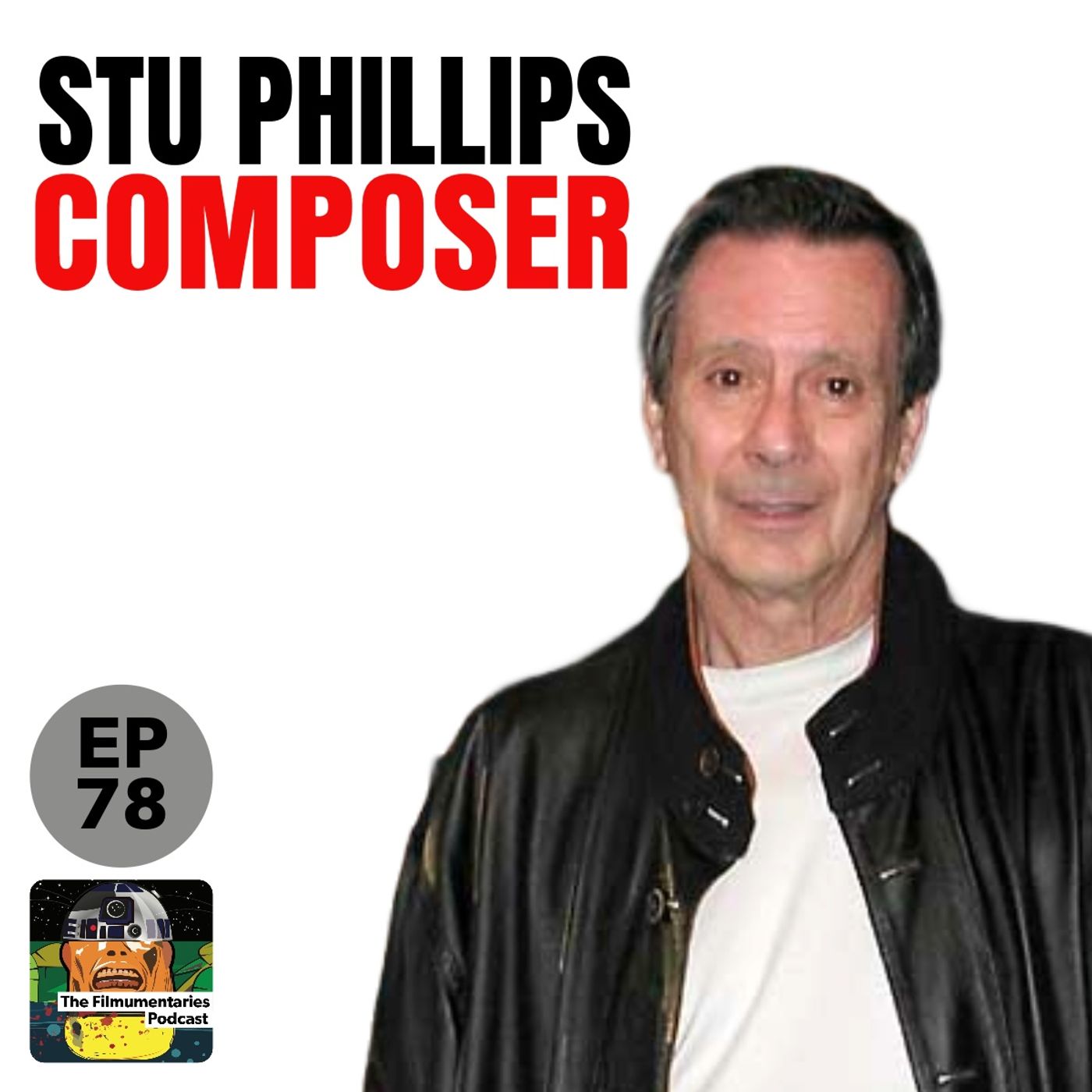
78 - Stu Phillips - Composer - Battlestar Galactica, Knight Rider etc
About this episode
Stu was born in 1929, is an American composer of film scores and television series theme music, He’s also a conductor and record producer. Though he is probably best known for composing the theme tunes to the television series Battlestar Galactica and Knight Rider.
After a career spanning decades, in 2002, he published his autobiography Stu Who?: Forty Years of Navigating the Minefields of the Music Business. It's well worth checking out.
Stu and I had tried to arrange a chat for months. I was unwell at one point, then I had some internet problems, then his phone line went down. But we finally managed to do it in May this year (2023).
I have to say it was a genuine pleasure chatting to Stu. And as you’ll hear, he is as sharp as a tack at 93 years old.
At one point in the conversation Stu and I talk about how artists borrow from each other all the time. Hang around at the end of this episode to hear what I found out after a deep dive into one particular track of Stu’s.
As with my conversation with Peter Kuran (episode 75), I was having internet problems at the time, so there are a couple of drop outs. Some I’ve managed to edit around, others I haven’t so if you hear any little jumps in the conversation, that’s why.
Links
Return of the Jedi Timeline Book - Register your interest!
Filmumentaries Merch
Support the Podcast on Patreon
Stu's Book
This podcast is completely independent and made possible by listener support. If you’d like to help me keep making these episodes, you can join my Patreon community here: https://patreon.com/jamiebenning
Watch more on YouTube:
Check out the Filmumentaries YouTube channel for behind-the-scenes clips and extra content: https://youtube.com/filmumentaries
All my links
Transcript
Automatically generated, so expect the odd misheard name.
M weird in Way Media. Welcome to episode seventy eight of the Film You Mentors podcast. This is Jamie Benning, talked to you here from my little office here at home in southeast London. It's June twenty twenty three. It doesn't look like it outside, but it is summer.
This is the first episode of the month, and this is another very special episode with a very special man. More of that in just a moment. If this is the first time you've listened to the podcast, welcome. You have about an hour or so a film history chat ahead of you. Please do check out some or all of the previous seventy seven episodes.
They're all great as far as I'm concerned, if you love behind the scenes chat, and each of them gives you an insight into the film industry and the different roles within it. I've spoken to directors, writers, editors, v effects and special effects artists, sound designers, behind the scenes documentarians, composers. There are lots to choose from, and there's always a lot to learn. If you're a regular listener, thanks as always for your continued support. If any of you like my work, and this is work, all be at work that I love then please visit patreon dot com forward slash Jamie Benning.
There are several tiers to choose from with different perks and merch too. Thanks to those that are already supporting the podcast, I think there's about one hundred of you doing so now and talking of much. You can also support the podcast by buying some film Momentary's goodies, including mugs, t shirts, bags, bottles, and even socks. There's t shirts as well with designs from my friend Pete Starling for my Inside Jabber and Inside Jaws posters on them. You could buy one for your next film convention.
There's a few coming up here in London in the summer. Please check out that shop at film Momentaries dot creator, dash spring dot com. I'll put it in the show notes because that's just too long, along with the Patreon link as well. I'm going to be adding a few more designs there in the coming weeks, so watch this or that space. So for this episode number seventy eight, I spoke to composer Stu Phillips.
Stu was born in nineteen twenty nine. He's an American composer of film scores and television series theme tunes. He's also a conductor and a record producer, though he's probably best known for composing the themes to the television series Battlestar Galactica, the Original One and night Rider. After a career spanning decades, in two thousand and two, Stu published his autobiography Stu Who or Stu as you would say in America, Forty years of navigating the mine fields of the music business. I'll post the link to that as well.
It's definitely a good reading worth checking out. Stew and I had arranged to chat four months. We had so many different times when we had to cancel. I was unwell at one point, then had some internet problems, then his phone line was down for a few weeks, but we finally managed to do it in May this year, twenty twenty three. If you're listening in the future, I have to say it was a genuine pleasure chatting to stew And as you're here.
He's as sharp as attack at ninety three years old, definitely the oldest guest I've had on the podcast, but wow, he honestly he was fantastic. His recalls incredible, and the conversation just flowed really, really nicely. At one point of the conversation, Stu and I had to talk about how artists borrow from each other all the time. Hang around at the end of this episode to hear what I've found out after a deep dive into one particular track of stews little caveat here. As with my conversation with Peter Kuran in episode seventy five, I was having Internet problems at the time, so there are a couple of dropouts.
Some I've managed to edit around, others I haven't, So if you hear any little jumps in the conversation, that's why. Hopefully it won't be too jarring. There are a few clicks and noises initially in the call. I'm not sure what's happening. There was a phone line I was calling and speaking to stew On he didn't have He doesn't have zoom or anything like that, so it does sound a little bit different to usual, But honestly this is well worth listening too.
So here's my chat with composer ste Phillips, and I'll be back at the end for a bit more jabbering on Ste, what inspired you to become a TV and film composer? Where did it begin? When did you first fall in love with the idea of composing when when I had a when I was an A and R man at a Cold Pis Records, and they didn't want to I had a hit record and they didn't want me. They didn't want to pay one of my friends out here in California. I was in New York.
Then. UM knew that I had some kind of an interest and I loved film music. I never said I wanted to write it, but he knew I liked it. So they offered me three pictures, a three picture deal to write the music for the three Columbia pictures. And instead of giving me this advance that I was looking for, and I don't know, I just kind of like, because sort of a whim, I said, now, why not, you know, I'll pry it.
I'll do anything, and so I did, and that's how it started. I'd always had a fascination for when I was a kid and went to the movies, you know, in my teens and stuff. I used to like pirate movies and stuff like that, and I always loved the music and a big swash vocaling music that went with the pictures. And but I never, you know, felt I wanted to do that. I did go to Eastman School of Music and study composition there, but that wasn't my main incrus.
My main interest was being an arranger and other other parts, but not being a film and TV composer. But that changed my mind back in uh nineteen, Yeah, it's nineteen sixty one, two, nineteen sixty two. And were there are composers that you admired back then when you watched those swashbuckling pirate movies where there composers that kind of you know, caught your interest. All the people who did them, you know, Eric Wolfgang one Gold and Max Steiner, And I guess I'm going to leave out from people I don't want to leave out, but at least those two, you know that I can remember offhand. And my first movie actually had nothing to do with those three pictures that Columbia offered me.
It was something that once I had signed that deal, somebody came into my office and wanted to and had an independent movie and they needed some music for it. And since I knew I was going to be writing some stuff eventually in Hollywood, I did this movie and that was really my first feature film, and it was a picture called mad Dog Cole with a Gangster movie, And that was my first one, which had nothing to do with the contracts that I had with Columbia, but it happened to be happened to come out on Columbia Pictures. They bought they bought the independent film and put it out. Just a coincidence. And when you're like looking at scoring for a gangster movie, are you revisiting gangster movies that you've already seen and the popular movies around at the time for inspiration or you the sort of composer that kind of likes to start with a you know, the equivalent of a blank canvas.
Uh see, it depends I've done them always, every conceivable with this particular gangster movie was a period movie. Mad Dog Hole was like in the nineteen thirties and stuff, So it was pretty, you know, it was a pretty actually a jazzy score, you know, nineteen thirty e Chancy score. So you know, each picture that I do, I has a different way of approaching it. Sometimes I work backwards, sometimes I work forward. Sometimes I work off of theme.
Sometimes the theme develops off of what I'm working on it. I there is no one particular way that I have done all these things through television and film and everything. You can find inspiration in lots of different places. I would imagine, whether it just comes yeah, you know what, a inspiration doesn't come from the movie or in a lot of trouble, you know, if you're not inspired by the movie. And let me tell you there's funny of things that I've done that I wasn't quite inspired, and I'd closed my eyes at home, and I had imagined a much better movie than it really was.
And I music, you know, in my from my imagination rather than from the actual what was on the footage. You know. Yeah. Sure. And in those early movies that you did, would you kind of get the final cuts and then you'd begin working on the music or were you engaged earlier on well, the first three movies Idea but Columbia were very professional.
The movies were always final cuts with maybe occasional a little at it here and there after it. But once I got out of that and got into television and got into independent movies, it got a lot different people. With what they showed you was supposedly a final cut was far from it. And you'd be cutting the picture while you're writing the music, and you'd constance have to rewrite the music because you'd get new new que sheets or the timing sheets and everything with different than what you wrote your music too, you know, yeah, yeah, yeah, you as well. But the first go and go ahead, we're very pational.
It was a finished cut and that was it. And you. I went in reading about you, I realized that you're one of the earliest people to use synthesizers on a film score. Well, how did that come about? Is it just because you're the sort of person that was always interested in the technological side of things, what was possible the new incoming technologies?
Or was that an accident that you fell into using synthesizers. Oh no, I tried to keep up with the times, you know, uh, composers. My first real use of the synthesizer was in a move in nineteen sixty eight called the Name of the Game is Kill, and I used the move synthesizer. But it was the synthesizer that was at that particular time like approximately eight feet tall and ten feet wide, with a whole bunch of cables and knobs and stuff, and all it did was admitt, you know, a bunch of waves and things that you fooled with. But uh, you know other people before me, Gary Goldsmith, Uh, and I think of you know a few that uh they used what the early you know, uh, synthesizers that were around, and I didn't do much with them, but that was my first big use of one.
And then I started to just keep up with the times and uh and uh used them here and there and until I did Night Rider, and and then I went big time with a lot of synthesizes. And by that time people were starting to use them quite a bit, you know. Yeah, but you it sounds like you were there kind of you know, I was kind of in the opening endings. Yeah, I was there in the opening innings. I experiment with things.
I had a friend, a couple of friends. There was a thing called the blast of Beam and I who owned that. That was a kind of a synthesized instrument that I used in Spider Man, the TV version of the Spider Man. Yeah, but that was in the late seventies, so it had been used once or twice before, but I had never heard it, and I was looking for a sound and I called his friend. I said, what have you got in your in your little garage there he said, oh, I got to this blast of beam.
I said, what is that? And I went down there listened to it, and he said, you know, we said a couple of composers of views that already. I said, I don't care for me in this particular episode, and so I used it. So I would experiment. I would try to keep up, yeah, until I got to the point that I hated synthesizers.
You know, in the seventies, it's what was it about seventy four you were with Universal Television? Was that was that a staff position where you were given scores to work on? You know? From there? From there, I was now no staff, no, no, no staff position.
H Glenn Lawson, Um Glenn Lawson who had was a singer in a group called four preps Um and he was the Capitol record of nineteen sixty three in the group, and I was their record producer. I was an A and R man and Capitol record and I produced his record one of his last record actually and uh. And then ten years later he was a big time Hollywood composer for a pilot that he was doing called The six Million Dollar Man, and it was the third third pilot already they already had two pilots that didn't sell, and so he was doing it and he out of ten years. I hadn't seen him in ten years, and I had been his producer. Now suddenly he said, he said, you were recommended by the music editor downstairs at Universal, said that he worked with you in a movie and that you were good.
And he said, are you interested? And I said yes, And so that start a fourteen year relationship with Glenn Lawson, where I worked for him for about fourteen years. I'm writing that that iconic theme for Battlestar Galactica, which is one that I can hum ever since. I mean, I was born in seventy six, so I don't really remember a time when that show didn't exist. Was both in that came out?
Yeah, yeah, But when when you were writing that, of course, Battlestar Galactica was very much riding that wave of the success of Star Wars got of Star Wars Fever in a way, did you feel any pressure, given the success of the film and the success of John Williams score to kind of reproduce that or were you given freedom to come up with something that was very much your own? Well, I was given freedom. But the point was I'm writing, you know, music to to a film that's you know, pretty close to what Star Wars was. So it was they you know, the Glen wanned a. He wanted a symphonic uh you know score like Star Wars.
So given that assignment, it was pretty difficult to try to stay away, you know. My fortunate fortunately, I was a friend of John Williams at that time. We had worked together in the early nineteen sixties on some stuff, and so uh we were you know, I wouldn't say we were close friends, but we were friends. You know, we knew each other. And so uh I did the best I could to not not get even close to what he did and not do a march with more like what his was and mine was is more it's kind of certainly not a march.
And uh there was a little uh, I wouldn't say friction, But when I record, I recorded, and with all the strange things in the world, I recorded a twentieth century Fox of all places five days. Yeah, and uh, uh John williams close friend is Lionel Newman. Was Lionel Newman, and uh I looked up one day, uh from the podium and looked in the booth and there was John Williams sitting there with you know, Lionel Newman for about thirty minutes and listening to what I was doing. And then he left and gave me a wave and he left. And years later John told me that Fox had asked him to come into the studio to see if I was lifting any of his music.
But he yeah, battlestar, and he had, you know, said to them, no, no, He says, he's writing his own thing, he says, you know. And John's that kind of guy. Even if I was lifting it, he wouldn't have said anything. He's not the kind of person. Yeah, of course John does his own lifting.
Between you and me, Yeah of course. I mean yeah. All you have to do is listen to things by Corn Gold. Yeah, and you recognize that I'm talking about a good friend and somebody I respect highly is one of the best that ever lived in the business. But the point is that we all do that.
You know, we can't help it. There's no way to get around it. Goodists borrow great artist Steel I think he's the same or something like that. Um so, what what kind of Nights did was Sorry? That was nineteen seventy eight, and in nineteen eighty two, John decided to do a sci fi concert with the Boston Pops and contacted me and said he wanted to do Battlestock Galactica.
Great, yeah, so you know obviously there and he recorded it too, you know, so nice. Yeah, that was but yes, there was a little pressure, you know, around it. But all in all, I don't think I really told any of John stuff or agreed agreed. Yeah. I wasn't that aware of that much of the music to begin with.
You know, I had seen it as a screening and that was it. So you know, I had only had one one uh uh experience was watching the movie, so you know, it was not like I was sitting here every day with the soundtrack listening to it. Yeah. Yeah, I mean just the theme was so iconic. I mean, you know, it was that was hard to get away from.
And as I said, I, if anything I was going to do, was it going to be a march? Yeah. Yeah. And you said earlier about some of those movies that you did early on, where you'd get the final cut a lot of the time. With Battlestar Galactica, had you been brought on earlier to kind of shape the feel of the movie in the TV series.
Had you seen like early effects shots or some of the dailies, or even the Ralph McQuary artwork I saw. I got a script with the artwork in the script, which is very rare now it's a kind of a collector's item. But I was not that involved on a daily basis with anything. Glenn would occasionally talk about, uh, some scenes or something. And the original cut of Galactic it was almost three hours uh so um.
There was a lot of messing around with that show because they had to get it done for American TV. They had to get it done for Canadian TV, which was a little different than they had to get it ready for a feature after it. You know, it was. It was a messy thing. There were a lot of versions of the uh and times of the film uh that went around, and what I got as a final cup was far from it.
I mean, I was on the stage with the Los Angeles Philharmonic at twenty Century Fox recording stuff scenes that my music editor was telling me he was getting new new pages of edits that it were taking place on the queue that I'm actually recording. Oh my goodness. Yeah, it was. It was a pretty bloody mess. And I'm it would have been a cheesier if it was a studio orchestra because they used to that the studio musicians.
But this was the La Philharmonic, you know, and they weren't used to Okay, guys, wait a minute, we got to change as you know, stars four to eight now go in the front. They go one to four and then you skipped over there. You know. They were not happy with that. Yeah, so it sounds that you really had to improvise and think on your feet during that recording.
Oh yeah, they Yeah, there were quite a few ques like that. I wouldn't say all of them, but there were quite a few like that. Uh, they had we had an improvise on our feet and on the stage and everything else. Yeah, And another theme of yours I always think about. Another show that I watched and loved as a kid was The Buck Rogers in the twenty fifth century.
Um. Yeah, Now, there were a couple of versions of that one that there was the instrumental and there was the vocal version. Tell me about how these had nothing to do with the nothing whats whoever to do with that song? U h blah? Blah blah blah blah blah.
But people, I had to do it that I did not write it right, and uh, I take no credit for it. Uh. And yes there was a vocal be done. Did a instrumental version of it? Uh?
And I was because I don't know why. I can't really answer the question, but I was kind of locked out of that whole main title of experience on Buck Rogers. And all I can tell you is that, uh that Buck, A lot of the Buck Rogers score was a redo on my I had to redo stuff that the network said that though this is not an interesting we don't like the score. And that time I was basing the score on the theme that Glenn Lawson had written, and so I had to go in and rescore a whole bunch of scenes and I wrote a whole new theme for those scenes. You know.
But but the songs, I think it's called suspension that you me or what a beep? No, I just heard a click at my end, so I don't know. It might have been a beep at your end, Okay, yeah, Um anyway, Yeah, I had nothing to do with that, so I can't help you there. Yeah, interesting to know. And the question is to why out of all the after all the shows that I had done, including Battlestock Galactical, which was successfully you know, it had a successful season.
It's just there was a whole bunch of confusion between the networks and plan studios and everything else, and I decided to go another way with Galatica nineteen eighty, which was there. And so I can't answer your question them why he suddenly decided that when Buck Rogers he was doing this theme himself, and and uh, and then it didn't work in the It didn't work in the show, so I had to go write a new theme, which I used for most of the score, and I think I used the main I think I used his theme once or at the end or something couple times. Yeah. I'm, of course a kid of the eighties, and you know, my I don't know how old I was when night Rider came out, but that is another theme that is so memorable.
But that was eighty two, and if you were born in seventy six, as you was six years old, yeah, and that is so much part of that show, that theme. I can't separate the two. How do you go about writing a theme that has lasted for so long and it has been sampled left, right and center. It's funny. It came out and it was really nobody paid any attention to it.
That didn't win any awards or nothing like that, and went into obscurity until um, one of the rap artists Buster Rhymes, Yeah, Buster Rhymes and h and the something land Google of can't even name decided to use it for uh some kind of you know underneath their rap uh stuff, and all of a sudden it became like a whole new thing and it became like everybody's favorite theme on television and uh and then the ring Tones, then the Ringtones started and I went an award from being for the one over one million ring Tones in the first whatever six months or year a wow. Yeah. In fact was it was a shared award between Lolo Shiffer Infermission Impossible and and night Rider. So it suddenly had a rebirth thanks to all the rap artists.
And he wasn't the only one that went on Kimberland and Magood. So yeah, it suddenly bore a whole new life in the last twenty five years. It suddenly become a vow theme where s you you just cut out in the last second there you were just saying, if you wouldn't mind just repeating, yeah, sorry you hello, can you hear me? Yeah, I hear yeah, Oh good, Yeah, you just cut out on the last bit. You were just saying, I think that you know, you had this whole new lease of life, very various things that had happened to things during the course of a lifetime.
Yeah, yeah, but you know, I think you're you're doing yourself a little injustice there. I think you know, as even at the time, that theme tune was very popular, and you know that the question really is about how do you go about defining I mean, that defines that show. It's the first thing we hear. It's married with those pictures of the car and the red lights on the front of the car and the you know, the very serious voiceover. Your themes are very good at feeling like they completely belong with with the visuals.
I mean, that's your job, right, but how begin to do that? And look, in that particular case, it was a it was a partnership between the people who were creating the the actual film for the main titles and the music. In other words, I kind of recorded the music before i'd seen anything of the main titles really, and then they ran some stuff and then they recut stuff and they put stuff into match the music. So it was kind of a good partnership between the visual and the music. Yeah.
I didn't just slop the music onto the picture. I had some idea what some of the visuals were when I wrote it, but I had no timings, you know what I mean. And they cut picture then to work with my timings nice with some of the things that I did that you know, where the thing swoops up and you know, and gets up there. So they cut they cut the stuff to match. And that's why it, as you say, it looks like a good marriage between music and visuals.
It was. Yeah, we worked together on it. It was. It was not. It was a good partnership.
Yeah, it really does show. I just think that sort of baseline that comes in and that you say, that rising sound and all of that. I just do you start with the working on the piano to do something like that? Where do you begin with a with a theme like that I had I had? Yeah, I don't.
I don't write things on the piano or on the guitar or anything else. If it comes out of my head if it doesn't come out any lecture I've ever done, to any composition classes or anything. I said, if you know, if you're sitting at a piano or you're sitting with your guitar and you're writing it, you're not really composing or kind of like improvising, because you gives your fingers go places that your mind isn't. I said, if you're really composing music, sit there and think about it and compose it in your head and then write it down or then play it, you know, or write it down whatever you'd want to do. Yeah, so I can honestly say to you know, I don't.
I don't. I didn't write. I happened to be sitting at a piano when I would do that, But I wasn't, you know, composing with the piano. I would write things down and everything. I was a you know, pencil pusher.
I wrote notes and you used twenty five thousands of races, you know to my career, and uh, you know, like anybody like John or Williams or any one of the composers. Eventually, if you happen to be a penis you play some some of the things you wrote, you know, get a feeling of it. But if it doesn't come from your head, you're really not composing anything, youcause kind of you know, improvising and if it sounds good, And all I can say is that ninety percent of old the scores an how we probably written that way improvising, you know, and if not improvising, simply taking stuff that's sits in the computer under you know, pull down menu number two and uh, you know, downstep spot and now okay, we'll use that for that spot and this for that spot.
It's kind of gotten. I'm a little blisse about the you know, film composing nowadays. The fact that, tell you the truth, the only really really good film scores i've heard lately, or are some of the Netflix stuff that's done overseas and Spain and Germany and stuff. And I've watched, We've watched a couple of shows that were really wonderful scores. And yeah, there's a few.
I'm not going to condemn every if they there's a few piece and a few and a few stuff here and every here and there, but a lot of stuff is just I'm sorry, I'm not with it. You know, I don't have to. I don't have to be with it. I'm ninety three years old, so I don't need to prove anything anymore. Yeah, well that's true.
I mean, your your your work thoughts for itself. I think sometimes, you know, I've spoken to artists who talk about using the computer to draw things or to animate things, and you know, other artists who come from an era where the biggest challenge was having a pencil and a blank piece of paper and just letting something flow out of you. And I think sometimes the tools that we have today can get in the way of that kind of most sort of raw invention, if you know what I mean, you know, just something that So were you using your voice when you're sitting at the desk there, or you know, you've got your pencil and paper, were you using your voice to hump things out and tap things out? Sometimes? Yeah?
Yeah, sometimes I something. Sometimes I think things. Sometimes I just thought of it, think of it and the rite. And sometimes you write something and then when you see it on the paper, you suddenly see what you want to go with it, you know, Yeah, you see it on the paper and then move, Wow, this goes here and this goes there, and then suddenly it all works out. You know, yeah, but those are the old days.
Yeah, that's no more, no more like that anymore, which kind of I'm sorry about. Because there was all these wonderful composers through the years that you know, they worked like you know, composes. Some of them would write pretty much to same some wonderful composers, but they got known for their style and they would constantly keep writing the same thing. But hey, I don't make a living, you know. Yeah, well, I was going to say to ask you about that, because you know, you're You're not somebody who strikes me as having a particular, definable style.
You know, you've got different, very different genres that you've worked in, very different styles. Do you think that's what kept you in work? That people could come to you and find something different certainly kept me. It certainly kept me interested because I was married to doing Somebody said, well, get him because he writes this stuff. I mean, without condemning people who I admire greatly, but like somebody like Miklas Rosia, you can pretty much listen to any score of his and know it's his score.
But he relied on certain harmonic progressions and certain melodic uh skips and everything that was successful. Uh, And people said, I love it, so they rehired them. And when they rehired them, they didn't want to hear something different. They wanted to hear what he wrote. And so, you know, somebody like that became so identifiable that you know, suddenly he was he wasn't really he wasn't creating, you know, any longer.
He was sort of like copying himself, you know, ye, yeah, yeah. How do you train can maintain that balance between the sort of commercial and creative aspects of your work. Well, you know, it depends on who hires you and what they ask you for. There's a story about one very famous composer who came in. He was hired to compose the music, and they called him in to look at the first cut of the film so that he could get familiar with it and and okay, the fact that he was going to do it.
He was a very big composer, and and he looked at it and he got done, and the director said, now, what we want on this picture is something like a lot of shifferent score. And he said to him, then, why the hell aren't you higher up? That was the days when, you know, if you were a big enough composer you could afford to lose a picture and not, you know, lose your career. You try that nowadays, and you'll you'll be out of work for a long time. Yeah, I will mention the composer that walked out, though, No, I understand whether it's about the process or the outcome of your work.
Is there a favorite composition of yours? Not necessarily you know, the final result, but maybe the process in creating it, because I'm aware that you know, looking from the outside in, we forget that you're working, you know, day and day out making these scores, and sometimes the process of doing it can be just as as valuable as the as the outcome. Is there a particular one that stands out? Ah, there's a there's a couple. Um Actually, the very the very first picture I did for Columbia or on that particular contractual deal with a picture called The Man from the Diners Club starring Danny Kay.
And in case you was too young to know, the Dinah Club was like American Express or Visa or yeah. Yeah, it was the very first credit card a company that that in Hilton with a very credit cards that were ever used, and they made a move we with Danny Kay called The Man from the Diners Club. It was a comedy. It was a Danny Kay comedy. And that was my first movie for Columbia.
And when I looked back, I was in nineteen sixty three. I think, when I looked back all these years and all the stuff that I've done and everything else, I'm very proud of what I did on my first really major movie. And I didn't know that much about it. I didn't even know what a click track was. I didn't know what streamers were.
The music editor had to teach me all that stuff. I had no idea what pretty much no idea what I was doing. I did it all from my bootstraps, you know. And I learned while I was writing that picture how to compose music for film. And when I'm back and listened to what I said, Jesus, that's pretty much one of the best schotes I ever wrote, you know.
So yeah, that one and another another picture called It's called Follow Me. I think it has a new name. They keep me naming these old movies to give the more sighting titles or something. It was a surfing movie and it was a quasi documentary. It was like a semi documentary about three surfers who go around the world surfing different famous beaches, you know, around the world, and in Portugal and Morocco and in uh India, et cetera, and uh every I really enjoy that one.
Every place they went the very it's amazing, very happy if you try to capture the music of that particular location locale in the score. So every place they went was a whole different approach to what I was writing, a whole different thing. I mean, going from India to Hong Kong, you know, going from Hawaii, you know. Um so everyone was kind of like a different type of music. And uh so, I enjoyed that one very much, and I'm really happy with that score.
The only thing that that score ever got was it was won an award for best Album Covered in a Book of Album covers it uh one, an award won some particular but yeah, got what here that was nineteen sixty nine, seventy won an award the LP uh music didn't. But album covered our awards important to you? Do you like? What does it feel like to win an award? On indeed, not not win an award when you're up against one of your Contemporaries.
Uh, like a loser. The only award, as I said, the only one I've ever won, was the one for Best Ring Tone for night Writer. Seems otherwise all my other rewards were in the record business. Yeah, three times three nominations for Grammys, lost them all, yeah so and four actually four because the Battlestock Galactico was nominated for a Grammy for Best Instrumental Recording, and uh I lost. I think the Henry Mancini, which I mean, yeah, you know, you little You're up there pretty big.
Yeah yeah, so uh yeah, So I can honestly say that I've lost every nomination that I've ever been nominated for, and unfortunately, or I can't say unfortunately, but unnecessarily, Battlestar galacticer never gotten nominated. And everybody at Columbia said it was a shoe in for not only a nomination, but for a win, because nobody had ever had a philomonica, a symphony orchestra on a television soundtrack, you know. And just a simple fact that the Los Angeles Philharmonic was playing the music on the you know, on the pilot episode of Battlestar Galactic was enough. And unfortunately, a technicality arose, which is kind of stuck, stuck me in the back for years and years and years and years in the backside.
And it was a stupid technicality that had to do with the entrance of the paper you need to put in at the Television Academy had to be in by ten am in the morning of a Monday morning or something, and at the papers never got in until ten minutes after ten, and so they disqualified it. That's hard to deal with it. Yeah, that's something that it has stuck. Clearly. I think that's hard to deal with it.
Yeah. Yeah. We spoke earlier about how artists are always borrowing from each other, and you know, all art is built upon what comes before it. Do you hear scores today where you think, oh, that sounds like something I might have done. Oh god, yeah, yeah, many many, many times.
And I know for you know, I know for a fact that this particular composer had no idea, you know, you know that, uh of what I had written. You know, it's not like the old God they went and stole it, you know, it's just eventually eventually, Hey, I'm sure there's plenty of stuff that I wrote that sounded like a whole bunch of stuff. I used to go to the Roxy Theater when I was sixteen years old, New York City and listen to, you know, Max Steiner's score or something. I'm sure there's sometimes in mind that sounds like that. You can't get away from it to I don't.
I don't know how for me you are with classical music. But like you know, Hayden wrote about one hundred and four one hundred and two hundred and four symphonies, and his wife much writing two symphonies every year of his life from the time he was boring. But you have to realize that when you listen to that stuff, you're listening some some of the time to about fifty symphonies one symphony written fifty times, you know, yeah, yeah, yeah, but you know, it was just it's impossible to do that. And and some of the composers now who have who are just have the whole army of people writing for them because they can't possibly come do the amount of music and composing that sass that they take the law in themselves.
They don't have to take it. You can't say no, you know, but nobody says so nowadays they just hire more people and that you know, they're all writing the same thing, you know, fifteen times, you know, four one times, And yeah, sure I hear things and I say, oh gee, I wrote that. I wrote that forty years ago, you know, like I said, that guy probably wasn't even alive then, you know. So yeah, yeah, yeah, I'm gonna say anything. One of my um, sorry, I was gonna say.
One of my followers on the Twitter, a guy called Lance shot he reckons that he sees a connection and an influence between your Battlestar Galactica theme and W. G. Smith's west Wind theme. Um. Yeah, west Wing was the was about, I guess fifteen twenty years ago and that big political Um no, I can't think of the theme.
Yeah I can't either. I need to have a listen. But it's interesting that people spot these things. I do know that there there were things. There was one that I actually had my lawyer preparing lawsuits.
Uh. There's a guy who writes music for the National Football League, for the NFL, and he wrote something for one of the Super Bowls, and I happen to be actually listening to it, and I got I said, you know, son of it's that's that's Coactica, you know, and in disguise, but that's what it is, you know. Uh. So I wrote some letters and some stuff, and uh found out who wrote it, and found out that he's a regular composer for the NFL, and uh, we were about to go into, you know, some kind of legal stuff and finally, like my attorney happened to be my brother and he's a music attorney, and he said to me, you know, you got to start realizing that. He says, this isn't going to be like six months from now or three months from now.
It will be taking care of He says, this to go on from five to seven years. He says, are you ready to go through all of these different things from five to seventy years? For one, he says, how much? What are you going to do? You can probably get him to stop using it, you know.
Yeah, yeah, but that's about it, he said. Otherwise they're going to claim, well they happen to be similar, so we'll stop using it, you know, or will So I gave isail okay, forget about it, and I haven't heard it since. Well there's something yeah, let's google write something else. But that's one. Yeah, And there was another song that had to do with some kind of a hockey movie or an ice skating movie that was very, very similar.
And again, if you look at the theme, it's pretty difficult. You know, it's simply a scale, you know, you know, I could probably find five hundred pieces of classical music probably had the same you know, progression of notes. Yeah, composing it's difficult, you know, like writing a book. He's certainly going to use a lot of words and people use before. Yeah.
Yeah, you can't say you well, you how somebody somebody wrote hello Master before. This is true. It was very cool to hear in the Battlestar Galactica kind of reboot the two thousand and four series that they used your theme in there. Uh yeah. I was particularly really grateful to bear At the last episode of the series, he did one of the most beautiful, beautiful arrangements of Galactica, and I said, boy, I tell you, I don't think i'd have ever written it, you know, anything like that.
But it's just great. No, I agree with you. The only bad taste that I have about that is the the actual when the theories thoughted and there was a kind of a thing going on between whether you know I might do it or somebody else, you know might do it, and somebody else did do it, but not Bear. But he was the assistant. And then Bear got the job, and you know, here and there through the series, Bear was say I'd like to, you know, take something from the original, and he wanted to use something out of the Exploration where the guy talks about the planets and all that stuff.
And he said, can I come over to your house and I look at the score and you know, maybe borrow it for a bit, so I do it right and do it the way you know, I can see how you handle it and everything. So he was very very nice about the entire situation of you know, writing something that I had originally written. And then when he did that very very powerful ending, I was very very pleased with it. And actually when I had at two thousand and nine, I had a birthday concert and we played the music from Battlestar buck Rogers, the name of the game, a few with the movies of mine, and I invited the Bear to do his version of version. He hadn't written that version yet, he was still in the midst of it.
To write a version of the Battlestar of my theme, and he did he wrote a whole thing for it, which was I didn't really love that. Uh, but as I said, I did love what he did it in the for the show. This was not in the show. This was just something he wrote for the concert. And yeah, it was nice.
But we've been we were through that whole situation. We were we were friends and close and h and uh. He sent me every single little solitary CD that he did, autographed CD from the show. Yeah. Did you ever manage to keep any of your master tapes from recordings?
Oh? Some of them, yeah, and not the ones I really wanted to would like to have had. I've a whole bunch of stuff that's on cassette, and all of a sudden I discovered now recently cassettes are back. Yeah, yeah, yeah, I don't know. I've got a cassette transfer here.
I might do something, but I don't know. It lose a little ambition after a while, you know. Yeah, Well, you've had a hell of a career. The competition is so immense now, there's so much of it that is just there's too much like hard work, and I did my hard work. Yeah, already you certainly did, and do you do you allow yourself some time to kind of look back at your incredible body of work that you created.
Oh yeah, there are times. There are days every once in a while where I said out and I just started playing a whole bunch of stuff, old cues of mine things and sing, wow, don't I write that piece of shit? And then other things that I say, Boy, that's good, you know, wow, Hey that's a good queue. Yeah. It go both ways.
I mean I've listened to the stuff and I say, God, how in a god name that I ever wrote there? You know, that's great self critical, you know, But when the deadlines come, you put any anything goes well, yeah, this is the thing. People just assume that you're you know, you're You've always got all the time in the world to strive for perfection. But the people forget there are deadlines, and there are budgets, and there there's other work and yeah, yeah, you know, you don't have much time to worry about it. Yeah, yeah, yeah, he did.
Do you know watched you I put onto I posted on Twitter today that I was going to be interviewing you tonight, my tonight, and I had the biggest response yet of any of my of any of my tweets that I put up. There were so many people wanting to say how much they you know, people were saying that they have listened to your themes more than any other composer, and you're in you know, the Galactica theme in particular is in their top three of all time and they've been listening to it for you know, forty five years. And yeah, so many people are still very enthusiastic about the work that you've done, and you know, so from us to you, thank you very much. Oh, Jamie, my pleasure, and I'm glad we finally got this done.
It was a hard a lot of hard worker. I'm getting phone out and you having your phones out and everything. Yeah, it seemed like it wasn't going to happen, but I'm so glad it did. I love talking to you. That was great, all right, Jamie, A pleasure.
Thank you, Say hi to the fans. We'll do, okay, thank you, we'll do. Thanks, bye bye, all right bye, Jamie. Well, I hope you enjoyed my chat there with stew I had such a good time talking to him. I was actually a little bit emotional afterwards.
I just thought, Wow, this guy has been around for ninety three years and is telling me all about his amazing career, and I've got the opportunity to speak to him. Wonderful, honestly, to feel so grateful sometimes when I have these conversations. As I mentioned in the intro, I went on a bit of a deep dive on the night Rider theme and came across several sites sighting tracks that could have inspired Stu Too in particular, stood out and in my mind leave little doubt. Really, the only doubt I have about this first track that I'm going to play you is that it's unclear who inspired who. They both this track and the theme tune came out at the same time pretty much.
This first track is by Harry Thuman. It's called Sphinx, and it's from nineteen eighty two. For copyright reasons. I'm going to talk over the short clipper, So here we go, so as you can hear, it's got that electronic a kind of sound. Sounds fantastic for nineteen eight two.
Listen to this whole track, by the way, but listen to this baseline here it's the theme tune right. Then there's this classical track from Leo delib It's called Cortege Debaccas. I'm going to play the music. Just wait for this little intry here wait a few seconds, and there's no doubt right amazing. Whether it was consciously taken from these tracks to build that night Rider theme tune, we'll never know.
So there we go, art combined and repurpose to create something great. Bladebrider, a shadowy flade into the dangerous world of a man who does not exist. And what's great about to you is that he makes no bones about artists borrowing and stealing from each other. You know, you mentioned about John Williams in there, and he's not saying anything bad about anyone. It's just we suck this stuff up and sometimes it comes back out again, you know, in our in our work.
Yeah. I really enjoyed that conversation. Thanks against you, and I hope you enjoyed it too. Up next on the Film You Mentions podcast, I have a long time lucasfilm production coordinator, Mickey Herman, then their special effects supervisor Richard Vandenberg. We had great chat.
I met him on the and Or panel that I hosted for ILM at Star Wars celebration. He agreed to come on the podcast read a really nice chat about his work. You know, still very much in the industry now, so it was good to get his insights about how much the industry has changed since he started. He started on Legend for Ridley Scott. Then I have filmmaker and pub teer Kevin Mucturk.
We've been trying to get this together for some times. I'm looking forward to that vrfcts artist Charming Chan, who's going to be amazing supervising sound editor Max Smith. I'm looking forward to that because sound is an area that I'm really interested in. You know, I spoke to Gary Rydstrom and Mark Mangini in that first year of the podcast, so that should be cool. Plus, I've got Steven Spielberg, collaborator, special effects supervisor Pablo Hellman coming up amazing all of these conversations I'm yet to have apart from Mickey and Richard.
And then I've got Star Wars fan and filmmaker David Whiteley. David made a great documentary about the British impact on this Star Wars films. David's a mate. We're looking forward to having a chat and just sort of geeking out over our love for movies and particularly stars of course, plus my latest booking Aggie Rogers costume designer on Return of the Jedi and so many other films as well. I'm going to have to do a ton of research for that.
Thanks for your continued support. If you can, please consider supporting the podcast on patreon dot com. That's patreon dot com forward slash Jamie Benning. There are several tiers to choose from with different perks, and for about twelve dollars a year, you can help you make twenty four episodes, and I'd say that's pretty good value. If you can't help that way, please leave a review in a rating five stars, preferably on Apple Podcasts, as that's apparently one of the best ways to help get this in front of more eyes and ears.
And a reminder that my new book is out, co authored with Justin Berger, Return of the Jedi Unauthorized Timeline is now available on Amazon in your region. I'll post the links to that in the show notes too. I got my copy today, my final copy. I've had some proofs, but I've got a final copy in the post today. Honestly, it was a thrill like no other.
I've never made a book before. I'm now an author, I'm not a published author, and we've sold a bunch today. Today was the release date of the fifth June It's take. There's been a bit of a delay because I'm at Amazon stalling over the approval process, taking far longer than they said they would, but it's all good now. So if you go to Jedi Timeline dot com, or if you just search for Jedi Timeline on Amazon or my name Jamie Benning or Justin Burger, you'll find the book there and I hope, really do hope you enjoy it.
Thanks for joining me, and I hope you can do so. For the next episode of the Filming Mentors podcast, Weird in Way Media


