
Season 1 · Episode 145
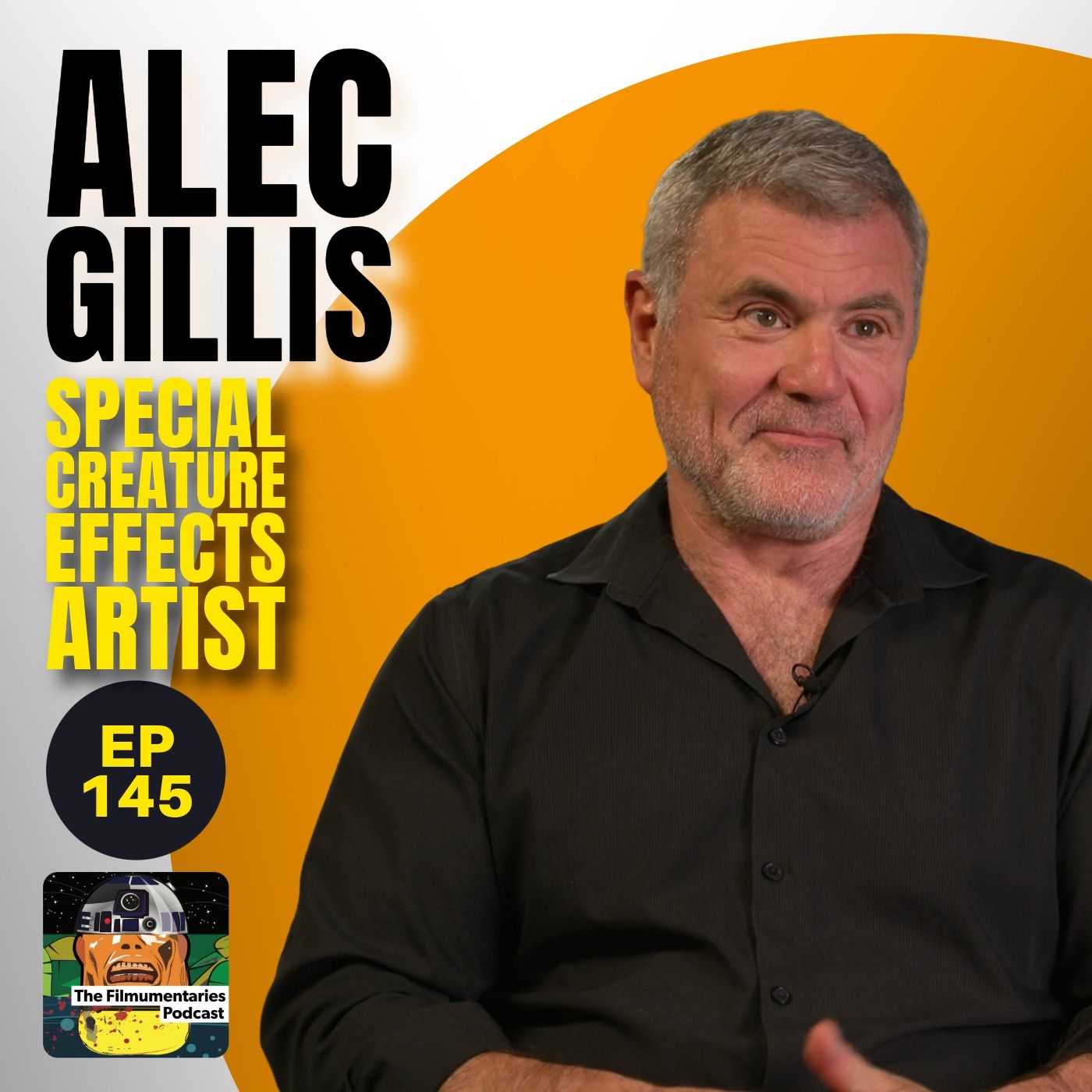
Ep 145 | Alec Gillis — Creature FX Artist (Aliens, Predator, Tremors)
About this episode
After beginning his career working under the legendary Stan Winston, he went on to contribute to films including Aliens, Predator, Alien³, Tremors, Death Becomes Her, Starship Troopers and many more.In this conversation we talk about how a childhood encounter with Ray Harryhausen’s Jason and the Argonauts set him on this path, the early days building stop-motion creatures in his parents’ garage, working for Roger Corman alongside a young James Cameron, and what it was like joining Stan Winston Studio during one of the most exciting periods in creature effects history.
We also talk about the eight-week scramble to build the Predator, working with David Fincher on Alien³, forming ADI with Tom Woodruff Jr., and how practical creature effects continue to evolve in an industry now dominated by digital tools.
This interview was recorded remotely, but I recently had the chance to visit Alec in Los Angeles while filming interviews for our upcoming Joe Alves documentary, where we spoke in person about his work on Jaws 3-D.
Topics discussed
• Discovering movie magic through Ray Harryhausen
• Building stop-motion creatures as a kid
• Learning the craft during the Roger Corman years
• Meeting and working alongside James Cameron
• Life inside Stan Winston Studio
• Creating the Predator in just eight weeks
• The production of Alien³ and working with David Fincher
• Founding Amalgamated Dynamics Inc. with Tom Woodruff Jr.
• Practical effects in the digital era
• Mentoring the next generation of creature artistsSupport the Podcast
I hope you enjoy it.
This podcast is completely independent and made possible by listener support. If you’d like to help me keep making these episodes, you can join my Patreon community here: https://patreon.com/jamiebenning
Watch more on YouTube:
Check out the Filmumentaries YouTube channel for behind-the-scenes clips and extra content: https://youtube.com/filmumentaries
All my links
Transcript
Automatically generated, so expect the odd misheard name.
Weirding Way Media. Hello and welcome to the Film we Mentors Podcast. I'm Jamie Benning, filmmaker, author, lifelong fan of sci fi and fantasy movies and behind the scenes stories, and this is the show where I talked to those artists and technicians who helped create the films I grew up loving and probably we grew up loving today. My guest is Alec Gillis, creature effects designer and filmmaker and founder of Studio Gillis as well as ADI Amalgamated Dynamics, Inc. With Tom Woodruff Back in the day.
Alec began's career working under the legendary Stan Winston before going on to co found creature Effects at ADI with Tom Woodruff Junior. Together they helped create some of the most memorable practical effects in modern cinema, and across a career spanning more than four decades, Aleck has worked on films including Aliens, Predator, Alien Three, Tremor's Death Becomes Her, Starship Troopers, and many more, helping shape the modern era of practical effects to this day. In this conversation, we took about how a childhood encounter with Ray Harry Housen's work on Jason and the Argonauts set him on his path. His early days building stop motion puppets in his parents' garage and working with Roger Corman alongside a young James Cameron, his years at stan Winston Studio, and what it was like creating creatures for films like Predator and Alien three.
This interview was recorded remotely, but as you're here, we start talking about the Joe alvesdoc that I'm continuing to make, so I did actually interview Alec in person. I got to visit Studio Gillis, which was fun. There in Los Angeles. We spoke to him about his work on Jaws three D, and we also interviewed Jared Rivett, a local horror expert, about some of Joe's work as well for the documentary. Aleck was so accommodating, so friendly, such a great guy, really really top guy.
So thank you Alec for your time doing this interview and for your time and patience with us when we visited your shop. So a little bit more about the Joe Alves documentary. We headed off to LA in the middle of February. You know, we had the hope of getting Steven Spielberg more on that in a moment that didn't happen, But what we did get was interviews with Alec Gillis. As I mentioned, we also spoke to and Dowsonberry, who was one of the main cast in Jaws two.
That was fun. I also managed to book Rick Carter for an interview. He actually came up to Joe's house and he sat there with Joe and we miked the two of them up and just kind of got a couple of cameras on them and observed them from a distance and they just chatted about their time working with Steven and Rick had some wonderful things to say about Joe. Then we did a sit down interview with Rick again, very gracious man, very generous with his time, Very grateful for that as well. We also managed to go to Leah Thompson's house and interview Leah about her first film, which was Jaws three D, Joe's first and last film that he directed.
That is so that was fun. She couldn't have been more friendly and warm. She signed my Turkish Jaws three D poster. I don't know why I have a Turkish one. I just quite like the fact that it's a bit different, and she signed a Howard the Duck picture for me, saying to Jamie good Duck lovelier, which I will cherish for some time.
Yeah, we just had the best time out there, and believe it or not, I managed to book Dean Cundy and thanks to some very kind folks, some friends of Joe Als and his wife Jerry, they let us shoot at their house out in Pasadena, so Dean didn't have far to go because he lives in Pasadena too, and is what he and his wife Tisha turned up and we had a good sit down interview with him for a good hour and a half and again he signed a couple of things for me. I've got a Jurassic Park license plate signed, and Paddy, my co director, got a huge Escape from New York poster signed as well, So that was really fun. And again another gracious individual, very nice to have a chat with him. Had a few jokes with him as well, and he was talking enthusiastically about his work with Joe and Escape from New York and I wish i'd could get him on the podcast.
Actually I might try and do that because he's got so much experience in so many films. It was really wonderful to talk to him. We also want to shot some b roll at Willow Springs Racetrack. That's where Joe started his short racing career, and he has a wonderful story about taking a Hollywood legend up there to have a race in his car. And we also went to Suppulvida Dam, which is where Joe picked for Escape from New York.
Obviously it's been used in a bunch of other films buck Eru Bandzai, I think it was in a night Rider episode, but it was very cool to be there. So we had this amazing five six days just purely adrenaline fueled wake up, get breakfast, write questions for the interview, coming, drive to the location, do the interview, come back, shoot some b roll, transfer the footage, have some dinner, collapse in bed and repeat. And then I came straight from that to a day and a half later working on the Australian Grand Prix for Formula One, so working on Australian time but here in the UK remotely, so I was already kind of on an eight hour time wonk and then another eleven hour's difference for Australia, so I have to say I was pretty exhausted.
Hence the reason I didn't get the last couple of episodes out because I then went straight from that the following weekend, after you know, seeing my family for a bit, then working on the Chinese Grand Prix in the middle of the night. So it's a pretty crazy month this month of March because I'm working on three Grand Prixs a formula e. I've got a couple of days work at home as well, and yeah, trying to get all the documentary footed transferred, backed up, mirrored onto drives, transcribed. I just haven't had time for the podcast. So again, apologies for not getting these episodes out.
Thank you for your support, Thank you for understanding. I will be making up for it in the coming months. I do have several guests in the bag back. Of course, they require editing, transcribing, doing the intros and outros of social media, the artwork and all of that stuff. So I just didn't have the time.
Between working ten hour twelve hour shifts and sleeping when I could, there just wasn't any other time. Again, thank you to everyone who donated to the GoFundMe for the Joe Alves project. We are getting there. We are getting there slowly, And the amazing news is is that Steven Spielberg has agreed to sit down with us perhaps in the fall this year, after the release of his film, which he's obviously focusing on right now, deep in post production on that, I would imagine. I think he's out at south By Southwest at the moment, so maybe there is a version that they're screening there.
So yeah, very exciting because that elevates this project to something else, entirely different. So we're still looking for people to come on board as the executive producers. If you're a distributor or you know a distributor that might be interested in helping us get this film out there, a film about a Hollywood legend and his amazing physical archive, then please get in touch info atfilmomentaries dot com. Likewise, if you've got an idea for somebody I could interview, just send me an email at that same address, info at filmomentaries dot com. Right, I'm going to stop jabbering on now, but I'll be talking to you again after the interview.
But here's my interview with legendary creature effects artist Alec Gillis, and I'll be back as I said at the end for a little bit more jabbering on Alex. So many other people that I've spoken to on this podcast can sort of cite this moment where they suddenly found the magic. Is there a particular moment or a particular film that you can remember seeing that turned you onto this stuff? Yeah, it probably hit me in a couple of blasts. One of my earliest memories was my father waking me up.
I think I was about five years old, and he said, come out here, you got to see this, And it was the network premiere of Jason and the Argonauts on our little TV. And it was right at the moment when the guy is scattering the teeth of the hydra and the skeletons come up. That was really like that just boggled my mind. I was like hooked, and my dad knew something about the techniques and he was explaining to me that they're only this big. And then the next big, big blast was four years later, I suppose, when the original Planet of the Apes came out and my brother and I my mother would just drop us off at the matinee show and we would watch it three times that day, hide under the seats and just keep watching it and she go up our later, but it's really that movie is so ingreat to me.
So I got basically that's my career, right, like creature stuff and makeup e stuff. Between those two films, I didn't do stop motion. I wanted to initially, but but I changed tact. So what I age with that would being you mentioned two points there, But were you like that sweet spot whether they say that, you know, if you're eight to twelve you find that thing. Yeah, love, if you end up doing it, you've you've got the dream life kind of thing.
Yes, So there was you know, five, I got the got the bug and knew I loved, you know, fantastical movies, and then by uh by nine, I was smitten with it all. But it was then actually, at about age eleven or twelve, that I saw an interview with Ray Harry Els in Castle of Frankenstein magazine. Yeah, I'm you know, paging through the magazine at the newsstand and I'm seeing most of my favorite creatures and then I go, oh, there's a guy who does this, and that in my mind said I want to be that guy. So that was sort of the So there were three. Moments those were the Catalyst.
It's funny, isn't it. People talk about Ray Harry Housen movies. They forget about the directors of these movies. I mean, I know, Jason the Lgonims, is it don Don Chafficky chaffee. H Yeah, you think about It's funny like you just have Ray Harry houses have been bleazoned on your brain.
And that makes him one of a kind. I think he was an not without being a director. You know, he'd do his five panel sketches, beautiful drawings. He'd go in with the idea, him and Charles Sneer would pitch it, get the green light, and then they hire a director. The interview directors hire them and uh you know, and but it's it's Ray's movie.
And I think that is so fascinating to me, and so outside the system and the normal way of doing things that he really was. He's sort of to me. I did get to meet him in the in the nineties and and uh, you know, I spent some time Tom Tom Woodroff when we were working on Alien three. Tom just picked up the phone book and started looking for Ray Harry Housen because we were in London, right and he's like, how many people are named Harry Housen And there it was. He was in the phone book.
So Tom called him and said, yes, we're working on a film, you know, because now we had some clout, you know, some stature. And Ray invited us over. So we got to go over and see his menagerie in his cupboard, meet his wife Diana, and and and one of my fondest memories was when he was he wanted to show us a videotape of some animators that were completing some of his puppet films. This one was a tortoise in the hair thing. I should know who these guys are because they did a great job.
But he said, I think you'll be impressed. And he was trying to get his VCR to work. He's trying to get his video player to work. He couldn't quite and he's like, where's the remote control? And I was like it was so endearing, and I just thought, this is awesome.
I don't have to worry about not because sometimes I don't think of myself as super tech savvy like a lot of people. I don't need to be that, you know, to do this stuff. But he told us in that visit that, you know, really he never felt like an insider in the movie in the studio system. He always felt outside. And there was a moment where he was pounding on the arm of his chair complaining about studio execs, saying they don't know their asses from a hole in the ground.
And I thought, Oh, there's the firebrand, right, that's the guy that I think Rape Bradbury wrote about in that little novella where Harry Housen is a character and that Yeah, so he was an independent filmmaker. I think he doesn't quite get his deserved acclaim for that. But it's one thing, though, to sort of say, there's this guy that does this and you found it in a magazine, but then to say to yourself, I could be that guy. I mean, where were you brought up? Where were you growing up at this time?
Were you near the Hollywood system. I didn't feel like I was near the Hollywood system, but I did grow up in the shadow of the matter Horn at Disneyland. I could see the fireworks from my bedroom window. So I spent a lot of time at Disneyland, and I think, you know, I didn't really realize it until some time later that being again, you know, it was a wonderful time when your mom would drop you off at the gates of Disneyland, the happiest place on earth. You'd run in with a single book of tickets, which you'd burned through in an hour, and there's really no lines, you know at that time, and then you had just run around the park for another ten hours until it closed.
So you know, I was looking at animatronics and just getting right back on the Pirates of the Caribbean, you know, with as many tickets as I had, or or the Haunted Mansion, and really because those things felt there were immersive experiences. They felt like you were in a movie and those animatronics were performing for you, and and it was really very fascinating to me. So I do kind of credit Disneyland for a fair amount of my interest in the fantastical and robotics. And there's something about the couple of things you described there. I think for me that you know, being dropped off at Disneyland and being dropped off at the movie theater, they're both sort of experiences of discovery as well, aren't they.
I don't think kids of my kids generation kind of have had that, whether I mean I had it in my time, definitely just going out on my BMX bike further than I should have gone, and in the woods and building camps and stuff. But I think, you know, you're that little bit older than me, where we did just kind of drop kids off and say you're on your own, and we were sort of left to discover these things, and it's so much more enriching, I think to that to discover those things. Isn't that funny? That's an interesting way of putting it, because getting out and going somewhere, going further than you should physically geographically is exhilarating and thrilling, and then pulling back and like going a little further next time or whatever.
Whereas today they're going way further in terms of the dangers of the cyberspace, but in the safety of their home, so there's an oction that they're safe. Yes, yeah, in reality they maybe they're being exposed to more dangers. Yeah, yeah, I think you're right as you were describing that they are going further and further. I can sort of remember that feeling like I shouldn't be here, a little bit beyond the border of where I should be, you know, wrong side of the tracks kind of thing. But when when did you sort of you mentioned about stop motion not happening for you?
What happened there? Then? Was it a hobby? For a while? I was into it, you know, initially that was what drew me in, and I was doing you know, little playmation things, and then I came consumed by how to make a stop motion puppet that looked just like something rare areas and would do you know not the same design?
But I had, And so I'm going, you know, looking at any magazine famous bosses of film land might have a picture of Hares imposing next to an armature or the King Kong armature, and you're, okay, I see those balls? What are these things? You know? How do I make a version of this with hardware store items and or do it out of wire or what have you? Foam lay text?
You know, how do I you know, where do you figure it out? In a pre YouTube tutorial era? How do I figure this out? And that was a big part of the of the exploration of going further and further is like, oh, I found out you know, there's an R and D Latex up the five Freeway. You know, how do I get there can I get my mom or my dad to drive me there.
Uh pick up a gallon of foam latex, which I won't tell my mother I'm going to be cooking it in her oven yet, but. I find yeah, yeah. Figure so. And luckily, uh, you know, I had two supportive parents. They did get divorced right around you know, when I was eleven, and divorce was fantastic for me because they both felt bad.
So, you know, my mom got me a Minolta super movie camera that had stop motion, setting, slow motion, fast motion, an intervalometer. I got to have the intervalometer because I got to click it one frame at a time, so I'm not jiggling the camera. And then my dad would take me to he was a he was a military guy, so he would take me to the military base and we would we would watch totally inappropriate Italian horror movies. And I remember I remember a double feature of When Dinosaurs Ruled the Earth, which is the one I wanted to see, and Torso, which I think was a ful chep movie, which which had like girls in bikinis getting sowd in half and and those were good to see because I realized, yeah, I'm not into that.
I don't. I don't. I don't love that. Yeah, I love. You found your niche or your niche as you would say.
And I mean you're talking about a very specific hobby. It's not like you know, today kids might be they might all have a PlayStation or whatever, or they might be going to soccer. This hobby at this time for you was a matter of finding this very occasional magazine or like a Dick Smith makeup kit or something for Christmas. It's interesting, so many other people I spoke to do like Ken Ralston, Dennis Muir and who that little bit older than you as well, sort of came through in a very similar way because I didn't discover the Harry House and stuff until it was on TV here at Christmas. It was always being shown at Christmas.
And you know, had I gone on the right trajectory, I'd be in a similar industry to you right now, I think. But it didn't happen for me, but it happened for you. But it's even smaller group of people that actually made it into the industry. Well that was the that was the sort of those barriers to entry of you know, how do you figure out how to do this? How do you?
How do you? I could talk to a counselor in high school, you know, who would say, what do you want to do? You know that before they just before you graduate, they take an interest in that suddenly, and so mister starts I believe was his name. Uh, You're like, what do you want to do? I was stop motion animation, and he looked at me blankly, and he go, how about welding?
Yes, not on his list, welding, right, yeah. Okay, welders make six dollars an hour. And uh, and I remember going pish posh, you know, I'm going to be the next Ray Harry Hols. And and now I think I look at it, and then, you know, when we need welders, I'm like, God, damn, they're expensive and they're working too. I always think with those like we, you know, we call the careers advisors over here.
I remember having to fill in this form and it came out that I should be a telecommunications engineer or something, which is what my uncle's doing at the time. Totally did not want to do that, but I think it should be almost like jury service, you know, like you get a let through the post one day and it says you've got to go to a school and talk to kids about careers because the people who are in the job of careers advisor, who were they to advise you on a career? You know? Oh, well, this is where my snarky uh, you know, self satisfied self was And that's part of what like doing this hobby that nobody I knew was doing it and it was so hard to find information that it made you feel special. It made you feel like and when you're a teenager, you know, you revel and you know, having no and understand you or like, I'm not even going to talk people about this when they ask me.
I don't want to because they just won't get it, you know, and then that gives you a very very special feeling. But but yeah, I did go in and mister Stott, I'm thinking, mister Stotts, you're a you know, you're a history teacher who has been thrust into the position of guidance counselor because it's that time of year. So please don't feign interest in my you know, you'll see someday you see my move my name on the movie screen. You'll love it. But they were all well, intended, and now I realize I was being kind of a dick.
Yeah, but you need that kind of dickish focus to end up, you need that passion. Yeah, I oh, this is what this is. Where Like, as I've gotten older, I really do. I have worked on removing my ego from my creative functions, you know, like working with my people and all that, because I've seen people with rampant egos in in the movie business, and you know, it's not it's not fun, and I'd rather have fun than not have fun. But I also want to do great work.
So then I gravitate towards who are the filmmakers I've worked with that are calm and reasonable and even keeled and are still great. And so that's what I But that said, like wholy death of the ego sounds all great and everything, but when you're building your career and you're scrapping and you're competing, and you have a vision, and you have to have a fire in your gut and you have to have you have to have tenacity, and you have to be sure of yourself. You have to have confidence, you know. Yeah, And so luckily I've had people who like Jim Cameron you know, as an early role model for me. And I saw, you know, how he was with his focus and his you know, he's a force of nature, you know, and and and what he accomplished and uh, and I've seen I haven't worked with him in many years now, but I've seen in interviews and extended interviews he has mellowed out.
You know a lot of David Fincher has mellowed out a lot. You know, two very different personalities there, but very driven. Yeah, yeah, both very driven David Fincher. Alien three. My god, that guy that was the first director I worked with that was younger than me.
I think like his twenties then, wasn't seven. Yeah, he was twenty seven, I think. You know, Tom Wodrif and I were about thirty thinking we were like wonder kids, and then we're like, holy shit. And that guy was so self possessed at an early age, at so unflustered, unruffled by studio kind of combat. He was just built for it.
You know. I don't know that he enjoyed it, but it was really amazing to see. I remember once in his office, we were coming over to show him some designs at Pinewood Student you, and he had the He had the same office that Gayle and Herd had on Aliens five years prior. So we you know, we we see him on the on the phone from the big picture window outside his feeder up on the desk and he's talking. He looks totally relaxed.
So we're like, okay, and Barbara, his his office manager, says yeah, go ahead, he's expecting you, and we kind of tap lightly and he's finishing a conversation. He's going. He goes, well, I don't fucking care, put me on a plane and send me the fuck home. And he and would go, wow, who is that? He says, ah, the studio head And we're like, god, wow, I would be ulcerating and go, you know, lumping jumping through hoops and yes, sir, yeah, yeah, yeah.
So when people I was, I mean, people don't don't blame him for Alien three anymore. Now it's settled down and we kind of know the story despite him not have you know, he doesn't talked much about it. But but initially when Alien three came out, and it would frustrate me when people would blame Fincher for whatever lacking, whatever's lacking in that film or for its chaos and so yeah, and it was the success of it and what people like about it is totally due to David Fincher. Uh and and I don't know, like a lot of other directors would it would have, you know, they would have crumpled. I think, yeah, a lot of people are very unaware of the mechanics of movie making.
I think people just assume that you get script, you get a crew, and you go for it, and you know you've got as long as you want, almost to do everything you want. I mean, when was the first time you kind of got a measure of how movies were? But that was that back within the sort of Roger Corman interactions. You then that's where you met Cameron as well, right. Yeah, well I met I met Cameron a year prior to joining with Roger Corman.
I met it through a My wife had a high school art teacher. I mean, she wasn't my wife when she was in high school, let me set the records, but when when she was in high school, she had an art teacher. And so I was about eighteen or so, and that art teacher had seen my work and said, oh you should you should meet this guy. My husband teaches oceanography and he's got the student who's into the kinds of things you're interest. So I got the number and I called and we had a nice chat.
And Jip was about six years older than me, and I went out to Brea and visited him during his truck driving you know, book you know, school district, book delivery whatever. It was, right, Yeah, yeah, I think you know. That big brown truck was parked in front of his house a fair amount. And he had like a little two or three bedroom house out in Brea, California, and he was just chalk full of giant. H had a seven foot spaceship model that he was building because he was like just on the roads.
First guy I ever met. He said, yeah, I got a script and I just thought I'd just start making the movie, you know, And he was shooting. It was he shoot. He was shooting at sixteen millimeter. He had done the short Xenogenesis at that point.
Yeah. That I think you could see a really low res copy online somewhere on YouTube maybe. But I went out to uh To to a movie theater where his buddy was a projectionist, and after midnight, when the crowd had left, they ran this and I thought, holy crap, No, that was a thirty five millimeter film. Sorry, it was no sixteen millimeter, it was thirty five. I was doing you know, stop motion in Super eight.
So I'm like, this guy is fully fully filed. Yeah. And then when I got the call through you know, another friend of my sisters who was working for Corman. He had seen my mother's garage where I was you know, work work turned into my workshop, and he said, I can get you an interview at Roger Corman's because we're working on a movie called Battle Beyond the Stars. And I got I was like, shit, I don't have a proper portfolio.
I don't even know like eh. So I said, can I bring a friend because I thought, well, Cameron will make me look good, right, so so you can see my lack of confidence compared to Jim's you know, complete confidence. And we uh you know, went to uh, I think they were in Tarzana. We went at the freeway and interviewed with Chuck Camisky and the Skotech brothers Robert and Dennis, tabletop miniature geniuses. We looked around and it was like, wow, this is a real movie.
This feels like uh you know, you know, we've arrived, right, But it was a good six months before they called us back and hired us. And Jim, Jim later told me that that he he learned, uh I don't know. Chuck Comisky told him that the reason it took them so along was that they thought Jim was kind of pushy. Yeah, a little a little bit much. That's probably the most understated description of James Cameron.
But then, of course, you know, so we we started working together and and and we were kind of a unit. They called us Orange County because we were coming up from the O C. And uh so he would start, you know, like like he did this beautiful drawing of Nell the spaceship with the boobs in that movie. And uh so we started working on that. And I had some skills he didn't have, like mold making, and you know, I was into sculpture and mold making, and he was into sort of more techie plus model building, hard surface model building and all.
So he started sculpting and he was quite a good sculptor, and and then I was making the molds and and it was we were doing it in a very crude way, but it was effective. And so he would then like go up the wrung of the ladder, you know, like Okay, he's art directing now they they're pulling him. Or he's got his own unit now shooting miniatures. Right, so I have to finish that. Thank god for Pat McClung, who was a model builder.
I interviewed Pat for this very Pook Coast. Yeah. Good guy, Yeah, great, great guy, And he was a Pat was a mentor to me and a little more low key than you know, maybe some other folks around, and very easy to learn from. He showed me about air brushing and all that kind of stuff. It's really great.
It was a great experience. And uh and then I joined Cameron in his effects unit, and you know we were doing uh motion control. So in that time I got to build miniatures. I got to you know, camera load, do bipack matting with magazines. I worked with simple motion control systems, just linear back and forth.
Uh. You know, we were doing we were we were called in to help build the sets or help detail the sets, you know, gluing hamburger of containers on walls and stuff like that. Yeah. It's basically imitating what we saw in aliens. You know, TV backs and all that grew them into the Walls Alien Alien, Yeah, Alien, sorry, Alien, And it was a and I ended up because of I was I was going to UCLA Film School simultaneous to working on films at Corman's and I ended up dropping out of the film school because Gorman's was a way better film school and I was paid.
Yeah, yeah, the important part. But it's so valuable to be doing that, like all those different disciplines, and there's different elements of filmmaking and having that time pressure as well to do it, I guess, and the monetary pressure and everything else. And I think I think you've talked previously about learning by kind of finishing off other people's work as well, like just seeing it through to that final stage before it goes in front of camera. That was something that it's an apprenticeship ultimately, isn't it. Yeah, it really really was.
And when you mentioned, like, you know, the pressures, I was kind of thrown into the on set aspect because it's very different to be in a workshop where you've got some months to build things. When you're on set and the day costs thousands of dollars and you've got an assistant director who is yelling at you and basically being a drill instructor to get things, to keep things moving, keep things on schedule. You realize, oh god, this is like, this is an intense I hated it going on set because it was not comfortable, way out of my comfort so I had to. But I knew that I had to if I was going to go where I wanted to go in the in the in my career, I had to figure out how to work on set without you know, getting ulcers, without you know, and figure out a way to enjoy it.
And really, what that means is you have to be prepared. You have to have your shit together, and you have to give no one any ammunition to attack you for competence or any of that kind of stuff. And that's a that's a really it's a really like it goes from a light jog during pre production to a a forty yard dash and you have to be in shape for it. Really. Yeah, I work in live TV, and you've pretty much described my my world, you know, because yes, you're you're you're doing this slow ascent to the moment where you're going to go live and then it's just this crazy run down the other side of the mountain and you've got it has to happen at that time.
And live live is so scary to me. Still, I still am like, like, I can you know, if I'm being interviewed and they're they're cutting to me, I'm fine talking, But if I have to have an effect prepared that has to go off just so on live TV or or in a live event, you know, it's not fun because there's no second take. No, that's right, But you know, I think I've sort of come to terms the idea that what I do as a sort of live editor director is there's a sort of performance. So you have to be It's almost like you're in a concert or something and you're a part of the orchestra and you just have to perform for that finite amount of time. I'm sure for you as well, like suddenly you've got to fix something on set, whether it's an animatronic or something.
You need to have all of that knowledge that has got you to that point and you have to be able to do it and fix it with the director breathing down your neck. So there's a sort of performance aspect to it as well. I think there is. I guess. I guess the difference between an orchestra is you you know, your your triangle doesn't suddenly stop making noise and then some guy is there saying, hey, sorry, that's not going to work.
The batteries ran. Now you know, I like in it. I like in it to sort of going into combat. Yeah, and I don't want to get I don't want to make, you know, get to a tom Cruise blowback, because it's not at all one. There's a similarity, let's say, but there's an.
Excitement where you you've got a team, You're like, this is our moment. It's very much biz right, this is our moment. Let's go out there knock the socks off of everybody, and you want it to run smoothly. It takes in and have people applaud you when you leave. And that's part of the beautiful thing about what me and my team do is that we're generally not there for the entire shoot.
We come in and out with characters with effects, and it's a special time for the rest of the crew when they come in and they go, oh, hey, the guys are here, you know, and we walk in with a predator or an alien or something and everybody's like, wow, look at that, and they all want to get their pictures taken and and it's really it's really very special for us and for everybody. And you know, if you're a grip, your work is extremely important to a film or a sound recordist or what have you. And but people aren't fawning over you. You know, That's what I'm all about. It sort of a raises all the pain that's got you to that point a little bit.
Yeah, yeah, it helps to helps to sort of soften it. So after working on Battle Beyond the Stars, was there a period of time where you weren't doing anything like or did you just dive straight into the next project. I went from Battle Beyond the Stars to Galaxy of Terror. I did some work on Android. There was maybe another one or two, but it was sort of like my role was diminishing a bit at Corman's.
And part of it was because I kept stepping out to do, you know, go back to film school and I was working on a film project, you know, a thesis film of mine that I ultimately when I stopped, I never finished the film, you know, So I think I was kind of separating myself from it, and I didn't love that. Career wise, I thought, well, this kind of sucks. I'm I'm devoting myself that I could be back with a team of people that I'm learning from and so on. And then Cameron got Terminator off the ground. But by that time I had started working in makeup effect shops, strictly in makeup effect shops.
Prior to that, I was kind of like in the visual effects world, you know, doing miniatures and so on. And then I started working at a place called Makeup Effects Labs. I think I met them because of Galaxy of Terror. They're the ones that did the giant maggot that has non consensual sex with a lady in the Galaxy of Terror, and I got to know them a little bit. Alan a pone over there, so you know, I went over and got I got a job working for them on projects, and I saw how that business model works, you know.
And by this point I had forgotten about stop motion animation, although Cameron had said to me that he wanted me to do this stuff motion on Terminator, and I remember thinking, you really need to go to someone who does the hell out of this, not someone who wants to do it. You know, thank you, but Cameron's very loyal, you know. And and then he met Stan Winston. He referred me to Stan Winston to be part of Stand's team on Terminator. But I had taken a job on Friday the thirteenth, the final chapter, because you know, we were gonna kill Jason for good.
There would never be any movies made after that. But so Stan was like, well, come back when you're available, and I did that around the time of Invaders from Mars, which rolled into Aliens and and what else, Monster Squad, the original Predator, you know, amazing stories episodes. So I had a good run at Stands, a very busy time at Stands. Yeah, and meeting great people along the way. I mean Friday of the eighth, the final chapter, would that have been Greg Canmon and Tom si.
It started as Greg and then Greg left the show and Tom Savini took over. So I was like, wow, I got like, you know, these are big names, this is yeah, this is all good stuff, you know. And then that thoughts, and I guess it's difficult as well, because coming out of the Corman stuff, where you're becoming this sort of very rounded generalist, working all the different things to then try and find your specific want and need in a job, you know, becoming an expert and something. There is that fine balance, isn't there between becoming an expert and being a good generalist as well? Yeah, but I'm glad that I have the generalist foundation, because you know, I'm not.
I feel like when when people you're less intimidated by things look right, You're like, well, you know I've I've done something like this. I can pull this out of my experience. And this is where I where I love to give people from my crew opportunities to take things on set because it gives them a much Now you've got to use this thing, right, You got to be You've got to break out the bailing wire. You've got to do all the low tech, non glamorous things to get that image on screen. And you're no longer in the perfect ideal building scenario of constructing things and so forth.
And if you've if you've done the generalism before becoming an a uh what would you call it, an expert or a you know that your narrower focus, uh, then you have you can always reach back into your you know, lowbrow bag of tricks and get yourself out of messes. Yeah, you sort of because you've been in those other roles. You know how your job, your specific job that you end up in, impacts other people, don't you. And I always encourage people in my side of the TV industry to just come and sit with me and see what my job is about, and then you'll know why you can and can't ask for certain things. And yeah, it just gives people a more rounded overview, doesn't it for sure?
Yeah? Sure? Did you? Then? Working with Tom Savigni was that?
I mean, how much older was he than you? Tom is Tom about? Uh he'd been in the industry a little bit longer than you though, right. Yeah, oh yeah, he's at least a decade older. Yeah, right, And so did he sort of take you under his wing to a certain extent?
Not exactly. There was a funny scenario there where, you know, we were Greg Cannon's crew. Greg had sing right, and then Greg left and we're like, wait, Tom, Tom Savigni is coming in now. And of course, you know much respect because he worked on the first Friday, the thirteenth, but he hadn't worked in Hollywood before, so it was kind of that was the that was the new thing. Here Tom Savini is coming out to work in Hollywood, and we didn't know what to expect, you know, we didn't know if he was a diva or you know, or if he would like just cast aside everything that we had done.
So there was a little bit of that petty crew kind of mentality of like, he better not do this, you know, I hope he doesn't, you know. And then he came in and he was just such a fun guy and not interested at all in derailing anything that we had started on. He wanted to, you know, he was he was really thrilled to be to have a team like that. I mean in that our team was myself, Kevin Jaeger, who went on to great things in makeup and animatronics, Jill Rockow, who is you know, a lifelong makeup application artist. Jim Cagele who was my sculpting mentor and inspired me greatly in sculpture.
John Voolich who's passed away now but went on to become a very successful I think he started he got into digital work and was doing really great stuff there. And Larry Carr was another guy who I had actually met in Orange County and we had worked on Super eat movies together, you know. And he was a great generalist as well, so he had a really good team behind him. And and then he got to meet tons of people in Hollywood that and and he didn't you know, he had no he had no grand illusions. If I may refer to his book about how things were done.
He explained to me, like, listen, I always wanted to go to Hollywood, but I was happy in Pittsburgh. And then Hollywood came to me in the form of George Romero. So he had to figure out solutions to problems not knowing much of anything. And it's almost a parallel to what Richard Taylor at WETA Workshop told me about, uh, you know, their their movie building Weta Workshops in the New Zealand film industry. And Richard said that their ignorance was their greatest asset.
They're so clever the stuff that they've come up with. And Tom Savini was extremely clever. And I learned a lot about like like, oh my god, you could do a bullet hit, you know, but with a with a condom, And there's a trick to it, and you super glue a button with a piece of monofilament and it'll pull the goo out and you can get it to go in directions and at uh wow, man. You know he would do bullet hits, little squibs on people and you're like, you put it where like right on his neck? Did you have?
Yeah, just a little piece of leather underneath it, and it's wow, okay. But they would trigger it with a battery with a switch. But rather than like some you know, thing that was made, he would take an old pack from a Polaroid film which has a battery in it and it has you know, that's what that's what. Cues the frame up. So he would cut it down to its little smallest thing and give that to the actor and they would just press it with their thumb and uh they could cue it so their reaction are perfect.
And so I was, I really I really loved learning that stuff from him, and you know, had had a great time. I mean, he's he was a fun boss. He was one of the fun bosses, which which I think was always something that I wanted to be. I aspired to. Greg Cannon was a fun boss as well, and of course Stan was the king of all fun bosses in my opinion.
You know, it sounds like, there's so much fun in that sort of experimentation and invention and that sort of acceptance that it might fail the first time or whatever, but you're learning as you do it, right, So failure is part of part of your world. Yeah, you can't have success without failure. You can't. And I and I'm always scratching my head when when people are so afraid of failure, they're afraid to look bad, or they're afraid that, you know, some idea is dumb and it's going to be judged. And I'm like, it's only movies, right.
We have to deliver something contractually, because yes, I will get sued if I don't deliver the thing in and it works in the way that I have promised and contracted. But until that point, what's the wiggle room? Do we have room to like experiment a little bit and try some things, you know? And and I kind of you know, by this time, I know when I have to pull the plug on experimentation and just go, like we this is meat and potatoes time. Now, let's just do the very best version of this that we can within the perimeters that we parameters that we now have.
Uh, and we know it's going to be great, you know, because because we're we're talented, we're experienced, you know, and let's have fun with it. That's I don't love the philosophy of like you must shed blood in order for it to be of value, that as a as a as a designer or a shop owner, I must ring I've squeeze these employees blood out of them, and I and I and I have worked with people like that, and I just think it's counterproductive and that is more ego based. I think that's that that appeals to someone's feeling of control and kind of you know, power, you know, it makes them feel like an authority or what have you. And I just I have thrived more in the situations where people are permissive and give you permission to explore a little bit, but you are responsible for coming in on time and on budget and all that.
Still, Yeah, of course, but I think I think we have kind of glorified near burnout, haven't we. Like, you know, I'm working so hard you say to people like, how you are you busy? Oh, yeah, I'm really busy. I haven't stopped. And it's as if it's a sort of boastful thing.
But yeah, I've always thought if I was in a position of authority, that I would want a team that comes in fresh the next day. You know, I've done jobs recently that have been like nineteen hour days. You can sustain that, and you're building up to the big day of life transmit and you're all burnt out, you know. Yeah, so then when it comes time to execute, you have no class on the tank. Stan Winston told me that, you know, was probably the uh well, he was definitely my biggest influence in terms of less about technique.
I call him my mentor, and that's true, but it was less about teaching me technique of sculpture or mull banking, or tricks of the trade or what have you some of that, but much more about the people aspect of it. Stan used to say, you know, he used to work with clay. Now people are his clay, which I thought was when I heard it, I thought that was sort of a self aggrandizement and what people are clay, how dehumanize, But what he meant was that he's working he prefers to work with the human aspect of it because he's he mastered the technical aspect of it, and that's what he would say to us. He would say, like, you know, if we have to work over time and I have to pay you guys extra time and a half double time, what have you?
Then I have failed in organizing this project. So we're so he was confident that we'd be able to get the job done without the overtime. We would, of course go into overtime, but that's where you know, being organized and not just you know, chaotic, and it helps the artist because you know, artists want to like be given a focus. Right, here's your task, this is what you've got to do. Let's see what you got go.
You know, they want to be able to focus on it and not be whipsawed by upper management who doesn't have their shit together and is you know, there's always a there's always some emergency fire to be put out, and you can never focus. It's a chaotic, disruptive environment. And I don't think that's for me. That's that's not what I ever enjoyed or what I want to promote. And Stan was the guy who taught me it didn't have to be that way.
You know. He says, like, if I work you sixteen hour days every day, I do that, I get less and less of you pay more and more for less, So go home and go to sleep. We'll tackle it in the morning. You know. Yeah, yeah, what was you said?
James Cameron was very loyal Was it that loyalty that brought you in on Aliens? Do you think like, because by this point you've done a few more movies. Yeah, he was ready to do his next and he thought of you. Well, I was already part of Stands because he that's loyalty. He wanted me on Terminator and I was unable to and Stand's like, well, you've got Cameron's stamp of approval, so you're good with me.
You know, I'll come back as soon as you can and we'll get you going. And that what a great feeling that was to walk in to a crew that included Shane Mayhon, John Rosen, Grant, Tom Woodriff, who I would form Amalgamated Dynamic, Rick Lazarini came on, Richard Land's a mechanical guy, Shannon Shay. These were all people that went on. You know, most of those guys stayed with Stan through the you know, Jurassic Park and all of those big giant movies that those guys did, and now Shane Mahan runs Legacy, and so it was just great to be at that level. And then all of a sudden, from having looked in from the outside at all these cool things that were being done.
Rob Boteen's work, a great hor of his work, you know, Steve Johnson over at Boss Films on Ghostbusters was doing amazing stuff. Rick Baker, of course, these were all the pillars of practical effects. But Stan had only done Terminator. He had done like, you know, the autobiography Miss Jane Pittman and the Cookies Christmas Special, so you knew something deeps, you know, so you knew that there was talent there, but he wasn't like doing the massive stuff like those other guys. And so to come into his team and be part of it in those big formative movies where all of a sudden, you know, people, aliens comes out and we are like on top of the world, and we felt like as a team, we have arrived.
And you know, even like Invaders from Mars, which had those goofy uh uh, you know, big creatures in them, but they're bold and they're fun and they're they're pushing the envelope and and and that was that was That was a really exhilarating time. I bet Cameron was one of the more difficult directors to work for though, because not because he's you know, a bad person, but because he's so driven and he also knows everything about every little manushai in everybody's job. I mean, I've worked with directors like that and sometimes it does go south because they're micromanaging everything. What was it like working for him? Really demanding?
I imagine, Yeah, he he was very demanding, and you know he was he could be a rough you know, have a rough delivery. But as Stan said, you know, he said, I don't always love the way Jim approaches people, handles people, but I know that everything that we're doing is going to be fantastic because Jim's vision is unlike any anyone else's and he will get us there. And so like you know, Jim designed the Queen Alien. He sat down pen and you know, colored pencils and black paper and designed the Queen Alien. He came up with the idea of putting the two people in, you know, two guys inside it so that you could have four arms.
We're uh spending it from a crane and then on the other side of that, he designed the powerloader, you know, and we'll put a big guy inside the body of it and we'll we'll hang it by two wires that will disguise as the antennae of the of the powerloader. It's all brilliant, right, Like, you can't argue with that, and so and the other thing about Jim is that he'll in the moment flair. I should speak at past tens because I think that he's he's he's changed. But this is this is like he can flare, right, he could flare, but you always know that, you know, there's a million battles he's fighting with others, you know, with the studio, things you're unaware of, and all you have to do is strip it down and not take it personally.
It's never personal. I feel that way working with Paul Verhoven, right, Paul Averhoven is another super passionate, meticulous, brilliant man with delivery as well. Yeah who who? And by the way, you have not lived until you've had Paul Verhoven one inch away from your nose, looking in your eyes, grilling you, you know about whether or not the puppet is going to perform to his expectations and it's fantastic. I just I enjoyed every moment of those.
I know people get rattled by it. I've been rattled by difficult personalities, you know. But you know it's Joel Silver threatened to sue us, you know that sort of thing, you know, And that's a little scarier because I didn't didn't have a creative connection with Joel Silver. You think, well, yeah, he might, he might do that, he might try that, which would be really a drag to go through. But if it's if it's just someone who is passionate about the work and wants the very best work possible, then I don't know.
I just always think my crew is standing right over there watching me react to this aggressive you know, venting, and we're gonna have a big laugh about this over cocktails tonight. I guess as well become for those you know, a couple of directors you mentioned, you know, Cameron and Vhoven. The actual film for them, what ends up on screen is such a massive compromise compared to the vision in their head. They must be constantly frustrated by the realities that are involved in trying to get that thing on screen. Yeah, when you, Yeah, depending on your imagination and how invested you are, like generally, you know, Cameron writes the scripts, you know, at least you know, I know he's got writers now with the Avatar movies.
But he's very deeply passionate and committed to his vision and his words and his you know, worldview and all that stuff. So yeah, you could see that. But Cameron also told me as a bit of a device, he said, if you get if you shoot high, aim high, and if you get seventy percent of what you're going for, your winning. And I thought, well, that's a very practical, mitigating kind of way to look at it. It's more about degrees of success rather than you know, one percent off and you're a failure everything.
So and I think that's a that's an artistic mindset that I discourage in my place, is like that it's a it's a success is a sliding scale, you know, and and and we can always make something out of it, you know. Only the only way it's a failure is if you just don't deliver, if you quit, if you don't deliver, if you walk away from it, you know. But yeah, no, that's a good WAYE to think about it. So you're only withstand for a couple of years, right, two and. A half years, and it felt like ten any projects that were coming in and and a lot of short schedules.
That's another thing is that stamp. You know, we would beg Stan to get us longer schedule. So probably the you know, the story that I've told about the Original Predator is that when uh, Joel Silver came to Stan to basically save the picture by uh, you know, rebuilding the creature, redesigning and recreating the creature, and uh, you know, we begged Stan not to take the job because we only had eight weeks to do it, and uh, this was like we're it's like too much. We're going to destroy all of the goodwill that we have created on Aliens and it's going to look like that like Aliens was the exception, and uh and and this is what we're capable of. And Stan said, sorry, guys, you don't get to tell me what we're doing and what we're not doing.
We're doing this. And you know, Arnold had come to him to to say you got to you gotta save this, you gotta and and that I think really appeal that call to action really appealed to stand and and I thought, you know, it was it was like, oh God, how are we going to do this? And then we did it and and that was a great learning experience for me to sort of embrace challenges and not be fearful. I mean, you know, within reason, but you know, yeah, I'm great for Stan's studio to sort of be known have a reputation of being able to do that as a fixer almost, you know, coming in and saving a movie. Did you see that original suit light in person?
No? I never saw it in person. I've seen the same things that everybody have seen, which are the documentaries and stuff. I do have issue with with some of the way that was presented. I can see where they would see that it was impractical and so on, but the kind of you know when people on the on the production side say, you know, and then there we were shooting in Mexico and we opened the crate and we said, that's what it looks like.
And I'm thinking, well, even in nineteen eighty seven, you know, you could get you never saw a drawing, you never no one showed you. We would mail videotapes to Stand wherever he was to show him tests and he would watch and it would take two weeks for him, you know, to see it, but he would see it. So this idea that production had no idea that it was a big surprise, and it was a total fail. I think that maybe what what happened was being you know, on the on the creature side. But I'm always going to defend the creature builders.
Right. They may have said like, Ooh, wouldn't it be cool if this thing had stilt legs for instance, you know, and it could, Well, that's not very practical if you think about it beyond just a workshop cement floor and you think about a jungle, there's not to be able to do much with that, right, And this is this was where Stan had a benefit in his eight weeks of design and build. They came to him they said, here's the things that didn't work. You know, the guy can't see very well. He doesn't have his feet under him, you know, he's you know, and so Stan's like, great, he's gonna be flat footed.
We're gonna put we're gonna use contact lenses. There was a moment where Stan was designing a much more prominent forward face, you know, lion like face, that would have had to have had mechanical eyes. And he looked at the sculpture and realized, oh shit, no, no, no, we got to change this, and so he had Matt Rose, who was sculpting the hid, sort of unceremoniously take a wire and cut the face off, take this much clay out, mash that face back in there. And that's to me why when I look at I see the I don't want to offend any Predator lovers because I love the Predator too. I've worked on so many movies.
It's a great character, and all hail Stan Winston and Kevin Peter Hall and Steve Wagon, Matt Rosse blah blah blah blah. I'm done. But when I look at the design of it, I see that that hid kind of mashes right in there right, And a lot of people just think that's perfect. But I know the clay right, like you would have paid this back a little bit because this prominent head had this out and then it mashed down. So I never felt like we got to truly balance forms.
And of course I've been raked over the coals enough over my various predators that I can't argue with anyone it's a matter of taste. Stan happened to create a pretty goddamn perfect creature. Yea later, still, yeah, he's you know, yeah, absolutely. So when you mentioned about ADI with Tom, when did it become apparent to you that there was a gap in the industry that you could fill the requirement for. Well, it was Our intention originally was not to go out and you know, form a company that would compete with Stan.
We had written a script that we admitted to Gail and Herd's company, and Gail called us and said, hey, everybody's talking about your script. They're telling me you got to read this script, and we were saying, that's awesome. Our plan was we wanted to create a film that Stan could direct, but this was an anthology film, so there could be like we wanted to direct also, so like Stanton, you know, whatever you want, you take the lion's share. Stan will give us two little episodes, two stories within this, and we'll do the creature and it'll be a Stan Winston production. And that just didn't track with Stan.
It didn't. It wasn't part of his wasn't really on his radar. And that's when I realized, ah, okay, he said I really need you guys out there, you know, Megan monsters, And I thought, okay, that's the latex ceiling I'm not going to get. I will not be in if I stay with Stan, I will not be able to advance my career beyond what is worthwhile, what has value to hit. And even though that had been had provided me with a livelihood and tons of opportunities, which I was grateful for and still am, I thought, ah, okay, I think I have to step aside.
I was never really I didn't really come here to be a lifer, you know, and there were other things I wanted to explore and do, and so so I left and with stance blessing. It was a great It was a great exchange that we had. And then two weeks later Tom left and we thought we were going to be working on this movie that Gail heard was going to produce, and you know, naive, We were naive, and the writers strike happened and Gail said, I can't be talking to non union writers and I'm not. We're not pursuing this, and we were like, hey, you know, but we placed too many eggs in that basket. Anyway, it was a very naive.
It was a good lesson, and then we looked at each other and said, what do we do? Do we go back to stance that doesn't sound you know? I know, so we we just decided to form a company and we kind of, you know, we did, uh George Romero had a TV show called what was that called Monsters Maybe I can't remember exactly, but we did a couple of those little episodes just me and Tom, you know, working out of Rick Lazarini's workshop and subleasing, and and then finally Tremors came along, uh, which was a gale heard connect to the guys, uh, you know, Ron Underwood and Steve Wilson, Bret Maddock, and then we you know, we got that gig and used those funds too well. We we sub let let sublet space from k and b our friends Howard and Greg Howard Berger, Greg Nikato and Robert Kurtzman and hired them to sculpt and all that kind of stuff.
And so we were kind of vagabonds for a bit, but then we then we did secure a workspace of our own finish that job. You know, I was talking to Greg Well via email just today. Actually he's been involved in one of my projects that I'm working on. I'll delete that bit out. I'll tell you about that later.
Yeah, so I'm aware that we're already done an hour here, are you right for another fifteen twenty or you got career? Man, I'm in a blast. Sorry, if I can compress my answers to. No, no, it's great. This is going to be a double episode already, which is a good thing.
So Tremors, you said kind of like this sort of saved you in a way that you you had this big gig, was there? Am I right in thinking you had a kind of several months after that where there was nothing around. Oh after after Tremors? Yeah, yes, several is closed. Seven is more like seven months where we were like what did we do?
Did we piss people off? What's going on? What would what? You put that down to? Ulical nature of things?
You know, Stan had given us good advice. He said, like, don't you know, stay the course because you know, if you're talking to people or things seem like it's that deals are coming together, there's a lot that has to happen before someone reaches out to you, you know, and and and they and the people that do reach out to you and you have an opportunity. They may not be greenlit, you know. So it's not like it's not a normal job, and it's not really. I always say it's not for the faint of heart because it's free lance, you know, and you never especially if you're carrying overhead.
I'm carrying overhead right now, and it's been very, very slow for a very long time, which is why this is going to be a double episode, because I have plenty of time. And then Alien three came along? Was that the next Yeah, so Alien. Three came along. They had approached Stan about doing the the quature effects for it, and he told them he would do the creature effects, but he wanted to direct the film and they already had Vincent Ward on the job and Stand true to his word, said well then, you know, I'm not really in a position I'm not going to do it.
And Mike Joyce over at Fox said, well, these guys, you know, did Tremors and that was pretty good and maybe they could do They worked on Aliens, and so they came to us. It was a very nice, seamless sort of segue. You know, we said you did you? We said, do you think we're still with stan Or. They said no, no, no, we know you're your own company and you went to Stan right, Yes we did, okay, you know, so so that came along and then Vincent Ward left that show and David Fincher came on and we got on great with David right off the bat.
We did all Vincent, but he had a different vision for it, I believe. And that was a very exciting project and and you know, we packed up and moved to London again five years after after Aliens, back to Pinewood Studios and it was really, uh fantastic and uh got to work with some Oh my god, that the crew we had on that. We had Stephen Norrington who would go out direct death Machine and Blade and lea extraordinary gentlemen. We have h Dave Elsie who has won an Oscar too, I don't know, Mark Coolier also another winter Dave Anderson on the American side, Uh, has won a couple of Oscars. Gino Acevito, who did all the beautiful complex jobs and then went to Wetta and contributed massively.
Still out there, isn't he, I think? Yeah, last time I spoke to him anyway, Yeah, So did you enjoy your time in London. Loved it. I'm a total Anglo file and and I and I loved everything about it. And uh, I still I got a really bad chest infection because you know, I'm a southern California boy.
I'm a hothouse flower. So so I occasionally I will it will flare up, and I'll I'll cough up and I go, there's my London flum London. Yeah, yeah, I'm got. The same trouble. Yeah.
I didn't know that Alien three was disliked by people when I saw it. I think I saw it in the cinema first. I used to go like twice a week and see like double features and things, and then I had it on VHS and then it wasn't until the Internet came around I was like, oh, people don't like this movie. I always thought it was. What I liked about it was that it was different enough from the other movies and it had taken a different tack and it definitely had a like a real sort of energy about it.
I liked it. I've always liked that movie. Yeah, yeah, I have too. I think you know, in the UK, I've found that people liked it more. The Americans were hoping to for a bigger batter ass or sequel to Aliens.
You know, they wanted the war movie again. We had some concerns when we you know, read the script that it was sort of trying to go backwards one person, no guns, what you know, and and a single alien is what I mean. But it was very daring. Fincher was a fantastic daring I really have appreciated their choices of directors. You know, Jean Pierre June is an interesting choice to direct an alien film.
And I thought they at a studio level it it was. It always impressed me that they'd take some chances on who's directing these these movies. But you know, my favorite is the first film, uh uh. And and so you just never know. But but the boundaries have to be pushed.
You have to try things in order for end risk that certain things are a work or not work. And and and I always appreciated the studio for you know, Fox for that. You know, yeah, I think if they'd have just repeated the same or made it bigger than people who would have moaned about that as well. It's like you know, Return of the Jedi people a well, it's just like the first movie, and there is another Death Star and all of that. Well, yeah, I agree to a certain extent.
But if you'd have gone off Peace and David Lynch had directed that film, people will probably be going, what's this? This is nothing like Stars, you. Know, right, And then many years later after it's a yeah, after it's a bomb, then you would have the people appreciating it in a cult way. But yeah, the love for Alien three has grown over the years. This is again, this is like, you know, levels of success.
I'm old enough now to know, you know, Tremor's was a bomb at the box office and now it's beloved. And you always now that there's the Internet, you always have the loud voices that are that are there at the beginning, and then they sort of disappear a little bit, and then the there's a swell of appreciation for the for the films. And that's why I always think, eh, I'm not really gonna like it would be great if these movies made tons of money so that we can make more movies and that people are just you know, happy all the way down the line. But that I think is too much to expect. And for me, I don't mind being associated with movies that didn't resonate in their time.
But it's interesting to come back twenty years later and see how they are. You know. Yeah, it's interesting how they still stand out, isn't it, Because, like you say, at the time they flopped, maybe they were before their time or the culture wasn't right, you know, in this sweet spot of the time. But it's we're still talking about these movies all these decades later. You know.
Yeah, And you know you talked about we talked just a minute ago about you know, films sort of pushing the boundaries and being different. But death becomes us kind of a bit of a weird one in your catalog of movies. I mean, not many comedies involved really up to that point. It must have been a bit of a blast to work on. It was fantastic And again was you know when when when I mentioned, you know that you've got those very passionate, loud, difficult personalities in directors.
Robert Zemeckis to me working with him, he's on the list of people who, uh just you know, are consummate professionals. He's a gentleman, uh knows everybody's job, as you said, uh, and and is even keeled and gets a result that nobody else gets and has his style. And I mean, you know, back to the future. You know, we were just over the moon to work with Bob's amicas and Death Becomes are I don't believe that was a box office hit either. And it's an odd movie.
Uh, it has only resonated further and further as we get I mean, the number of people who do costumes of the two of building on Meryl Streep. It's it's fantastic. I mean, you know, a musical on broad Way, you know, talks of now a reboot or a sequel or what have you. And it's also an iconic it's a gay icon iconic movie. And that's a very interesting segment because you can't you know, I don't think a lot of my my resume is specifically you know, I don't know, well, we've had a lot of different things.
We do. We have it some comedies in the Santa Claus movies are very different from an alien movie. And I just like appealing to you know, a wide variety of audiences. This guy right here, go. And describe it for us as well, because some people just be listening, Oh okay, this this is a.
Sort of odd character from a music video, a rap video that a that abteen Bagheeri directed and it's just a super strange character, sort of a bodyguard kind of character that follows the artist as he wraps and and it's very violent and all that kind of stuff. And it's so cool for me, Like I'm not the demo demographic, but suddenly I have street cred among followers and this is dope, and I go, dope is good, isn't it? And but it's again, I love reaching out across borders, international borders or cultural borders. And and when your work, uh is inspires people or delights people, it's just it's really like that. That's a that's a joy to me.
Yeah, it's amazing, Like through your career, just how that kind of culture of appreciation has grown in you know, the conventions and the cost play and you know, we now have people directing TV shows and movies that are the people that are inspired by your work as well. Now that's that's sort of third fourth generation almost. Well, like Dan Trachtenberg on bad Lands, Predator Prey and Predator bad Lands, Hey right there, pray and Dan is a guy who is an encyclopedia of knowledge of films. And we had his podcast, I think or YouTube channel whatever it was, and he loves the history of it. And I have to like restrain myself when we're together because you know, we always end up talking about like, you know, stories about you know, you know, like this, you know, we're talking about stories, and meanwhile, there's a whole zoom meeting waiting to resume, the resume the actual conversation of making a movie.
But and Dan is another one of those people who is inspirational to me because he's he tells an emotional story. He's an aster craftsman, and he's so even keeled, he's kind. He wants to hear ideas there you know, one thing will lead to another. He'll stay, wait a minute, go back and what was that thing you said? You know?
Or right I go that that's a dumb idea. No, no, no, I want to hear it. And that might be a dead end right there, or it might inspire something else. But it's really like for me at this point, you know, being being uh, you know, everybody's effects dad or grandpa, I don't know which. It's a very nice time for me to be working because a lot of those sort of you know, I am not an upstart.
I do not. I now have a deep resume, you know, so there's a built in respect. And Stan Winston used to talk about that. I'd be like on set, I'd be like, Stan, how come they don't listen to me when I when I say do this? But if when you say it they hoped to.
He said, it's the gray hair. It's the gray hair, which means it's the experience. It's the you know now the gray hair, and it's pretty nice. Yeah. I suddenly became that guy at work in the last few years.
I looked around and say, shit, yeah, I'm the older guy here. How did that happen? Look of the younger guy? Wild? I know if you cant sometimes it like meetings, you know, like you catch yourself in a reflection on a win, know, or on a picture, and you go, oh, my god, that's me.
I used to be the youngest person in the room. I have the advantage of having lost my hair in my twenties, so I now look the age I've been for twenty odd years. You know, I'm fifty next year, so you know, I've grown into that. So this is the sweet spot, right, This is as good as it gets for me. You've got you've got the facials.
Yeah, yeah, I guess we can't really talk to you without talking about, you know, the the annoying argument of practical versus CG. And of course it isn't a binary thing, and they are tools. But I sort of see your work as something that whilst in the nineties, you know, you're pumping out these movies and these TV shows practically, and then we had the sort of switch to CG after Jurassic Park, I see your your craft is becoming more and more of a kind of a niche thing again, like as an artisan thing. People come to you because there's a there's this sort of history of x te's that you have, and that your craft does a very specific job. You know.
I think people there has become a bit of a thing, hasn't there in marketing and the press. Ah, there's no CG in this film. No, it's Top Gun. Of course they've replaced ninety percent of everything outside the window or it's the f one movie and they've done pretty much the same, but equally having those practical elements in there. I still think, particularly when it's a character driven thing as opposed to a set extension or a vehicle or something like that.
I still think, I mean, I've probably got more of a discerning eye than the average audience, being somebody who's been into this stuff for many years. But I still think it's very necessary to have that practical thing on set, not just for the viewer, for the performers, for the lighting, all of those exact where do you sit on that? Yeah? I think you know, people, I think I got around twenty fifteen. You know, when the we do a movie called Well Sorry twenty eleven, We did a movie called The Thing twenty eleven, and a lot of our work was replaced by digital.
It's sort of last minute. And you know when that happens in Hollywood, nobody calls you and says, hey, listen, here's the what we're doing, and here's the You just don't get the call. You just you know, you find out. Yeah, yeah, you find out at the screening at whatever, and that's the way it goes. But that movie, that was a low point for me where I thought, well, it's all digital now, I don't know, and Tom and I seriously talked about hanging it up at that point because it was happening to Rick Baker and everybody.
That must have been a real gut punch. So to have done the work, not even to like you haven't even isn't the tender stage here where you're sort of saying, are we going to do it this way or that way? You've done the work? Yeah, no, it was. It's not a good feeling when you're an artist and a crafts person and you, you know, have have spent a lot of studios money and put something on film and then the only thing that you can think of is it wasn't good enough right for someone, for someone.
And I don't believe that it came from the director. I don't believe that the director made that because he was very much into the the the We were retaining the feel of the Carpenter film, you know. But what we did once the movie came and went and people were asking, they were you know, I was reading online right like they must have eighty I must have screwed up and blah blah blah. So we put out a video and it got millions of views, and you could read the comments that were heartbroken that that work was not in the film, and and that's when I realized, oh, people are people are still appreciative of this. It's at the studio level that they don't appreciate it.
Well, what do we do about that? Right? And and how do we how do we stay in business? How do we apply our craft if the if the gatekeepers don't want to spend the money on it, you know, it is because we were finding directors were very interested in having that the real stuff in their film. But but it was a studio it was a sort of a business model, and and some of the some of the studio execs that we talked to said, well, we just don't want to pay for it.
Twice we don't want to We don't want to pay you to do the effects in pre production. And then when we go get response cards from of test audiences and have to reshoot the ending or whatever. Uh now it has to be digital, and so we're just gonna wait on all of it. And the digital people are like, oh my god, that means we get all this stuff dumped on us in the last minute before our release date. Uh So it wasn't working for anybody.
So now I think what's happened is that the studios. As you mentioned, the studios realize that it's that that it's important to the audiences. Enough audience is now saying, hey, that looks phony, this looks this sucks. They're listening to the Internet, which they didn't used to do. Point where they go like, oh, and it's a good promotional tool to be able to claim that it's it's practical.
And you know some of the student have gotten in trouble for faking things to look practical. Yeah, yeah, yeah. But so for me, that was a long winded way of sort of getting here. For me, I've always been a proponent of a mixed bag that you know, even going back, we worked on Wolf in the early nineties for Mike Nichols, another spectacularly kind person director, and we wanted to we were working with Sony Image Work, Sony Digital, and we were like, can you if we were to make if we were to put Jack Nicholson in a makeup and you put the tracking markers on, could you stretch his face out? Could you give a face that is just not an effect of it stretching, but just could you just change it drop his forehead back to it.
And they were like, oh, not yet. We can't do that yet, so we've always been looking for ways to integrate the practical and the digital, and now that that has come about, and it's a really great time for both arts and I think both a line now. Like I just I just had this a presentation at the Visual Effects Society with Michael Ralla, who did The Sinners, and he did so much work based on Mike Fontaine's beautiful makeups on that where he made it bubble, but to him, it was all about retaining the practical elements, scanning things, shooting and augmenting, but not destroying to the point where you know, Mike Fontaine looks at it and says, I can't tell what I did and what digital's doing. And I think that's a really nice place to be because it the practical work anchors it in reality to your eye and to your brain, and after that you stop questioning, how's this done?
How's it You're not knocked out of the movie because it looks either like a stiff piece of rubber, nor does it look like a a non existent cartoon that's floating in space in the realm. You know, Yeah, I wonder if I was just thinking as you're saying about The Thing the twenty eleven movie that you know they didn't want to do it twice because then you would have had to do it twice, whereas now you can have a practical and you can augment it. There are tools have advanced over that what last fifteen years, I guess where you have got those options so you can get the advantages of both worlds. You can have a perhaps the Thing on set, you can have design fixed, and then you can tweak it later on, but not relying on post production solving the problem necessary, but using it to its full.
Ye. That has been and I think that may have been in play on The Thing, where you know, like in every shot there was some specifically intentionally designed area that would have to be digital, right, like the like you know, if the guy's the guy's next stretching, you know we can do that, right. We can do a mechanical torso, but we're going to put it on a boom arm and he's got no legs. You're going to do digitally growing transitioning legs and then it's going to walk towards its victims. Right, So you're going to have the torso is going to be practical.
The legs are going to be digital, but then there's the tracking issues, right and if that if it's quite I don't know, I'm speculating, but I know these are the sorts of conversations I've had with the effects supervisors, like, well, then we're just going to get rid of everything in the shot and do it all digitally because it's much easier and more effective to put the whole thing in rather than try to track arms onto a pre existing thing. Yeah, as you say that, times have changed and and that's a good thing. Yeah, yeah, you're talking about the thing. You had a response to that, and that you win and directed a movie. Oh yes, yeah that was Yeah.
So when I looked at all the comments and we literally got millions of views, I thought, well, again, you know, like, how do we how do we get success? Do we walk around moping and saying this was a failure and feeling shitty, or do say, hey, look there's a market, there's an audience out there, people who might want to contribute. Way. It'll be a low budget movie, of course, so it's never going to be on a scale of a of a of the thing or whatever, but maybe they'll maybe they would like a movie that we say we guarantee that there that we will not use CGI to create the creatures. We will do digital removal of rigs.
You know, I think I put an eyeblink in one at one moment on a creature, but it was a two D effect. It wasn't three D animation. And uh. And I actually rejected some really great digital work that Steve Norrington did for me. He's a spectacular digital effects artist being a director, and he showed me this and said, look, this is this is like digital tracked onto a guy's body.
And I said, I think it looks better than our practical but I have to keep my promise, so we have to use So there I rejected. I got yourself into a corner. They So that's where I was like, well, you know, for this exercise for Harbinger Down, we're saying we're not using it. But I don't know that I would really want to to do that on every It's kind of a fun challenge to be purist like that. But you know, I shot it on digital.
I did a whole bunch of digital stuff. We did digital compositing, we did you know, so it's not really super purity. But it was enough to say, these are rubber monsters in camera and Lance Hendrickson is going to fight them. Yeah, that was the fun. How did you find the experience of directing the like?
I mean, obviously you've done some directing in the past, but you know, helming something is a different thing altogether. Yeah, very different. But it was a lot of fun. It was a lot of fun. And it was like I got to bring to bear all of my Roger Corman skills.
And I mean we were doing things really down and dirty, you know, in a warehouse to make it look like the uh, the the the the you know, the North Atlantic or the what's the ocean up there? I've already forgotten all the details. You become an expert for a while and then you just lose it. Yeah, I don't need to remember a lot of but like, you know, scrounging around like Corman's to build the set, like where we'll go to a junk yard or or the uh. You know, we'll find bits and pieces to create an engine room.
And some of that stuff's made out of cardboard. You know, you never know it and uh and you know when you know, here's the deck of the ship, which is like, you know, we designed the deck of the ship after one of the old clunker beater ships from Deadliest Catch, the TV show, because I knew I could get cheap footage from that of them pulling TRAbs just to establish the world. So all right, then to match that, I need to have a deck of a ship that looks like that, and we did this sort of stunted version of it. And as long as you're shooting that way and then you're shooting that way, it kind of looks like it's double the size in your mind. So all those tricks were super fun.
And then it was fun to just have a bunch of enthusiastic actors and a bunch of enthusiastic affects people who were, you know, in a sweltering warehouse in Chatsworth making it look like it's a frozen sea. You know. But that's sort of filmmaking at its core, isn't it knowing what you need to do to achieve what you want to achieve. You know. I spoke to Ken Rauston a couple of years ago, you know, and he's talking about they're booting hundreds of asteroids for the Empust strikes back and he's like, looks like a potato.
I'm just going to put a potato in there and comp that in because it does the job. You know, nobody's going to see it, and it was a bit of fun. But it also it's just having that mindset, isn't it about the problem solving? And then this is what I love? Like those that's a great story too.
This is what people love. This is like, you know, when we were not really getting into AI, but this is one of the things I think that is missing from AI. As effective as it can be and it's photo real as it can be, it's missing the human story. It's missing the like who are you going to who will you interview when the AI movie comes out? And what are they going to talk about?
Is there going to be a couple of people talking about their prompts? And you know, it doesn't sound where's the hardship and and the and the you know what's They're going to be working in a cubicle, you know, and that's that's it. They're not going to be out in the middle of the desert digging trenches like we had too on Tremors and you know, they're not going to have fires on the set where you have to be evacuated and all that life threat stuff. Yeah, exactly. One of my now friend I call him a friend, we call each other friends, is Nelo roodis jamiro one of the designers on Empire and Jedi and a bunch of other stuff.
And he says, you know, there's nothing as sort of scary and as tantalizing as that blank piece of paper or you know, that piece of clay or whatever it is, because you know, he says to me, like he has to go through maybe one hundred to one hundred and fifty sketches before the finished sketch of whatever he's designing, be at Speeder Bi Corps or you know, a character in a movie comes out of him, you know, and that iterative nature of it is part of the creative process, isn't it. Yeah? I agree. I agree. We'll see helped shake down.
I had a look at some generitive AI stuff the other day. I've got so this project that I'm working on. This is where my listeners will roll their eyes because I'm always talking about it. I'm doing a documentary about Joe ALVE's the production designer right been working on it for a few years now because it's just a side project that I'm sort of self funding with my buddy who's co directing it with. And we've got some amazing photos of him and he there's one in particular where he's stood next to Paul Newman and Paul Newman's in Joe's racing car.
Right, he let him have a go of his racing car. That is the moment that launched Newman's racing career because he just fell in love with racing this car, right, And Joe tells this great story about how he took this turn up at Willow Springs and he span and he thought, oh my god, I've killed the biggest movie star in the world. They shouldn't have been there at the beginning here because Hitchcock. They were on a Hitchcock movie, and you know, it would have ruined both their careers, you know, if he'd have been hurt. And he tells this great story and got this wonderful photo and I just put it in as a prompt, like, you know, make it look like that the guy in the car has just spun and smoke's come up and he's adjusting his goggles.
And Joe comes running up and asks him if he's okay. Thirty seconds later, it's there, and it's terrifyingly. I mean, it's weird. At a certain point, it doesn't. It looks uncanny, but there's a good sort of fourth seconds that just looks incredible.
But I just couldn't ever bring myself to put that in the film, because just a slow push in on an amazing photo is far more emotional, I think than anything that AI can do currently. Obviously, it's accelerating at such a pace at the moment. Goodness knows where it's going to be when we get to the point where we actually finished this film. But I was really sort of taken aback by how uncanny it looked, and equally how photo realistic it looked. It's still somewhere in this strange space that just doesn't feel right, and morally it doesn't feel right, you know, because I'm taking work away from someone.
I'm also using natural resources, you. Know, from the out resources thing is interesting. Nobody talks about that, do They're they're building nuclear reactors in order to power AI. Yeah, yeah, I mean you were just dealing with a bit of latex and a few nasty chemicals, and that's. Right, and we actually our own lungs purify the air by sucking those chemicals in and processing it, and then you can just bury our corpses with icle in a concrete so that I worked on Jaws three D.
By Well, this is what I was just going to ask you. Yeah, so obviously Joe, Joe is a prideful man, and he talks about, you know, shooting on Jaws and second unit on Jaws two and working with Carpenter and escape from New York. Jaws three d's is a sort of area we didn't get into a great deal because I still think, you know, maybe eighty nine was he ninety this coming year, but he still has that sort of that's that should have been his directorial career kind of taken off. Of course, that was the beginning and the end of it. But what was your experience on Jaws three because that was one of your early movies.
Yeah, it was early. That was after my Corman era and my uh Chuck Kamiski, who had hired me at Corman's and ran the visual effects department at Corman. He he was the visual effect supervisor on Jaws three D. He brought the Scotech brothers in, you know, a lot of dry for wet stuff, smoked stages, and lots of miniatures and things like that, and all that stuff was looking quite good. And I was supervising the construction of a I think it was about a three or four foot long mechanical shark that was shot dry for wet and it was a it was a pretty it was a guy.
It was. I was very proud of that, you know. I sculpted it and art directed it. And uh we had a guy named Dave Nelson who was a nice guy from Manchester who did He had done the faces in Kujo and you know, he was a friend of mine and he mechanized it. Was the lead mechanical engineer and it would you know.
It had this sort of cam operated thing where you could just turn it on Rhea static slower faster for swimming, and it had radio control fins, you know, with tips, a mouth that could open and close, you know, radio control, and you could mount it like a spaceship on a on a and push the camera past the dollie or put it on it, you know, and it was it was, it was cool. And then to my knowledge, there was a legal dispute between Private Stock Effects, which I think was not Chuck's company. I think he was employed by them. There are other people who know this story better than I do. Probably brothers know it better than I do.
But at some point all of the assets were seized from Private Stock Effects and sent to another company and they had to finish the film, and I think that's what accounts for some of the not so great looking uh V effects in it, including the shot of my shark which kind of slide sideways towards the and then the glass breaks and it's right, you know, that's so far and that ends up on I've seen it every once in a while on the number one worst effect in film history, and that's my shark, and the shark isn't performing. I think probably what happened was this, these poor people at this other company looked at it and go, what the fuck? How do we deal with it? Right? How do you plug it in?
How do you hook it up? You know, it's got a bundle of cables coming out of what and maybe they didn't even get all the parts. I don't know, So they just had to do what they had to do, and uh so as a result. I'm very proud to be connected to that particular shot, but that was all, you know, I was only involved in in you know, I was never on set. I was I was never around any of the actors.
I don't know the ins and outs of of uh of of all that, but I was grateful for the opportunity. What do we currently find you working on? And what has been the most recent project in h how's that coming? Urined? I would say that my most recent project is Studio Gillis.
You know Tom Woodruff who I had an amazing successful company with the Magamated Dynamics for thirty four years. Tom retired, I think right at the right time, and I thought, you know what I'm gonna keep doing, and here I am, and but you know, honestly, since here if I'm just gonna repivot so you can see a little bit more of the room. But we Studio Gillis was formed three years ago and we do all of the same you know, creature effects we've always done, and we have been working on some really cool stuff including Alien Romulus and bad Lands design for for bad Lands and Smile too. We did that for Parker Finn and we've we've been working on some really cool, interesting projects and uh and then also we have our sister company is pro Makina, which is also our production company.
We have a film that we produced that you can find on Amazon to purchase. This is my little plug I'm going to put my radio blog voice on right now. It's called Wellwood and it's a It's got a ton of practical effects and other effects as well, and it's kind of a tragic sci fi horror love story. It's it's a really interesting little film. We shot in New Orleans.
But the other aspect of pro Makina is that it's a miniature effects company. So pro Makina did miniatures for for Alien Romulus as well as for the Fantastic four First Steps. They built the Excelsior it. So this is part of my dream of going back to my Corman roots of having everything under one roof at you know, having all your practical effects needs met right here. And we had and I run well.
I don't run much of pro Bacana because it's a separate company run by my daughter Camille Balsimo and her husband read columns and they have been working with Ian Hunter for about seven years Ian Hunter, who is famous for his miniature effects, including you know, he's won a couple of Oscars for Except Interstellar and or No First Man An Interstellar. He's a brilliant guy that I've known since Alien Resurrection. So I'm very excited about that and trying to, you know, keep the practical effects craft healthy and alive and do interesting work. And that's the goal, and so far we're doing okay. I'm hoping that things open up a little bit in the in the industry and we can show even more of what we do.
Well. Listen, I appreciate your time today. I mean we've been talking for an hour and forty one minutes here. I feel like we could easily have quadrupled that. We've missed a lot of stuff from your career.
This is a double episode, as we said earlier. Bit it's still about a quadruple episode. It's more aliculous than anyone's interested in. I'm sure, no, not at all. Not all.
I mentioned that I was talking to you today on social media and a lot of people chimed in and said, oh, I can't wait to hear that episode. So I'm going to have to rush this one out in the New Year, and oh good you put you ahead of the cube. But no, I appreciate your time today and I hope, yeah, I hope I can meet up with you next time I'm out. Thank you, absolute pleasure, and hope hopefully someday I'll come to your neck of the words. I would love to get out there again soon.
So I hope you enjoyed my conversation there with Alec Gillis. As I said, what a great guy, just so welcoming, so open, so friendly, so many great stories. We had a wonderful time with him in La interviewing him for the Darhals dot talking about his work on Jaws three D. More on that later, Yeah, Hughes, thanks Alec for taking the time to sit down and chat and for sharing so many of those great stories the Roger Corman days through right through to now you know, the modern era of creature effects. He really is a legend in the industry.
If you enjoy the Filmiamentaries podcast, I would like to help support the show. You can do that over Patreon. Just head to patreon dot com forward slash Jamie Benning j A M I E B E double N I NG. That's me. Your support helps me keep producing these interviews, traveling to record them, sometimes in person where possible, and digging deeper into behind the scenes stories of the films that we all love.
You'll also find a bit of bonus material, early access to episodes, and a few other bits and pieces over there on Patreon. As I said in the intro, if any of you have got any friends or colleagues that you think this Joe Al's documentary might suit in terms of being an executive producer or helping us fund the project, or helping us produce the project. You know, I think the quality of what we've produced kind of speaks for yourself. If there is a real that we're not releasing publicly, We're just releasing it to people who might be involved or you know, we might want as contributors. So there is that to send out if anybody wants to take a look in terms of anyone that can help us get to the next stage.
And now that we've hopefully got this Spielberg interview lined up in the fall or in the autumn, as I would say, yeah, this brings the project into a different realm altogether, very exciting times. I'm smiling here. You might be able to hear it in my voice. Right. It's nine point thirty here.
I've been up since three am because I've just finished the Chinese Grand Prix, so I think I'm going to go back to bed. But I hope you enjoy the podcast, and there'll be another one later on in the month. I've got a few of them lined up at the moment. I'm undecided about which one I'm going to release just yet, but it might be Don Bee's former Lucasfilm employee again, another great guy with some great stories. If you have five minutes, please leave a review of the podcast.
I know everybody says that and it's a bit of a drag, but my goodness me, it really does help. And I would love to get this podcast to more ears, and you know that helps with the advertising revenue, which at the moment makes me about twenty dollars a month. So really is you patrons on Patreon that are helping me continue to do this. So if you can leave a review, if you're unable to support the podcast in any other way, then that would be fantastic. Thanks for joining me, and I hope you can do so.
For the next episode of the film, we mentor this podcast. We are getting way media



Similar episodes across the network
Matched by shared keywords.
-
Yautja Fest - Aliens Vs. Predator (2004)
2 shared keywords: aliens, predator
-
Special Report: Beware Boiúna (2026)
1 shared keyword: vfx
-
Primetime - Kulture Meltdown
1 shared keyword: predator