
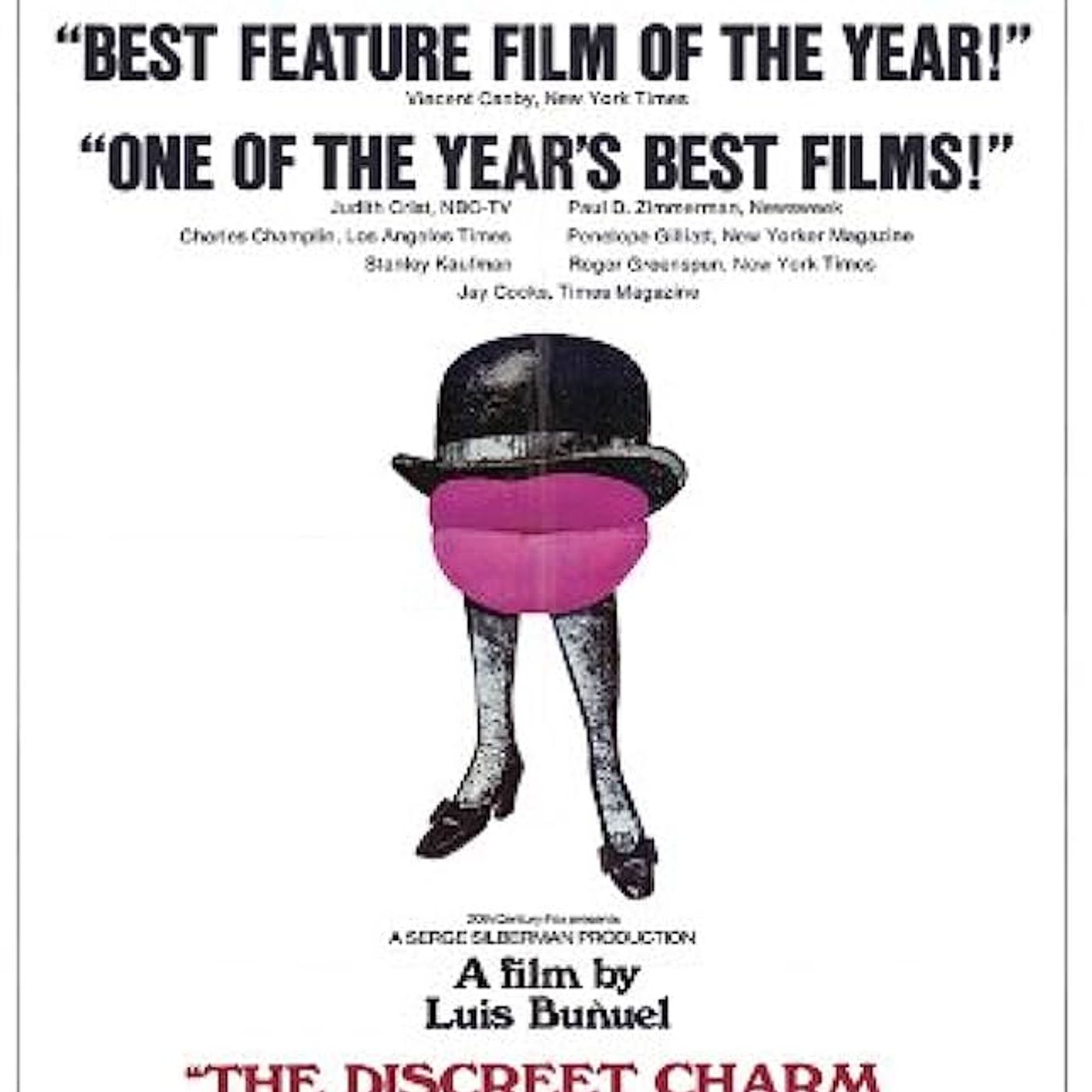
About this episode
Starring Fernando Rey as the ambassador from the fictional Miranda, he, along with a group of his middle class acquantiances, attempt to share a meal together with hilarious, bizarre, and even violent interruptions stopping their feast. It's a film unlike many others and one that rewards an active, engaged viewer with sight gags and more.
For more Kulturecast episodes and podcasts guaranteed to be your new favorite audio obsession, check out Weirding Way Media at weirdingwaymedia.com.
———
The Kulturecast is a film and culture podcast from Weirding Way Media, hosted by Chris Stachiw, the Doctor of Podcasting, alongside a rotating table of guest co-hosts. Each week digs into where film and culture meet — and how each one bends the other. Now home to sub-feeds including Required Viewing: A 360° Film Study with Dr. David D. Perlmutter.
New episodes weekly.
Subscribe on Apple Podcasts → https://podcasts.apple.com/us/podcast/the-kulturecast/id931361376
Spotify → https://open.spotify.com/show/5wjxip9XVYapYuY12yEaGY.
Back the show: https://www.patreon.com/cw/kulturecast
Transcript
Automatically generated, so expect the odd misheard name.
We'd we can make as little sense as the movie does, and I think in this episode we might actually be able to get away with it. Just you know, hey, that's none of this makes sense, and we'll just start talking about something else entirely, and and they're like, oh okay, they're doing like the whole bud wealth thing. God. Well, every time we get started talking about the discrete term of the bourgeoisie, something will like interrupt us and it will start off something like realistic, and then it'll go to increasingly outlandish and people will find it very charming. We'll get an oscar.
Yeah, at one point, we'll drop the chickens on the ground. Another point we'll have the military show up and then leave and then show up again. Yeah, it'll just it'll, it'll this will just be a reflection of the movie we just watched. Wow exactly. Yeah.
But on this episode of the Culture Cast, I am joined by Bill Ackerman, who you have heard here before. And Bill, you also have several shows of your own, and you guessed a lot on the projection booth. But tell my listeners again if you wouldn't mind a little bit about kind of the main projects that you work on Okay, so right now, I've been working on Director's Club podcast, which talks about directors careers. But I guess my best known show for me is Supporting Characters, which is interviews with people that, yeah, take their little film into some kind of project or vocation, like film criticism or film programming, home video extras, basically most things other than filmmaking itself, but that come from a place of cinephilia, So long form interviews of people that they may have heard on your show, like Mike White or had the Drain.
That's maybe my main show. I also do a little bit of home video supplementary kind of work. I did some booklet essays and some commentaries, but those are the main things I guess I do. I mean, those are all cool things. I mean, look, I'm a huge fan of anybody who wants to shine a light on you know, not necessarily like the same corner of film that everybody else is, because everybody is shining their spot, like very hard on like one area of film, and there's a spot for a lot of other people that don't get that attention that totally do, which is why I enjoy your shows so much.
So yeah, I would say that if anyone enjoyed your recent episode on night Dreams, which I enjoyed that. Stephen Sadian is a director we did on Director's Club and Heather Drain and Justine Smith and I we did an episode on all of his films, including Night Dreams, but also Cafe Flesh and Doctor Kalagari. And so that's a pretty fun one. If you want to hear more of Heather saying the praises of her buddy Stephen Sadian. What's funny is, I think, to be fair, anytime you talk to Heather, she might bring it up.
If you're lucky she does. She figures out a way like I don't know, like she's the master of, like I don't know, stringing things together. But I felt really thankful to finally see one of the movies that she's talked so much about, because she's brought up Cafe Flash and Night Dreams for as long as I've known her, So, you know, yeah, But but but to pivot away from our dear friend Heather Drain into what we're gonna be talking about on Jess buy or July. Jess Byrd is not here this week, but Jess since their regards because we're gonna be talking about another surrealist film, this time from night teen, seventy two or seventy three, depending on where you were in the world when it came out. We're gonna be talking about Luis spoon Wells The Discreet Charm of the bourgeois Z.
You play so close names trivian text. So it is directed and written by Boon Well along with Jean Claude Carrier, and it stars Fernando Ray, Paul Frank cur Delaphine say Ring, and Stephanie Adron as a group of friends the titular bourgeoisie, who keep trying to have dinner together. And for the love of God, these poor people just can't seem to make it happen for whatever reason. And like Bill already mentioned, well, it starts out simple why they can't and by the end of it you might as well be waiting for fucking aliens to show up. Um, Bill, I'm gonna kick it to you first.
When was the first time you saw this? What did you think then? And what did you think rewatching it for the culture cast? Okay, so I first saw it. I want to say maybe in the late nineties.
I was in my early twenties, I saw the Media Home Entertainment video cassette. I'd already seen a little bit of boon Well's other work by that point, I had seen in shen Andalou I had seen, most importantly, I had seen that Obscure Object of Desire, which I guess is probably the one that is most similar to this. I might have seen Beldejure, but so I knew that this one was one of his big successes, going into it, like, I rented it knowing this was one of his hits, and I could immediately tell why it's probably his most likable and accessible movie. I think. I think when I saw it, I was already a very big fan of what people might think of a surreal cult movies, like since you mentioned Stephen Sadian people like him, people like David Lynch, your Delphn's Forbidden Zone, Aleandro Hoderowski, and so I think when I was starting to see Louis spoon Well, who I know, um critics like Roger Ebert would always bring up Louis spoon Well as a you know, as a bat to club David Lynch with you know, as far as like you know, preferring you know, the restraint of of boone Well's own kind of perversity versus lynches kind of more lurid ways of elly handling the female characters, I guess in like what Blue Velvet and Wild at Heart and things like that.
Anyway, So like when I saw these Boonwell films, I think I think I was taken aback by how gentle they were, how like they I think I was just so used to a kind of a more violent, lurid kind of surrealism, and so to see something where there was not really like musical emphasis it or like even like camera effects to like push how odd this was? Like No like strange felinish kind of angles, No eerie drones on the soundtrack, No, like Tim Burton kind of like color palette. Like it was just odd things happen matter of factly. And I think, um, that's kind of what I always associate with boone Well is, even though like his one of his most famous films would be un Shenandalu, which has like really kind of you know, abrasive kind of imagery with like the slicing of eyeballs and all the kind of um, you know, the dalish kind of like ants in the hand by the time you get to discreet term of the bourgeoisie, it's really just people having a normal situation to occur and then just something really inexplicable happens and they just don't really react to it or it just like the film doesn't overreact to that odd thing happening, and that that's that's the way Phantom of Liberty works, That's the way that obscure objective desire works.
Even um something like Tristana like them they're they're surreal, but they're maybe not if you if you think of surreal as like things like David Lynch, it's not quite as exaggerated and nightmarish in that way, like It's night in the way real nightmares are just reality, but slightly askew for most promost dreams. I mean, I'm sure there are people that dream things that are like melting clocks and such, but you know, it's not really like maybe surreal paintings or even like the experimental short films that you know, if you think of avant garde films, like, it's not quite like that, Like it's narrative. It's just a little bit off. And I think I know his films are not films I've returned to for revisiting a lot, so this was actually rewatching her for the shows the first time.
I think I had seen the discrete term of the bourgeoisie since the nineties, and in the years between then, I think I became a lot more familiar with the cast from other films. So now it plays like this crazy star studded ensemble of familiar faces from classic sixties and seventies art house films, and interestingly a lot of muses for other directors who were big in that field at the time, Like you have Chabral's muse, you have a woman that did a lot of Ellen Renee films, you have a woman that did a lot of Jacques Rouvette films. Um, I mean, you have Fernando Rey, who did a lot of Boone Well FLMs. But you have a lot of faces that you might associate with with other art house titans of the day. And I don't think other than Fernando Ray, who I knew from that Abscribe Doctive Desire, And I knew Delphine Siric, but I knew her from Daughters of Darkness.
I didn't know her from Jehan Deelman or Muriel or things like that. I hadn't seen those at that age. So when I look at it now, it's like, yeah, it's it's like a Robert Altman movie, you know, you know, as far as like everyone's kind of like a name. But um, that's that's the biggest difference now watching and now Well, I mean, what is your history with boone Well end with this film? So my history with boon Well is is this this?
This is the entry point and you know you you've mentioned some other people though that, you know, I don't know how this happened. I do know how it happened. It happened because David Lynch is a much bigger name in the United States for a certain age and group of people than Louis boon Well. Is fortunate, unfortunate making a you know, a determination is not what I'm getting at. It's more just that's the reality.
And I've seen more of Lynch's stuff. I mean, I think I've seen at this point every thing that David Lynch has done. And I've seen a couple of Durowski films al Topo. I think maybe one other one maybe, But you know, I'm not I am a woefully underserved when it comes to these kinds of movies. And there's no specific reason why I have seen very few Trufau films, Like it's just it's just a blind spot for whatever reason.
I have no problem admitting it. Like you know, again, it's not line's not saying I don't know anything about them, it's just I've never seen them. You can read plenty of things about all these people, but going and watching the movie and actually experiencing it is such a different feeling because, like you mentioned these movies, there's nothing about this movie that really has anything to do with the plot. It's more about what you're seeing and how you're interpreting it. And we're just receiving what the director and the screenwriter are giving you and just kind of living in that zone with the characters, in that world with the characters.
And you can go read the plots and opsis for this on Wikipedia. It's not going to do you a damn like a good because there's nothing about it that would inform a lot of what you're going to see in the movie, or the surrealism that the movie uses to move around. And I was gonna say, you use an interesting word in interpret because I'm not sure how much you're meant to interpret Lynch or Boonwell, I don't know that they are constructing them like puzzles the way I mean, there are directors that do that, like Renee does that, Peter Greenaway does that, Adam mcgoyan does that, Like there are directors that, you know, I guess in a different way, Jordan Peel does that, Like there are people that use that use symbolism, and things are supposed to mean something that you're meant to decode.
I don't know that you're meant to decode this film. I think it is meant to play exactly as you think it's playing right well, and that and that, and that's kind of I think to your point, I think you know that is kind of not the hang up. But for me, that's kind of maybe why I have stayed away is because again, like some of this is just an expectation with watching current media and then watching something like this, which is so vastly different. And yeah, I mean interpret, I mean, yeah, I get where you're coming from, and I completely agree, like I less looked for meaning in this movie and more just looked for a notion of a through line or anything to grasp onto. And I think that what's interesting is the movie feels a little slippery in that guard.
It wants to not be held close. It kind of just wants to exist, and you sit and watch what's going on, which I appreciate as an audience member watching something that the filmmaker is making. Sometimes a filmmaker doesn't want you to be part of it. He just wants you to observe it and and and from and and just observe it and enjoy it and then that's it. Yeah.
I mean I think that there's I mean, there is like something politically being said in presenting these characters. I mean, they're being criticized. I mean that's not that's not unclear. But I think when you get into what what the the odd details are supposed to mean, sometimes I don't think it's supposed to be anything other than isn't that funny? What it would be funny if this happened?
Like I think he is. I think it is a comedy. Um So, I mean, I guess we could go beat by beat through it. But I mean in terms of like what's your takeaways supposed to be? As a satire of Rich people, you know, making them out to be complicit in drug trade or complicit with like you know, sympathetic to Nazis, or just room to the help.
I mean, there's they aren't being treated kindly. But I also I also would imagine that the biggest audience for this film is the bourgeoisie. Like I don't, I don't, I don't know that the working class viewer sees this movie. I think I think the people that appreciate, um, you know the Martini recipe, which was Boonewell's own Martini recipe. You know, that's the crowd, like they can laugh knowingly at the excesses of that of that mel you.
But I think that that's it's it's one of those films who are like the target of the satire is also probably the target audience, right with the movie? Well, and I and I wonder then, you know, as you've mentioned, you know who was want and who who is made for? And I think you're completely right. I mean, there's nothing about it that I think speaks to anybody higher than this group of people, because the people that are higher in the strata than these people are not concerned with the bourgeoisie at all, yeah, and then the people, you know, one social strata beneath them. Again, their concerns are are essentially ignored by the bourgeoisie, as we see in this movie, and because of that, they feel like, well, it doesn't matter what the bourgeoisie think anyways, because they don't care what we think to begin with.
So I find that, yeah, you know, I find that kind of those the posturing of some of the things in the movie very interesting. When they're sitting and you're again you're you're expected to sit with these characters and look at the way that they're treating one another. And then again, like you said, understand that the people who are watching this movie, they're doing the exact same thing. Well, it's also I mean, if you think about screwball commies of the nineteen thirties and forties, you're dealing with like ultra rich people that don't have the same financial struggle, so they can be free to have like these kind of wacky hijinks in penthouse apartments with the Martini because they're not slaving away at a factory.
And that's a kind of escapist fantasy for viewers that want to watch rich people being silly, and on some level, I think that's part of the appeal of this film too. It's about rich people in silly situations um played as comedy. I mean, it might be attacking them, but I don't know that it's really that savage. I mean because I think that even when like like like Fernando Raised character is coming right off of the French connection, like he's coming off of like a major American hit where he plays a suave drug dealer dealing with this borish cop asshole. You know, so he's kind of like an antihero or he's he's like he's like a slightly like classy villain dealing with like a like a really borish antihero cop.
But like he's he's bringing that drug dealer, kind of that suave drug dealer thing from an American hit into this character, the ambassador that he plays. But when he's when he's being kind of threatened by a young woman maoist terrorist, I don't know that the film is totally against him like getting the upper hand, even like you know, being a little bit gropy and like borish. I feel like audiences would have laughed at it because, like you know, it's just so naughty. I think I think that's how the character would have been seen then, like it was like, aren't they so awful? T he he like, it's not like, um, I don't know, like as far as like films that like really like viciously go after the subjects.
I feel like this is not one of the most biting of his films, which is probably why it was a big hit, because it is kind of soft in that way. I mean, you could read it harder, but I don't know that it's as a satire. I never I never found it like that. I mean it's the same, like the same way like Robert Altman's The Player big in Hollywood, even though it's like attacking Hollywood or like if you ever watched Cafe Flesh, it's like satirizing porno viewers, but you know, became one of the most legendary adult films of the eighties. So sometimes sometimes the audience, you know, laughs with the attack on them, and that that just begs the question how harsh it really is the attack?
But well, and I don't think that I don't think it can be that harsh if you want to get the audience on board, because I think when it when it kind of when it veers too harsh in one direction, it almost becomes like a documentary. You know, it's like it's a piece with a it's a piece with a message, or it's a pie. And you know, I'm not saying movies can't do that, but when they do that, it becomes a little much. It becomes it gets in the way of being entertaining or at least having I don't know, if you want to just come out and say it, there are better ways to do it than just in a movie, like in a in a actual narrative format. There are documentaries and short films and other things like And that's the thing that I appreciate about this is, you know, in a lot of ways you could just watch You can watch this movie at like ten to fifteen minute pieces.
That's I mean, it's vene. It's almost vignette style the way that it's presented, which I think, again, I don't know if it has to do with the idea of just constantly doing the same thing over and over again and kind of expecting a different outcome, but yeah, I do wonder, you know, again, to kind of poke fun at the bourgeoisie, like their inability to learn from their mistakes. I feel like comes into play given that even by the end of the movie, we're still waiting for them to have that meal. Yeah, well and didn't. I don't know if we said it or not, but I mean, the joke of it is that it's about a group of friends, you know, that keep trying to have a meal together and they just keep getting disrupted.
And the structure of the film allows for dream within a dream, within a fantasy within a flashback. So it's and it's all presented in the exact same kind of matter of fact way, but it can be like like a Chinese box kind of structure as far as like we're in this person's dream. Now we're in this person's dream, but it's all going to be revealed to be this person's dream. Um, so it it's it's given license to be surreal, but it hasn't built an explanation at the same time because it's we're in someone's dream. But yeah, it's always like the one sentence U pitch is always when you hear people talk about, oh, it's that film about people that keep trying to have a meal and they keep getting these odd disruptions, which is kind of like a I mean, people will comment on this as well.
It's like it's kind of like the Companion to the Exterminating Angel, which has a similar kind of group of characters having a dinner party. But then when it comes time to go home, they can't and it's never and it's it's for it's just an abstract idea like they just can't. They just can't do it. There's nothing really preventing them. The door is not locked, they just they can't take that step right and and things descend into chaos.
Um, it's the inverse of that essentially, Yeah, this is the meal that we just can't seem to have. And you know you've mentioned kind of the it starts out so kind of just mundane. It's you know, oh, we showed up, and you know, they're just surprised to see him. They thought it was the next night. Like that's that's the most mundane way to start it.
But again, like it ramps up from there pretty quickly because by the second scene we have a dead the dead manager of the restaurant in the back of the restaurant that they're trying to eat at. It's like, yeah, it's already escalated, like three steps in between the first and second, you know, first and second attempt at having a meal. Yeah, well, I guess the the initial concept for it was them, like in real life, going to someone's house and they got the dates wrong, and so there was a similar kind of real life incident like oh, you know, dinner's not tonight, it's tomorrow night or what like, like a recognizably human miscommunication. But then things start getting creative once they get to the first restaurant, like you say, and it's kind of like this kind of like ghoulish joke.
And I think watching you again, I forgot how much quasi horror movie imagery is in this movie. Yeah, oh my right. And it's like some of it feels very like I'm not obviously it's all very intentional, but some of it feels a lot like bolder than the others. There are a couple shots where I'm like, this is a straight up horror movie shot. Well, you know, And I was thinking about this because I think I would not have thought of this at the time because he wasn't really a name or like, well, well he was son of a name in the nineties with Giamo del Toro.
I thought about like the way uh, Spanish filmmakers deal with ghost imagery, where it sometimes not even really like like the way you might find in North Americans. It's almost kind of like more like like dead relatives, like you know, like it'd gray with black eye, with like blacked out eye air is right, like yeah's backbone. Yeah, But it's also not even just about like shock horror run. It's like it's it's like a ghostly reminder of the past of loss, so like like it's it's it's like it's a character to deal with. It's not just a monster.
And I think that um, that was something I was wondering if that was like you know, like maybe he was drunk from kind of maybe they drew from similar cultural traditions in some way, but like um, because because del Toro's a Mexican director and Boon Well Um was based in Mexico for big chunks of his career, so I don't know if he was drawing influence from like any kind of local cultural I don't know that was I could be totally off on that, but that's something I thought about with the horror stuff in this because you know, there's a few instances where ghosts kind of chopin closets, like kind of like the you know, Abrey Loso hosts you know, or the others um you know or they what was of the other things like uh yeah, yeah, I'm trying to think of the other examples, like like just like a character realizing that they're dead, or or like the the the jail warden coming back from the grave or whatever, like right, odd odd kind of horror touches to it, which I don't really associate for think about like water for chocolate, right, like I mean, I want, I mean that has tons of like just characters that are dead coming back and standing outside of windows and staring at people like you.
That's just deal with it, like that's that's not supposed to be scary. It's just have to handle this. Like it's the The Spanish and Mexican way of handling the influences of the deceased, I think is very I vibe with that more than I do the way that we treat it in this country, because it's it's it's just more like holistic, I feel like, and I think also naturalistic, because it's like all right, they passed on to the other side, and they're there and you know, they're with you, and we can respect that, and one day we give them respect and we move on, like, yeah, I respect that more than just like pretending it's not going to happen, which seems to be what we deal with here. So yes, yeah, although I do like schlocky American ghost movies as well.
Well, yeah, I'm with you, I with you, but I'm talking more like the cultural aspect of yeah, yeah, yeah, yeah, no, it's it's it's I agree with you. I think. I think with this one, I was thinking about how, because there's not really narrative momentum in a traditional sense of a plot, you know, point A to point B kind of plot, how do you how do you sustain audience engagement? And I think what he chooses to do is just try to have something interesting happen as quickly as you can, even though the pace is quite measured, like it's not like a fast paced kind of cut movie, but odd elements are introduced all the time that kind of keep each individual vignette from feeling stale and like you before you have a has to even hang out with some characters for too long you're off to some other situation.
But when I think about surrealism and this, it's also like, um, it's little things like when the Fernando Ray character is going through the woman's person, he brings out like this large key right and ahead of lettuce. Right. It's just like it's just like ordinary objects like the mundane, but in the wrong context they just seem strange. Right. I love I love that that giant head of lettuce that he's like, yeah, you are the you know, the bread, the mayo, the lettuce, like and there's the lettuce.
Wait a second, Wait a second here you mentioned the pace of this movie and keeping the viewer engaged. You know, I think for me another movie that really was kind of I kept feeling like was at least I know he had to have seen it, and I'm sure he's mentioned it, and I think I had read that he had mentioned it at least going well is After Hours, Scorsese's film. It's that same thing of like introducing weird things to keep ostensibly a narrativeless film running. I'm not sure what I mean. The narrative of After Hours is a guy who's trying to get home, So that's a little bit more of a narrative, but everything that happens within you know, the movie is so bizarre and strange and surreal and paperweight bagels and everything else like that.
It made me, you know, this movie made me think of that because, like you said, it's trying to make sure that you're not wandering off, because the movie is just kind of doing that thing again, Like he just keeps doing the same thing over and over again, and it keeps bun Well, just keeps finding new tricks to use and carry a script and when well script obviously I think does a good job of keeping me as if you were wondering what's coming next. Yeah, well, they're very different ways of approaching nightmare logic, you know, right, I think I think I think I think After Hours would be like what could go wrong? Now, this can go wrong, and it's like it's like this kind of like heightened paranoia, right, whereas the Boon Whale film, I mean, it's like they're they're almost like untouchably powerful until you know, and even even when um, when they're butet for crime, it's like they're too powerful to be kept in the jail because they're just like they have that kind of political influence.
They don't have the same um the same circumstances is Paul in After Hours, but it is it is, it is nightmarish, and that like they're just like odd elements are introduced that that disrupt order at the top of the hat. And but in a way it's really unexpected, Like it's not just oh, the restaurants closed. It's something where it's like, this is a thing that if you were to tell this story to someone, they would have a hard time believing that all of these things happened in tandem with one another, let alone just one of them happened. Yeah. Well, even the way um like characters have to get together sexually so urgently that those just go outside and like fuck behind the book.
Well the company waiting because they did they just cannot wait. Right, that's actually your trope that you find in a whole lot of Boonwell films is like the lovers that have to get together quickly in secret, and just how funny that is if you're on the outside of it, Like passion is absurd in this situation. And I think that that's something that I think when you look at Boonewal's films. I think he talks about in interviews like having a fascination with fetishes and just how fetishes can be deadly serious if you have them, but can be very funny if you're just watching other people have them. And so I think I think that like the way, I mean, this is not really dealing with sexuality as much, but I think that the sexuality in it is is kind of absurd, like the Fernando Ray character getting on the woman and you know, trying to seduce the woman who is trying to kill him and would kill him and tries to in the scene where he's seduced her.
Yeah, that's pretty absurd, frank. Yeah, but the way that it's put out through the movie is the way that it's received, Like it's that scene you know, Lettuce and key and all like is really is really funny. Yeah, although I would say that when she leaves and she's taken away by like thugs in a car, like that's like a real political assassination kind of thing, and like there's nothing funny about that. No, No, Like she's she's gonna be taken to a deep dark hole and locked away forever the end, Like yeah, that's and that's the thing. I mean, it's it's that kind of the fun, lighter hearted nature of the kind of the the gaffs and ganders of the bourgeoisie.
And then all of a sudden it's like, oh no, you don't forget, like they could still like that one, like that one. Yeah, yeah, it's like, oh shit, right, like these people aren't to be trifled with, though, and that's the and it's like and then I wonder though, because again that is the bourgeoisie. But it almost feels the definition of bugoisi right, they are the definitely of it, but not what is now the definition of bourgeoisie, right, Like it feels it feels they these people feel more affluent than what I would consider the bourgeoisie. Now oh yeah, well no they're aristocrat christ right. It's again it's a different kind of yeah.
Yeah, it's it's old European money versus maybe how an American you know, film would handle this kind of thing, right, which I I mean, I mean again, like obviously that time it's made directors making it all that, But I love that that the notion of the level of power is kind of explored in the movie, especially with the Fernando Ray character, because I think I'm interested in that aspect of it because these people just have infinite wealth and infinite power, and what they do with it seems to be, for the most part, just a complete waste of time. Yeah yeah, just to talk about nonsense, right yeah, and try to have sex with each other constantly. When when the woman's husband is in the bathroom, effectively he's like he's going to come back, like whatever, let's do it, let's go.
It's like what do you but no, like ridiculous stop stop at you two. Well, that that when it's funny because it's like I've got to I've got to share with the cir six. He's making up words. Yeah well, and you know I The other another aspect of the movie I really enjoy is the is the bishop character, who's you know, like I'm a gardening bishop. Yeah.
Well but that but again, that's the fetish idea of like he just wants to wear those clothes, right, he like he wants to be, he wants to try, and the clothes are so essential that the same man can be treated like like uh, like a loathsome intruder or a welcome, reverential kind of equal to them as power depending on what outfit he's wearing. Um, yeah, no, it's I don't know. I mean he's he's such a funny character because like it's such a simple thing. It's such a weird joke on some level because well that's and that's the thing. I kind of walked away from this movie feel like it's like a lot of this is just Bunwell and Carrie A just being like, I don't know how to make a movie about these things without it without making it this way.
So we're just gonna make it this way and tell the jokes and and the series, you know, kind of put these characters in these weird scenarios and just see what happens like and I you know, we're not going to take, you know, any measure to explain anything. Like it's just we're doing this and we're chuckling behind the scenes as we make it, and hopefully it's resonating with somebody else when they watch it. That's what this feels like. And I appreciate that in a lot of ways, Like I don't need somebody to spoon feed me everything. Yeah, what's funny, because I think last time we spoke with Carrie was the cowriter of Taking Off, which has pot jokes and it, and this also has that same kind of idea of like, um, the military smoking weed.
It is marijuana, would you like some? And I was wondering if that was like, like again like his kind of like contribution as well as like, let's let's let's tell the audience that this is actually is not Reefer madness situation here, like this is no big deal, right, because that's again similar timing. This is like was taking office nineteen seventy ones is seventy two, So it's like, yeah, that same idea as fresh in his head. Well, and I think in a lot of ways, like you could use the discrete charm of the bourgeoisie and Taking Off as kind of like a double feature, because they do, I mean they talk about similar ideas. I mean the entire marijuana like kind of symposium and then the lost child symposium and taking Off.
There are moments in this film where I feel that kind of like absurdity coming through of like the ridiculousness of this scenario that the characters are finding themselves in. Yeah. Although I would say that the parents' cluelessness in taking off is hand a little bit more warmly than than these characters, which, right, I mean I think that the you know, the buck Henry is not going to be like, you know, well it's carried a way to call this nazi a butcher. I mean it's yeah, you know, he likes animals. He walks his dog, right, And and that's the other thing I love how I just love the cluelessness.
I mean that's the other thing, Like that might be the biggest level of kind of needling is just the amount of cluelessness, right, because like that that whole thing about you know, well he's a fascist, but it's like no, no, no, no, no, no fucking butts here, like no but no butts here about any of this. And I love that, like that clueless nature and just kind of like the naivete of the bourgeoisie is really constantly on display. And that, I feel like is where they really needle them the hardest out of any of the things that they kind of go after him for in the movie. Yeah, well, they understand, they understand like their cultural rituals, Like they understand how you have to stand to carve lamb.
They understand how you know, like you know which glass to use, maybe, but they don't necessarily they don't really have a lot of profound opinions on anything, right, just they're just making small talk about their culture. And so I mean that's that's the low key satire of it. It's just like they don't really even compared to The Exterminating Angel, where it's like a lot of like heightened melodrama melodramatic situations like this, they're barely talking about anything at all. But it's but it's all stars doing it charmingly, and it's like odd things keep getting introduced to keep it from getting Even though it's repetitious as a as a as a story structure, it's not. It doesn't feel like exhausting to watch it because you get new elements each time introduced right well, and and then you have like little weird kind of aside tangents, like when the bishop goes and murders a guy.
Yeah avenge is uh, but but even that's like a repetition because it's a repeat of the lieutenant telling the story of like murdering his but you know father, or the guy that murdered his father. That just the poison them and so it's like a similar kind of like avenging avenging the poisoned kind of trope. So but but they don't really make any strong effort to underline the rhyme. It's just you might notice that this thing is and he kills with the rifle, kind of a call back to fernand Ray having the rifle to shoot the toy dog like, like there's similar imagery, but it's like just I think he likes I think boon Well in his memoir talks about like just finding repetition interesting as as an idea, and so like there's certain kind of repetition of themes that I don't know if it's supposed to mean anything more than isn't in repetition interesting?
I think it's I think it's what's interesting is in a lot of ways, it just feels like like jazz like riffing, like you know, let's all do this in g sharp and let's just see where this goes, and not not giving I mean again, obviously there's a script and you know there's plenty of boundaries within the idea and the narrative of but these then yets all just feel like a riff and it's like, you know, filmic jazz, which I don't know, that's not a thing, but it is a thing. It's just it's not a thing that you see a whole lot because it's not something that I think a lot of people are interested in doing. Is kind of doing like a riff movie, and this this is a riff movie. I feel like he's just riffing on this idea of like what would happen if these groups of people kept getting together and couldn't have a meal, and the characters in the surrounding area around them is kind of the stage with which they play on.
Yeah, to the point where there's literally a fucking stage in the movie and they're standing on it having dinner together, and they all and then they all dip off the stage immediately, which I was just so hilarious. They're just some of them sit and are frozen and the other ones just nope the fuck out immediately. That that scene made me laugh out loud. That was that is great. That is a great moment.
Yeah. I mean when when they drops the chickens and the chickens are are fake is right, He's like, what the hell is this? It's that and that surrealism and that just like absurdity. I feel like for me is within my wheelhouse because the kind of comedy and stuff that I really resonate with now as an adult is stuff that kind of pushes the envelope of what even could be considered comedy, like Eric Andre Tim and Eric you know, Nathan for you stuff like that where it's like isn't or you know, we talked about it before we started recording Andy Kaufman, like people who are doing a thing and they're just doing it and is it a thing? Is it not?
We were We're not sure. And with bun Well, it's again like there's just things that happened in this movie and they just happen. They just happen. There's no other way to classify. Yeah.
Well, and I think there's also moments where like characters are talking about something and then all of a sudden, typing drowns them out, or like traffic noise drowns them out, and it's like it's it's that same kind of joke that you could find in like a mel Brooks or like a Zucker Abraham Zucker comedy, as far as like it's real obvious, like years the thing they we're doing behinde the what they're saying. It's like, it's just to tell you that the particularities of like what is going on politically not important, you know, like you know, we can actually like make a joke out of telling you how unimportant it is, which I appreciated those moments. Those were pretty great, especially how they didn't like at the end, right near the end the back to back where he's like, no, no, oh, okay, so he heard it the second time, but we didn't get to hear it the second time.
Yeah, we didn't get to hear it any of the times. But I loved that, like that fake out that they do with the thing that they've established that they've been doing throughout the movie, that was that was very clever. Yeah, but it's just, you know, a broad joke. And I don't think I even realized that the last scene where it's revealed who's been having the final dream, the first thing he does is chow down because he's been dreaming about these you know, unconsummated meals all night, right, And I loved that too, that it ends up being his character is kind of the base reality of it all. Yeah, well, I think that, I mean, they keep returning to this image of them all walking on the road, and I feel like, I feel like, I don't know.
I mean, I assume that that's meant to be read in a certain way, and I have definitely interpreted it, you know, in a certain way. But I genuinely don't know if he just found that to be a compelling image or he meant for that to have a symbolic weight. I mean, I interpreted symbolically, but I can never tell. Like, at one point he's like, and that's what it means to me, that's what it should mean to you, Like, I don't know he does. It's not like, yeah, I don't know if he's ever spoken about it.
I haven't read too many interviews with him talking about but whenever I've heard him talk about this film, it's just like very cut and dry kind of things like this is based on, you know, something that happened to me, and this is you know, we just think these things are funny. Well, and what's what's funny is you know. Earlier this year, I was on an episode of the Projection Booth Mike White Show, which you can find a weirdingwaymedia dot com doing true stories, and that movie opens and closes with a girl walking towards the camera down a road and then walking away from the camera at the end of the film, And if you listen to the commentary which any podcast are worth their saltwood to be on mic show, David Byrne literally goes, you know, I don't know if people watching this thought that I meant anything by it, but I just thought it looked interesting.
And you saying that, It's like, I feel like, if any part of the movie can be quote analyzed unquote, it is the reoccurring theme of them walking on the road, right, Like that motif reoccurring. I feel like, is the one thing where it's like, Okay, what is what is what am I supposed to take away from this? And what is that supposed to me? Because what's weird is not only do we see it a bunch of times, but then there's a moment where he's in the base reality best we can tell, and he cuts away to it. He's about to eat, and then they cut away to it again.
We never see him even eat. At the end, it cuts back to them walking down the road again. It's like, did he die while eating the chicken? Did he fall asleep while eating the chicken, like this man never gonna eat the chicken. I do love in that scene though, Fernando Ray.
If you notice when he takes the chicken out of the fridge, he takes a piece and kind of like picks it up and looks at it just to make sure it's real, because he's been dreaming about it being faked chicken. Which again, those like little those little moments are really what sell the movie for me personally. Are just the attention to detail and the attention to absurdity. You know, yeah, not everything can be American Werewolf in London having one weird surrealist moment in it that everybody remembers. This movie packs it all in to you know, in an hour and forty minutes.
I mean everybody and anybody who watches American Werewolf is gonna remember the scene with the werewolf Nazis, which makes no sense and you know, what does that mean in the context of the movie. But like here, it's like that's the entire movie is just things happening constantly in the audience just feeling like they're being swung around by the director. But I've really appreciated this style of filmmaking because it's just it felt very different in a way that is just as a film watcher, it's a blind spot of mine. Yeah, yeah, I'd be curious to hear what you would think about. I mean, if you if you look at the career of Boon, well, it's it's really fascinating because it starts I mean, it starts back into twenties.
I mean, I mean the early films with Salvador Dali come, you know, like I think in Chenne to Lose and maybe like nineteen twenty nine. But he starts off like in purely avant garde territory, right then he um and he has like lage Door and things like that, and then he then he starts making like these Mexican mail and dramas, so he goes to Hollywood. He's working like behind the scenes in Hollywood, and then he's working in Mexican mail and dramas and like Loose all the Dados, which is probably one of the first things I saw of his. But that's almost kind of like it's like a like a cheap comparison to comparison like kids or Pishout or things. But it's like, you know, like like um, like like almost like a like a juvenile delinquent movie really, I mean, like but like one would like kind of some some teeth to it.
I mean, especially for the time, kind of a cult movie in its own way. Kind of hard to see right now. I mean, I'm sure there's bootleg files and video transfers rips on YouTube, and but like that's one that I don't know if it's a rights thing, but like that's kind of one of his biggest films that is kind of missing an action in the current DVD blu ray streaming kind of era other than in gray market ways. But then he he gets some really provocative films out into the world through these Mexican productions with Exterminating Angel and Vera Diana, and next thing, you know, he's getting interested with these big French production like Belldejure, which in like he starts having like these kind of art house hits and discrete charm of the bourgeois.
I mean when an Oscar, you know, it was a hit, it's like his biggest hit, and you know, and then he kind of safely rode that way that with other odd comedies like you know, with like you know, people like Fernando Ray in the cast, like I mean Fantom of Liberty and that obscure objective desire and that obscure objective desire is kind of like this and that it's like scenes just play at matter of factly, like there's odd details, like I just always remember it as the film. We're like a woman is running to the train and the guy that's looking at her takes a bucket of water and dumps it on her, you know, and it's just like it's just like an odd like there's nothing like supernatural or it's just like it's just like an odd group of elements, like where'd the bucket come from?
Like, well, like how did this happen? But it's like little things like that, like every day of actions that just seem out of context and therefore strange and surreal, like that kind of thing you find that in that film. But the gimmick with that one is he has two different actresses playing the same character, so like she'll walk into the room and then they'll come out and it's like a different person, but like it's never acknowledged by the character, and that's that's the surreal gimmick of it. But it's played all like a real story. I mean, it's just like those are the weird things he keeps it you on your toes with these like little touches.
Interesting, Yeah, it's it sounds like he plays a lot with the anti climax as well, like the the expectation of something and then it not delivering as well. I mean, obviously this entire movie is about the anti climax, like you never you never see the thing that you're expecting to see throughout the entire movie, and it's interest. It's interesting because like again, I think that his bag of tricks is is pretty vast. So to hear that the movies do other things like a double casting of a character, to be like, I want to see what that looks like if bun Well is doing it, you know, like that for me sounds interesting and exciting. Yeah.
Well, I mean that was one where I knew that going into it that that's what it was, because I think it comes up in their view of Lost Highway when Roger Ebert's criticizing Lost Highways, like, but boon Well did this thing and this is much better and h y Roger yact. But I can't like one or the other. DC or Marvel vanilla or chocolate that swirl ice cream doesn't exist, I promise. Well, it's funny because he came around on Mahaland Drive and straight Story but like, um, but Mahaland Drive opens the same way discreet Charm does. But like the driving shot right right, probably coincidentally, but I mean I did notice that this time around, because right, And that's the thing, like I you know, you mentioned early on, like David Lynch is not a director who you know, maybe there is no interpret I think Lynch himself has said, like you know, there isn't any like I'm not hiding any meaning here like there may and like I don't even have an interpretation for my movies because I think frankly, for me, a director saying that is better than saying, well, you're wrong, and what I'm saying is right, Like I feel like to leave the mystery alive and to leave the audience participation part of the artistic expression alive.
One should not be going, well, you're right, which means someone else has to be wrong. And it's like these kinds of things lend themselves to interpretation, less pinning down specifically what it means. And I think that's antithetical to the way so many people have been kind of conditioned to watching film as American film watchers. Yeah, well, I think dream sequences and may be wrong about this, but I feel like when you get to things like Spellbound, which Salvage O'Day, you know, did you work down the dream sequence in that them? Trying to think of the other examples maybe Wild Strawberries, the Bergman film, but like, I think dream sequences at the time of Discrete Charm of the Bourgeoisie might have been thought of as shorthand for like, you know, Freudian symbolism and like like meant to Freud in the movie, right, he's like, has not Red Freud?
Like, Yeah, I think I think that. Yeah, I think that like the way dream sequences were used in movies before Discrete Charm of the Bourgeoisie, I think it was like the cliche or the trope was that it was like meant to hold clues to things, And that's something to you even find in Twin Peaks later on. I mean, like as far as like what does what does it mean in the dream that Cooper has, like it's meant to be decoded? But I think by and large, you know, uh, Lynch and Boonwale are not really presenting these things as clues to be decoded. I don't.
I don't think um, I was gonna say the decoding thing I think. Also, you know you mentioned twin Peaks the thing I think of, and I thought of it a couple of times during discrete term of the Bourgeoisies the Sopranos, because that show operated a lot on kind of an anti climax, anti expectations and I know we all say, like subverting your expectations. I hate that term because I feel like it's been really beaten into the ground now, but it is that anti climax in that show. A lot of things happen that just happen, matter of factly, and other shows would have this pomp and circumstance associated with it, but sometimes characters just get shot and they're dead and that's it, and like, yeah, too bad.
Like and and I love that approach to filmmaking and that style of filmmaking because that's also something that Indian cinema does a lot. It's just, you know, a movie could be a romantic comedy, but then it has a scene where people are kicking the shit out of each other. And it's not because it's trying to be an action movie, but because there are characters that are having a conflict that needs to be resolved and they want to resolve it physically and it's just done matter of factly. I appreciate that style of filmmaking without necessarily a sheen of pomp and circumstance kind of covering everything. Yeah, yeah, now I think, I mean, there's not a lot of pomp and circumstance in this for all the glitz of the of the of the milieu that it's said, and it's it's really I mean, it's very it's it's just deceptively mundane, right, yeah, completely completely, And again to your point, I mean there are things that happen that it's not given any kind of explanation, like again with the lettuce and the key.
But then even when when they first arrived at the house and the one woman is given a bouquet of flowers, right, and they never come into it, just like oh, here's this bouquet flowers and then this carry on with the scene and it's like if you if you, if you're not paying attention to how strange that is, it just seems like, oh, well that's what that's that's the custom them right right right, and and that's the thing. It's like a lot of this stuff in the movie that happens again, if you're if you're unwilling to play along with the movie, it's just going to seem nonsensical, and it is. But there is no other point that is the that is the point, and in it being the point that is I understand that might be a hard pill to swallow, but there is so much of this movie that if you just get on board with the movie, it is such a joy to watch, and it's so just it's it relishes how lavish the sets are and how kind of opulent these people are just by showing them.
But everything else is just insanity. This is not like a Great Gatsby story of reveling in how rich these people are. It's just look at how weird these rich people are and how unphased they are by weird fucking things happening to that. Yeah, and for a European art film of that period, it's not contemplative, like there's no moments of the characters walking and consideration for what's going on like, it's just it unfolds like a screwball comedy, but just like without maybe the rapid fire pattern of a Howard Hawks or at Preston Sturge just kind of movie like it's but it is a screwball comedy set in the world of the rich, just like those kind of films, And I think that's why it was a popular film in America.
Well, I mean you have things like that dream sequence that the soldier is explaining where he walks out onto what looks like a set and it's like, what what is this movie? All of us also becomes like a Mario Bava movie. Yeah, it's it's but like but it works, like even in spite of the fact that it has becomes something entirely not opposite of what it is, but just in a complete different direction. I'm I was just sitting there going okay, sure, like I'm I'm on board with this because again, like when Well, I think just unflinchingly presents it in a way that he's not going to apologize for what you're saying. You just need to watch it and just appreciate it.
The way that he's creating something that feels just so again unique and weird and strange, but of a of a milieu of a lot of things that would come afterwards, a lot of things. Uh, I was gonna say. Bill final final thoughts on the discrete Charm of the Bourgeoisie just that it's you know, it's it's it's a it's a charming funny film. I've always found it. Uh.
I think if you if you haven't seen a Boon Whale film, that this is probably the most approachable entry way in. It's probably um easy to see now through the Criterion collection. I don't know. I think I think you can stream it. But it's also out a blue ray set with that obscure objective desire and Fantom of Liberty as a set, So it's slum like all the classical late funny weird comedies of Boonwell are all in a set which is worth picking up.
There's a you know, good release of those. But you know, I think, um, yeah, I mean I hadn't seen it in a long time, but it was never one I forgot, like I mean, I always it's like it's full of so many great set pieces. I mean, I guess that in a way, since we keep bringing him up connects it to Lynch as well, because I think of Lynch as a set piece specialist, and I think that this is, you know, operating along the same lines. But I mean, if you go into expecting something like David Lynch, it's it's not like that. It's not like a dreamy horror thing.
Like, it's just this absurd series of situations that go slightly off kilter. But yeah, I know it's I mean, I'm glad that you invited me to talk about it. I hope that wherever they are, that just By has some thoughts to share about this since this was their selection. Yeah, yeah, I yeah, I was. I was kind of bummed because you know, I know, I know Jess was super excited to talk to Surrealist Film because you know, we've talked about Lynch a whole lot, and and David Lynch is Jess's favorite director side too.
Yeah, and you know what, like he is for me in my top three. It's like him, Fincher and Scorsese and like, I mean, three directors who are all very different but at the same time are all very unique in their distinctive ways. And now seeing something like this, you said it perfectly like, if you go into this expecting David Lynch, that's not what you're going to get. But if you look not hard enough, but if you just pay attention, you can see the influences and the directions and the ideas and kind of the early stages of what these things would end up becoming with other directors kind of picking up the torch and running with it and taking it and doing their own weird, sexual, darker or you know, more again in a different direction, And this is its own thing.
And I'm really excited to watch the next two films after this one and then go watch some of the other completely not these things as well. So yeah, you know, I would just say that I not not to imply that Bonwell isn't dark and sexual. Maybe this one is a little bit lighter, right right, Yeah, I mean that's fair. I haven't seen all of them, but this one is neither dark. It's sexual, but it's not very dark.
Person. Yeah, it's not as expl there's no one angrily masturbating in any Boonwell films. But if anything, he actually had like an aversion to profanity from what I understand, Like, it's so interesting. Yeah, it's a very prominent proper surrealist. Well, there you go, I mean, there you go, I mean and and and that that comes through definitely as as a as a viewer.
It's like, this is these this there's a there's a level of kind of sheen to these people that we have to get through. So yeah, So on that note, we'll take a break and we'll play a preview for the next Sculture Cast. So that's right. In the next Culture Cast, we're gonna be talking about Holy Motors, another film that I've never seen, but we're gonna be joined by the mentioned a million times on this show, Mike White and hopefully Jess Fired as well. So until then, Bill, where can people find you and the things that you work on?
So I guess you could go to www. Dot now Playing Network, dot net, where you can find directors Club, supporting characters and if you like Lynch, I did a show about Blue Velvet Crew people called from the Neighborhood that you can also find on there. Um. I just I wrote an essay for the Radiance Films edition of My Sign of Evil, which is coming out in October. It just came up for pre order, and I think that's the only home video thing I can really promote that has been announced.
But yeah, those are some things you can find me. Dude. Nice I think of a Projection Booth dropping any any day now. I don't know when he's editing. I know that it seems like he has an episode out every other day, but I am supposedly on the Pretty Poison episode, which should drops in the near future.
So nice. Yeah, I mean, hey, when you're as prolific as Mike White, God, it only knows how many episodes are in the can ready to come out. Mike, I don't know. I don't know how he does it. It's very embarrassing for people like me that do like a few episodes a year.
Hey, hey, man, I do a couple episodes a week, and I'm still feel like I'm running ten miles behind Mike trying to catch ups. I know, it's embarrassing. Well, speaking of my show and this show and the other shows that I spend all of my time on, Weirdingwaymedia dot Com is where you can find this show, all the other shows that I work Gone Barney Miller, Colombo, Cole Check and The Projection Booth and eighties TV Ladies anal Kinds of other great things that you should be totally checking out, and they can all be found at Weirdingwaymedia dot com. Um. Yeah, as for everything else Patreon, big thanks for our Patreon supporters.
As always, ten, ten, twenty five, and fifty are the levels on Patreon if you want to get involved that way, but like rate and review the show wherever you get it, which is more than likely and unfortunately iTunes. Bill, thank you so much for joining me. It's a pleasure. As always, I hope we could do this again. Maybe you know who knows right the time time is a flat circle, so until the next time, we'll catch on the next episode.



Similar episodes across the network
Matched by shared keywords.
-
Episode 777: The Image (1975)
1 shared keyword: surrealism
-
Special Report: Todd Rohal on F*** My Son! (2025)
1 shared keyword: surrealism
-
Episode 769: Season of the Witch (1972)
1 shared keyword: surrealism