
Season 1 · Episode 381
Special Report: Michelle Garza Cervera on Huesera: The Bone Woman (2022)
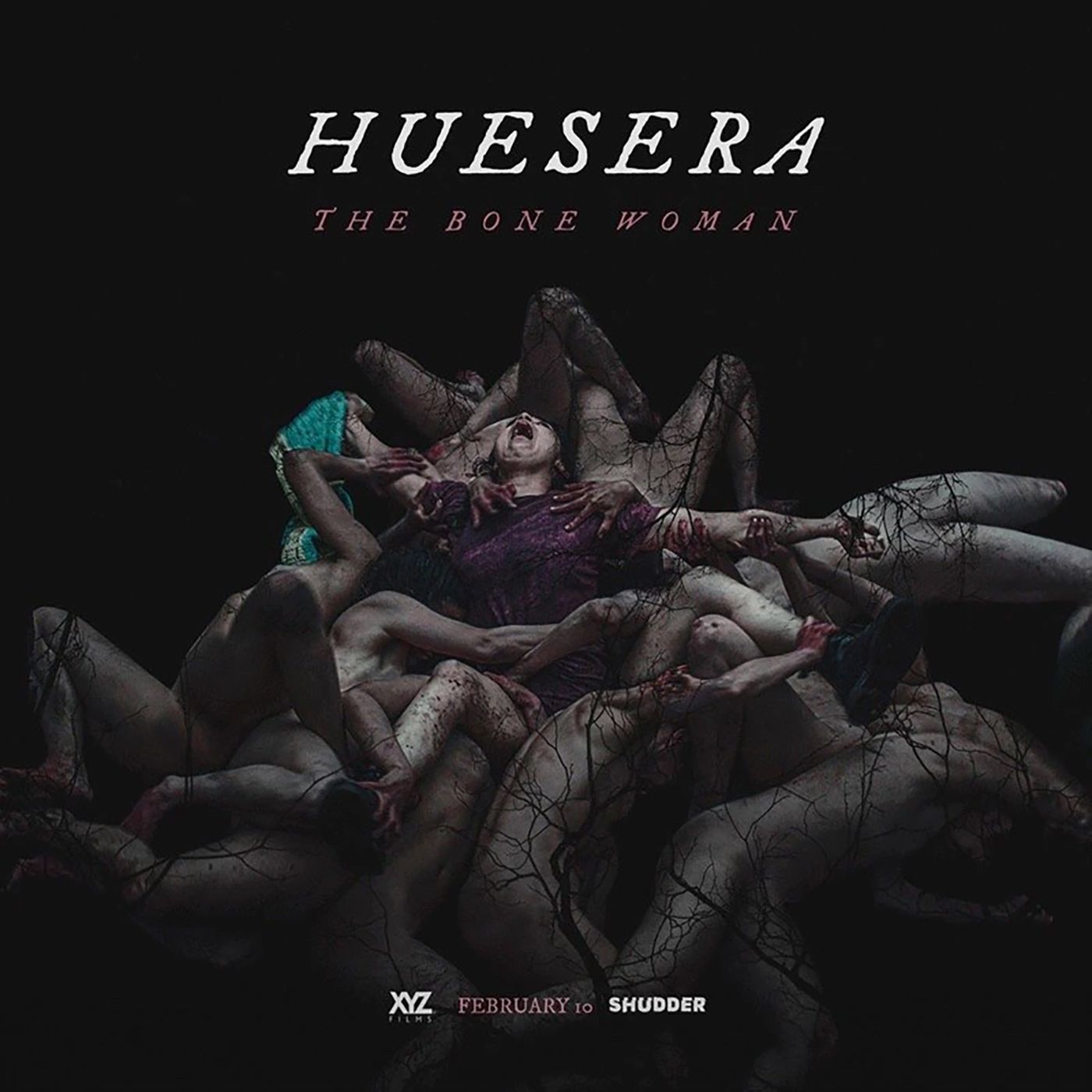

About this episode
The film is now available to stream!
Transcript
Automatically generated, so expect the odd misheard name.
Hold you is both its show time. People paid good money to see this movie. When they go out to a theater, they want cold sodas and look hot popcorn and no monsters. In the Projection Booth, everyone pretend podcasting isn't borings as in your screen Hills, Yes to stop a sun Montagne as contenteris he's as rules Nia Sundmaster smiles converting Mamas in part donds espirit teran cm. Hey, folks, welcome to a special episode of The Projection Booth on your host Mike White.
On this episode, I'm talking with Michelle Garva Servera all about her feature film debut, Who is Sweat the Bone Woman. It is now available on streaming services. If you like horror films, I highly recommend this movie. Even if you don't, I still recommend the movie. Enjoy the interview.
So I am so curious about you and your career. Can you tell me a little bit about how you got into filmmaking. When I was a teenager, I built a strong fascination with films. I grew up in that home. Both of my parents were industrial designers, and I had an older brother that he's a visual artist.
So it was like a very creative and inspired. In arts household, we would go to positions every weekend or to the Cygnema, and that was kind of like the constant. And then teenager I started getting in both into punk music and films, and I got very obsessed, like I was a kind of team layer that I would watch like any movie with a week and like make lists with my friends of our top hundred films, you know, like very obsessed. And then I was that every chance I had to take a film class, like any kind of video class, editing, whatever, I would take it. And I was very sure since I was very young that I wanted to be a film director for some reason, like there's something that was that I knew.
And then I started taking courses in the film school here the Nationalton School in Mexico, courses that they would give outside of the university, like whatever, like like approach to first approach to film or a film analysis. And then I started I tried to getting and I didn't pass the exam and the tests. So I started working for other filmmakers that were already in film school, like doing everything like PA assistant production and products producer or sistant in art or whatever. Really like just taking the coffee. And I worked like that for a year, and then I passed to the film school in the second time I tried, and since then I never went away, and I did many short films, everything within the horror, Gendra and sci fi.
I was the only one in my grade at least, we were just victim students. It's like the public school share and I was the only one within those gendres, and I stayed there. I kind of first it was kind of like a rebellious instinct that I had, like I built like a strong passion horror because it was kind of like not the arts. I didn't like my classmates that way. They were all like you know, and like all speaking about Bergman and the CoV Sky, and back then I was very like I didn't want it to really like that.
I didn't know I was there, very like now I when I go for my horror fiews that everyone here said that are like lower level or whatever. But then later I understood like that actually Gandra had like such a strong potent show. And then some of the best films ever are Gandra. So it kind of started like I was very young when I got into film school but then later I understood how powerful it is and started doing like a more profound than mature investigation on it, and with every short film, trying to reach the point to be able to do my feature. What was the test like to get into film school?
It was very intense. It was very intense. It's like it's very hard to get into film school here in Mexico because it's very few places, and when it people want to get in because it's free. It's fill on pay. It's four phases throughout two months or some things.
So first you have like to like basic knowledge, you know, like a cultural and like literature and like kind of like the four options kind of questions along exam of that type. And then the second one it is that you watch a film. And I remember that time I didn't pass. We watched Fin and Alexander by Waveman, and you have to write an essay about the film. You watch the film with like five hundred people or something, and then everyone goes outside and has like two hours to write an essay, and then I didn't pass that second time I applied, it was an amazing Mexican film called the the Islod Brothers from like the golden era of cinema in Mexico from the fifties and the Beautiful Film and that one I passed.
And then the third pace is that they give you a seam and then you have to to deliver a photo scene out of four to ten pictures. You have to deliver like a out of one team for pictures that sell a story. And then the last one is an interview. But that interview is very intimidating because you're sitting in a long table, like they do it in a very intimidating way. And then like eight people asking you difficult questions, you know, like regarding everything personal stuff or like films.
When you want to do it. You can do a film right now, would it be? You know, it's like an hour long interview. It's long. But that was two thousand and nine when I got into film school in Mexico, so it was a long time ago.
So you mentioned you have made a lot of short films, and I'm curious, obviously, I don't think the short films can probably sustain you as far as income goes. What else are you working on while you're working on those? Yeah, I got a lot of works different. I did some recording for a long time for commercials or whatever. Really and and then I also did films as a script supervisor and I did some features like that, and that was very helpful because I did learn a lot.
But I also worked in I had many different jobs, like doing a big special videos for some company, or like editing, like I would just like I was just all around. They even worked for some a couple of years in a company that they did video mapping, you know, like they would do shows on the pyramids, and I would do the editing or the making videos. And yeah, many I even I even worked in a four friends that had like a bigger food factory for a while. So it was I was kind of like jumping. But I never stopped doing my shorts, so that I was.
It was every time I had like free time, I would go back to my scripts or trying to put them together. The wererior crew on those early films, some of my like the main shorts. I was my short film scene in film school. So this Tilm school. The good thing in the film school in Mexico is that they produced, you like very well produced films.
Like then my first short film it was shot in sixteen millimeters and then the second one was thirty five millimeters. So they want you to learn the whole process. That that implied in the sense that they would give you one can or two cans and that's all you have. So that's kind of like it goes with a lot of preparation because you can do one take or two takes for shot. So it was really a good way of learning.
So my crew was class and the and there's many actors in Mexico that they go to these film schools and they they delivered their photos or their their curriculums and then you go to the office that that was back back then, you know, like we had like as much as Internet as now. But and then we would look for them and they would do casting calls at school, and the actors really wanted there were actors and actors that many of them were also starting, you know, or that they maybe didn't have a lot of words, so they really wanted to work in student films, so they would it was nobody would charge money for those shirts. And later and I did another short that more they were more like within friends out of school, and I also got a chance to do a master's degree in London.
I got a scholarship here in Mexico from the UK embassy and I went one year there, um and I did a short film over there that is a sci fi short that I really loved called The Arena. That's the only one I have in English? So how did who Ecer come about? Around that time that I was about to go to London? And I know I already had like five or six shorts, and I knew I wanted to give the step to my feature, and I knew I wanted it to be horror.
So the horror was before the taking the you know, deciding what story I wanted to tell. But back then, I my mom passed away in two fourteen, and I was still very affected by that, and I feel like all the process of understanding her and motherhood throughout her loss got me also to good thinking my grandmother's you know, and and that took me to one of them that she was a woman that let her household. So I grew up with a very dark image of her. I only knew that that she had left. I didn't know her name, her picture, anything.
She was like a completely canceled person at home and kind of creaked her the concept of her made me very fearful of becoming some one like that, you know so. But then later, thanks to to all this process that I went going through, I started asking the uncomfortable questions you know about her, about her life, and it's really crazy what happened when you have access to a story you know, with all their arristas, and I understood she really had a very difficult situation that was kind of very hard to judge. And I knew back then like, oh my god, this is the power of the narrative, the power of the stories, how it can change a complete concept of a person or a family. So I was like, Okay, I need to make a film that gives justice to these kind of characters that we don't want to look at or that we deny on our families.
And that's how it started. And then thanks in that company that I was working doing video mapping, I met my co writer in a trip to a and we became very close friends and she gave very great feedback to the idea that I went building for Wes and that that was twenty seventeen and we started writing together. It was like thirteen versions of the script and little by little. It was a long path. Little by little we started getting people and colleges that they would believe in the story and ourselves because it was our first feature.
And that's how that's how it started. Yeah, how did you manage to get funding for it? So in Mexico, and what is very different than in the US. Here here we have the Mexican Film Institute and without that, like ninety percent of films would Mexican films wouldn't wouldn't exist. I mean at least most of the outhorall Mexican films like history wouldn't exist with that public funding because there's not such thing like there's not really big companies here like in Hollywood that can uh found you know, like or have that investment to do films.
So but now with a platform that is changing. No, but but most of the films have Mexican Film institu suport So it's kind of like the same thing as film school here. Like you you have to prepare your script and a whole submission application I guess, which is very long and very bureaucratic and many people of me so you have to sometimes to submit several times and there's certain amount of mundia from the tax incentives that goes to films in Mexico. So around one hundred, one hundred and fifty films are produced several years thanks to that. So you have to go through that process and there's like a committee that picks the pro project.
So we want one fund that is for first features, that is like a historical fund, which for for example, Chronos from and we want that. And unfortunately we were the last generation because due to the pandemic, that's fun got eliminated, so we were the last batche. It's very small funding, but for us it was great, you know, and it's more than enough to make a first feature in Mexico. And then we got another fund to complete more of the financial necessities. And then we also want a copy production fund with Peru because we've seen the Latin American countries there's a lot of cop production contexts, you know, so you sub me it also, it's like and we want that.
And that was great because some of some of the colleagues, like the script supervisor and the sound recorder that yeah, like the sound guide and one of the actors came from Peru. And Delgay was more funding as well, so it was years or years of that, but at the end we managed to put it together and then thanks to our distributors in the US, which are x Ysive Films, we got the extra funding that we needed to be able to finish with a post production. The film looks gorgeous. It is so well shot and just every single frame looks terrific. I mean, can you tell me a little bit about your crew and your cinematographer.
Of course, she's amazing, Like That's why I picked her, because even her still photos, she has something that is very instinctive or magical. Right, There's sometimes I see her frames and I see every color there, Like she's very colorful, and she makes it in a way that is very like my talks with her, all with very emotional and symbolic and that's what I love it. We really don't we really don't focus on the technical aspects when we're analyzing the script. We actually just recorded an episode for a a horror series that is coming up soon and we work together as well. And what we do her name is Nur Rubio, is that we analyze everything and every transision from the emotional and the symbolic ways, and then we managed we decide together where the camera goes to tell the story, and then we we do create a lot of like rules, like color rules of like the symbolizes this and there's like a lot of a lot behind west that is full of meaning for us.
And it was a very long process. We did the shooting several times, and we would go to the location, like both the scouting locations and that once we picked it with our phones and we would edit on camera, you know, like how we would tell the scenes. Like very is very little space for a provisation because we had very limited budget, so we really planned everything out of and and then of course we had great actors and allowed us to change some of our decisions. But it's very enjoyable and she's very as I was saying, she was. She used to be an actress before she actually she was an actress for soap operas and like, and so she has something that is very emotional and very that I love that of lud That is very little technical talk, you know, and she of course she knows a whole technical thing, but that she goes with her team and arranged that after all our crazy talk.
Yeah, we also really wanted to build a harmonious domestic world full of like pastel colors, like very apparently pretty, like very safe space, but then make that qualifying. So we we were really actually for some of the horror scenes, we were like, no, let's make this as if it was like the like the first light of the day, you know, like the morning, the early morning, instead of like the classic night horror scene, because we wanted to give that light horror her aspects of that, I guess. And then on the other side, world's like the punk world for example, that it is usually darker. We wanted that world to feel free, like actually that that could be the sage space in this film. So we were kind of like really playing with that.
And I just love the whole idea of the you know, our main character's body changing and then also her body changing just the way that the bones and everything moves around because of the pregnancy, but then also just because of what is going on with her, possibly in her mind or not. Just I thought that was so clever. Thank you so much. Actually, you're very right, because with pregnancy it sons like a very important body change, body transformation, but we didn't want that the field to be focused on the actual pregnancy because we think that we've seen that a lot of times, and of course that cod with a whole thing, but we wanted it to be like a psychological like we wanted to represent the whole entity out of her, of her side, out of her feelings and emotion that she's going through.
So we we build a yeah, exactly that like the whole entity where it's like like a FOURD that breaks you apart, like the fractures your body deep down, like in representation of the kind of feelings that women go through when they're transforming into mothers. We really didn't want it to be specifically about the body changes of pregnancy. It was more about her whole life or perception. Can you tell me about your lead actress? Because I think she's in just about every single scene in the film.
She is, Yeah, just in the flashback she's not. But you know what, she was unset because the actress, the actresses were more amateur, and she s helping me out to help like the body and like the expressions of herself when she was a young a younger, a younger teenager, you know. So it was great because actually she's the one screaming at the teenagers like the neighbor that screams at the teenagers as her voice. So she went every single day. We became very close friends.
She arrived to the project thanks to the casting director, which actually the casting director is one of the witches of the curanderas in the ritual scene, because I convinced her. Her name is Rasio Vermont, and I've seen Natalia before in theater place here in Mexico. She's big in theater here. And it was a long process. It was a very difficult process to pride our main, our lead character, our lead actress, and we were about to go for someone else when my casting director was like, please wait for me, that one more coming, you have to wait.
I never waited and nada yah right, and it was immediate that we knew that she was Valeria. I was in completely impressed. She's a kind of actress that you believe that she's fielding a own fracture, you believe that she's looking into a monster. And she has something that she's great with the minimal, like with a small eye change or movement or mouth movement, like she says a lot with little she has this huge like pimbour tonight that But I always thought her, but then she can also take it to cross to the other side in town, you know, which in Mexico sometimes, especially like in AfterAll or artsive films, people or filmmakers are very scared, scared to cross to cross those tonnel lines because we're very scared of so boperous.
We were very scared to become that. But on the other side, you go to a Mexican dinner or family reunion, and that's how it is. Like people are screaming like we're not so contained. We're not like like European tignema. That's not that's not how our family gathering looks in Mexico.
So we talked a lot about that and saying like, no, we don't have to be scared of that. We really had to have our characters speak like like naturally, like we speak in Mexico City. And she's not afraid of that, and she's not afraid of crossing the lane, the line to Savage List and breaking down like all the screens that she was going through in the ritual scene for example, and in the woods like she has. She she's a very prepared actress as well, like she worked a lot, like she started a lot so because she started very young. Her father and both her parents are big actors as well.
But yeah, it's she has something that is magnetic. Natalia's not fearful of crossing those toneal nines or limits that many actors are afraid of. I feel like she reaches those. She manages, for example, to scream like desperately, you know, like the perception style and she and she makes it. You know, I still believe her, which is to me, and it's theipist.
I'm pastery you're not, like, I don't exactly understand. How does she make it? You know, it's very perplexing. She brottles so much bodily, embodily aspects to that character. You know, like all these feeling that she's holding a lot of energy and every type she can break down.
That's something that she brought and she it can sound very conceptable, but she made it made it very tangible on screen, which was very impressive as well. You talked about that end scene or the scene in the forest, and that's one scene and there are a few other times throughout the film and probably more than I even realize where you've got some really amazing special effects. Can you tell me about your effects people. I think that we did a good editing job because there's really not so many effects. We most of it.
We didn't had a lot of fun like money for effects. For example, it was that the most immediately possible. The same with prosthetics because we had a very limited budget and so a lot of the for example, fractures is really like two movements and like a little bone now. And the sound effect I think it's many time press sound is more effective. And the editing like brit anything to make it look like there's a bone popping for example of quite in the wood scene another black blurred faces and erests of their bodies, but it was really like dancers, you know, like that they know how bodies like that, and an occasions like it's in the middle of Mexico cities.
I would because even that by the way that I thought it was perfect. But we shot it on in one day and it's really most of it is practical. It's really there and very few prosthetics as bro I imagine, though her belly was fake. Yes, that looked really good though, Oh yeah, that was amazing. The Belding was that especially the battle that's fantastic and that one that however, artists, our prosthetic artists dedid.
It was hours of work for that one, but it looked wet. Yeah. Also like the food seeing that was like kat that's also a prosthetic at the finger as well, like the one that breaks that. Those were like models out of the actress body. What was some of the biggest challenges getting this film done?
Staying in love with a Break for so long, because it was years of trying to get the funds of Nega, And I do feel very proud that I always thought, like I never let it go, you know. I was always sure that someday we were gonna be able to make it, even afraid of myself losing hope, you know, but if I beat man, I stay there, you know, and to keep on pushing. It was very helpful to hear other directors and about other films first features, especially that are so hard together. So I I kind of called it, you know. I was.
I was okay with waiting, you know, and being very patient and even the pandit affected us a lot. We had to push two times the shooting. It was kind of like a nightmare. But at the end, I'm so happy that we never let it go, you know. So I think that that's part of the big thitting.
And also so I mean the right team, you know, because we did I mean I did try to work with some like bigger collaboration, bigger I mean, like with more experience, for example. And the thing is that you don't look to them like what they think is a director is going to be very hard, you know because again not speaking only of my gender, but it of course it has to do. And Mexico is also a very sexist country many places in the world, but there's still a lot of ideas of how a directories and how they manage and the way they have relationships, you know, in the team. And that's different because I work in another way. So I really had that luck to find the right team that were that believe in me, you know, like with my shut fields, they work Okay, she can do it.
And I think that that's very valuable because they didn't impose anything to me. That they really let me work in the way that I wanted and they protected my work, you know, and now and they let me because I am the kind of director that I do invited a lot of the team to work to to collaborate, like they have the script months before the filming every reactor, so they can write a lot of ideas that I actually take listen, you know. So there's a lot of ideas for examples, from backstories of the actors that you can't see them in the field. So so that's that's something that has to do also with the way I work out From that, I'm very happy that my redisters respected because it could have it could have looked like I went slating a lot of opinions, but I think that's part of the cinema process.
Well, it was nice that you had at least you've mentioned your co writer is a woman, or your main actress of course, your cinematographer. I mean it was it must have been nice to have women and some key roles to support you. Yes, also one of the producers and my editor for example, the production designer. It was not that I said like, oh, I'm like all the fads need to be women. Really they were.
They were the stronger pitch. And it has to do of course, because also many of them are mothers, for example, so they were really wanting to work. They wanted to speak on a bread about all these you know that had like there's no really so much space for them to talk about it. But there's also a lot of men involved, like domesticia, so at the production that sound this a hanger. So it was kind of like very it was a very diverse, to be honest.
When was the first time you get to see it with an audience. We got a lot of test screenings Daska, he said, yeah, with my editor. She's great. She's an amazing editor, like a teacher for me. We had like made me order twelve screenings with two people, you know, like they would give us notes, but like unofficial, unofficial screening we had you know, the festival, it's a horror festival in Mexico, and we had almost one of the last cuts.
We had a little screening with like thirty people. That was I was so vervous and because that back then we didn't know if it was good or like we were just like, oh, like my little film, Like it was great. It was very good. Sit back, it was. It was very stressful, of course, but it was great at then.
The first official one one was seeing Treveca on our premier. It was great. It was I don't remember it like with honestly, I was, so it was that I remember it like flashes like and very lost. It was very intense, and I mean the actress came a careter like the producers. It was it was great.
What was the reaction like? It was very good? Yeah, I mean back then we had no idea we won the two awards that we were nominated at Treveca. I was only very happy to see that people went outside, like very excit, I don't know, an explode party. After across slipcord.
It was approaching the actress and myself but one talk, so we thought like, okay, we're having a good reception and then maybe was starting to pop out and they were. They were very positive, so we were okay, my god, this is working. But it were really not sure what to expect. And then I came back to Mexico. I was working in a TV series, directing some episodes in CROs Arito who was to be And then they called me back my my distributors X YC.
And they were like a trave guy, it's asking for you to come back for the A work SERI work And I was like no way, no way, and hay and the production in the TV series let me go and night and I was there for twenty four hours maybe less, and we got the two hours I was expecting one. But it was also that it was the best beast new narrative director and I was like the best email director. It was really a high night moment. It was very, very very exciting. Of course, that helps out out for us to go like good distribution and at at reaching other people.
Plus of hoops myself and my team that the right way is ready to follow unibods because everybody for sometime, everybody would tell that we were crazy, like our project eight tho cents. So now it's like, okay, all that imposter syndrome. We were very right of really trying to fight it, you know, because we we had that we deep down we thought we had something good, like we had to work for this, but it could have been the other way. So I'm very happy that we didn't shoot. What are you working on now?
So I'm about to actually go into production soon for my next feature, which is funny because I started reading also with Avia in two nineteen, so it was two years after we set that we started. It's also horror and it's based in the southeast of Mexico, and I know where my grandparents were from. And we won the funds the same week that we were marrying that Treveca, so that's wild. And we've been rebriding because it's a very complex project. I didn't know what I was gonna get it into when I decided my goodly horror story.
I mean to me like, yeah, no, Praft and I and I have all those kinds of stories. But now that we're really getting into detailed, I was like, oh my god, what did we do? This is sound complicated, but we're breaking out our nets and we we've been rewriting five or six times so reading the script, but we're getting to it like we were reaching the point that we really liked that I'm about to film around October and feel that so very a very lucky, you know, because honestly, like it's you. It's very usual that filmmakers in Mexico, when they have a first film that goes well, they the next deputy that they go to the US. That's kind of like a common thing, and and of course eventually I would love to be able to work there, but part of me, I'm very happy to try to for ourselves.
So so that I feel making world in Mexico, that we can also stay here at Dreevious here because they do well also in other countries. Do you know, like why do we always have to go to the like, you know, to try to unify our voices when we can from everywhere the world telling stories, you know. So my dream of course is that. I mean, of course every feelmaker wants that, but like like a style of Korean filmakers that they are able to stay on alpot over and you know, like that's always like everyone's like, oh my god, how do it? You know?
So for now, I'm just very happy to have the child, like my second features, best of luck with it. I'm so excited to see it and excited to see what else you do after that. Thank you so much. I mean, like, let's see I feel for now, I do want to stay in Horror or Gendre for a while because it feels like like a long term investigation. But let's see where life next me.
Well, Michelle, thank you so much for your time. It was a great talking with you. Thanks to you, my dad. It's really honored. I'd like, I know your podcast and I know it's Jelly and Darry so I feel very honored that doing.
But I didn't need to talk to you, said that it's great to meet you. You're Jaffee ra and I dropped Jaffee Slum and you're gonna be talding. You're so pretty when you're thaf you're supporting me. FA to me. Oh, your bones gotta let on my sheet.
You're the phone I'm talking to preaching, preach about kissing, chiss if I'm a soda. If I'm be a soda, I'm in soda, trying to want to span the mark. Make me my sails. Said, your bones gotta let on my sheet. You're a bone my sheep.
Your boss gotta let on my machine.
More from The Projection Booth



Similar episodes across the network
Matched by shared keywords.
-
Nell Campbell - Unsung Cinema
1 shared keyword: horror
-
Seasonal Differences, Shifting Fandom
1 shared keyword: horror
-
Halloween II (2009) — "Man was meant to eat meat. We, all of us, have a little bit caveman in us."
1 shared keyword: horror