
About this episode
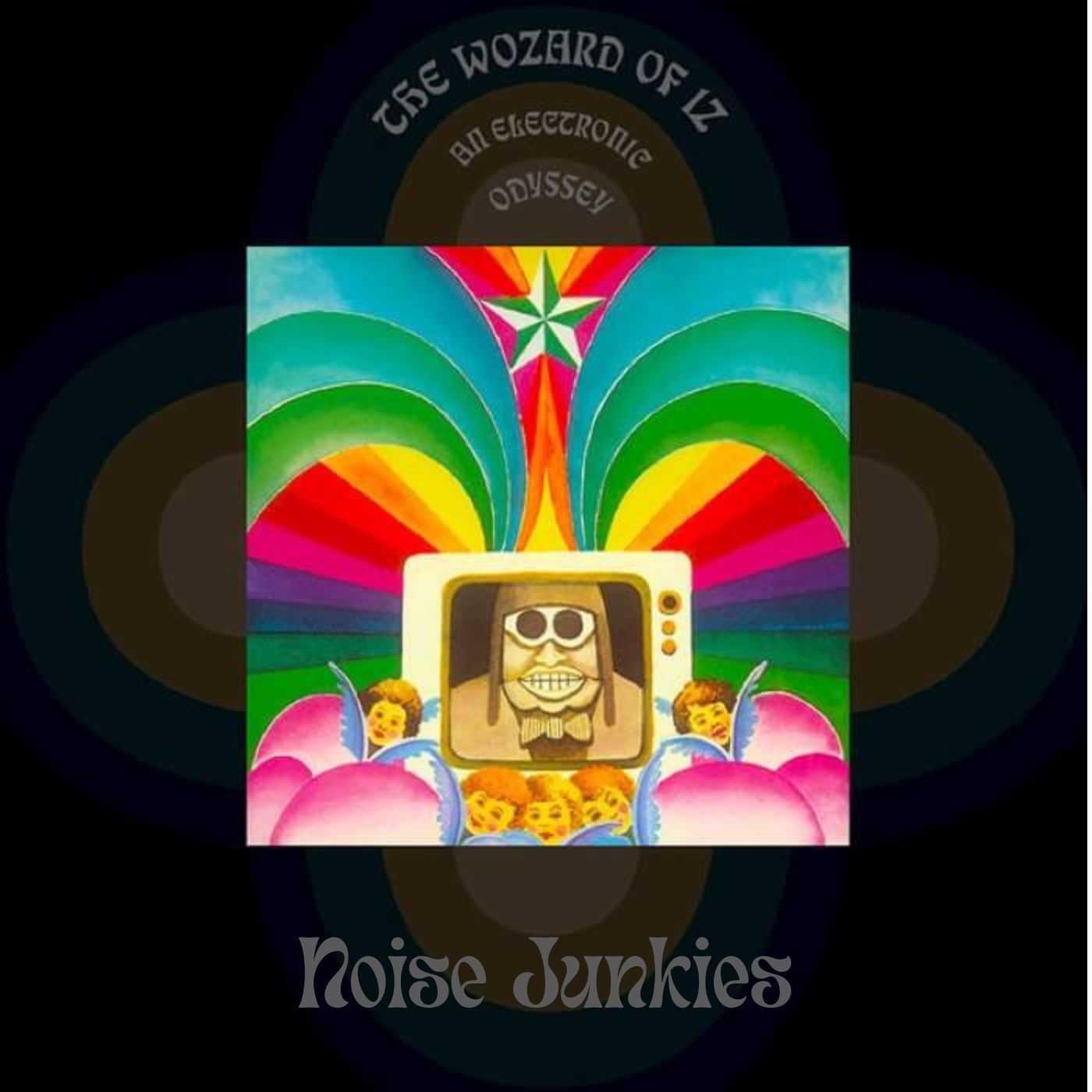
This episode also features a guest chat with the very person that introduced HP to this classic! Join HP as he freaks out (in a good way) to the magic of: The Wozard Of Iz by Mort Garson.
JUNKIES
Father Malone: FatherMalone.com
HP: hpmusicplace.bandcamp.com
Heather Drain: https://www.mondoheather.com/
SPOTIFY PLAYLIST
https://open.spotify.com/playlist/5nS86knITjRR45uGkRvuNt?si=b28780d1699f4135
Transcript
Automatically generated, so expect the odd misheard name.
We Like many of you, I've had tons and tons of albums recommended. To me over the years. Some I grew to enjoy, some missed the mark. But every once in a while, a record comes recommended that ticks so many boxes almost immediately that it's skyrockets to cherished status in no time at all. It doesn't happen very often, but when it does, it's magic.
I'd like to share one of these discoveries with you. Get ready, because tonight we're off to find the waws It of His. Hello. Listeners to another special episode of Noise Junkies, I'm HP. This episode will be covering another great concept album from the HP archives.
This time it's nineteen sixty eight's The was It of Isz, composed by Mort Garson and conceived and written by Jacques Wilson. I first became aware of The It of is back in nineteen ninety nine. I just started a new job and almost immediately became good friends with someone in my group. We had a lot of shared interests video games, bad movies, and had a very similar sense of humor still do. Plus, we both loved oddball or weird music.
At some point, I don't know when he mentioned this album from his dad's collection called the was it of his I thought he was at first. Then the more he told me about the record, the more I thought it was some kind of put on a parody of sixties electronic weirdness. But no, this was authentic, recorded earnestly, no trace of irony whatsoever. Based on his description, I had to see and hear this record for myself. He eventually brought the record in for me, and as much as I built up in my head what it would sound like, the reality was so much better.
More on my friend and a little bit. But before we get into Wazard, let's delve deeper into mort Garson's career. Garson started out as a session musician who later went on to a successful career as an arranger and songwriter. In the late fifties on into the sixties. His credits included arrangements for Doris Day, The Letterman, Paul Revere and the Raiders, and Leslie Ugghams.
In nineteen sixty seven, he arranged the strings on Glenn Campbell's cover of Jimmy Webb's By the Time I Get to Phoenix, which was a big hit for Campbell. By the time. I get to Phoenix, she'll be rising. She'll find the note I left hanging. On her note.
She'll leave when she reached the part that says I'm leaving because I've left that girl so manute times before. Garson met electronic music innovator Robert mog at a convention in nineteen sixty seven, and subsequently became one of the first people to start using the Moge synthesizer for compositions and arrangements. This formed the basis for his nineteen sixty seven album The Zodiac Cosmic Sounds, co written with Wilson and featuring Paul Beaver on the synthesizer. It was the first West Coast album to feature the Moge synth. Nine Times, the color Red explodes like heated blood.
The Battle is on Mars. The Master of Matchmaker Sulfu rizes the sky. Incendiary diamonds scorch the earth. As you listen to these samples of Garson's music, bear in mind that the Mogue synth was monophonic, meaning it was only capable of playing a single note at a time. The first polyphonic Mogue wouldn't come out until nineteen seventy five, but given Garson's background and arranging, he was savvy enough to piece each track into a cohesive piece of music.
Wendy Carlos was innovating to an even greater degree with her Switched On Back album in nineteen sixty eight, but that's the story for another episode. After the Cosmic Sounds album, Garson dove deeper and deeper into electronic music using the Mogue on a series of subsequent releases. Nineteen sixty nine's Electronic Hair Pieces featured covers from the hippie musical hair performed with the synthesizer. He also wrote and performed nineteen seventy six's Mother Earth's Plantasia entirely on the Mogue synth. This was an album based around the pseudoscience that plants could respond to and appreciate music played to them.
Garson was even commissioned to write electronic music to soundtrack the Apollo eleven moon landing in nineteen sixty nine. This piece was used as incidental music during the televised coverage of the mission. The Wizard album cover art was done by Tom will a Grammy winning designer who is also the creative force behind the covers for such albums as George Harrison's All Things Must Pass, Neil Young's Harvest, The Rolling Stones, Beggars Banquet, and Janis Joplin's Pearl. Wizard was a true concept album, a psychedelic retelling of the Wizard of Oz, filled with riffs on the counterculture and wild mog playing. Aside from the vocals, every sound you hear, including all of the drums and percussion, were generated from the mogue.
The album was wonderfully sincere, totally dated, and fully committed to its hippie ideals. I fell in love with it immediately. In this updated version of the Wizard of Oz, Dorothy is a bored hippie girl on a search to find where it's at. I'm out of the coffin, I'm out of the box. The city isn't where it's at.
It's a place where people throw rocks at dreams, and the dream shouldn't be stoned, only the dreamer. I'm looking for a place where I can look at a stranger's face and not be afraid. To offer him a flower. I want that kind of power. Susie Jane Hocumbe, a sometime collaborator of singer songwriter Lee Hazelwood, played the role of Dorothy in later years.
There was a myth surrounding her on this album that she was actually Nancy Sinatra using a pseudonym, but that was later debunked. Instead of following the Yellow Brick Road, Dorothy follows the yellow green road. Roland Getty's work isn't the wool movies, honor as you can be sure that you're mine. Hope be blown that collars starts getting white there. Everybody's way up tight.
They say that thest young guys off the light there, but they're a flame to go out late at night. The scarecrow is called the scared crow who is so obsessed with money and material possessions that he fears he can no longer think. Help me, please, I can't move. Who are you? Why are you carrying all those things?
I'm the scared crow. I'm afraid if I don't have, people won't think I am. In fact, I may even have a list of my possessions tattooed on my forehead. Thing thing hear that, a cash registered ring, thing, a ling thing, See them nice goodies that I bring. The tin man is called the in man, a coldly analytical robot so concerned with facts and hard data that he can no longer feel.
I'm the man and I'm keen. I'm a mind like a machine. Charge some digit digital charge. I will totally all your parts. I'm the man and I'm all head.
But elsewhere I'm kind of dead. Grabs and data, data and craps. I get answers, but no laughs. I'm the in man. I define, I deduce, then I design games and busses, lusses and games.
I'm just loaded down with brains. I'm the in man number one one, three, five eight seven, six oh two three five seven nine five two five six nine oh three. Boy, do I have your number? The Cowardly Lion is known as the Lion Coward, a blowhard who spouts rhetoric to the masses that even he knows his bullshit. Glory glory, bloody glory to my in in ordertory.
Dinner. Every word I say it's a grabber. But all my talking is an attraction. You won't find me. Near the action.
Do. I'm listen to and trusted. Those who listen all get blustered. Fun fact, actor Barney Phillips played both the Scared Crow and the Lion Coward. He acted in movies and TV throughout the fifties, sixties, and seventies, most notably appearing in the Twilight Zone episode Will the Real Martian Please Stand Up?
He famously played a short order cook who spoiler alert is revealed at the end of the episode to be a three eyed alien from Venus in disguise. The image of Phillips lifting his hat to reveal the third eye was an iconic image from the series. And I think I really ought to tell you now that your friends are not coming. They've been intercepted. Oh, colony is coming, but it's from Venus.
And if you're still alive, I think you'll see how we differ it. All of the action in The Wizit of Is comes to a head with the track Blue Poppy. In the film The Wizard of Oz, Dorothy and the others have to walk through a vast field of poppies on their way to the Emerald City, but the Wicked Witch used the spell to enchant the poppies to make Dorothy fall asleep so she won't make it. The song Blue Poppy is an abstract spin on this scene, a freak out of the highest order. It's half instrumental and half Wild, Jacques Wilson Rantings.
Opened the door for the Prince's piety. If the rocks, who am I? If I have the rock, A man could live in a summer and still dream. Of the ball. Another highlight of the album is the song I've Been Over the Rainbow, a ballad sung by Dorothy in which she reflects on the banality and uncertainty of life that she glimpses behind the rainbow in colorful psychedelic trappings.
I have been over the rainbow and I found nothing but very thin aird. I have looked under my shadow, unseen us souver. That guide in the night. I've Been Over the Rainbow has been sampled by modern artists, which is a reflection of the cult cachet that Wizard has gained over time. Australian electronic group The Avalanches sampled several Wizard tracks, including I've Been Over the Rainbow for a song on their twenty sixteen album Wildflower.
The song's name the Wizard of izmer So no discussion of the Wazard would be complete if I didn't bring up the man who introduced me to the Wizard so many years ago. He's here, He's straight from upset strip. It's my friend, Chris. Chris, how are you this evening? Oh?
Pretty good? A little upset, but you know it comes from a strip. You're high on big sir, this evening. Yes, just to back up you and I. I started at a company in late ninety eight, really early ninety nine, and you've already been there.
You had been there for what about a year before I started, or a few months that summer, so okay, maybe six months. We obviously became really good friends really quickly. We were in the tech support group together. Yep. A bunch of us were there learning the ins and outs of the product.
And that's where I met. That's where I met Chris. Let's talk about Wazard specifically. Now. I want to know a little bit about your history with the album.
When when's the first time you learned about the album? This was your dad's album originally, right. My dad was in the service during you know, late sixties, early early well, very early seventy. He might have been out by them. He served, but he wasn't Vietnam.
He was in Europe. He was a Russian linguistic linguist, whatever you want to call it. He listened a spy transmissions in Germany. So the Good Side, the West Side records were cool, you know Vinyl. He was hip, he was in his twenties.
He was groovy. He went to the store and people were talking about this move synthesizer music and all this fire out groovy stuff and like, oh was it of Is? So he bought this album not knowing what it was, and he listened to it and he's like, sucks. He hated it. He was a classic rock guy.
Three Dog Night. The Kinks, the Beatles, Zeppelin, Blood Sweat and Tears, you know my name off of You know, these are all albums I eventually inherited, not inherited, but he gave them to me. I would say I was four or five. I think it was kindergarten when he gave me some albums. I can tell you exactly what they were.
You know, it was the was it of Is? It was led Zeppelin two, which I will go on record as saying is the greatest album ever. There was Bongos, Bongos, Bongos, and I actually looked it up recently and it's just an album of bongos. So there I am with the five albums. But of course, what did I like was it of is?
Because I thought it was Wisdom of Oz, not realizing what the meaning really was. The covers nice and colorful. It's a rainbow type thing. I could see that young inviting. For a child, for sure.
Yeah, I had that face. It has the cherubs flying on the backside. It has this huge computer that's with a keyboard and buttons lit up, and it was all state of the art, and I was like mesmerized by it and the music. So was this an album that you went back to over the ensuing years as you got older, did you find yourself returning to it? I remember having a little turntable, a little record player that would fold up and snap and turn into a suitcase and you could have a handle and you could carry it around.
You'd lock up the arm and the needle so it wouldn't get destroyed, and I would just bring that into whatever room my parents weren't in. So if it was a living room, the family room, the dining room, they had an old almost like a dry sink stereo, the ones that you would lift up the counter and the stereo was down below. Yeah, and if I was in there, they would let me put that on and I would listen to those same five albums, but always went back to WAWS. And it is because it was weird. I mean, it sounded weird.
It was like a narrative. It was telling a story. I knew what Wizard of Oz was, so I could relate. It's psychedelic to its core. There's veiled and not so veiled drug references all over it.
I can only imagine what this would do to an impressionable. Child, totally innocent on that one. So here we are. Let's flash forward a little bit. So you and I are in this group at this job together.
Do you remember when you first told me about the album. I was trying to think of this myself, like, what, at what point did you think this is totally a Paris Sally, He's gonna he's gonna flip for this. I'm pretty sure it was the same time that we were talking about Buckethead, which could be a whole other episode, but talking about different stuff that we kind of knew about but couldn't relate to each other type thing. I feel like this would have been something you and I would have been talking, laughing, having a fun time at work, and you might have said, oh, like that, like positive is like I had this album where it's the Wizard of Oz but it's all and I can just see myself going, what you're kidding?
You must be. Because it sounded so on the nose. And I said this earlier in this episode. It sounded like a parody of a psychedelic record. But you said, I.
Can see you in my mind's eyes saying no, no, no, this is real. I will bring it in to show you, right. M hm, oh, yeah, you know something wasitive is thing I got as a kid, And you were like what And I think, yeah, you know, I started explaining and you were like, you gotta be kidding me. You know, it's yeah. So it sounded like something that I could have pulled out of my rear and just made up.
But yeah, I was dead serious about telling you that this is a real album. I know you, I know the songs. It wasn't like you could just go online and pull up information on mort Garson and why. What it is? It just wasn't that much at that point.
He was still very much a lost relic of the of that time. So I couldn't just search you know what alta Vista or whatever the search engine might have been Google. I think it was still early goings. This would have been ninety nine. So you actually, after you told me you had this record, you said, well, I'll bring it in.
And not only will will I bring it in, but you said I will bring in a record player so you can listen to it at your desk, because there was no way that it wasn't on CD at the time. It's really three's of it, that's for sure. No, because I think this was right around I'm pretty sure this right around Napster time. You brought in the record player for me. It was a sort of inexpensive little all in one record player.
I remember having it at my desk, plugged in headphones. I think it may have only had one channel, like I think I might only it might have been mono, like I could only hear out of one speaker. I just remember listening to it and it just The phrase blow your mind is an overused cliche, but it truly blew my mind. This ticked so many boxes and a funny way. It was one of these things that made our friendship even better because this just confirmed to me like this guy knows me, because it was every bit as good and better than how you described it to me.
You couldn't record this now. It's so earnest and so honest. It's authentic. You have war, you have politics. It was made when that stuff was going on.
Nowadays it would just be like, you know, it'd be like watching Forrest Gump. Okay, they're doing you know, a hippie scene on it, but it's fake. How do you feel about the album now after so many Like you said, it's been over forty years or so, actually closer to fifty years now, how do you feel about the album now after all these years. I appreciate it in a different way now. I appreciate what they were trying to relay as a message as opposed to it being you know, like thinking it's a kid's album, which we know al it was a good time with music.
I mean, was there better music to listen to? Probably? But I'm listening to it of Is and Bungos Bungos bongos, so you know, that might. Be the next podcast. I don't think I've ever actually asked you this, but I'm really curious, what's your favorite song on the was it of and why?
I think I know the answer, but I want to hear what you say. It has to be upset strip, and it's the beat in the background. I think, take out the vocals, which are hilarious anyways. But if I was like a famous recording artist, I'd be sampling that background beat on upset stript. My breath, get the word, get the straight word.
General Westmoreland trades in his dog tags. For love beats. It just has that groovy, basy sound to it. So I would have to say, yeah, upset strip has always been my favorite. See I thought you were gonna say, big sir, that.
Was a work haha one that we would crack up on. But yeah, that one was. That's you know, you get out your cigarette lighter on a concert and you know you're gonna wave the arm and you know, andever you know, everyone is high on big sir. This sad. I will teach you a song.
I will teach you a song. I will teach you song. Send. You created this image for me at the time, it's been indelible. You said, this is like you had in your mind's eye.
It's the recording studio. There a guy there with a like a beard or a Van Dyke, love beads sunglasses listening to somebody sing and they're. Like, yeah, baby, yeah, give it to me. That to me is like the essence. He's got the slip on boots with the bell bottoms.
You know, he's a groovy you know, he's got the rose colored round glasses and everything, Johnny Bravo type stuff. That's what I was gonna say. It's like the It's like the guy in the Brady Bunch episode who wanted to record Greg as Johnny Bravo. You fit the suit man, that guy right. Exactly what they're doing in this recording studio.
You know, Yeah, I hit it man, big Sir. For me, my favorite, I would say I've been over the Rainbow. I know it's a pretty safe pick, but I love the keyboard in it, and I love the fact that so many contemporary artists have sampled it. There's I can think of at least three or four different techno and electronic artists that have sampled directly from that I referenced in this podcast as well where I will. But I think that speaks to that this is something that has cachet with the modern day.
It's a little hipper than you would think because people are seeing the value and some of this electronic music, and certainly the mode being kind of a prized instrument nowadays and something that's considered vintage. But I really like I've Been Over the Rainbow. It's maybe not the sexiest pick, but I just love it. Probably the most mainstream song on the album too, it's very conventional. I think you're right that it's not as weird and out there some of the other ones.
The word you use that, I think it's the best word I can think of. It's authentic. There's no subterfuge here. You're getting a direct line to how these people feel about the sixties and about how things were at that point. It's maybe not the most hard hitting expose on the sixties, but it's fun, right.
I think it speaks volumes that you, as a four or five year old, can get just as much out of it and not be damaged. But you know, because it's a safe record, even some of the things that are maybe are a little out of the ordinary and maybe a little bit shading into something a little more adult. If you're not listening carefully, you'll miss it, and you'll just be hearing the bright sounds and the popping electronic noises and everything works really well. I just think that speaks to the beauty of this album that it can appeal to a five year old playing records in his parents room or a fifty some adults listening to it now in my car, which I do on occasion. So it's great.
And I've said this to you before, but I'm so appreciative Chris that you introduced me to this record. We've known each other now, I was thinking about this before we started talking. We've known each other for upwards of twenty. Five years of a century. Yes, I just want to thank you again for introducing me to this absolute gem of a record.
Like I said, I still return to it like you do on a regular basis, and it's still as good as it was the first time I listened to it. So thanks again, Chris. Oh, no problem. And while I'm in a thanking mood, thank you so much for joining me here on this podcast. Is there any parting words for our listeners, Chris.
Other than General Wes Moreland treaded in his dog tags for Lovebeads, I mean, well there, thank you for having me. In more recent years, mort Garson's contributions to music have gone through a reappraisal. He is now widely considered one of the early pioneers of the synthesizer in pop music. Sacred Bones Records has begun reissuing Garson's back catalog, including many pieces of music that have been out of print for decades. He's finally getting his due as a true innovator in electronic music.
Though there's plenty of dated aspects to the wosit of is and some truly cringey bits as well, it's not hyperbole to suggest that it occupies an important place in the history of electronic music. It's also one of those records that could only be made in the late sixties. So there you have it. Thank you for indulging me once again. When I'm not listening to.
Music, you can find me elsewhere on the Weirding Wade Network. I am the co host of The Night Mister Walters, a Taxi podcast. I'm an occasional guest on The Culture Cast with Christashu, and I have a bandcampsite hpmusicplays dot bandcamp dot com. Please check it out. As always, please feel free to write us, rate us, review us.
We'd love to hear. From you in any manner you choose, Thanks again for listening, and we'll see you again next time. St.
More from Noise Junkies
Similar episodes across the network
Matched by shared keywords.
-
Episode 573: Three Poplars on Plyuschikha Street (1968)
1 shared keyword: 1968
-
Episode 540: Capricious Summer (1968)
1 shared keyword: 1968
-
Episode 528: The Great Silence (1968)
1 shared keyword: 1968