
Season 1 · Episode 97
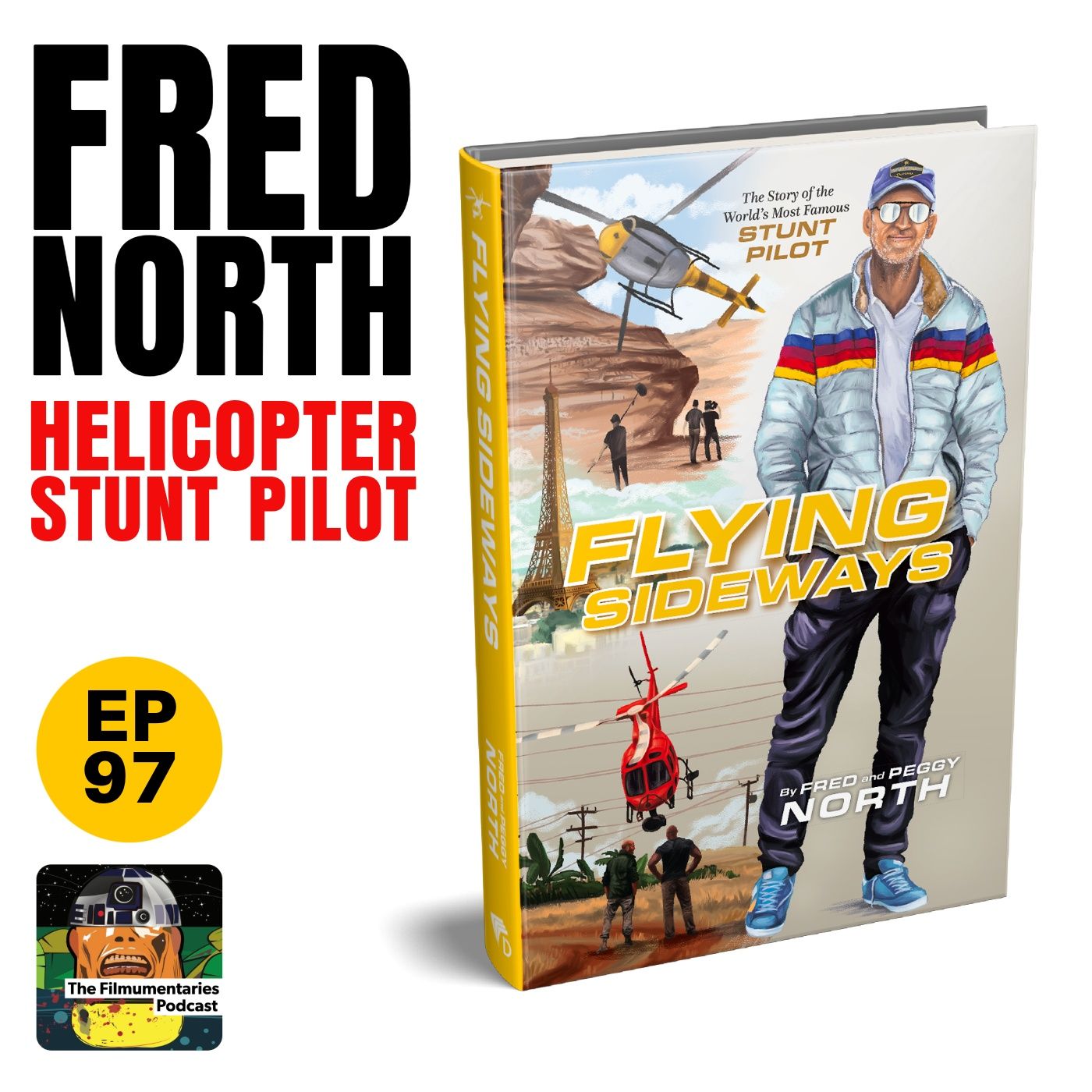
97 - Fred North - Helicopter Stunt Pilot - "Flying Sideways"
About this episode
Takeaways
- Creating opportunities and having a drive to succeed are key to achieving success.
- Connecting with the machine and understanding its nuances is crucial in flying a helicopter.
- Understanding the director's vision and offering creative solutions can make a helicopter pilot invaluable in the film industry.
- Embracing mistakes and learning from them is essential for personal and professional growth.
Chapters00:00 Introduction and Patreon Support
03:35 First Encounter with Helicopter
06:27 From Childhood Fascination to Becoming a Stunt Pilot
08:20 Shark-Like Drive and Embracing New Opportunities
10:42 Dealing with Mistakes and Learning from Them
12:30 The Importance of Having an Open Mind and Connecting with People
14:24 Writing the Book to Share His Journey
25:08 The Role of Instinct and Connection in Flying
28:21 Finding a Way into the Film Industry
35:25 Understanding the Director's Vision and Offering Creative Solutions
41:06 QR Codes in the Book and Making it Entertaining
42:18 Closing Remarks and Future Episodes
All the links
This podcast is completely independent and made possible by listener support. If you’d like to help me keep making these episodes, you can join my Patreon community here: https://patreon.com/jamiebenning
Watch more on YouTube:
Check out the Filmumentaries YouTube channel for behind-the-scenes clips and extra content: https://youtube.com/filmumentaries
All my links
Transcript
Automatically generated, so expect the odd misheard name.
Weird Being Way Media. Welcome to episode ninety eight of The Film Mentory's podcast. This is Jamie Benning talking to you here from my little house in London. I hope you're doing well. Welcome back, or maybe this is your first time.
Either way, you've got about an hour's worth of film related chat ahead of you. I hope you enjoyed my chat with director Gareth Edwards and his effects crew in episode ninety seven, probably one of my biggest episodes so far in terms of the status of the guests and the film, but also in terms of the number of people I interviewed. I really appreciate all of the positive feedback from you, most commonly saying it was the best episode yet. Was it okay? Good?
It's good to know, so maybe I'll aim to do more panels like that in the future. It was good fun actually chating to all of those artists. I really enjoyed that evening and one evening that was also talking to Phil Tippit's coming out and April folks of that episode. If you enjoy my work, please consider contributing via Patreon dot com forward slash Jamie Benning J A. M.
I. E. B. Eblenng there's just over one hundred of you doing that at the moment. I'd love to get the number to two hundred.
Despite loving what I do, this is work and I really would appreciate your support. So if you enjoy my work, then please help me make this a viable venture to continue with. I hope you agree that I get good guests and that it's always nice to listen to my episodes. So yeah, you can check that out on patreon dot com. Forward slash Jamie Benning.
Talking of great guests, I know what segway I should be on the radio. For this episode, I speak with helicopter stunt pilot Fred North about his incredible career. If you haven't read Fred's book, Flying Sideways, I'd really recommend it. It charts the life and career of Fred to eventually reaching the pinnacle of his profession as a Hollywood stunt pilot, with a lot of amazing experiences along the way. You can find it at most bookstores and online in the usual places.
In fact, if you go to freddashnrth dot com you'll find all the details you need. Okay, So here's my chat with helicopter stunt pilot Fred North, and I'll be back at the end for a bit more jabbering on. So you began this journey into stunt piloting a young age. Tell that. Obviously I've read the book, Fred and I thought it was fantastic.
But tell the listeners about that first moment you saw a helicopter and how it changed your life. Yeah, I mean, yeah, I was eight years old. I was in Africa, on the west South of Africa because my parents were teachers, were living there for thirteen years, and I was in the street, you know, just with my buddies. So you have envision you know, for five kids eight years old, you know, not much close, you know, like just that it's pretty hard over there, and then we can we hear that that machine, you know, and it's it's it's called an Alouet too. It's like a mad Max licapter with a lot of steel and open structure at the time, and it's very noisy.
And that machine came like pretty low above us because we were close to the local stadium, and you know, as a perspective as eight years old in Africa looking at that machine, it was like an alien ship landing in our neighborhood. So we just see that it's going towards the stadium. So now we're starting to run and it's not just us, there's like thrended kids running all the streets you know, converge towards the stadium. So it's like crazy event. So we're running like crazy, you know, almost falling and all that stuff.
It's like whoa, you know, super fast. And then we get there and that's when the machine is landing in that stadium full of sand, there's no grass so to us, and the noise and it's sectrifying, it's insane. And then everybody's like the eyes is here popping looking at that. And then that edic apter land there is no doors, and my social study teacher step out of the machine and and then he's seen me, you know, he sees me. So he said, you know, our Fred, you know, what are you doing here?
I'm eight years old, you know. And and and then he said, you know, he was going to take some pictures of our river that burst into the ocean. He said, you know you should come with us. I made years old. You know, we're talking about in the seventies where there's no safety thing that it's like it's not go ask your mom, you know, you come with us.
So I'm going in the back and I'm sitting by myself on the side of the there's only three seats in the back, and there's no doors and there's no seat docks. Why brother, I made years old, They have no problem to ask me to sit there today that will be impossible. Yeah. Anyway, No, I'm sitting there and we we we we we're taking off. But I think I'm going to fall, you know.
So I'm holding and those seats are like a military kind of seats where you have the tubes. The tubes on each side is just a piece of fabric. You know, it's pretty rough. I'm holding that to my life, and each time de Nicapter is turning, I think I'm going to fall, even if we don't because with the it's like on a motorcycle, you're not falling off the bike when you have speed. Anyway, all that event, you know, it was crazy to me as eight years old, you know my perspective.
So when we needed, I run do you know to my house and I told my mouth, I just did a you know, a helicopter tour. Ands He's like, what you know, But since that day. Basically it was there was It was an amazing experience for you know, so from that day it was always in the back of my mind. It's crazy to think, isn't it that that light bulb moment you had might not have happened if your family had remained in France, or if you know, you weren't out that day. I mean, it sounds like, you know, from reading the book, it seems like you had quite this kind of feral, open childhood where you were just out every day.
I mean, I think, right, I'm forty seven, and I think my generation was probably the last generation that had that. I remember, you know, going into the woods for hours and then thinking, oh it's about to get dark. I bare head home. That was my only concern when my stomach was rumbling. But those lives doesn't exist anymore, no, because they have too much digital like the phone.
You know, we don't have phone. We had to get busy, you know, with other there was no device. Yeah. In fact, for me, you know, I had no doors, no nothing, so we we it was never a problem. You know, we're busy from sunrise to sunset.
But yes, you're right, you know. He funny my daughters would tell me they're bored and they've got everything as soon as you tell them, you know why why you stay on the phone to say, well, I have nothing else to do. It's a catch fun, yeah, absolutely, But how does an eight year old kid go from that to being, you know, a successful stump pilot in Hollywood? And that's the story that your your book tells so fantastically. I mean, I'm I'm a sucker for you know, movie behind the scenes stuff, and big part of your book doesn't isn't concerned with the movie end of it.
It's all the journey you had on the way, you know, where you didn't think you were going to become a pilot because you couldn't get into the military, it didn't fit your personality and all those things. But one thing that strikes me about you is you've just got this kind of shark like drive whor you just keep moving forward until you encounter the next thing and see if that works out, and you're always experimenting. Is that something that you always felt was different about you? I think so it's to me, you know, when my three kids and two boys and one daughter, and the two boys at eighteen and twenty years old and they're asking me, you know, what's the key of success basically, and I you know from my perspective and my experience, and that's what we try to say in the book is if you create opportunities for yourself and you keep doing that so things come to you and you go to them, eventually you're gonna have success.
Because the problem is that I think people stay in the in the box and they don't get out of that routine or something. So if you don't expose yourself to situation, to new people, to new talent, to new holidays, to new anything, you're not going to have a chance to connect those dots. So for me, you know, I think that's how I went to the US at forty two years old, because I basically threat my my life, my second life, because I believe as a man, you know, you have two life. You have twenty two, forty forty to sixty and after that it's just the bonus things. So the first half you're building what's going to happen on the second half.
And this is what I'm telling the kids, you know, be careful to not waste that first half. And in the book, you know, because One of the reasons we did the book with my wife Peggy is because everybody's asking me how I got where I am today, But it's not I can't say that just in one sentence, and I'm trying to respond to those to those people on social media and be kind to them and explaining to them. But that's why the book is. You have to create opportunities. You post yourself.
You stick to the plan. You don't deviate from the plan. You can change plans, but you yet for whatever you decided to do. When I moved from France to the US, I was forty two, only knew one guy in the US, okay, one guy, and my English was shit. I'm not saying it's better today, but it's good news, not good at all.
No work, no visa, pregnant woman and not much money. But you know, at the end of the day, you stick to the plan that there's so many people that go back to the country and for me, that was that cut that bridge off. There's no return, you know, so I think, yes, the drive is there. You know, it's not always easy, even for when you make a decision, but if you stick to it and you keep running to a point you're gonna you're gonna make it. Yeah.
I think you're absolutely right about you know, seeking heading towards those opportunities and they they will come towards you and you're past. Some will pass you by. But it's keeping a sort of open mind. There's apportunities because everybody sees their opportunities every day for everybody, and some people just walk straight past them. Other people, like yourself, seem to already have an intention and head towards it, but can also recognize it when they see an opportunity at all, I think it's gone.
It's you're right, and I think it's because you also have to be open to the people. So when let's let's say, like I'm not a dancing guy, Like I love dancing, but my dancing is crap. Okay, So if I go take a dancing class, let's say, okay, I'll let you expose myself to challenge myself. I'll go there. The dance may not be working out, but the people I'm going to meet there may connect me to a guy that is flying a Boeing seven for seven, and then suddenly I may go to that career.
You know what I mean. It's just I think you have to go there and be kind and be opened and things will come to you. A lot of people they're so close thing, they're so they don't open their heart, they don't give a smile back. I met all those things that help people succeed. You know.
I think you know and you've got this, You've got this, I can do this attitude as well, which a lot of people don't have. You know, you've reached. As you'll see when you read the books listeners, you'll see that thread strive, strive to reach one point and then reach that point, but that wasn't enough. It was always something else that you wanted to do. So it's always I think it's always important to have that next step, isn't it have that next dream ahead of you.
You can never We always say it's about the journey and not the angle, and and it's appreciating to say, but the truthfulness of this is you do the journey and when it's done, then you need another one. And it can be it can be work, but it can be a house to build, it can be moving you know, it can be a new go friendly, whatever that is. But you need something to the way I see it is you know, you're on a bicycle. You always have to to to to you know, move your battles and keep moving. If you don't then fall off the bike.
To me, just you have to keep doing it, even if there's no really planned You'll you'll just figure it out. Yeah, yeah, yeah. People say to me quite often, and mine my endeavors a much smaller scale. But they say, Jamie, how do you do it. You've got like a job that takes you around the world.
I work on Formula one. You've got a podcast, You've got a family or doing a documentary. You've put a book out this year. And I kind of look at these people and I say, what are you doing? You're watching every episode of Game of Thrones or something.
I don't know what it is, you know, But I'm not sat there doing nothing. I'm always trying to do something because otherwise I just kind of vegetate. I just I need something. My wife always says to me, something creative, you know, and one thing may work, the other one doesn't work. Yeah.
It was the same thing for the book, you know, the book for me. You know, I'm like you, I travel all around the world. I'm gone six seven months a year. Yeah, you know, you're my family. When I come back, I have to you know, be available for the family and ever and and the book.
You know, we just in two years. We did it. It was not easy, you know, but we did the book, and we didn't know what the book was going to take us, you know. And at the end of the day, the book is more to share my journey, you know, it's not the money thing as you know, a book it doesn't know. But but we did it because we stick to the plan and we you know, you have to do that.
I think that's the difference between people like you know, be happy about their lives and some people that will have regrets. You know, I'm not gonna really regrets that I can tell you that. Yeah. But also you talk about some of the problems of they're not really failures that there they're stepping stones on the way, aren't they. When there's a problem, and that you don't and you don't manage to do what you intended at that time.
It's not the end of the story. It's just the next step in the story. Right And even today, you know, I still have you know, I make mistake and then it's like I make a mistake that nobody will expect me to make because like I've used s red rocks, you know you're gonna make an miss I do mistake and then but in the way I see it, to me, okay, make a mistake, and I'm not trying to blame myself, even if it's my phot and everything. I'm just okay, what should I do really to not for this to not come come back and happen again. It doesn't mean I don't take the blame.
I do, but I don't victimize myself on that blame. I'm very careful to Okay, that happened to me. There must be a reason, like I did. You know, when you make a mistake usually or something whatever that is, it's usually because your behavior. It's good that it happened, so not something worse can happen, you know, And to me, I try to take it as as a positive, even if you know it doesn't happen overnight.
Like I said, you know, what did I do? And then? And then and then and then I go back up. But to me, that's the way you need to manage mistakes, because we're all gonna make some. If you are, you know, you drive and you you go through life and I ain't gonna make some some stuff.
So yeah, it's allow you to keep going in life. And in the book, I really open heart to everything that happened to me. Yeah, and that was some rap stuff. Yeah, well yeah, I mean I just think of one example of when you're flying a helicopter. I forget where, maybe in the jungle or something, and you clip an antenna and the helicopter kind of flips over now and you take and as fire starts and you have people threatening you because you've turned off their communications or whatever.
And some people would say, I need to get out of a helicopter. I never need to get him back in one again in my life. But your attitude is right, what went wrong this time? How can we improve it for next time? And I think that attitude is clearly something that's taken you along this path, and you're you're one of those people that just is able to kind of recognize that as a as a requirement if you want to keep moving your life forward.
Here it's very important. The thing is, I think a lot of people that successful in life. I'm not saying I don't want to be a reguon saying I started saying I'm sucessful, I'm good where I am. But what I mean is you need to have some ego and some confidence. So ego is confidence in you.
But there is good and bad ego, and sometimes it's it's very the line is very close from each other. So you want to be very careful. And I think if you humble, like if you if you don't take things, you know, like oh, you know, I'm so fucking good, like you know you guys are you know? The bad ego, No, that's not going to help you, right that. I think that's going to drive only bad stuff coming towards you.
And in my business, there's so many people have bad ego, you know, like up there up the chain that it's not always easy. But well, now when I see them, it makes me laugh because I'm thinking, when that guy is a piece of work, but it's a joke, like because the bad ego is funny to see. Yeah, you know, yeah, I agree. And it's interesting you talk about the good ego because people don't really say shay ego as a positive thing. It's always has a negative connotation.
But it's important to have that not necessarily the confidence that you've reached the pinnacle, but the confidence that if you keep trying, you will get there. Yeah. No, yes, And also you have to convince that what you what you think is right, even if it's not. That you don't have to be a dick about it, like, don't don't be you know, imposing all your ideas to everybody. Do it to you, but do it with kindness.
You have to be a dick. When I moved to America, I remember I met that pilot. Somebody you know, introduced me to a film pilot that was doing the same job than me. But I was coming from France and the guy was so rude, Like the ego of the guy was huge, and that guy he forgot that he came to France ten years before. So I was forty two years old when I moved to La forty and then ten years before that, when I was thirty, that same pilot came to France and he was looking for a helicopter to fly for film.
You have to understand they don't have a French license, They cannot fly by themselves, and the chopper I made it happen for them, which is not easy to do. To have an American podericum to France and fly a French airicopter without the paperwork, okay, without a license. I made it work for him as a kindness to make it work for him. Then ten years later I go to the US and then that guy is basically told me, you know what, French people coming to our backyard. What are you doing in our country?
Go back to where you're coming from. And I told him, I said, did you forget that you came to my country? I opened heart to you. You can I didn't tell you, you know, And he was not having it. But now the funny thing is that same guy is I'm giving him jobs.
Once in a while things shifted, but there was bad ego, you know, and that that doesn't take you anywhere good, you know. I also like in your book about how you talk about wanting to become instinctive in the machine, in the helicopter. You know, you have to, of course, have a technical understanding, you need to pass the exams and things like that, but you want to be able to feel the machine you're in. It's funny because in the last two interviews I've done, I've been talking to an animator and a director and the animator was talking to me about that kind of meditative state you get in that flow state, the kind of center the Formula one driver would describe where he'd do fifty laps and he wouldn't really be thinking about it, he'd just be responding to the machine, feeling machine.
And this director was saying the same thing about having a very lightweight camera that just made him very free. He operated himself and if anything happened, he could instinctively move with whatever was going on and kind of improvise in that way. And I think somebody like yourself, you know who, you think of a helicopter pilot as a technical operator maybe in the general public, but really there's a real art to it, isn't there. There's a kind of Yeah, there's a real craft and art to it that is really like an artist. No, it's one thousand percent like that.
And I think to me the instinctish part. So you're an instinctive person or you're a technical person. If you want to be connecting with whatever it is, a bicycle, a car, and a Formula one, a camera, a helicopter, you have to be in that mood where you're connecting. You have to dedicate your energy, your effort, and your mental mind, your set mindset to the connecting part. And I truly leave that today.
And it's a bit of a shame. But a lot of the chicapter pilots, I would saying ninety percent of them are taught to just be an operator. They're just operating the machine. They're not connecting with it. And the problem in helicopter is because you have all those jobs that are pretty complicated, like firefighting and rescue in the mountains, filming what I'm doing.
But whatever you do, you need to connect with the machine. You know, a long line where they have the line and they drop things off I in the mountains. You have to connect with your machine. You have to become one. The problem is most of the guys only learned that on the way.
Like for me, it took me twenty years to understand that concept. I had it, but I didn't know I had it, and then I understood that I need to fly. If you take the control on the helicopter, you have a few different control You have the main one here the cyclic it's called it's the one that are controlling the blade and everything, the direction, and you have one by the way, Fred, just just to interrupt, your camera stopped when whatever you did a minute ago, your camera stopped me. I don't know if it's oh, I'm not do you can see me. I can see a still of you with your arms crossed.
I think is you know when you swiped something on your screen a couple of minutes ago. Uh, it was somebody that called me, so I just put I uh. I didn't take the call. So that's okay. Maybe it's okay, Maybe it's okay, okay, so go back.
You're just talking about the control. What happen is you have you know the battles that's go left and right when you have no speed, like if you hover. You have a main control here called the cyclic, and this one can you push forward? You go forward, but you're also going down. You pull, you go up and and then you can throw down left and right, and then you have something on the left that's the power go up and down, but it's it's the engine.
And then what happened is most of the people when they have the control, if you tell them to go left, they will I will see they will move it like this, like they push it instead to do that pressure point. So just just put pressure and connect with this and then it's a pressure, it's not a movement. And I believe that it took me twenty years to understand that that's the way you need to fly with pressure. I was doing it, but I didn't understand what I was doing. Now I can really clearly see it.
And then when I see pilots that I found with them, is like, why are you moving the control and that just think you turn and it's gonna turn. It's so sensitive anyway, And to me, when you do that, then you connect with the machine. Suddenly you really trying to connect. It's like it's like, you know, some people when they do they give you a hug. Okay, so some people give you a hug.
It's like a piece of wood. You know, there's no connection between the two people because they don't mean it. And some people they give you a hug, and me, really it's pressure. To me, it's exactly the same thing. You know, So when you fly helicopter, I truly believe if you do it with connection and with pressure, you're gonna be so much better.
So in the book, I'm talking about that instea inkie thing that is a natural feeding versus if you're technical, like an Eland pilot is more technical because that's what it does. Everything is, the process is control, is a switch, is a plan computer? Then more flying a computer. The truth is we are not computer flying people like I'm definitely not. I'm not good with instruments.
I hate instruments. I want the minimum of instrumentation I can have. You know, if I can add one, I'll take it, you know. And I think that's why, you know, I'm lucky to be to be good in the film, in the filming things. It's because I'm instinctive person.
So the book is reflecting a little bit of that. The explanation m just out of interest. Has the computer world tried to in sort of inject itself more into the helicopter realm, you know, in the way that it's done with aeroplanes or is that something that just doesn't work because of the physical technology they're trying to do it because the way to connect with the mission in right now, the machine are designed with hydraulic system, so it's a hydraulic you know, to to remove one of the forces, so otherwise you could not fly it like like a car, you know, still will. They're trying to do fly by wire, which means instead of a hydraulic, it's a wire and then it's electrical input. I hate that because there's a zero connection between you and the and the helicopter.
So there is not that many. Only some big machine have that concept. But although the ones that are in my like my category, like five six yeaters helicopters, they still have the hydraulic and it seems that the industry understands that we do need that because the problem with fly by wire is like a click if you want to go if it's one click and it's go back to neutral, one click, go back to neutral. When you have hydraulic, you pressure and after the turn is down, if you want to go back to the right, then you're going back to the right, but you're not coming back to neutral each time. So it's not the same way of flying, right you know.
Yeah, yeah, yeah, I've still to this day not being in a helicopter that's a big seven. You have to go. Let's just go what you do. Don't go for a tour as then you want to do initiation one hour flight just to show the control and the guy will explain it to you and it's almost the same price. The truth is, but do it on an initiation.
Do one hour and he's gonna light you like he's gonna be like a like a fireworks and you don't have to keep going. You just do it once and you know what you say, what you say. I don't know your wife, but I truly believe you should also give that to her to do one hour, because a lot of people don't believe they can do something, and flying helicopter is like, oh I cannot do that. But you do the one hour and suddenly you understand it's not that complicated to the basic the basic principle, and it's fun one hour. You know, it's you take a smallerly copter.
It's like threeil box or two und fifty bucks. You know, I can do it. I live right near Biggin Hill Airport here in Kent, so they do I think they do helicopter runs up the next time we have a conversation, you better do that otherwise, yeah, okay, okay, promise. I really enjoyed the book and enjoyed that journey into you know, film work. You said obviously had a aerial unit in France for a while, which you then sold on and then age forty two heading out to la And I love the kind of route you had in because you describe it as this very much a sort of closed shop.
You know, it's a bubble the Americans helicopter industry in the movie industry is a sort of impenetrable bubble. But you managed to find a way to kind of circumnavigate that because of where you had licenses and the language you speak. Could you talk a little bit about that kind of backdoor often you know our I hear you know, or you know, there's no way to get into that market because it's it's it's I think every market is a little bit like that. There's always a niche of professional doing the biggest jobs well whatever that is, and to getting you have to fight away because nobody's going to be inviting you, that is for sure. So for me, you know, I I really didn't know how to get in there.
And then that that my friend, the one guy that I knew, his name is Larry Blandford and is uh is a director a deep Deep now and he was an ariial cameraman back then, and he told me, you know, we have that movie in Canada called Fantastic Four, the first one and if you remember, you know those four guys. And he said, it's in Canada, and nobody in the filming pilot world have a Canadian license and production is not going to bring an edicapter from the US when there is plenty of them in Canada. But he said the jobs in two months. I said, Fred, there is no way I can bring you in unless you have the Canadian license, because if I cannot bring one guy from the US, they would they would want the guy that are known, not an unknown Frenchman, you know.
So that's when I decided to Okay, I need to get my Canadian license. So I called the helicopter company in Canada and a whistler that was in you know that far from Vancouver, and I called the guy and Lucky need for me. It was old school that guy, and I told him, I said, you don't have a friends guy ten thousand hours at a time and there's a movie and I said if, and they want to use your helicopter for the show, but they want me to fly and he said, well, you don't have a Canadian license. I said I don't, But I said if I do have it before the job, would you let me fly your machine. The guy was convinced I was not gonna get it on time, so he said, of course I won't if you get the license for sure, because normally to get a license it's six to eight months.
And I said, you give me, you give me your word as a man, and he said yes, okay, Steve. Then boom. I hang up the phone then thinking how I'm going to do that? So, because my English was crap, I decided to do it in Montreal, so to go on the East coast. And then I went to that school and that told me it's minimum three months as a freelance for you to do it.
There's no way you can do it less. And then I said, but I have so many hours. The only thing I need is the written test and the flying test and the mental to have the license, basically because I didn't need to do the whole course because I was already a pilot. They said, yes, but the written test it's complicated, exams, you know, it's you have eighteen different things. You know, aerodynamics, weather and so many things.
And then I figured, okay, what I'm going to do that? So then I was with all those young kids that was eighteen nineteen years old that were at that school, and two of them just finished the written test. So I just told them, you know, can I hire? So there was two that our supervised I said, can I hire you guys for ten days? You just teach me how to pass the exam.
I don't give a shit about the knowledge. I just want to pass the exam. So how we do that? And I will pay you for ten days, I'm going to run a house and we work from six am to mid nights every day. Can we do that?
And those two, you know, they're sure because I was already known a little bit in France and those guys were French, so they knew me through that connection and they had some sort of admiration from me or something, so they wanted to be part of, you know, that that event. And for ten days we work our ass off. And after ten days, you know, I went to the Canadian Civilization Office doing written tests and those two guys who were lack in the delveriary room and me having a baby, they were so stressed out for me was crazy, And I passed the exam. You know, ninety eight percent of something he was insane, but it was not an easy thing to do. And then I did my flight test with a twenty two years old instructor.
You know, there was a joke, but and I did that, and I did my medical and then so all that stuff took a month back to back, and then I called the guy back in the Whistler and I said, Steve, you know there was no internet back then. Okay, there was no it was fax, right, we didn't have He was tell X or fax. And I said, Steve, you know I have my license. He said no, and I didn't have a way to show it to him because there was no iPhone. There was no you know, send a picture of the thing.
I said, I have it, and I said, just call the similiation. He said, I'm going to do that. They said there's no way. So he ung up the phone. He called the civiliation and they didn't really give me the physical license back then, but I had a number that was so he checked and then they told him, yes, he has it.
So then he called me back and he said, Fred, you know, I can't believe you have it. I said, are you going to honor your word? And he said yes, but I have to I guess, but I'm going to fly with you the first day, and if if you was showing me you capable and everything, I will let you go on your own. And for a reason I don't like what you're doing, then it's a no. So then that's how we did it.
And then the first day we flew just for thirty minutes and then he said you're were good, and then he let me feel and we became friends since then. But you know, it was nothing easy. So that's how I built my first movie, and then from that movie a second one and a third. But it took five years to be financially sustainable when I moved to the US, so I had to go back to France to keep doing jobs to you know, feed my family basically, so it was not so easy for five years. You know.
Yeah, yeah, that's an amazing story. I'd love I love again. It's just that drive to just reach that target. And I also really love about how you describe about what you can offer as a as a helicopter pilot with you know, with a camera. I mean, you know, when I was a kid, you would see if you saw a helicopter and a camera, there was a guy hanging out the side with a camera on his shoulder.
But these days, of course, we have all the sophisticated, stabilized silly flex cameras. Yeah, and I know we use them on Formula one of course, on our coverage there. But I love what you can offer, not just technologically and with your experience as a pilot, but your understanding of the story as well and the understanding of what that shot is intended for. For what is it doing? Is it how is it driving the story along?
And I think that's probably what sets you aside. Again, it's not that technical aspect of you which does exist, is that artistic aspect. Can you talk a little bit about how you interact with a director and how you can kind of maybe surprise them with an offer of something that can do to me the way I mean, the way I see it is when you get hired as a film pilot, it's the same for a Formula one or whatever event it is that you need to film. They're not calling you because you know how of a helicopter. It's like if you when you go to the doctor, Okay, you're not going because he's just the doctor.
You go because he's the best guy you know, or because you have a specialty, but you know what I mean. So to me, you should not talk about anything about a chapters. That's a given you have that. So now you need to see what can I do for them? So I need to understand, you know, what they want to do with the with the footage, like even Formula one.
Okay, if Formula one, they're more focused on who's going to be winning, who's going to be losing? Or are they going to be interested more about the flow of the race. Are they going to be interested more about the scenery around the race? Are they going to use a three second shot? Do they need a forty five second storytelling?
Do you need them to focus on one guy? You need to know all those specifications so you can fly accordingly to get those shots. If you don't care and you're just going at one thousand feet and just go around and circle and let the cameramen zoom in and do these things again, you're not going to be connecting with the race again. You need to connect with the event. And to me, I do this in the film work.
I really put my heart into what do they need and what can I offer? And I'm very careful though, to not impose my vision. I'm really careful to give them what their vision, because again you can have ego and say I know better than you. You don't know what I can do for you, So listen what I have to say, No, you don't want to do that. It's what they It's to give them what they don't know they can get, but still aligned with their vision.
What do they need? So I'm always doing my homework in a film. If I work with a new director, I'm checking a couple of movies that has done before. I'm trying to see Davis a style like if you get If you take a guy like Michael bay Okay, director of famous in our industry, he has a style. The camera is always moving in his shop, always moving.
It never static. You have a director where it's the action moving in the back the camera doesn't move, and some others the camera is moving and not whatever you're filming, like read Less Club does that a lot? Really Readless Clutch? You know it is shaking the camera a lot, but this one doesn't need to shake otherwise it's it's impossible. But you need to understand the way they're doing things so you can embrace that vision and then see what you can add to that.
And and I think that's part of the reason that I have so much work and everything is because people know I'm going to embrace the creative side of it, and I'm not talking about the alic apter ever. The only time, you know, I may talk about the alicapter limitation if they're asking me something crazy, which they often do, but I'm always telling them, you know, it may not be that simple to do that, and it may you know, limiting me, limiteding me to give you what you want at that location because it's too tight. But if you if we do it at that other location, then I can absolutely do that and this and that, and then okay, great. They will embrace your proposal as long as you're allowed with what they have in mind.
And I think that's what the phone pilots need to do instead to say, you know, where do you want me to go? You know? Yeah, yeah, is there a director You've felt that kind of alignment with that you feel like you're on a level with them and they know what they can get from you and you know what you can give for them. Yeah, there's there's a there's a there's a few Michael Bays one John John, Joaquin running Is he did you know Pirate the Caribbeans? And I love this vision some hard Grave, you know, extraction, Peter Berg is amazing, There's Matt mulloy.
I did Baldy Health Cops for It's not out yet. Mark is amazing supervision. I love it. Yeah. The thing with directors is they are in their bubble okay, and they don't know how to communicate, Like there's no way for them to tell you specifically what they want because they don't even know themselves.
Like they there's so much shot in their mind. When you're in the gym on a movie, you know, have any shots you have in one I feel like a two hours movie you have like hundreds thousands of them. They have that in there. Yeah, So it's like what can I do to support them? So I'm trying to understand what they want, and then I don't asking to tell me how to do it.
I'm just asking them tell me what you need, don't tell me how to get it, you know. And then I when I understand what they want, I'll try to think how can I do better? How can I get them this exactly that? But better. Can I give them more?
You know, if it's epic, if it's sixty, if it's a if it's a three second shot, I'm not finding the same way, then it's a forty five second shot. So if it's telling you, you know, there's a dialogue in the car while you're showing that car going from the airport to the city, you know, I'm not going to show you the same way, then he's telling me, we just need to see a two second shot of that car going to the city. I'm going to shoot it. I'm going to fly differently. So I love all that part, you know, Yeah, yeah, I love in the book as well.
I've got the book here with me. I love in the book. Here is the QR codes in the back, so that you can see some of the you can scan them on your phone and you can see the videos of you know, the video clips, the trailers, the helicopter scenes and things that you've been involved with over the years. I thought it was a really nice time. I think it's really cool for movies because it's it's because in my mind, it was it has to be entertaining.
If you only have like four pages of blah blah, blah blah. As a pilot, it's hard to read because we're not reader, you know, so I really want so that's what we did, the pure code, and people can go watch the videos and look at the story and it suddenly, you know, I think it's way more connection. Yeah. I mean, there's so much that we've not talked about this in the book, but we'll leave that to people to discover for themselves within the book. I appreciate your time so much today, friend, and I've thoroughly enjoyed the book, and I've already bought it for two other people and I've recommended it well.
So thank you so much, thank you super well. I hope you enjoyed my chat there with Fred North. Thanks to Fred for his time and to his publisher for sending me a copy of the book. That was a nice, rare treat. If you do want to watch, the video version of this interview is on the YouTube channel.
But I will say about halfway through the interview, Fred got a notification come up on his phone and I saw his finger reach towards the camera to swipe and say, you know, hang up. Unfortunately it froze the video. I've reported this to riverside the platform I used to record my podcast, so only half of the video has a video of Fred. You do see me throughout, but who wants to see that? Honestly?
Now next month March twenty twenty four, much already, I have a couple more episodes lined up, one of which is presenter and documentary maker David Whiteley a really fun conversation about our love of those particular movies, you know, the ones. And for the second episode of March, I have some good options, so I'm not going to commit right now to saying which one is which I know sometimes I say next up, it's this episode, and then I changed my mind. I'm going to try and stop doing that. Just rest assured there'll be some good stuff coming up. I'm chasing some rather high profile guests for later in the year too, so please keep that support coming.
Just twelve dollars for one year and that will help fund twenty four episodes. Patreon dot com forward slash Jamie Benning. You can find me on Twitter at Jamie SWB. Facebook, Filmamentary's page, filmomentaries dot com, film Yourmentary's channels on YouTube and Vimeo. There's a lot of stuff for you to look at and listen to out there.
Thanks for joining me and I hope you can do so again. For the next episode of the Film Yourmentaries podcast, we are Conquay Media



Similar episodes across the network
Matched by shared keywords.
-
Seasonal Differences, Shifting Fandom
1 shared keyword: the
-
Resident Evil - Kulture Meltdown
1 shared keyword: the
-
Linus O'Brien - Unsung Cinema
1 shared keyword: the