
The Filmumentaries Podcast
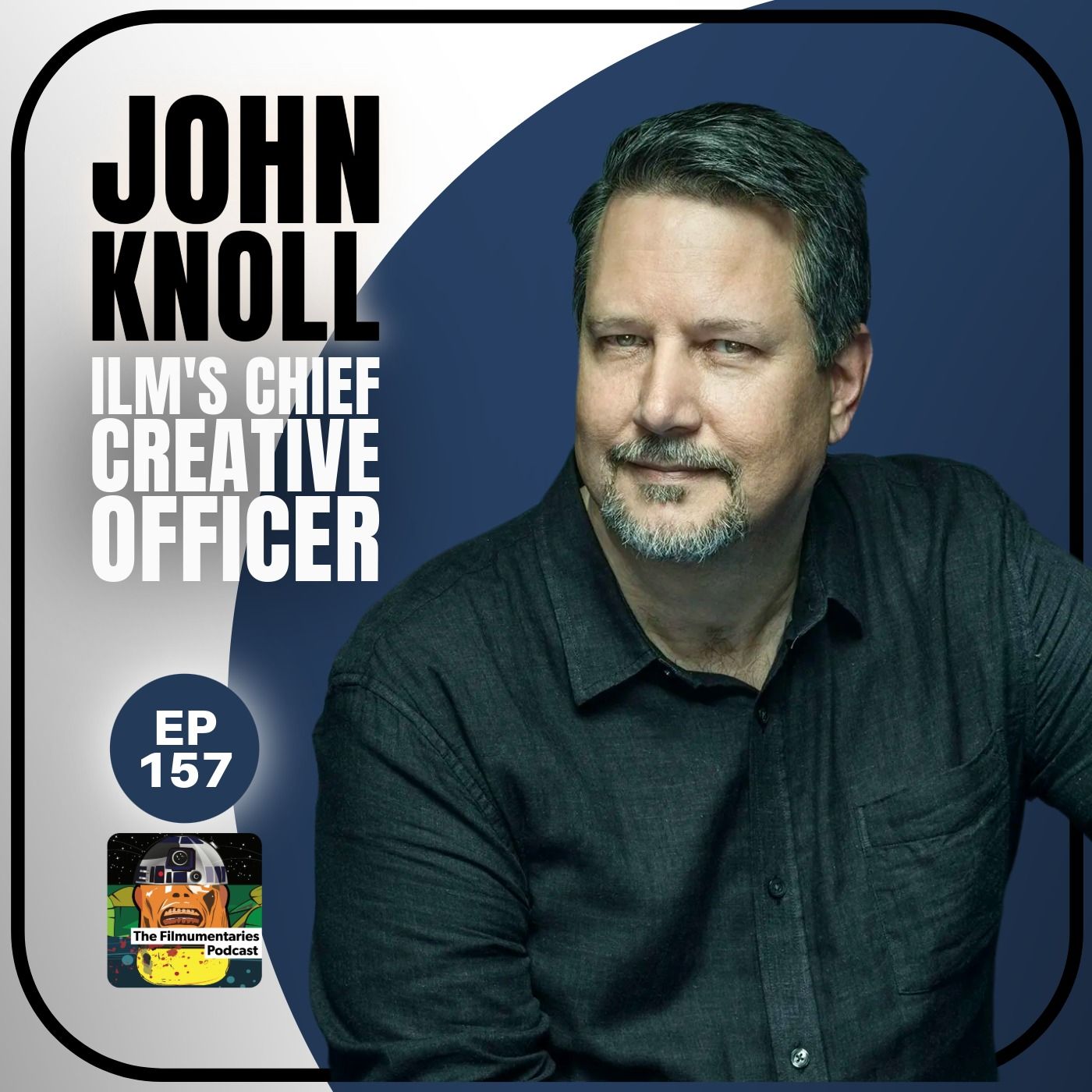
· Season 1 · Episode 157 · Latest episodeEp 157 | ILM’s John Knoll on The Mandalorian and Grogu — motion control, stop motion and gaussian splats
John Knoll is Chief Creative Officer at ILM and visual effects supervisor on The Mandalorian and Grogu, the first time Mando and Grogu have been on a cinema screen. He describes two forces pulling against each other. It had to feel like it came from the same group of people who made the series, which meant keeping the handcrafted approach — puppets, creatures in rubber masks, motion control miniatures, stop motion.
But roughly forty-five per cent of the film is IMAX, and you compose and cut differently for a hundred-foot screen. Fewer quick cuts, more headroom, room around the frame for peripheral vision. IMAX had sent ILM a document about all this years ago. John decided simulating the room beat following the notes, so they built an Apple Vision Pro app that puts you in an IMAX auditorium, seats and all, looking at the live feed off the video taps.
They used it on set to check composition, and later to check animation and action scenes before they were finished. The stop motion went to Tippett, who spent the better part of a year animating a two-minute fight between Mando and two droids. The Razor Crest is a forty-eight inch miniature, double the size of the one built for the series, and John finally got to shoot it in an LED volume — built in part from panels salvaged off a decommissioned StageCraft stage.
He’d been chasing that since season one, when he tried building a foam core enclosure and projecting onto it. It sort of worked, right up until Favreau wanted the flight path changed. We also cover Rotta the Hutt, who turned out to be the hardest thing in the film. A Hutt who moves fast reads as funny on the page and is difficult to put on screen. Does he move like a snake, an inchworm, a snail? They landed on elephant seals, and then on a barrel roll.
Plus the cameras — a Sony ILX-LR1 for daylight exteriors at the Ranch, and a Canon 5D Mark IV out of ILM’s equipment cupboard for the interiors. Gaussian splats for the Razor Crest interior, shot in twenty minutes and used from any angle he wanted. Keeping a coherent look across five vendors with Doug Chiang riding the designs through post. And two shots containing an original 1976 Y-wing, on loan from the Lucas Museum for a single day, with two museum staff watching the whole time.
This podcast is completely independent and made possible by listener support. If you’d like to help me keep making these episodes, you can join my Patreon community here: https://patreon.com/jamiebenning
Watch more on YouTube:
Check out the Filmumentaries YouTube channel for behind-the-scenes clips and extra content: https://youtube.com/filmumentaries
All my links

About this show
Twice monthly conversations between film historian Jamie Benning and the craftspeople that helped create the movies we love. From visual effects and editing to sound design and art direction.
Hosts
- Jamie BenningHost
All episodes (165)
-
31:28Season 1 · Episode 114114 - Laurent Bouzereau - Director of "Music By John Williams"
-
1:26:49Season 1 · Episode 113113 - Kevin Jenkins - Production Designer - Star Wars - Jurassic World
-
1:19:08Season 1 · Episode 112112 - Jon Spira - Director of "The Life and Deaths of Christopher Lee"
-
1:28:44Season 1 · Episode 111111 - TyRuben Ellingson - VFX Art Director and Educator - Star Wars and Avatar
-
1:21:51Season 1 · Episode 110110 - Andrew Whitehurst - VFX Supervisor - Ex Machina, Indiana Jones
- 21:06
-
1:03:39Season 1 · Episode 109109 - King Kong - 35mm BFI Screening - Doug Weir and Kieron Webb
-
1:19:42Season 1 · Episode 108108 - Jett Green - Matte Painter / Artist - Labyrinth, Willow, Temple of Doom
-
1:04:00Season 1 · Episode 107107 - Steve Sansweet - Rancho Obi-Wan
-
1:29:37Season 1 · Episode 106106 - Nilo Rodis Jamero - Legendary Designer - Part 2/2
-
1:15:31Season 1 · Episode 105105 - Nilo Rodis Jamero - Legendary Designer - Part 1/2
- 18:15
-
53:38Season 1 · Episode 104104 - Ahsoka VFX and Sound - With Richard Bluff and Matthew Wood
-
1:30:34Season 1 · Episode 103103 - Nathan Crowley - Production Designer and Chris Nolan collaborator
-
46:45Season 1 · Episode 102102 - Master of the Air - VFX masters Xavier Bernasconi & Steve Jelley
-
32:43Season 1 · Episode 101101 - Skywalker Ranch, Lucasfilm and Rancho Obi Wan Visit - April 2024
-
1:01:05Season 1 · Episode 100100 - Phil Tippett - VFX Legend
-
1:12:06Season 1 · Episode 9999 - David Whiteley - Presenter, Filmmaker (The Galaxy that Britain Built & Toy Empire)
-
2:15:15Season 1 · Episode 9898 - The Empire Strikes Back Commentary - With Giles Terera
-
44:45Season 1 · Episode 9797 - Fred North - Helicopter Stunt Pilot - "Flying Sideways"
-
1:00:53Season 1 · Episode 9696 - The Creator - With Director Gareth Edwards and his Effects Team
-
48:02Season 1 · Episode 9595 - Garrick Hagon - Star Wars Actor
-
46:10Season 1 · Episode 9494 - Robert Watts - Legendary Producer
-
33:33Season 1 · Episode 9393 - Mission Impossible 7 - VFX Supervisors - Jeff Sutherland & Simone Coco
-
1:35:15Season 1 · Episode 9292 - Tom Spina - Sculptor / FX Artist - Regal Robot, Tom Spina Designs
More from the network
See all shows-
Dreams for Sale: Twilight Zone '85
A completed retrospective on the 1985 revival of The Twilight Zone.
Explore the show -
Midnight Viewing
Horror anthology and themed-series coverage.
Explore the show -
Scary Stories We Tell
True crime, supernatural stories, and horror-culture coverage.
Explore the show -
Noise Junkies
A music-focused show covering popular and obscure music.
Explore the show -
The Kulturecast
Chris Stachiw, the Doctor of Podcasting, on where film and culture meet — and how each one bends the other.
Explore the show


